
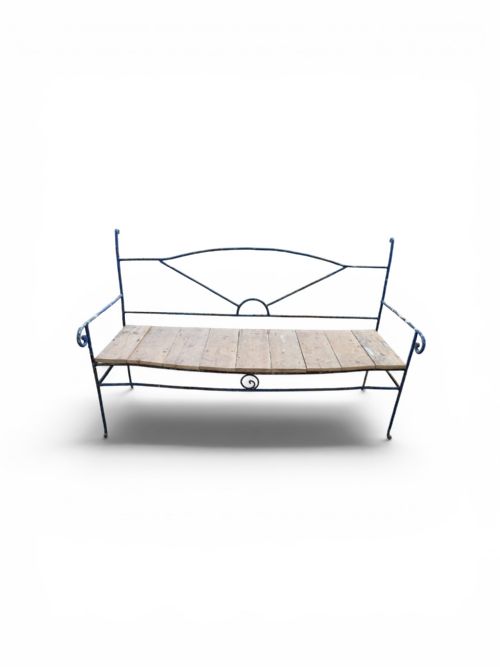


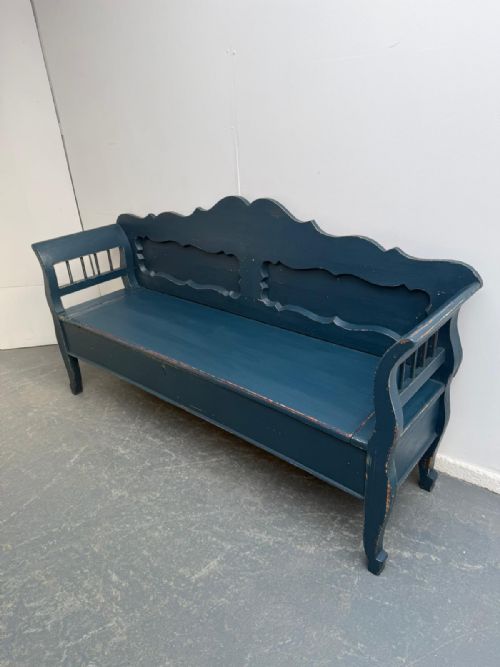
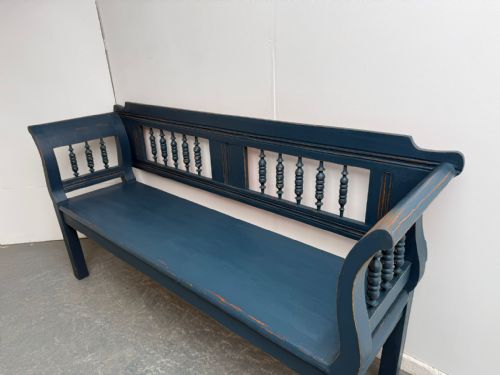

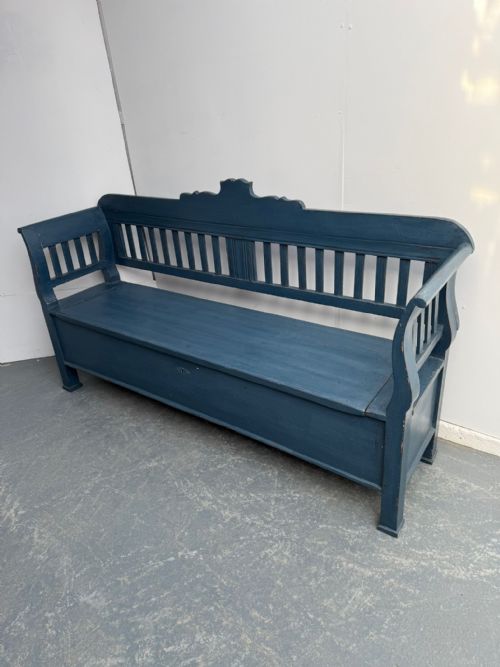

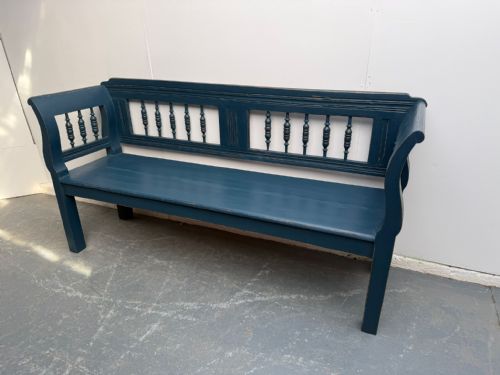
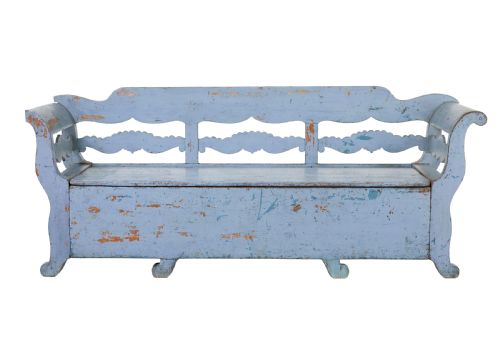


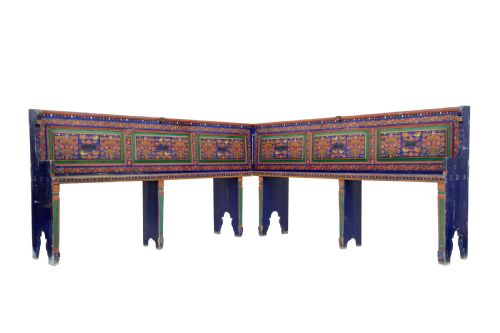


Blue Painted Wooden Bench
A blue painted wooden bench brings immediate character to a hallway or garden with its weathered surface and regional vernacular charm.
Blue Painted Wooden Bench
A blue painted wooden bench encompasses everyday seating forms ranging from English settles and high-back storage benches to European country settees and garden seats. These pieces are typically encountered in pine or mixed woods carrying layers of historic pigment.
Originating across different domestic and regional traditions, these seats vary from English country pieces to Hungarian folk art three-seater benches and Scandinavian country designs. Each item reflects the utility of its period, spanning Georgian, Victorian, Edwardian, and later nineteenth-century eras.
How they were made
Construction relies primarily on solid pine and other timbers joined to create sturdy box settles, trestle forms, and framed sofas on fluted legs. Makers utilised local woods suited to simple domestic carpentry and regional joinery traditions.
Surfaces received hand-applied coats of paint, frequently in shades of blue, which accumulated patination over decades of use. Additional details such as wrought iron hardware, fabric upholstery, and brass tacks appear on specific stylistic variations.
Some Hungarian benches come with built-in storage boxes originally designed to hide away heavy winter woollens from curious farmyard mice.
What varies in quality
Quality rests in the originality of the painted surface and the integrity of the timber framework. Pieces retaining their early or original blue pigment hold greater visual interest than later re-painted examples.
Proportion and structural honesty separate everyday utility items from finer stylistic expressions like Louis XV style settees or early regional folk art forms. The balance between practical joinery and decorative paint application defines the character of each seat.
The Blue Painted Wooden Bench Glossary
- Settle
- A wooden bench with a high back, solid arms, and often a storage box beneath the seat. This form protected sitters from draughts in traditional interiors.
- Folk Art
- Objects created within a regional craft tradition by self-taught or local artisans. These pieces prioritise functional utility and vernacular decorative expression.
- Pine
- A softwood commonly used for utilitarian European furniture throughout the eighteenth and nineteenth centuries. It provides a stable base for painted finishes.
- Box Settle
- A variant of the settle featuring a hinged seat lid opening to a deep storage compartment. It served a dual purpose as seating and household storage.
Blue Painted Wooden Bench: Frequently Asked Questions
Where should I place a blue painted wooden bench?
These benches suit entrance halls, boot rooms, and large kitchens where their storage capacity and robust construction prove practical. They also function effectively along garden walls or in covered outdoor spaces depending on their timber and finish.
Placing them against plain walls allows the painted surface to stand out as a focal point in the room. Pairing them with natural textures enhances their regional country character.
How do I care for the painted surface?
Dust the surface regularly with a soft, dry cloth to prevent dirt accumulation on the historic pigment. Avoid harsh chemical cleaners and excessive moisture that might lift or damage the old paint.
Keep the timber away from direct heat sources and strong sunlight to prevent the wood from drying and cracking. Gentle waxing can protect exposed areas of bare wood without altering the surrounding paint.
Are these benches comfortable for daily sitting?
Many historical country benches feature wooden seats designed for utility rather than deep lounging. Adding loose cushions or pads can improve comfort for everyday use.
Upholstered variants provide a softer sit while maintaining the original proportions of the frame. Consider how you intend to use the seat when selecting between a rigid wooden settle and an upholstered settee.
How can I tell the period of a painted bench?
Examine the construction methods, tool marks, and fixings used in the assembly of the frame. Hand-cut joinery and older types of nails or screws often indicate earlier nineteenth-century or Georgian origins.
The style of the piece, such as Louis XV influences or Edwardian garden framing, provides further clues to its era. Paint analysis reveals whether the blue finish is an early application or a later addition.