
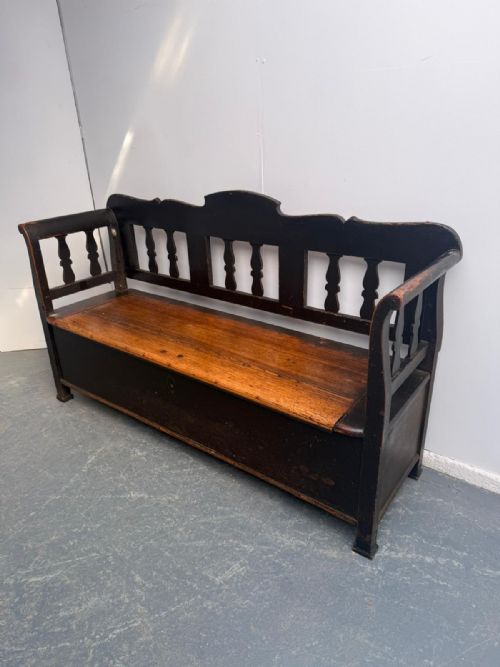
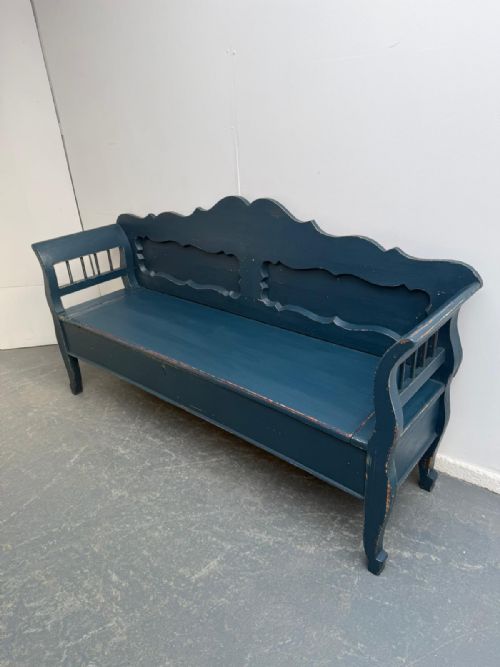
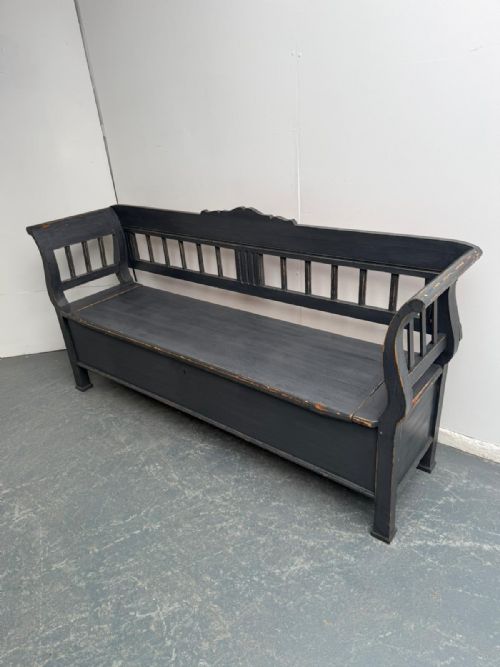

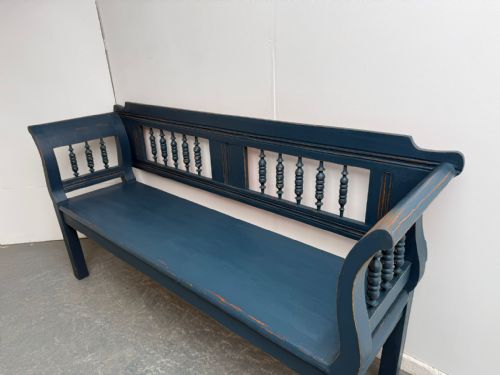



Hungarian Painted Pine Bench
A Hungarian painted pine bench brings rustic warmth to a hall, fashioned from solid timber and finished in vibrant folk colours.
Hungarian Painted Pine Bench
When you search for a Hungarian painted pine bench, you encounter sturdy country seating originating from Central Europe, designed for domestic utility. These pieces primarily date from the Georgian and Victorian eras, taking the form of three-seater benches or box settles with integrated storage.
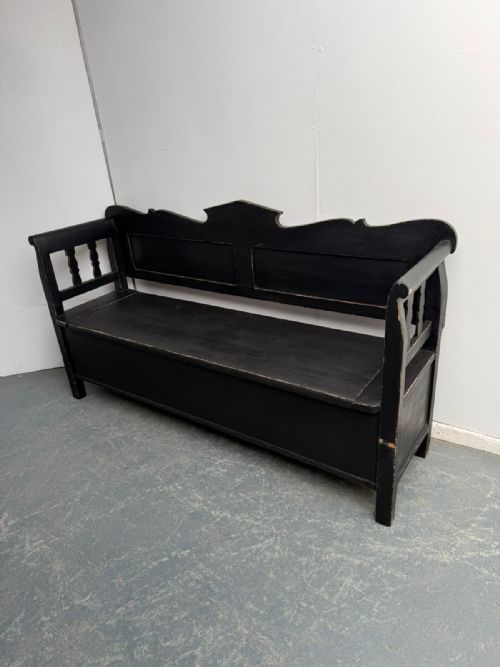
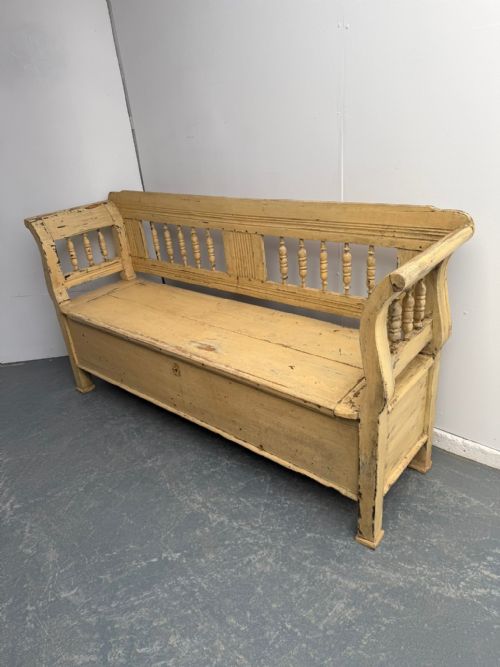
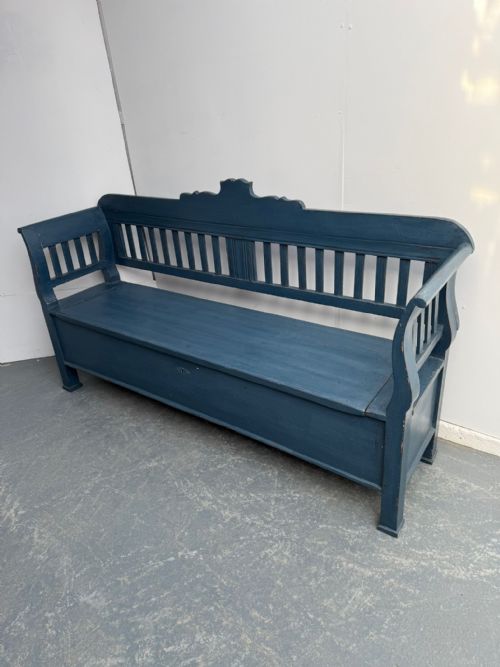
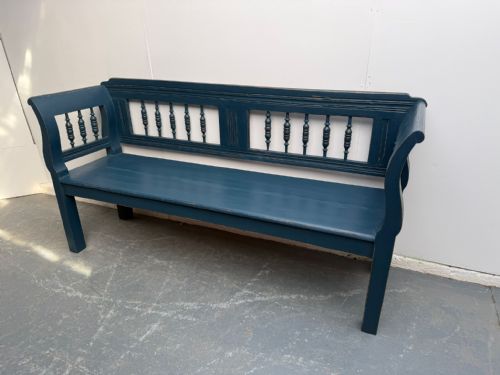
The versions most commonly met on this page belong to the Victorian period, often retaining their original painted surfaces in shades of blue, grey, black, cream, and green. They combine straightforward carpentry with traditional folk art styles, serving as both seating and practical hallway furniture.
The corpus spans distinct regional variations within European country and rustic traditions, sometimes incorporating iron hardware. Settles among them provide enclosed compartments beneath the seat, reflecting the multi-purpose demands of rural households.
How they were made
Construction relies on solid pine planks, assembled with pegged joints and sometimes reinforced with iron straps or hinges for daily endurance. Carpenters shaped these timbers locally, prioritising sturdy utility over refined cabinet-making techniques.
Surfaces received layers of oil- or water-based paint, often in distinct regional palettes such as blue, grey, green, or black, applied directly to the bare softwood. Over decades, this paint layer developed a characteristic patina through regular handling and domestic wear.
Several benches still bear the ghosts of forgotten farmyard coats, tucked safely beneath layers of original blue and green country paint.
What varies in quality
The distinction between ordinary and superior examples lies in the survival of the original painted surface rather than the complexity of the joinery. Benches retaining their untouched historical pigment command greater interest than those stripped down or heavily overpainted in later restoration work.
Proportion and form also separate basic utility items from more considered regional pieces, particularly where box settles feature panelled storage compartments and integrated backrests. The integrity of the pine timber itself, showing honest signs of age without extensive modern replacement, dictates the overall character.
The Hungarian Painted Pine Bench Glossary
- Pine
- A softwood commonly used in European country furniture for its accessibility and workability. It takes paint readily and forms the structural base of these rural pieces.
- Box settle
- A wooden bench featuring a high back, armrests, and a concealed storage compartment beneath the lift-up seat. This form provided draught protection and utility in farmhouse halls.
- Folk art
- Traditional decorative styles and craftsmanship passed down through regional communities rather than formal academic workshops. It manifests here in the vernacular painted finishes.
- Patina
- The surface sheen and wear accumulated on wood and paint over generations of use. It serves as a visual indicator of age and handling.
Hungarian Painted Pine Bench: Frequently Asked Questions
How were these benches used originally?
In rural households, these pieces provided communal seating around farmhouse tables or along hallway walls. Versions with box compartments additionally served to store household goods, blankets, or firewood.
The high backs often found on settles were designed to block cold drafts from stone floors and uninsulated doorways.
How do I tell Victorian pieces apart from Georgian ones?
Distinguishing between the two eras involves examining the construction details, panel styles, and the character of the pine timber. Georgian examples generally exhibit older, hand-worked joinery and earlier conventions in regional folk art.
Victorian pieces on this page frequently include box settles and specific painted colourways like cream, green, and bright blues, reflecting later country workshop output.
How should I care for an original painted surface?
Preserving an antique painted finish requires keeping the furniture away from direct sunlight and excessive humidity, which can cause the softwood and pigment to crack. Dusting gently with a dry cloth is sufficient for routine maintenance.
Avoid chemical cleaners or aggressive polishing, as these can strip away the delicate historical patina and original paint layers.