
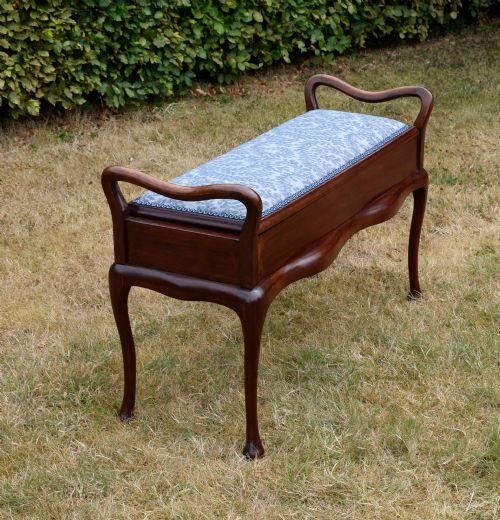
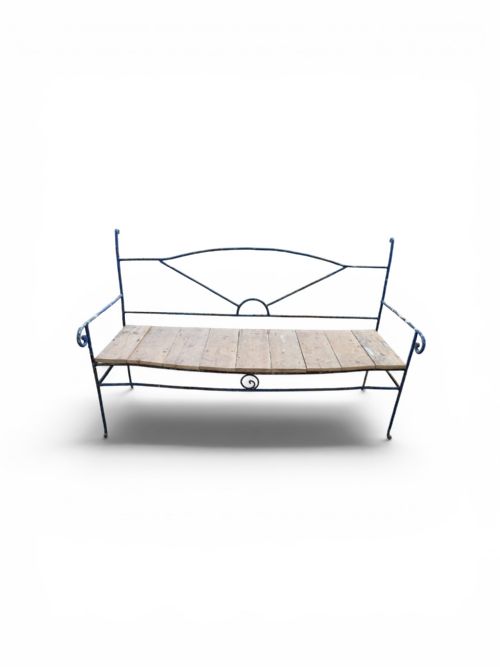
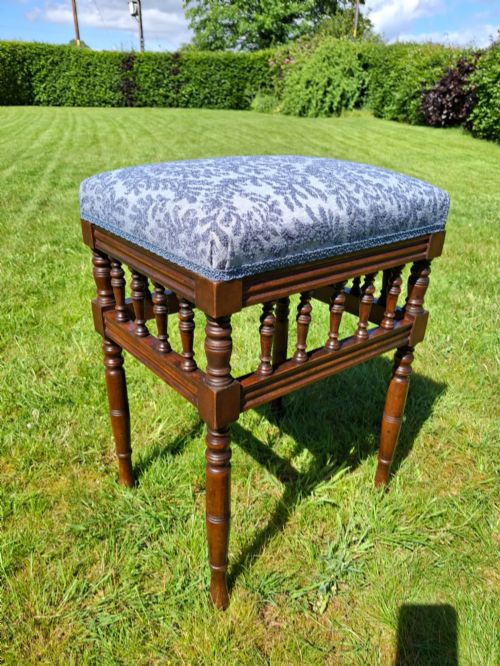




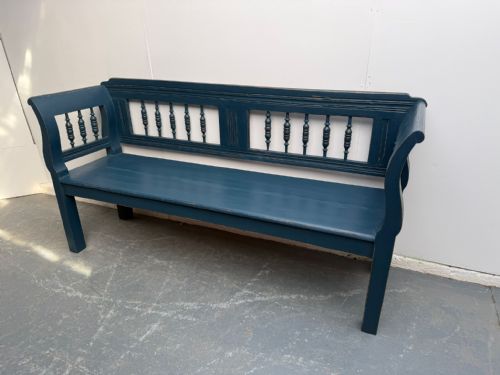


Vintage Blue Wooden Bench
A vintage blue wooden bench brings painted character and practical seating to a hallway or living space.
Vintage Blue Wooden Bench
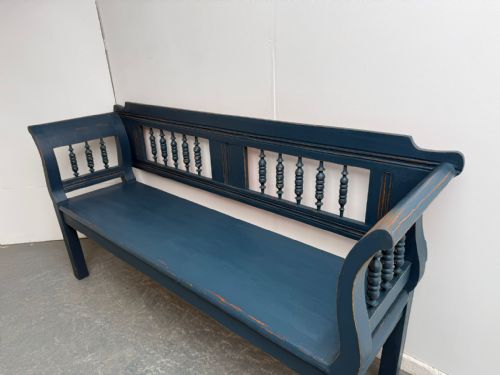
When you search for a vintage blue wooden bench, you are looking at seating forms ranging from three-seater settle benches to small settees and garden seats. These pieces predominantly appear in pine, often wearing original or later painted surfaces in shades of blue.
The selections span the nineteenth and early twentieth centuries, drawing on English country, Victorian, Edwardian, and Hungarian folk art traditions. Alongside standard benches, the listings incorporate related forms like painted storage benches and high back settles.
Buyers most frequently encounter nineteenth-century pine examples originating from English and Hungarian workshops. Their forms vary from simple plank construction to carved backs and integrated storage compartments.
Construction and materials
Makers utilised solid timbers such as pine, mahogany, walnut, and rosewood to build the frames and structural elements of these seats. Joinery techniques relied on traditional methods appropriate to the period, including trestle supports and framed panels.
Painted finishes form a defining characteristic, applied directly to wood surfaces in various blue tones. Some examples incorporate additional materials like wrought iron hardware, brass details, and upholstered cushions in fabric or velvet.
One literary-linked settee carries the name of Daphne du Maurier's Rebecca, bridging interior seating with twentieth-century fiction.
Assessing quality and character
Quality in these pieces rests upon the integrity of the timber and the character of the surface finish. Original paintwork that has weathered naturally holds distinct appeal compared to later repainted surfaces.
Structural stability determines utility, particularly in longer three-seater benches and storage variants. Finely turned legs, subtle carving, and well-proportioned backs distinguish superior examples from simpler utilitarian forms.
The Vintage Blue Wooden Bench Glossary
- Settle bench
- A high-backed wooden bench with solid sides designed to block draughts in traditional rooms. It often includes a hinged seat revealing a storage box beneath.
- Pine
- A soft timber widely utilised in country furniture for its workability and availability. It accepts painted finishes readily, which accounts for its prevalence in blue-painted seating.
- Settee
- A small upholstered or wooden two or three-seater sofa. Examples in this category span Victorian and Edwardian revival styles.
- Fluted legs
- Columns or legs carved with vertical parallel grooves. This detail appears on refined seating influenced by classical design traditions.
Vintage Blue Wooden Bench: Frequently Asked Questions
How do I date a wooden bench?
Dating relies on examining construction marks, tool traces, and timber characteristics visible on the underside and interior joints. Secondary woods and fastener types also provide clues to the manufacturing decade.
Style indicators, such as Victorian proportions or Edwardian leg turning, narrow down the production period further.
Are painted blue surfaces original?
Surface analysis helps determine whether a blue paint layer dates to the period of manufacture or represents a later decorative application. Wear patterns around high-contact areas like armrests often indicate age.
Paint layering and crackle patterns under magnification reveal the history of the finish.
How should I clean a painted bench?
Maintenance requires gentle dusting with a dry microfibre cloth to protect fragile historic paint layers. Moisture and harsh chemical cleaners should be avoided.
Wax is occasionally applied to unpainted wooden sections, but painted surfaces generally need only minimal intervention.
Where do Hungarian benches come from?
Hungarian pieces in these listings typically originate from rural nineteenth-century households where painted pine furniture formed a central part of domestic interiors. These benches often feature distinct regional joinery.
Their substantial three-seater proportions reflect traditional rural seating requirements.
Can I use these benches outdoors?
Most antique wooden benches with historic painted finishes are suited for interior use where humidity and temperature remain stable. Exposure to damp conditions degrades nineteenth-century pine and damages surface paint.
Garden-specific variants are constructed to withstand exterior environments.