

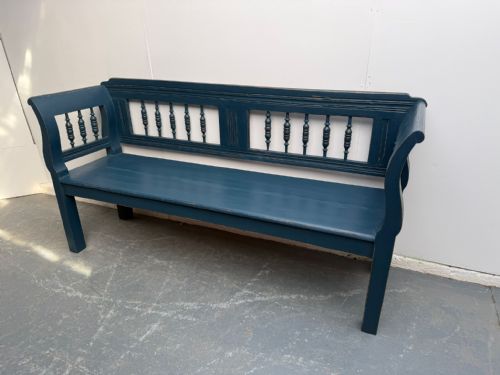


Three Seater Wooden Bench
A three seater wooden bench offers generous seating in timber, spanning from Georgian painted pine to weathered teak garden pieces.
Three Seater Wooden Bench
When a buyer searches for a three seater wooden bench, they encounter a diverse selection ranging from indoor box settles to outdoor garden seating. The pieces listed span several eras, including Georgian, Victorian, Edwardian, and the 1930s.
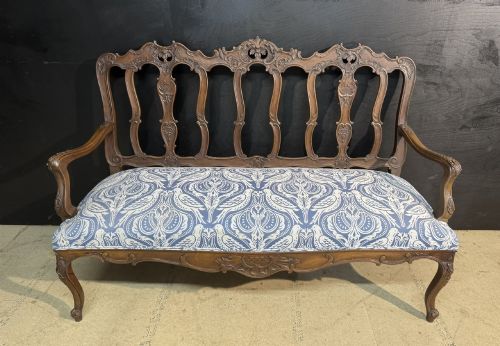
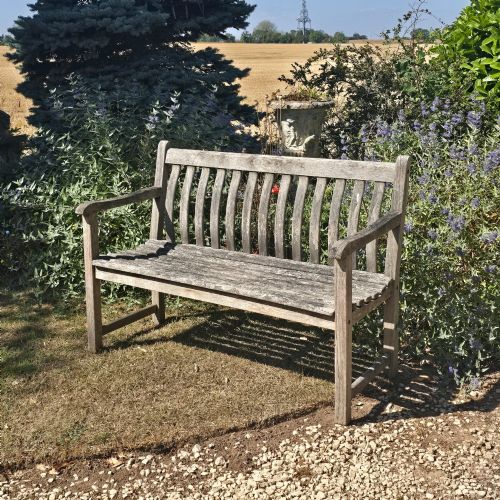
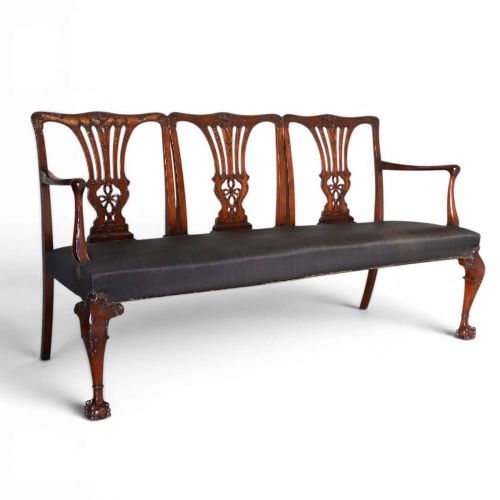
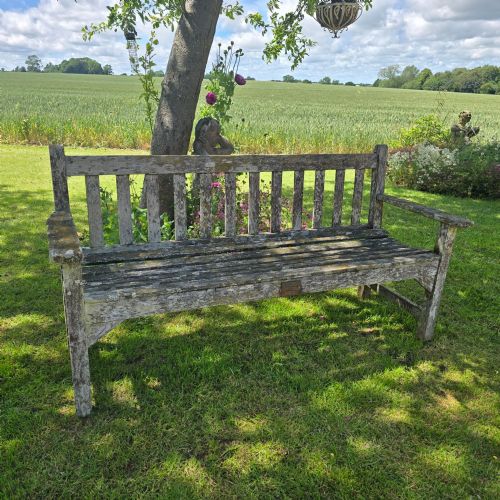
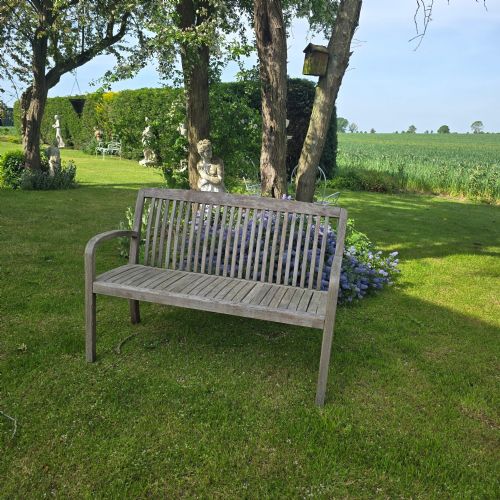
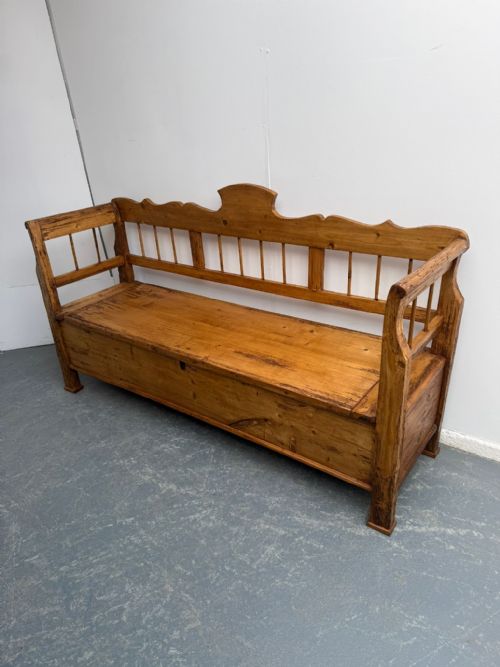
Indoor examples often take the form of painted pine box settles or mahogany settees with carved backs. Outdoor variants appear in weathered teak designed to withstand the elements.
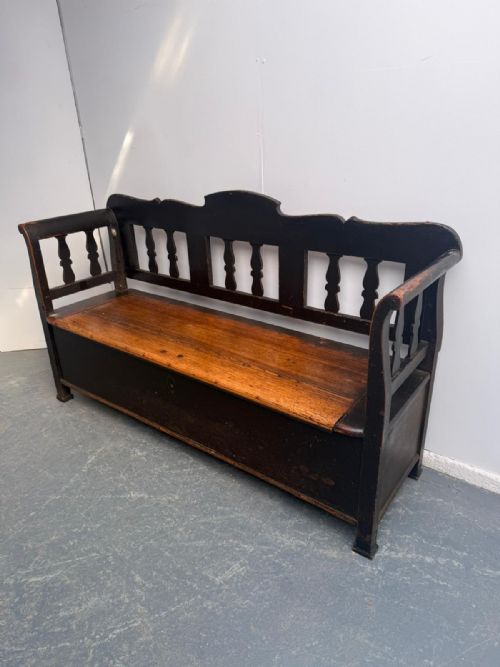
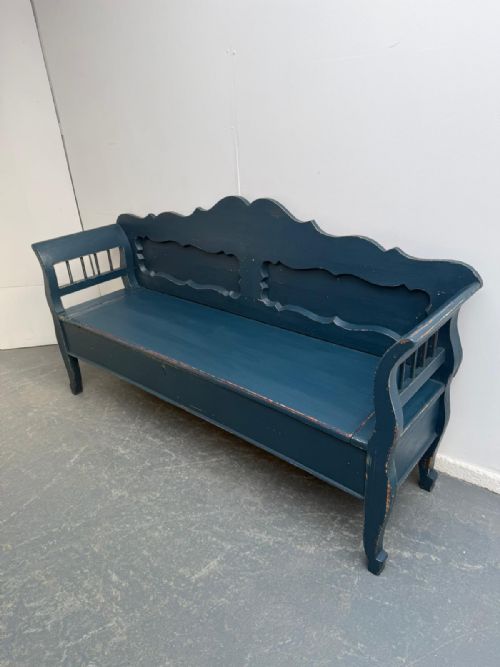
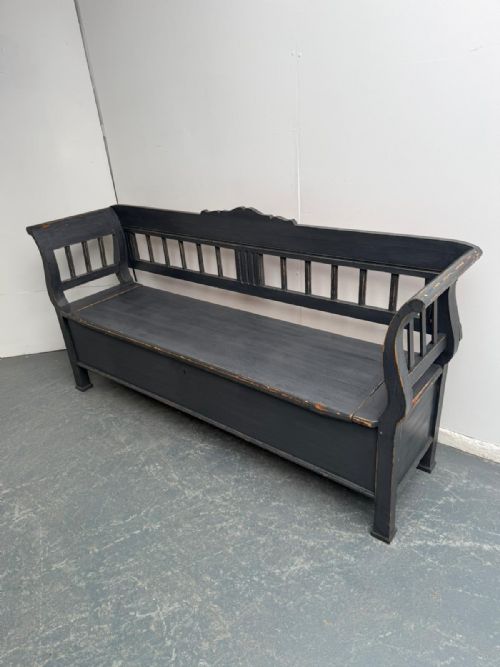
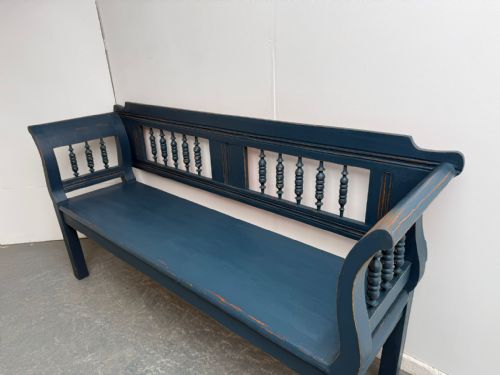
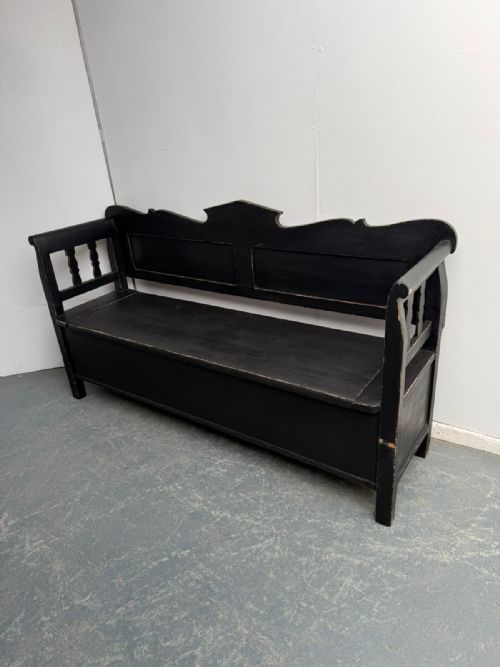
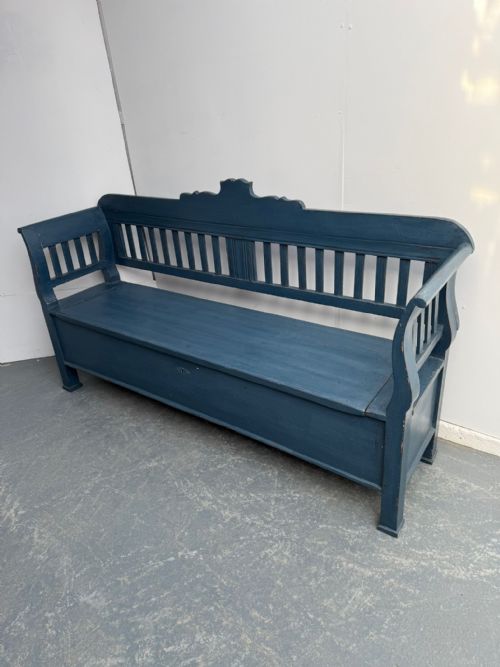
Hungarian folk art traditions strongly influence the painted pine benches seen in the collection. Buyers most frequently meet either rustic country garden seats or domestic settles originating from European and British workshops.
How they were made
Carpenters constructed these benches primarily using solid timber such as pine, mahogany, walnut, and teak. Joinery methods varied according to the period, employing traditional framing alongside box construction for storage settles.
Surface treatments define many of the pieces, utilising layers of paint in blue, black, grey, or finishes like wax and simple weathering. Certain indoor models integrate fabric or leatherette upholstery for added comfort.
Materials across the inventory include pine, paint, teak, fabric, mahogany, walnut, leatherette, and wax.
What varies in quality
The standard of a three seater wooden bench depends on the integrity of its timber and the preservation of its original surface. Pieces retaining authentic painted finishes or natural weathering display greater character than stripped or heavily restored examples.
Carved details, such as the Chippendale-style backs on Edwardian mahogany frames, reflect the skill of the original maker. The structural soundness of the joints and the retention of original elements determine the overall standing of each piece.
The Three Seater Wooden Bench Glossary
- Box settle
- A high-backed wooden bench featuring a concealed storage compartment beneath the seat. This form kept draughts away and provided domestic utility.
- Chippendale-style
- A design influence characterised by intricate carved openwork backs, often seen on Edwardian mahogany seating. It draws upon mid-eighteenth-century cabinet-making patterns.
- Weathered teak
- Hardwood exposed to outdoor conditions over decades, resulting in a silvery-grey patina. This state indicates durable material suited for garden use.
- Hungarian folk art
- Regional decorative painting traditions applied to rural furniture, frequently using vibrant blue or black pigments on pine bodies. These pieces reflect distinct cultural aesthetics.
Three Seater Wooden Bench: Frequently Asked Questions
Where should I put a wooden bench?
Indoor variants like box settles or mahogany settees fit well in hallways, kitchens, or living spaces where extra seating and internal storage prove useful.
Weathered teak examples belong in gardens, patios, or conservatories, as the timber withstands outdoor exposure while developing a distinct patina over time.
How do I care for painted pine?
Painted pine surfaces require gentle cleaning with a soft cloth to preserve the historic pigment layers without causing abrasion or lifting.
Avoid harsh chemical cleaners and excessive moisture, keeping the bench in a stable indoor environment away from direct heat sources.
Are these benches comfortable?
Comfort varies depending on the specific form, as high-backed wooden settles and chair-back sofas offer upright seating suited for social spaces or dining areas.
Some models feature upholstered pads in fabric or leatherette, while others rely purely on shaped timber construction.
How can I tell the period?
Stylistic clues such as Rococo Revival curves, Edwardian Chippendale carving, or utilitarian Georgian box construction help indicate the era of manufacture.
Material choices also guide dating, with specific paint treatments and weathered hardwoods pointing towards particular decades from the nineteenth century onward.