
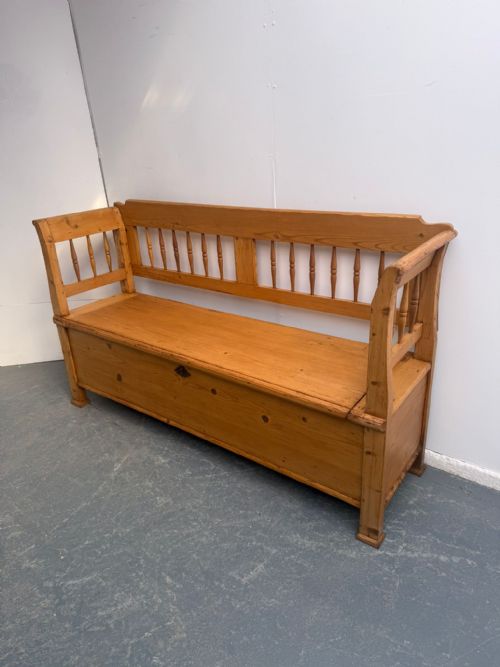

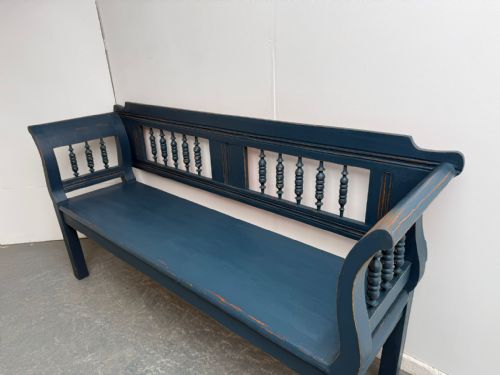
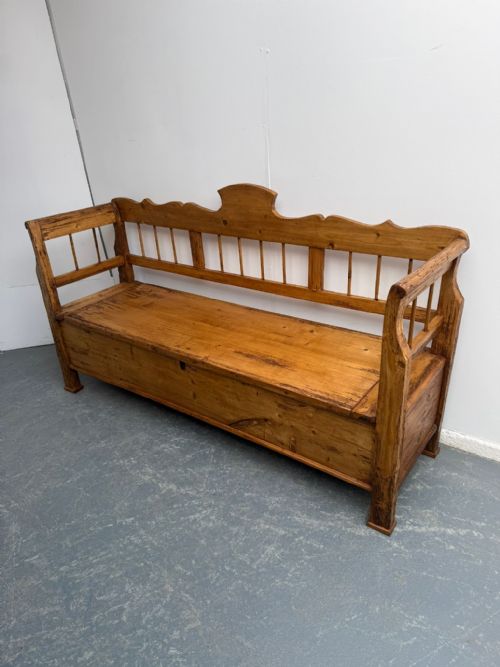
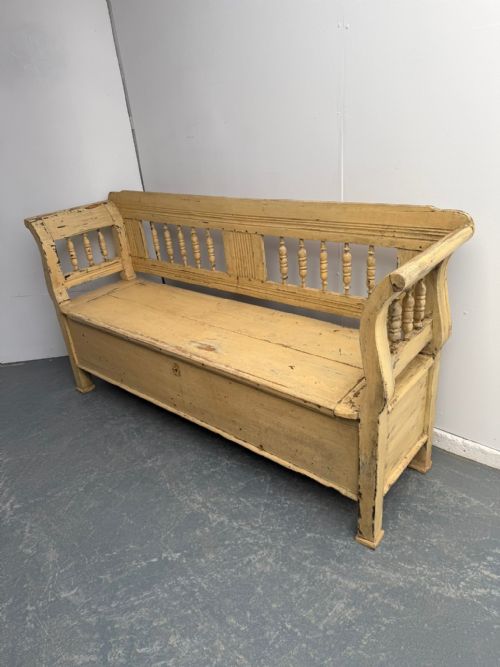
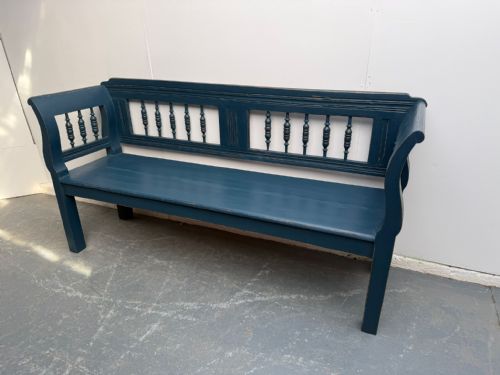


Spindle Back Pine Bench
A spindle back pine bench offers straightforward country seating, combining turned wooden spindles with soft softwood timbers.
Spindle Back Pine Bench
When you search for a spindle back pine bench, you encounter regional European country seating originating primarily from Hungarian, Swedish and Austrian workshops. These pieces span the Georgian and Victorian periods, including specific years such as 1870, alongside broader eighteenth and nineteenth century datings.
The forms vary between open three seater benches and enclosed box settles that feature high backs and storage compartments beneath the seat. You are most likely to meet Hungarian and Swedish examples on this page, reflecting rustic farmhouse, Scandinavian country and folk art traditions.
The construction serves domestic utility in farmhouse kitchens and hallways, offering sturdy seating through simple joinery. The defining characteristic across these variations is the arrangement of vertical turned spindles supporting the backrest above a solid pine plank seat.
Materials and construction
Makers utilised pine timbers for the primary framework, shaping the seats from solid planks and turning the back spindles on a lathe. Iron fixings occasionally reinforce the structural joints where the backrest meets the seat base.
Surfaces were finished either with clear wax to preserve the natural grain of the pine or with coats of blue and cream paint. Paint finishes often show the patination of age across European country and folk art styles.
Hungarian box settles double as seating and secure spots to hide the household baking supplies from hungry children.
Assessing quality
Quality in these benches depends on the integrity of the original surface treatment, whether waxed pine or early painted finishes. Examples that retain their original regional paint schemes command greater interest than those stripped down or heavily restored.
Structural proportion and the crispness of the spindle turning distinguish finer regional pieces from simpler utilitarian seating. The presence of integrated box settle compartments and well preserved nineteenth century joinery further elevate the standing of a piece.
The Spindle Back Pine Bench Glossary
- Pine
- A softwood timber commonly used in regional European furniture making. It accepts both wax and paint finishes readily.
- Box settle
- A high backed bench featuring a built in storage box beneath the seat. This form provided draught protection and space saving utility in traditional interiors.
- Spindle
- A slender, turned wooden rod forming part of the backrest. Spindles are shaped on a lathe to create symmetrical decorative profiles.
- Patina
- The surface sheen and wear developed over decades of use. Original paint and wax surfaces accumulate this character naturally over time.
Spindle Back Pine Bench: Frequently Asked Questions
What is a spindle back pine bench?
A spindle back pine bench is a traditional piece of country seating featuring turned wooden spindles along the backrest. These pieces originate from various European regions and date across the Georgian and Victorian eras.
They serve as practical furniture for hallways and kitchens, combining wooden plank seats with upright back supports. Many examples incorporate regional folk art painting styles or simple waxed pine finishes.
How were these benches used originally?
These benches provided communal seating around farmhouse tables and along cottage walls. Enclosed box settle variants also offered concealed storage for household goods beneath the seat.
The high backs and side wings on certain regional styles helped shield occupants from draughts in unheated rooms. Their robust construction suited daily domestic service in rural households.
How do I care for a painted pine bench?
Maintain painted pine surfaces by dusting gently with a dry, soft cloth to prevent dirt accumulation. Avoid harsh chemical cleaners that can degrade historic paint layers.
Keep the bench away from direct heat sources and strong sunlight to prevent the timber from splitting and the paint from flaking. Waxed surfaces benefit from occasional applications of traditional beeswax polish.
How can I tell the period of a bench?
Dating relies on examining the construction methods, tool marks and timber characteristics visible across the frame. Georgian and eighteenth century examples often display hand cut joinery details distinct from later production.
Regional styles and traditional paint formulations also provide clues to age and geographic origin. Comparing the wear patterns on the seat and footings helps confirm the longevity of the piece.