


Traditional Church Pew Seat
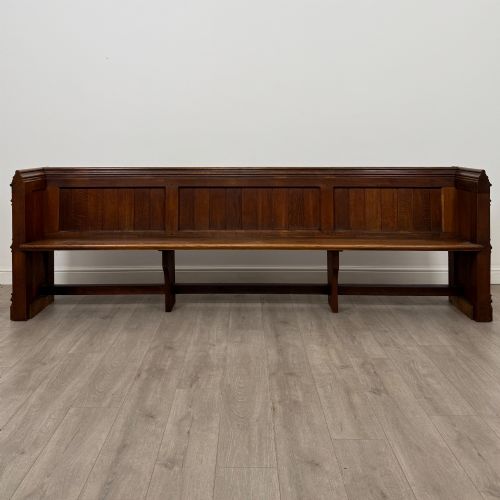
A traditional church pew seat brings grounded architectural heritage and robust timber character straight into a domestic hallway or dining room.
Traditional Church Pew Seat
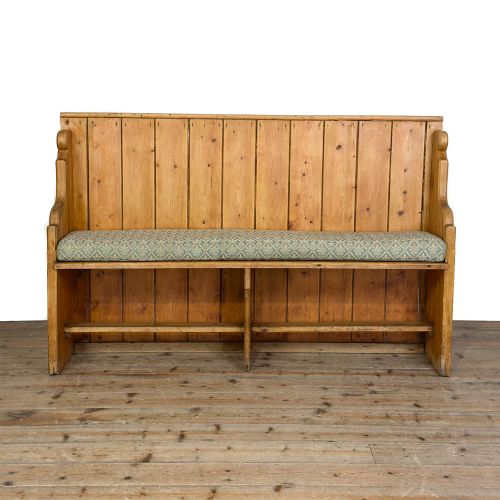
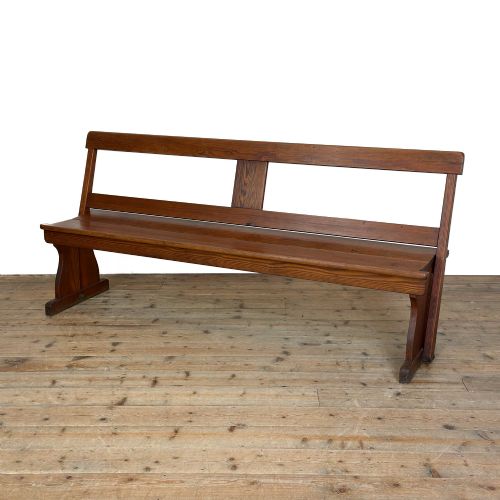
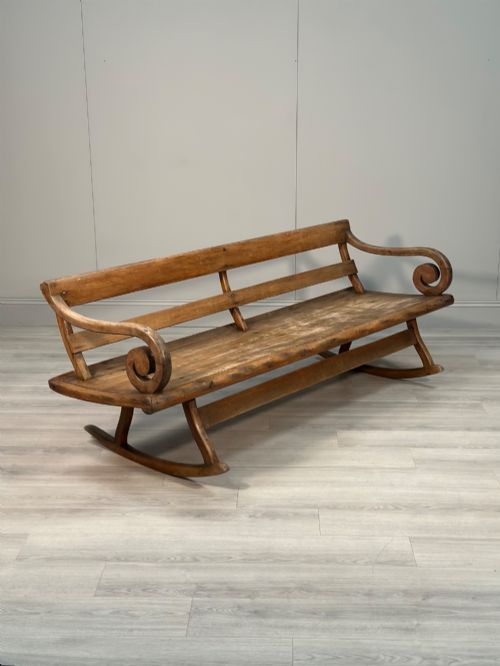
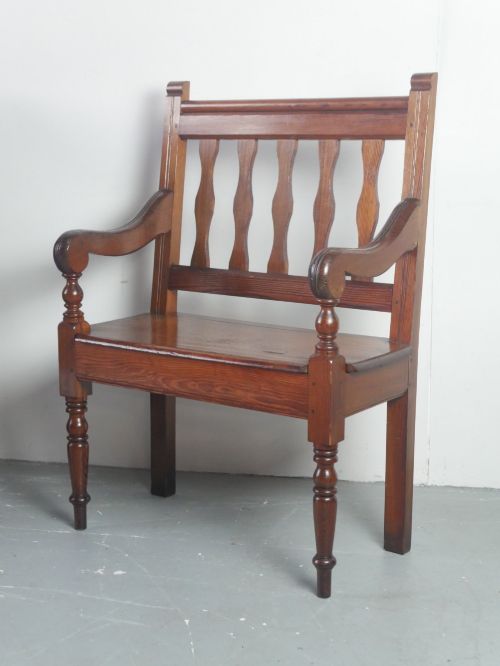
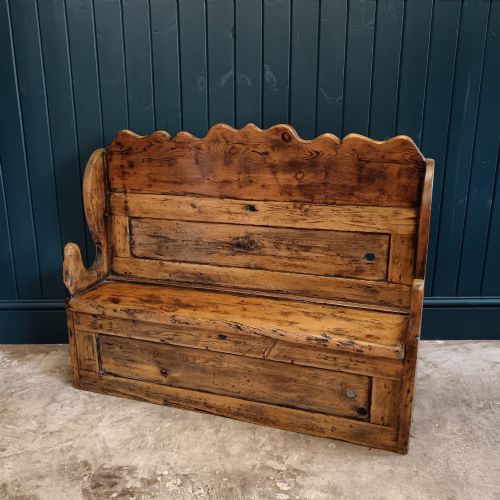
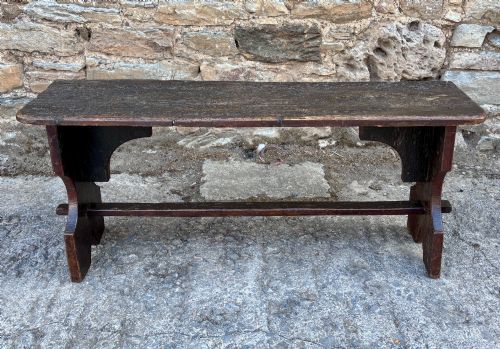
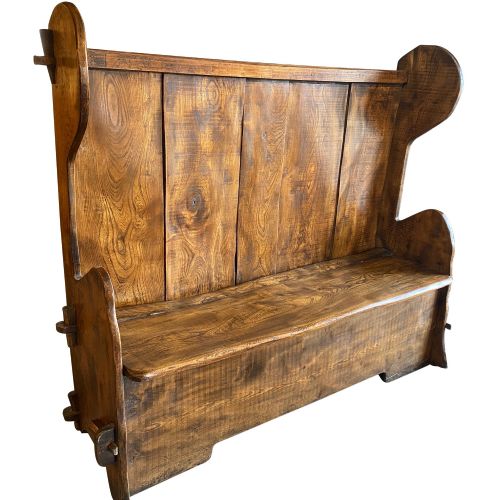
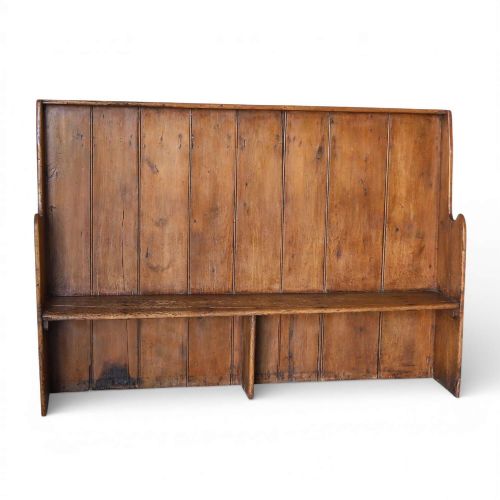
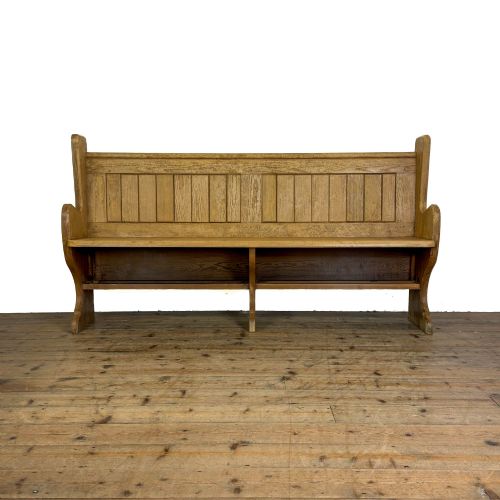
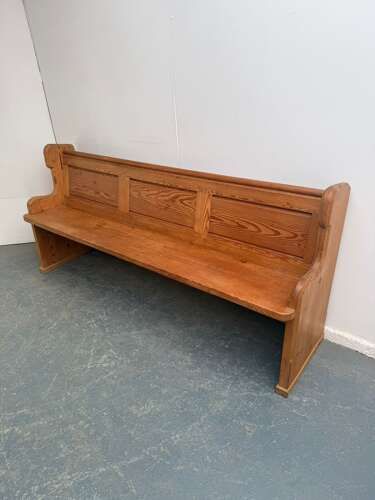
A traditional church pew seat encompasses utilitarian chapel benches, high-back settle benches with storage compartments, and rustic tavern seating originating from the eighteenth, nineteenth, and early twentieth centuries. These linear pieces serve primarily as functional hallway seating or dining benches, carrying history written in surface wear and structural timber joinery.
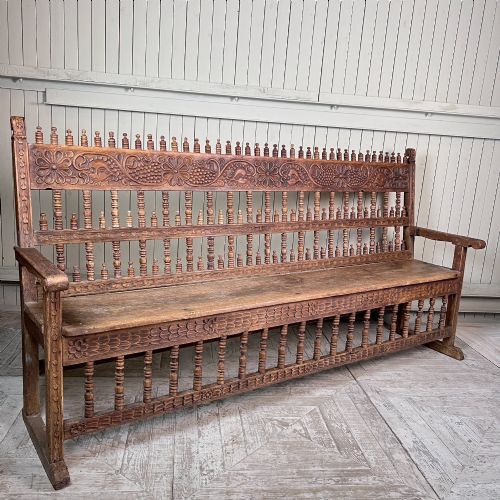
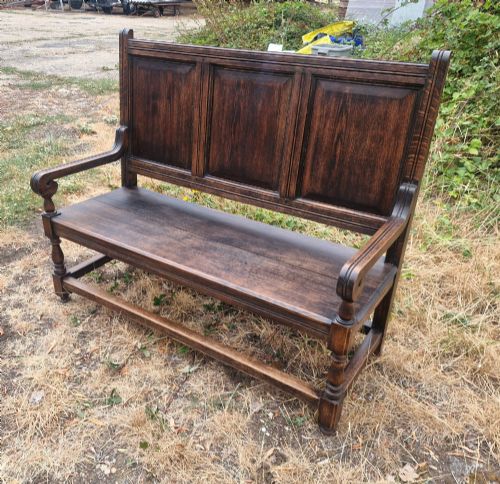
Buyers on this page most frequently encounter nineteenth-century and Victorian pine examples, alongside oak settles and elm variants spanning English, Welsh, Hungarian, and Austrian country traditions. Forms range from slim chapel benches and flip-over designs to grand high-back settles with integrated box storage beneath the seat.
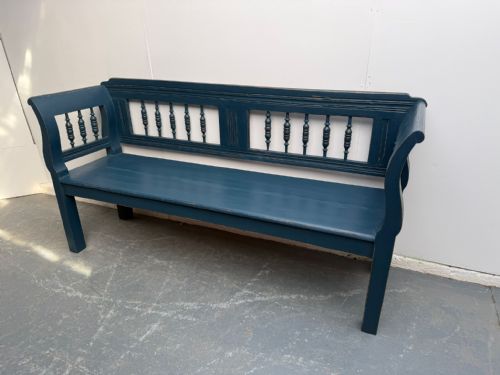
The aesthetic bridges formal ecclesiastical carpentry and vernacular domestic furniture, drawing on rustic country, Jacobean revival, and Spanish colonial styles. Whether left with a waxed honey-brown patina or retaining original blue paint, each traditional church pew seat offers long, uninterrupted lines suited to modern interiors.
Materials and construction methods
Makers relied on solid native timbers, predominantly pine, oak, and elm, supplemented by pitch pine and hardwoods selected for structural endurance under heavy public use. Planks were joined using traditional methods like panelled construction and pegged mortise and tenon joints to withstand decades of sitting.
Surfaces were finished with wax, left as raw timber to age naturally, or coated in lead-based and oil paints that now show characteristic crazing and flaking. Secondary materials such as fabric occasionally appear, though the defining characteristic remains the solid wooden seat plank and integrated backrest.
One listed Victorian pine bench carries a painted mark for the chapel at Llanfair, reminding us it once watched local parishioners fidget.
Factors determining quality
Quality rests upon the integrity of the original timber frame, the proportion of the backrest to the seat depth, and whether the piece retains its authentic surface finish. Superior examples display thoughtful timber selection, such as figured oak or clean-grained pine, balanced by robust structural joinery that requires minimal modern intervention.
The presence of period modifications, original painted surfaces, or integrated storage boxes elevates a piece above standard utility benches. Conversely, heavily re-cut lengths or unsympathetic timber replacements diminish the historical coherence of the seating.
The Traditional Church Pew Seat Glossary
- Settle
- A wooden bench with a high back, solid wooden arms, and often a closed base or storage box beneath the seat. This form was designed to block cold draughts in older domestic interiors.
- Chapel pew
- A linear bench produced specifically for religious spaces, characterised by simpler end panels and lighter construction than cathedral seating.
- Patina
- The surface sheen and colour acquired by wood and paint over decades of handling, exposure, and waxing. It acts as a visual indicator of age.
- Tavern bench
- A long, sturdy bench utilised in public houses and refectories, built to endure heavy commercial use and frequent shifting.
- Box settle
- A variant featuring a hinged seat lid that opens to reveal a deep storage well beneath. It combines seating with domestic utility.
Traditional Church Pew Seat: Frequently Asked Questions
How do I clean a pine pew?
Dust the timber regularly with a dry cloth to prevent dirt accumulation in the grain and carved details. Apply a microcrystalline wax sparingly once or twice a year to nourish dry pine without dulling the patina.
Avoid using water, modern household sprays, or harsh detergents, as these strip historic wax layers and soften aged wood surfaces.
Will a church pew fit a modern hallway?
Many traditional benches are relatively shallow, making them practical for narrow corridors compared to standard armchairs or bulky sofas. Measure the exact length and available floor clearance, keeping in mind that older benches often feature raked backrests that require a small gap from the wall.
Check whether the entrance doorways and stairwells can accommodate long single-piece timber lengths before committing to placement.
What is the difference between a settle and a pew?
A settle typically incorporates solid high sides and armrests designed to shield the sitter from draughts, often enclosing a storage compartment beneath the seat. Pews are open-sided, modular linear benches constructed in repeating lengths for communal seating.
Pews rely on simple upright ends, whereas settles are self-contained architectural furniture pieces.