


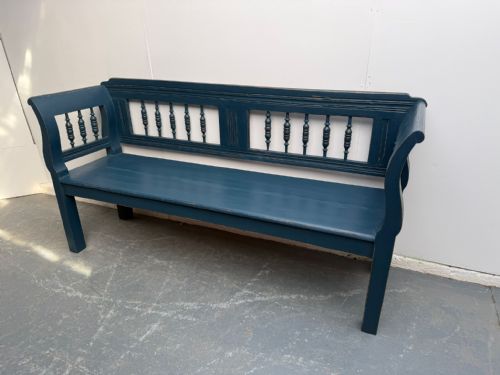


Painted Pine Hallway Bench
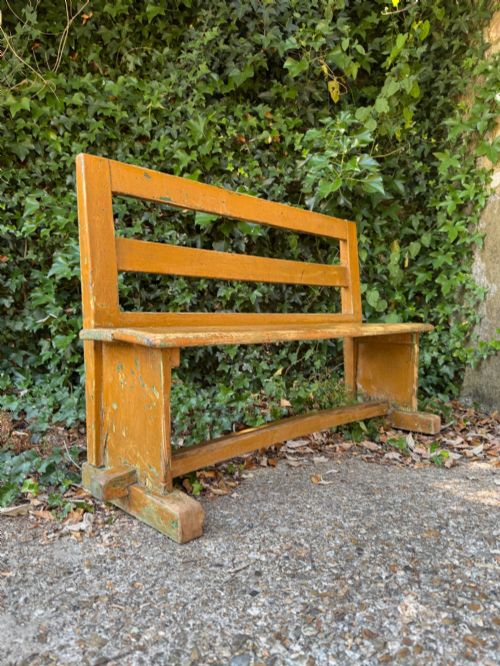
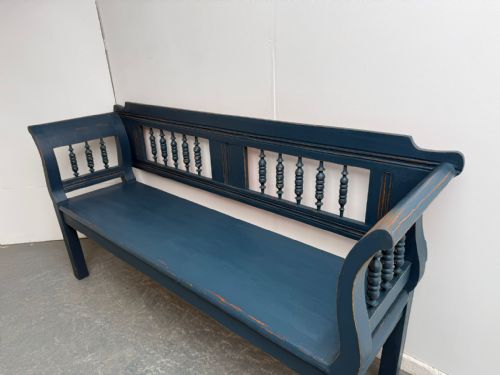
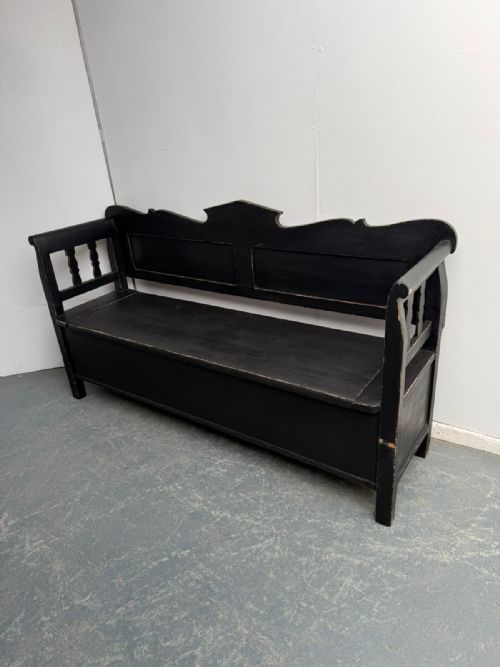
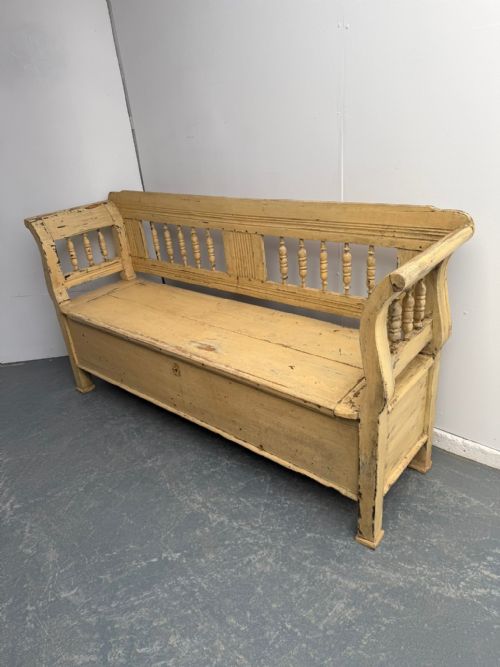
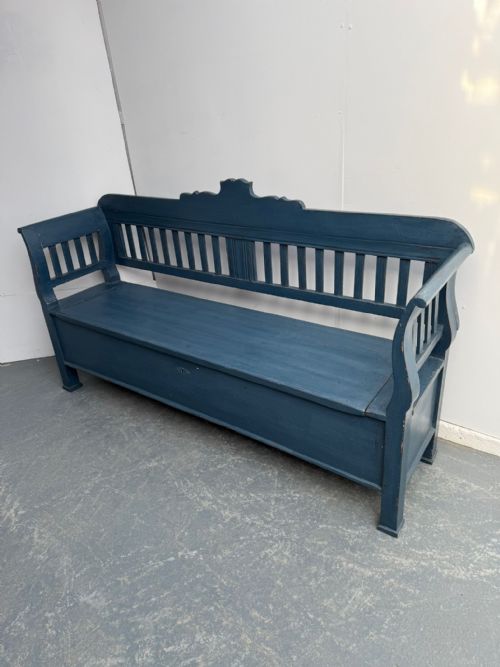
A painted pine hallway bench offers robust seating and useful storage, bringing practical vernacular character directly into an entrance space.
Painted Pine Hallway Bench
A painted pine hallway bench is a practical and enduring seating form found across various European and British rural traditions. Buyers searching for a painted pine hallway bench encounter numerous examples originating from Hungary, Sweden, Wales, and England, spanning from the Georgian period through to the late nineteenth century.
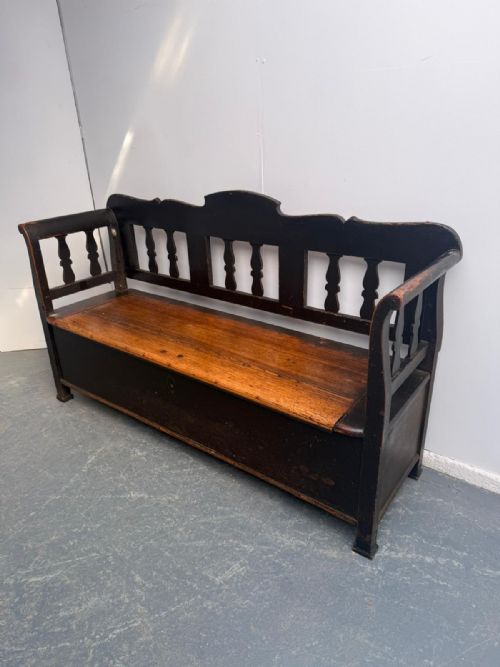
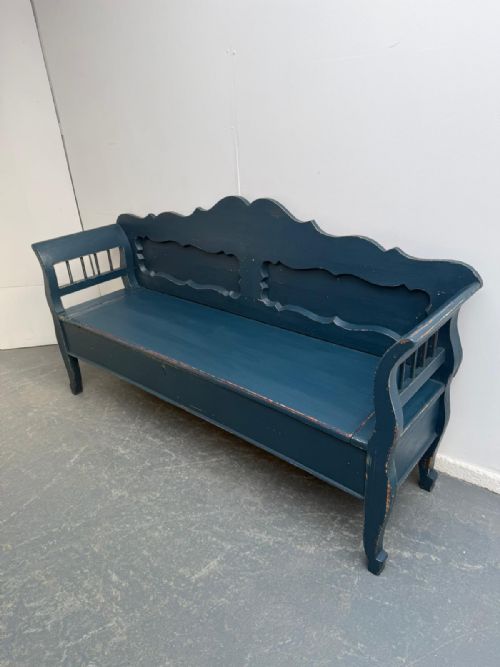
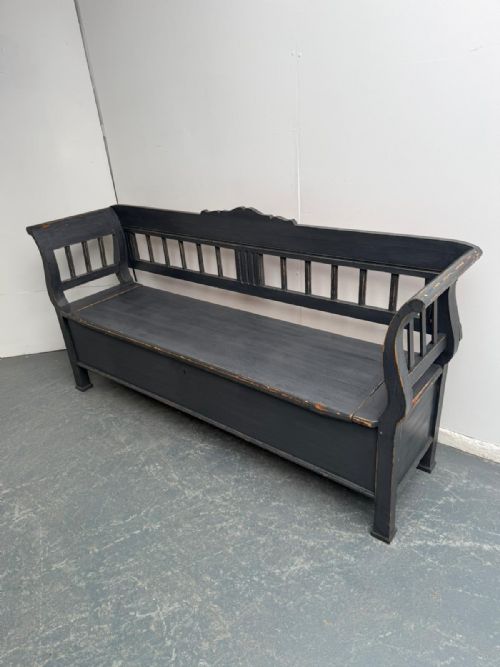
The selection ranges from simple open benches and long dining forms to high-backed box settles that double as storage chests. Many pieces retain original painted surfaces in colours such as blue, grey, black, and cream, displaying the honest wear of domestic or communal use.
Originating in farmhouses, taverns, and chapels, these sturdy wooden items provide narrow profiles well-suited for hallways and passageways. Some variations incorporate lidded compartments beneath the seat, while others present high panelled backs designed to block cold draughts.
Materials and construction
Makers built these pieces primarily from solid timber, utilising pine planks joined with pegged mortise and tenon construction or simple iron hardware. The underlying wood shows the grain and knots characteristic of conifer species shaped by hand or early mill tools.
Surfaces were traditionally finished with lead-based or oil paints applied over bare timber, often acquiring layers of patina and crackle through decades of re-decoration. Additional details such as ceramic elements or fabric components occasionally appear alongside metal hinges and brackets.
Materials recorded across the inventory include pine, timber, paint, iron, metal, ceramic, and fabric, forming bench and settle formats alongside luggage stands.
Judging quality and character
Quality in these pieces rests on the survival of original decorative paintwork rather than a pristine, modern factory finish. Examples retaining their untouched early pigment command greater interest than those stripped down or heavily over-painted at later dates.
Structural integrity and proportion also distinguish better examples, particularly where panelled backs, integrated box storage, and original ironwork remain intact without excessive timber replacement. The charm of regional folk art traditions shines through in the individual brushwork and local joinery methods peculiar to each country of origin.
The Painted Pine Hallway Bench Glossary
- Settle
- A wooden bench with a high back, solid arms, and often a hinged seat concealing a storage box beneath. This traditional form kept draughts away from people sitting near open hearths.
- Box settle
- A specific variant of the settle featuring an enclosed compartment under the seat accessed by lifting the lid. It served double duty as a chest for blankets or household stores.
- Folk art
- Decorative and utilitarian objects made within a regional tradition by self-taught or local artisans. The style prioritises practical utility and local aesthetic preferences over academic design rules.
- Patina
- The surface texture, sheen, and colour changes developed by wood and paint over many years of handling and exposure to light. It serves as a visual indicator of genuine age and continuous use.
Painted Pine Hallway Bench: Frequently Asked Questions
Where should I place a painted pine bench?
These pieces fit naturally into narrow entrance halls, boot rooms, and passageways where seating and low-profile furniture are required.
Their robust construction handles daily use, while the built-in storage versions help keep footwear and accessories out of sight.
How do I care for the painted surface?
Protect the original finish by dusting gently with a dry, soft cloth and avoiding harsh chemical cleaning agents or excessive moisture.
Keeping the timber away from direct heat sources and strong sunlight prevents the historic paint from drying out, cracking, or fading further.
Are these benches comfortable to sit on?
Most historic styles feature rigid wooden seats and upright backs designed for practical utility rather than lounging.
Adding a simple loose cushion or pad allows you to soften the seat while preserving the underlying wooden structure.
How can I tell if the paint is original?
Original finishes typically exhibit natural wear, subtle crazing, and multiple micro-layers that reveal themselves around edges and high-touch areas.
Fresh, uniform modern paint applied uniformly across all surfaces usually indicates a later decoration rather than an untouched historic finish.