
Victorian Wooden Settle Bench
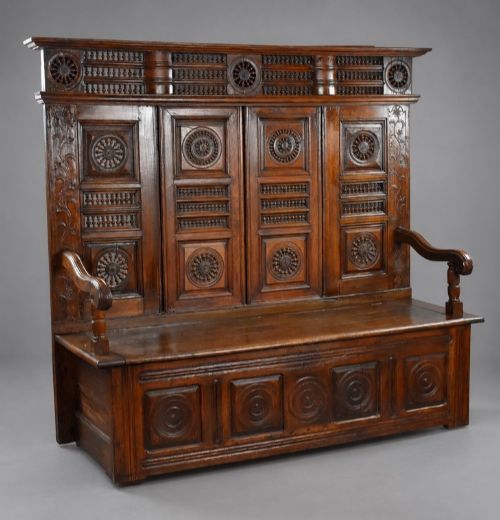
A victorian wooden settle bench brings heavy timber seating and enclosed storage from nineteenth-century halls and country houses into modern rooms.
Victorian Wooden Settle Bench
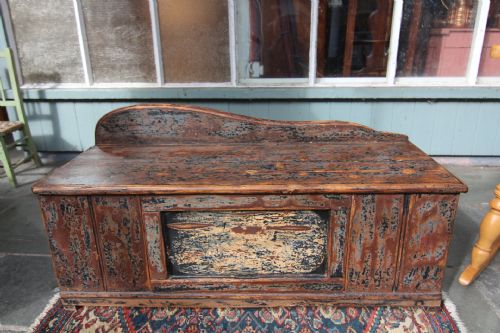
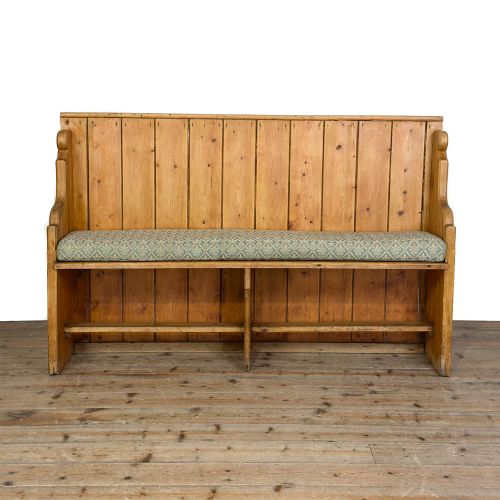
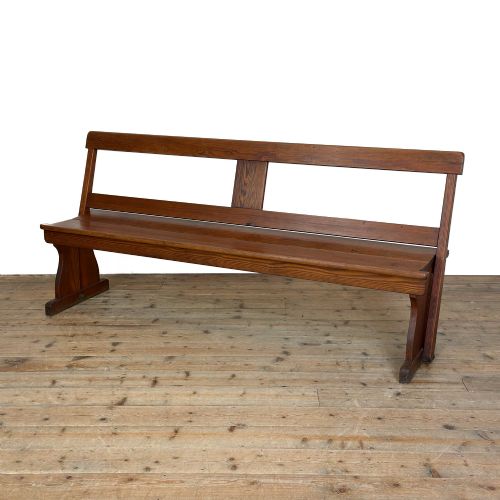
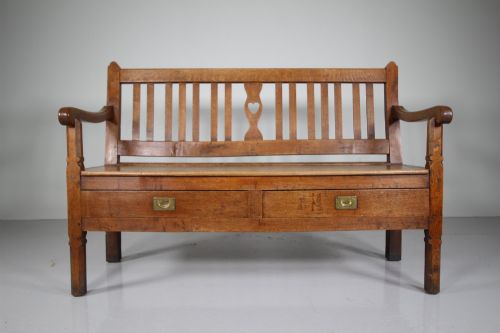
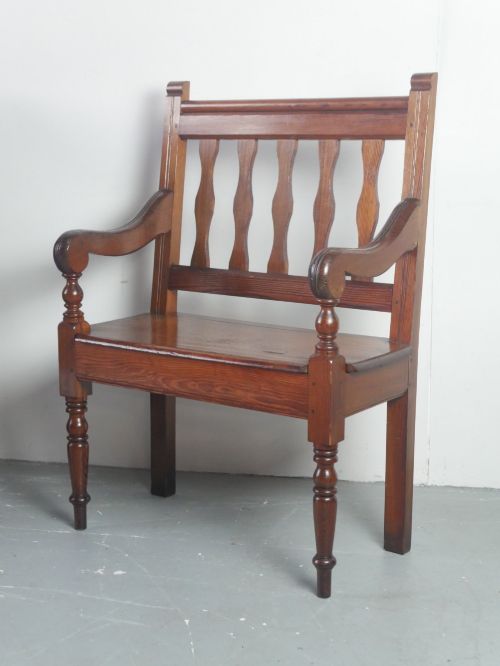
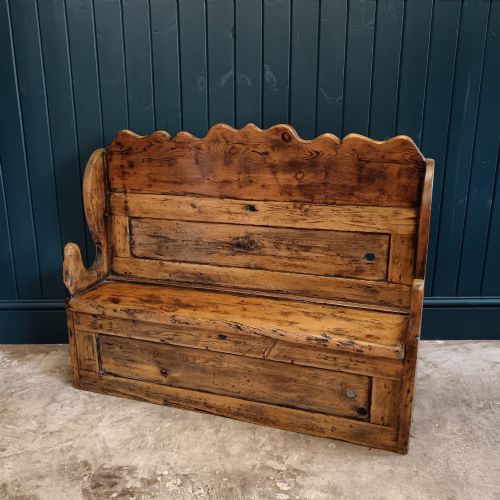
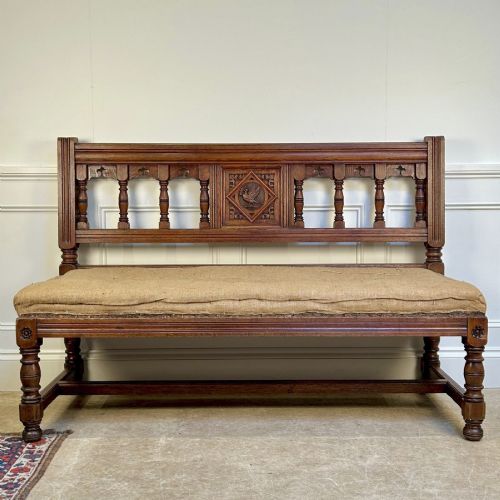
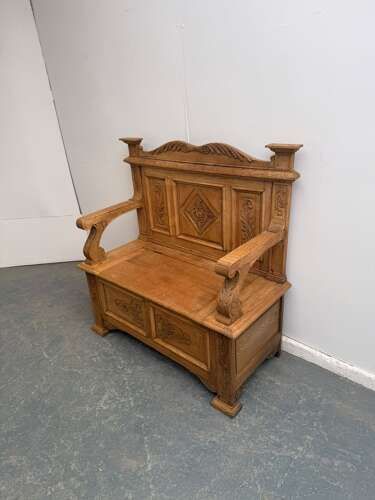
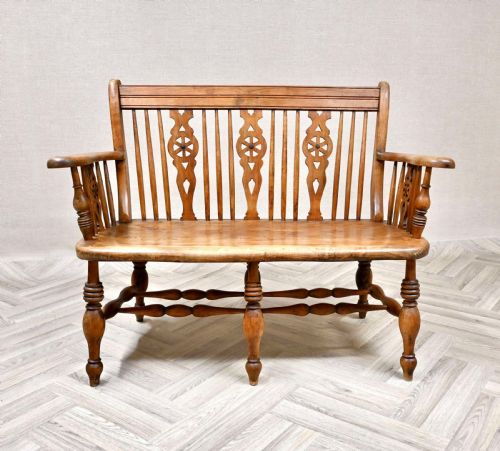
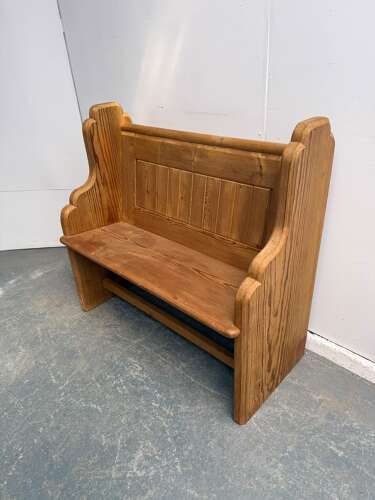
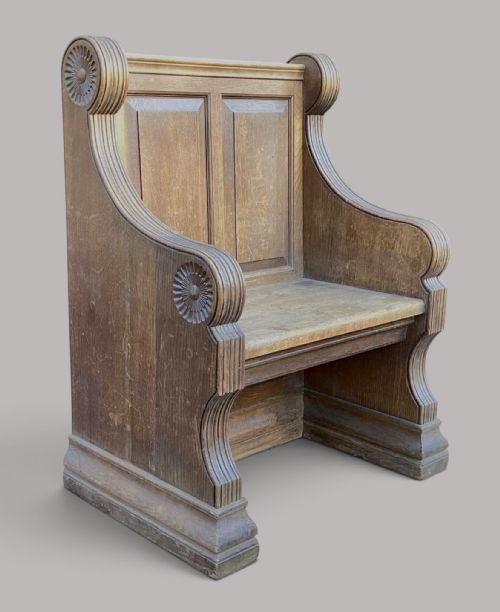
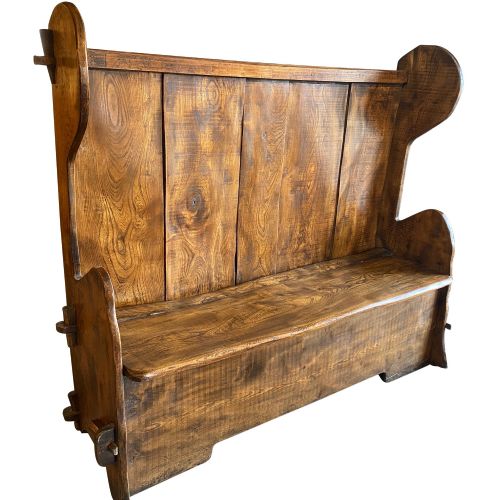
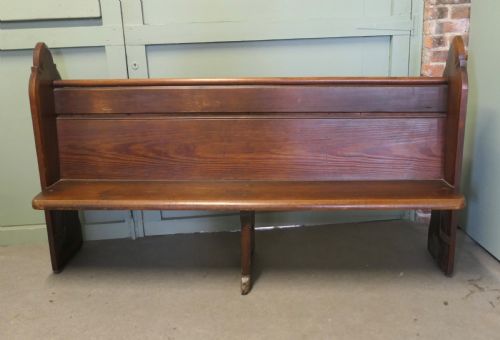
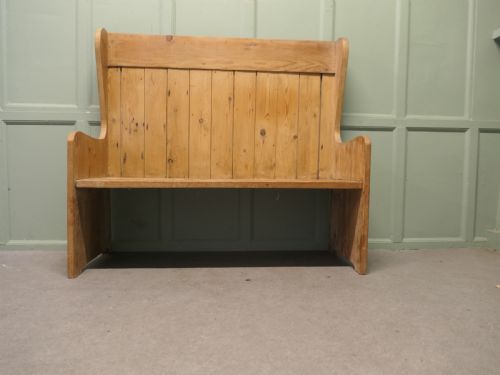
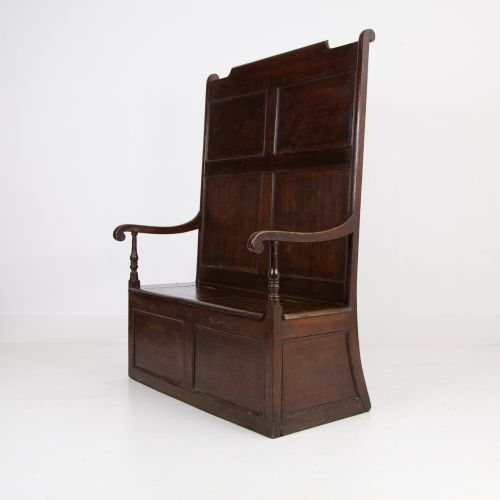
A victorian wooden settle bench takes several forms across nineteenth-century styles, appearing as high-backed fireside seats, box settles with storage beneath the seat, and architectural hall benches. Buyers encounter regional variations ranging from English oak and pine church pews to painted Hungarian pieces and Welsh heart-carved examples.
Makers and workshops constructed these benches for specific domestic and institutional settings, including farmhouses, country houses, chapels, and waiting rooms. The inventory spans simple planked pine seating as well as heavily carved Gothic Revival and Jacobean Revival designs.
How They Were Made
Cabinet makers and vernacular joiners built these benches primarily from solid timber such as oak, pine, pitch pine, elm, and walnut, frequently utilising traditional panel construction and dovetail joints for durability. Surfaces show wax finishes, natural grain patination, or historic layers of blue, grey, cream, and black paint.
Structural elements include high panelled backs designed to block draughts in farmhouse kitchens and hallways, hinged seats opening to storage boxes, and turned or spindled supports. Secondary materials such as brass, iron, leather, and fabric appear on hinges, brackets, and occasional upholstered inserts.
Periods represented span the early nineteenth century through the Edwardian era, incorporating Gothic, Jacobean, and Arts and Crafts styles.
What Varies in Quality
Quality rests upon the integrity of the original timber construction and the crispness of hand-carved architectural details, distinguishing provincial utility pieces from fine cabinet work. Original painted surfaces and untouched wax patination hold greater distinction than stripped or heavily restored timber.
Proportion and scale dictate the success of the piece within an interior, separating balanced hall seats from awkward domestic conversions. The retention of original storage compartments, hinges, and structural bracing marks superior craftsmanship.
Gillows
The Victorian Wooden Settle Bench Glossary
- Settle
- A wooden bench with a high back, solid arms, and often an enclosed box base for storage. It was traditionally placed near the hearth to keep out draughts.
- Box settle
- A variant featuring a hinged seat lid that opens to reveal a deep storage well beneath. These pieces doubled as seating and linen chests in domestic spaces.
- Church pew
- A long wooden bench designed for ecclesiastical interiors, constructed from pine or oak with open or panelled ends. Many found their way into domestic hallways.
- Gothic Revival
- A nineteenth-century design style drawing on medieval architecture. Pieces display pointed arches, tracery panels, and heavy carved mouldings.
- Panelling
- Framework constructed from vertical stiles and rails enclosing flat or raised wooden boards. It forms the structural backs and sides of finer settles.
Victorian Wooden Settle Bench: Frequently Asked Questions
Where were settles placed in homes?
These benches traditionally stood in entrance halls, passages, and beside farmhouse fireplaces where high wooden backs protected occupants from cold draughts. Their enclosed bases also provided practical storage for boots, blankets, and household goods.
Today, they serve similar functions in modern boot rooms, kitchens, and hallways, offering both a sturdy seat and concealed storage space.
How do I care for waxed pine furniture?
Maintain waxed pine surfaces by dusting regularly with a soft cloth and applying a traditional beeswax polish sparingly when the wood appears dry. Avoid placing timber furniture near direct heat sources or in damp conditions to prevent warping.
Gentle care preserves the natural grain and builds a deeper patina over the decades without damaging the historic finish.
How can I tell the period of a wooden bench?
Dating relies on examining construction marks, timber species, tool evidence, and stylistic details such as Gothic revival carving or vernacular turned spindles. Nineteenth-century examples often display hand-cut joinery and authentic surface wear.
Comparing the proportions and wood patination with documented pieces helps confirm whether a bench dates to the Victorian era or later revival periods.