

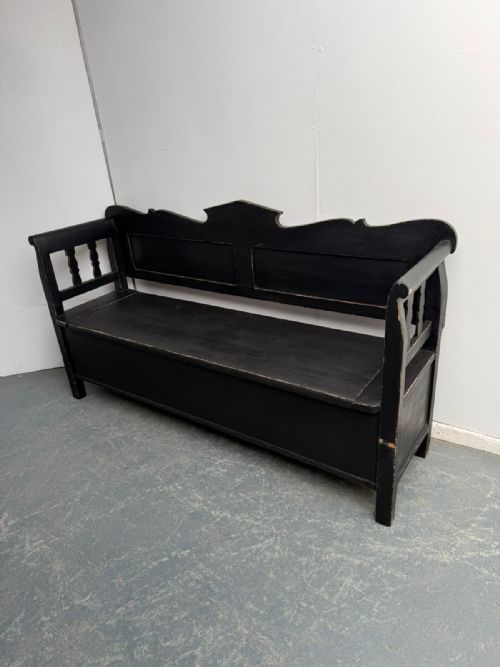

Hungarian Storage Seat
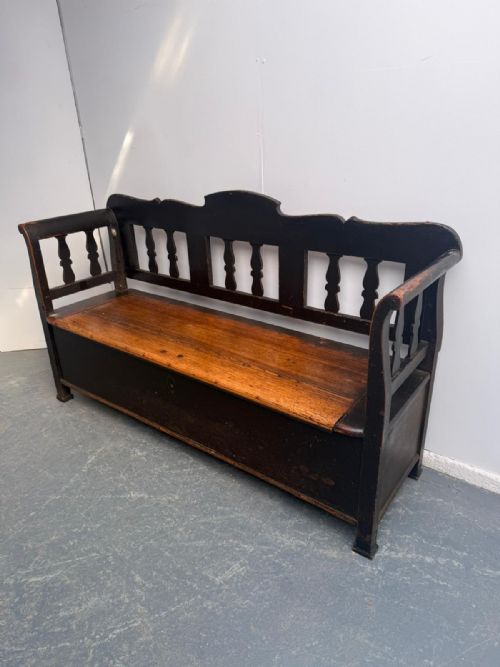
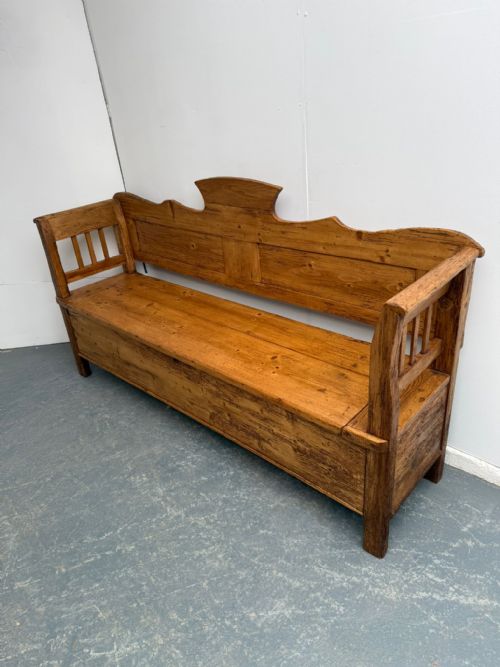
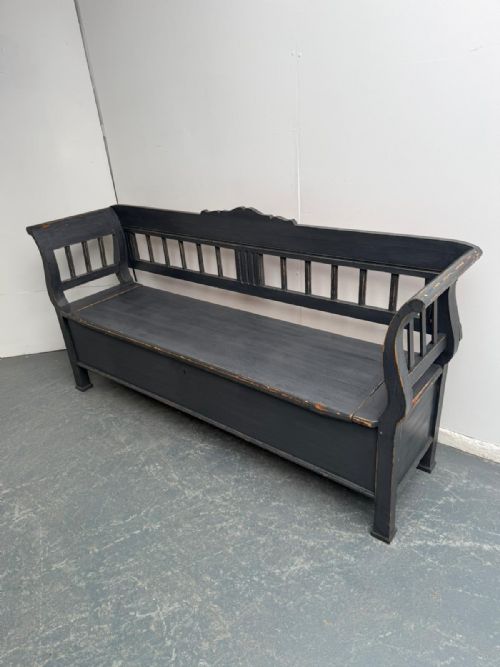
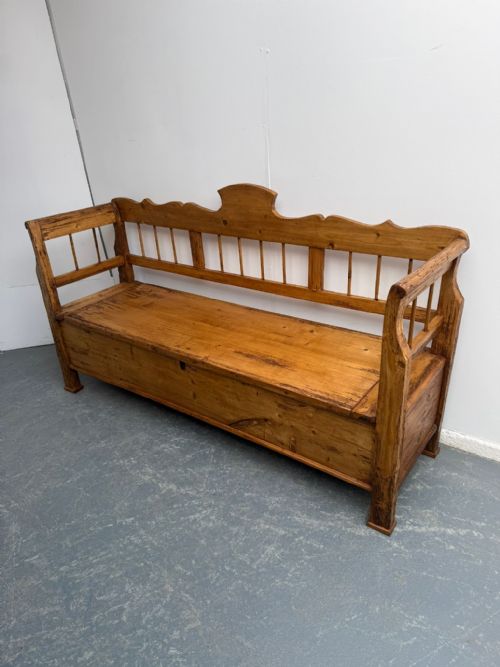
These Hungarian antique storage seat pieces offer rustic utility and folk charm, combining practical chest space with traditional timber seating for any rustic interior.
Hungarian Storage Seat
When you search for a Hungarian antique storage seat, you are looking at substantial country seating designed to hold household goods inside the base. These traditional items double as robust benches and settles, providing both a place to sit and a concealed compartment beneath the seat.
The versions you are most likely to meet on this page hail from the Victorian and Georgian periods. They take the form of wooden benches and box settles constructed for everyday domestic life in European country settings.
Originating from Hungary and broader continental regions, these pieces display regional folk art traditions through their construction and finish. They range from open three-seater benches to enclosed box settles with high backs and integrated storage.
How they were made
Carpenters built these items using solid pine, shaping heavy timber planks to form sturdy frames that could withstand heavy daily use. Traditional joinery methods secured the backrests, armrests, and deep box bases together without modern fixings.
Surface treatments define the aesthetic of these items, utilising layers of traditional paint in shades of black, grey, and blue alongside simple wax finishes. Iron hardware frequently appears on hinges and structural supports, adding functional strength to the pine framework.
Some of these stout pine settles survived generations of farmhouse gossip, muddy boots, and hidden children playing silent games of hide-and-seek.
What varies in quality
The distinction between standard examples and superior items rests on the originality of the surface and the integrity of the timber. Pieces retaining their early painted finishes in colours like grey, black, or blue hold greater visual interest than those stripped down or heavily restored.
Proportion and structural form also drive the hierarchy, with enclosed box settles and multi-seater benches demonstrating more complex vernacular carpentry. The presence of original iron hardware and untouched waxed pine surfaces further elevates the character of a piece.
The Hungarian Storage Seat Glossary
- Box settle
- A wooden bench featuring a high back and a concealed storage compartment beneath the hinged seat. This form protected sitters from draughts in traditional farmhouses.
- Pine
- A softwood commonly utilised in European country furniture for its accessibility and workability. It accepts wax and paint finishes readily.
- Folk art
- Artistic work created within a traditional culture, reflecting regional styles rather than academic training. Hungarian folk art pieces display distinct local decorative characteristics.
- Waxed finish
- A protective coating applied to timber to nourish the wood and impart a soft sheen. This treatment highlights the natural grain of the pine.
Hungarian Storage Seat: Frequently Asked Questions
What is a Hungarian storage seat?
A Hungarian storage seat is a traditional wooden bench or box settle originating from Hungary, featuring an integrated compartment beneath the seat for domestic storage.
These pieces combine practical utility with folk art aesthetics, serving as both seating and furniture for holding household items.
How were these benches used?
In traditional rural homes, these pieces provided communal seating around the hearth or dining table while keeping blankets, textiles, or provisions tucked safely away inside the base.
The high backs on the settle variants also helped shield inhabitants from cold draughts in simply constructed rooms.
How do I style a pine settle?
A pine settle works well in hallways, kitchens, or living spaces where its rustic presence can anchor the room. You can soften the wooden seat with simple textiles or cushions that complement the painted or waxed finish.
The internal storage compartment remains fully functional for modern use, offering a convenient place to stow clutter.
How do I date a Georgian bench?
Dating these items involves examining the construction methods, timber patination, and style of the piece against known historical periods. Georgian examples display earlier vernacular joinery techniques and proportions distinct from later Victorian pieces.
The presence of original paint layers or early wax finishes also provides clues to the age and history of the timber.