
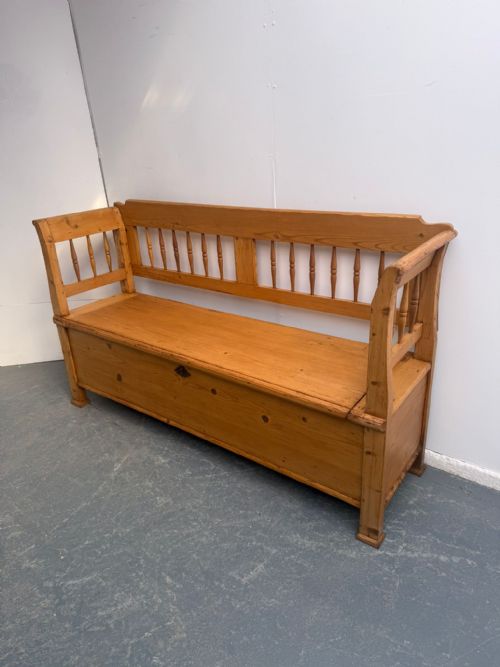

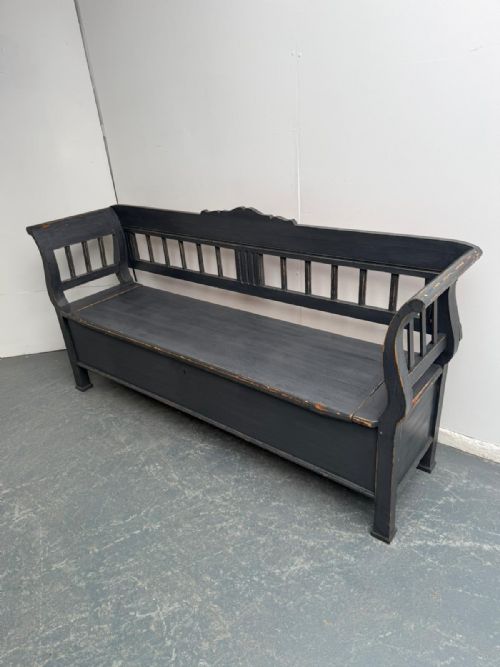

Victorian Storage Bench
A victorian storage bench provides a practical seat with a hidden compartment, combining hallway utility with period character.
How They Were Made
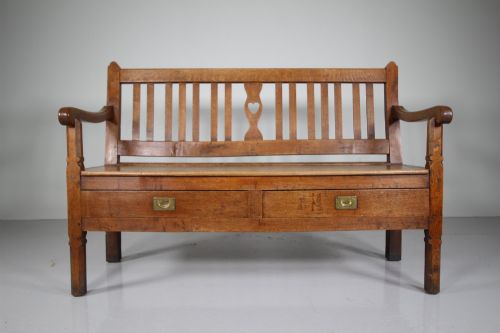
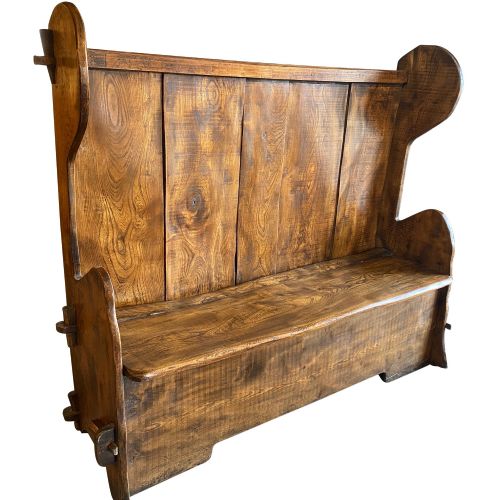
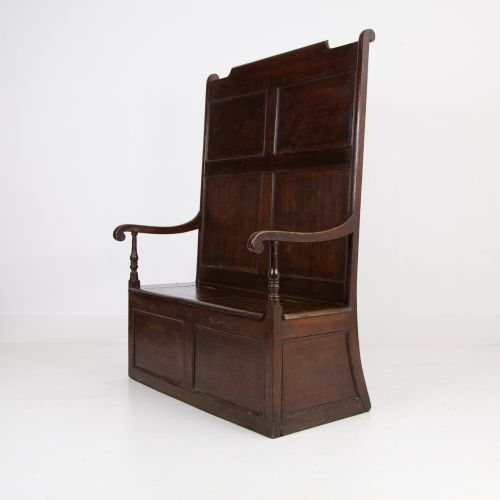
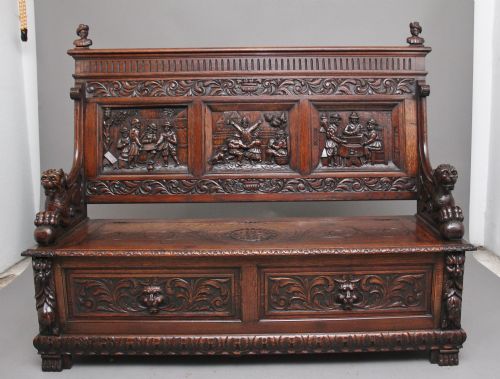
Carpenters constructed these benches using solid timbers like oak, pine and mahogany, joined with traditional framing and panel work. Many feature hand carving, turned elements and applied mouldings.
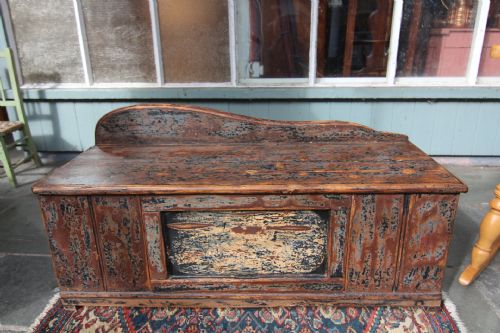
Hardware such as brass hinges, iron brackets and brass fixings secured the lifting seats and storage boxes. Finishes range from clear wax and polish to painted surfaces in grey, blue, black and cream.
What Varies in Quality
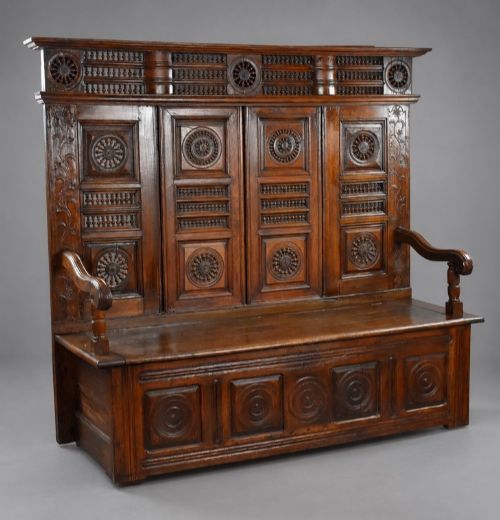
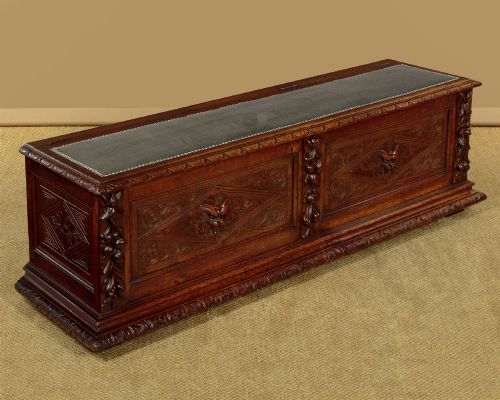
The depth and execution of the carved detail define the upper tiers of these benches, particularly on oak panelled and Gothic revival examples. Crisp, deeply undercut woodwork distinguishes superior cabinet work from simpler vernacular pieces.
Timber selection and structural integrity set pieces apart, from dense nineteenth century oak and mahogany to softer pine builds. Original hardware, undisturbed paint surfaces and intact interior storage compartments elevate the standing of a piece.
Listings feature nineteenth century oak, pine and mahogany alongside painted Hungarian pine variants.
Hallett & Sons
The Victorian Storage Bench Glossary
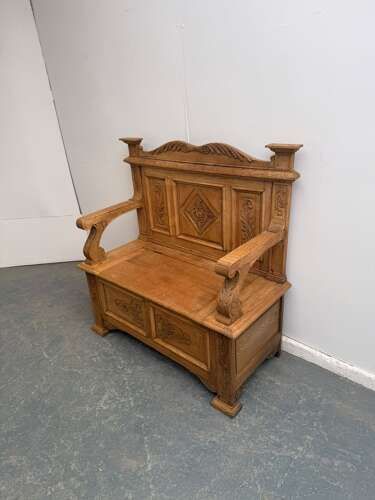
- Settle
- A wooden bench with a high back, solid arms and a box seat for storage. These pieces typically stood in draughty halls near hearths.
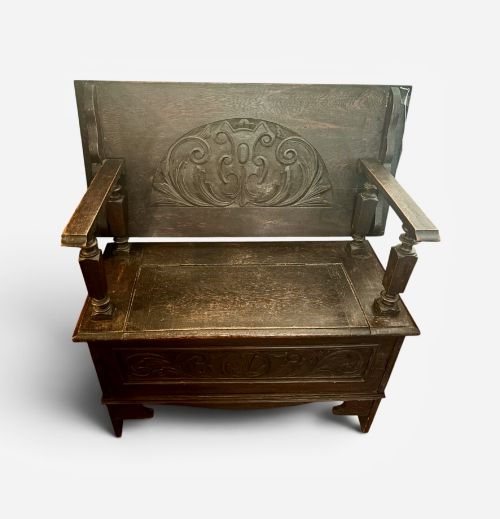
- Monk's bench
- A multi-functional seat featuring a hinged back that folded down to form a table. This form combined a table and a storage box in one piece.
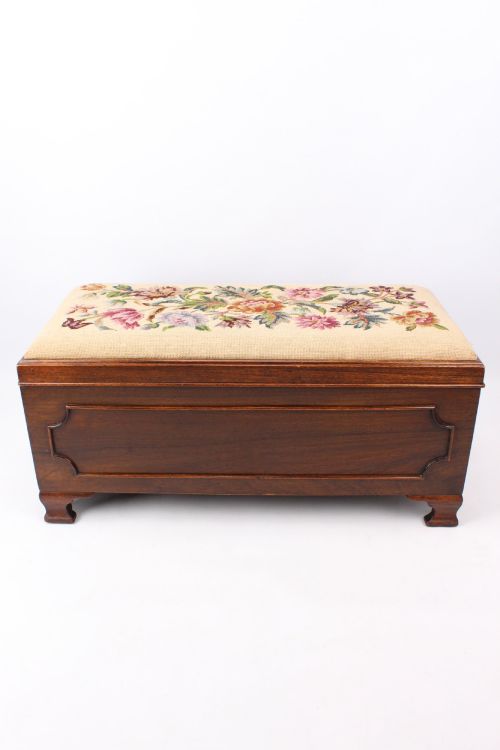
- Ottoman
- An upholstered seat or box without a back, used for storage. Versions from the period often included needlework or leather tops.
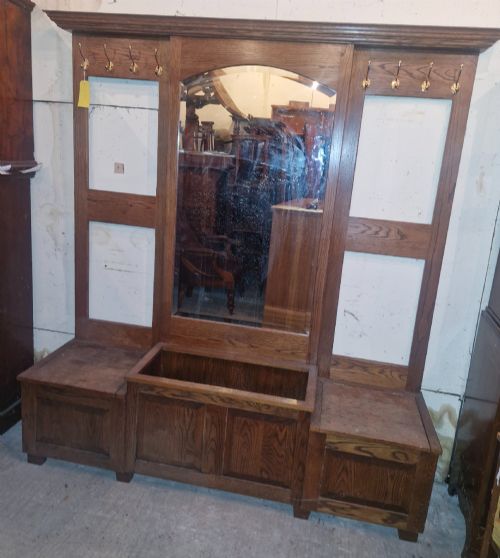
- Hall bench
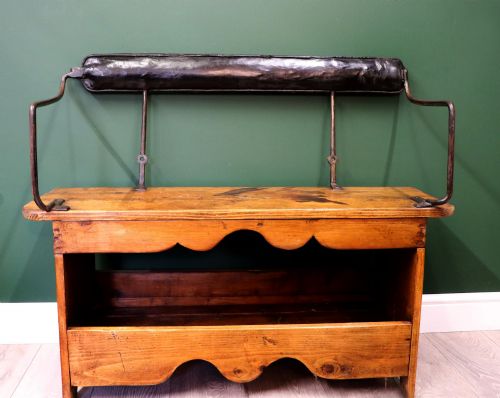
- A narrow seat placed in an entrance hallway for putting on shoes. They frequently incorporated coat hooks, umbrella stands and lift-up storage compartments.
- Revival
- A design style that resurrects historic aesthetics such as Gothic, Jacobean or Renaissance forms. Makers applied these historical motifs to nineteenth century furniture.
Victorian Storage Bench: Frequently Asked Questions
Where should I place a storage bench?
These benches suit entrance halls, boot rooms and large landings where footwear and blankets require concealment. Their narrow profiles allow placement against walls without blocking walkways.
Positioning them away from direct heat sources prevents the timber from warping and protects original wax or painted finishes.
How do I care for the wood?
Maintain waxed oak and pine surfaces by applying a traditional beeswax polish occasionally. Buffing with a soft cloth removes dust and preserves the sheen.
Avoid using wet cloths on historic timber and keep painted surfaces dry to prevent flaking or bubbling of the original finish.
Are these pieces comfortable for daily sitting?
Wooden hall benches and settles provide firm, upright seating intended for short periods while removing boots. Upholstered ottomans offer softer padded surfaces suited for longer lounging.
Adding a loose cushion or pad enhances comfort on solid wooden seats without altering the structure.