





Three Seater Bench
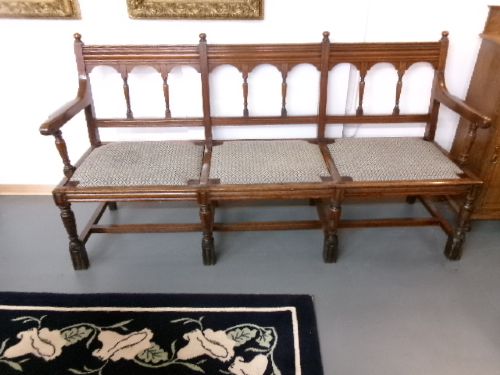
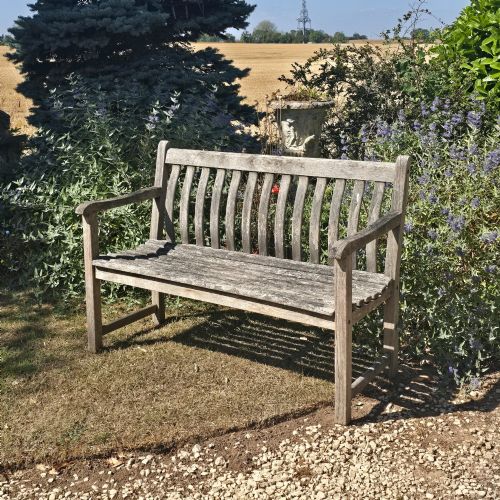
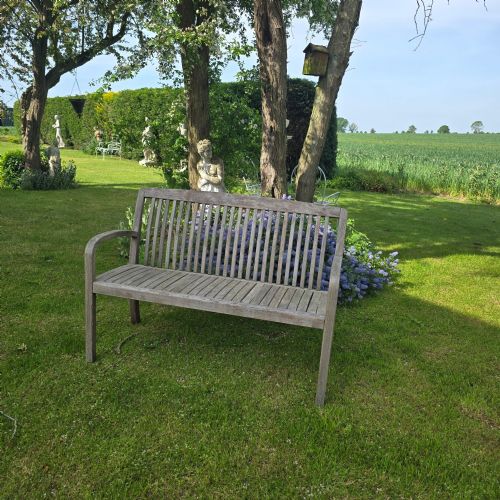
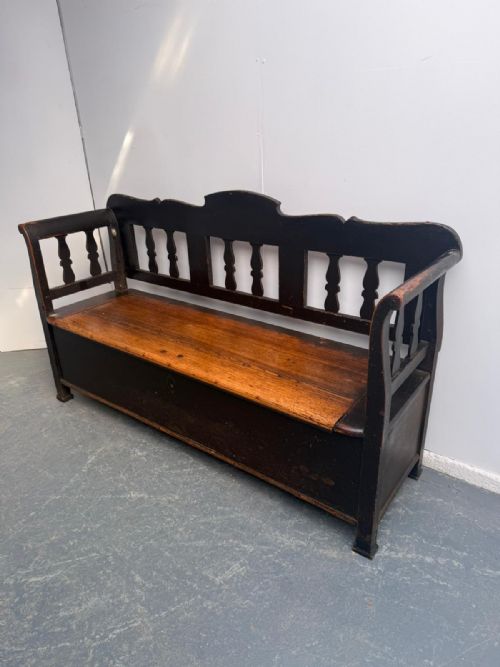
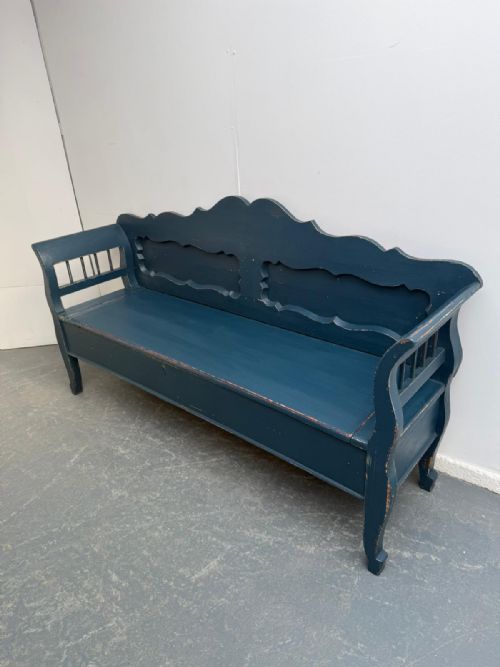
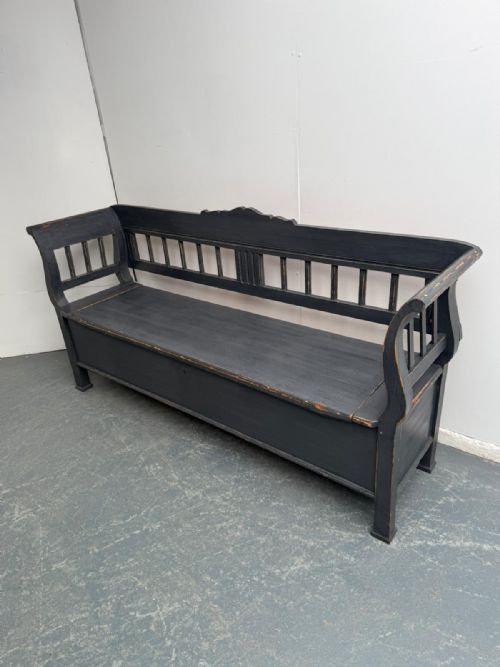
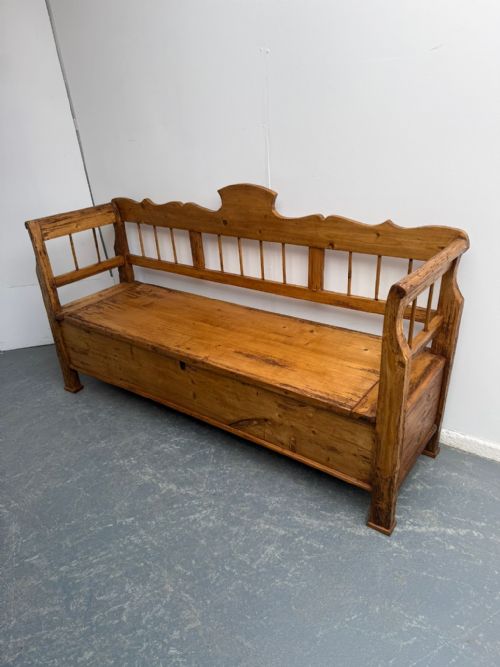
A three seater bench offers ample seating across diverse styles, ranging from weathered garden teak to painted Hungarian pine and nineteenth century walnut.
Three Seater Bench
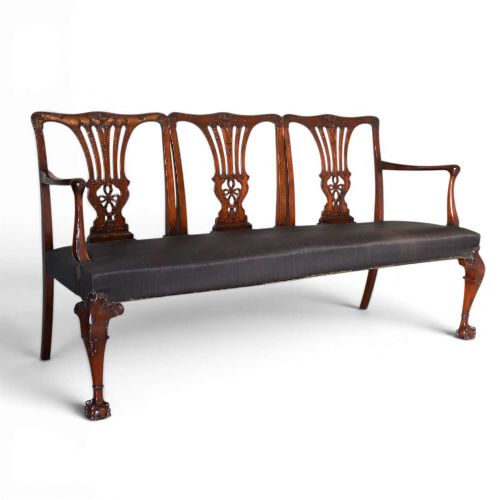
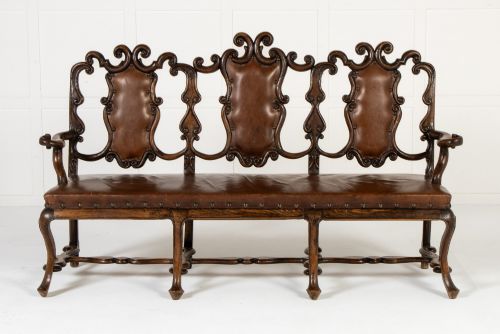
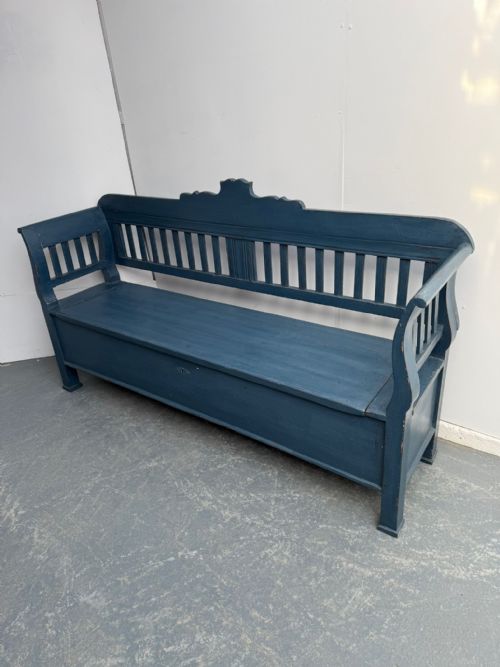
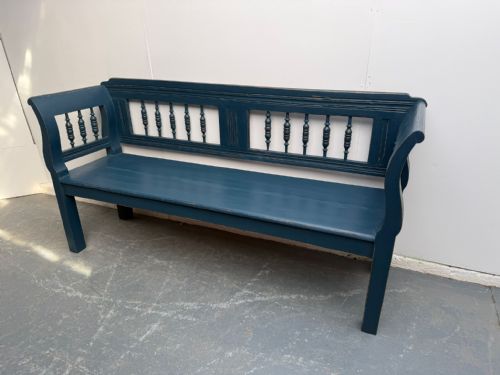
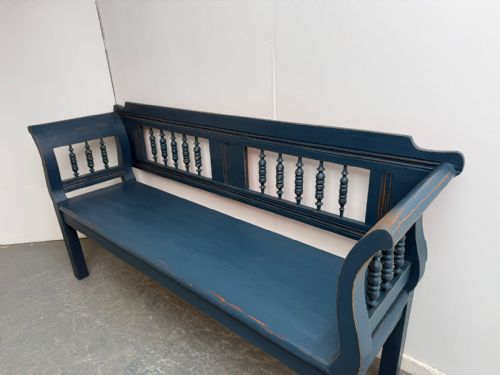
The most common forms on this page include Hungarian folk art painted pine benches, box settles, and weathered teak garden benches. You also find refined mahogany and walnut settees stemming from nineteenth century and Edwardian workshops.
Origins stretch across English country houses, French salons, and Hungarian rural traditions, providing distinct regional interpretations of long seating forms. Buyers select these benches to anchor a room or garden scheme with historical character.
How they were made
Makers utilised solid timbers such as pine, walnut, teak, and mahogany, often shaping them with hand tools appropriate to their period. Pine pieces frequently display historic painted finishes in blue, black, or grey, while hardwood frames showcase carved details.
Upholstered variations incorporate fabric and linen over internal padding, sometimes paired with brass details. Garden pieces rely on durable timbers like teak that withstand weathering outdoors over decades of use.
Three Seater Bench Retail Price Guide 2026
Typical asking prices for three seater bench among the pieces listed under this phrase on Sellingantiques today, from the lower quarter to the upper quarter. They describe what is for sale here now, not the wider market.
Listings feature pieces spanning the Georgian, Victorian, and Edwardian periods, alongside 1930s garden furniture.
What varies in quality
Quality separates through the integrity of the timber and the retention of original surface treatments, such as early paint layers or waxed pine patination. Pieces retaining their structural joinery without excessive replacement parts command greater appreciation.
The sophistication of the carving and upholstery execution also distinguishes simpler country pieces from refined revival examples like Edwardian Chippendale or Regency gilt frames.
The Three Seater Bench Glossary
- Settle
- A wooden bench with high back, solid arms, and often a storage box beneath the seat. This form protected sitters from draughts in older interiors.
- Box Settle
- A bench incorporating a hinged seat lid that opens to reveal a storage compartment. They were common in vernacular Hungarian and English interiors.
- Teak
- A dense, oil-rich tropical hardwood selected for garden furniture because it resists moisture and weathering. It ages to a silvered grey tone.
- Gilt Frame
- A wooden structural support covered in a thin layer of gold leaf or metallic gilt paint. This technique appeared on formal Regency settees.
Three Seater Bench: Frequently Asked Questions
Where should I place a three seater bench?
These benches suit large hallways, living rooms, and boot rooms depending on whether they are upholstered settees or wooden settles. Teak versions are built for garden lawns and patios.
Consider the depth and back height before positioning one against a wall or in an open hallway space.
How do I care for a painted pine bench?
Painted surfaces require gentle dusting with a dry cloth and protection from direct sunlight to preserve the pigment. Avoid chemical cleaners that lift historic paint.
Waxed pine surfaces benefit from occasional application of traditional beeswax to nourish the timber.
What is the difference between a settee and a settle?
A settle is traditionally constructed entirely from wood with a high back and solid arms, often featuring enclosed storage beneath. A settee typically includes upholstered seating and backrests.
Both forms accommodate multiple sitters but originate from different domestic traditions.
Can teak garden benches stay outside all year?
Teak naturally resists rot and moisture due to its dense natural oils, allowing it to remain outdoors through winter weather. The wood simply develops a silvered surface patina over time.
Covering the bench during severe weather helps prolong its structural condition.