
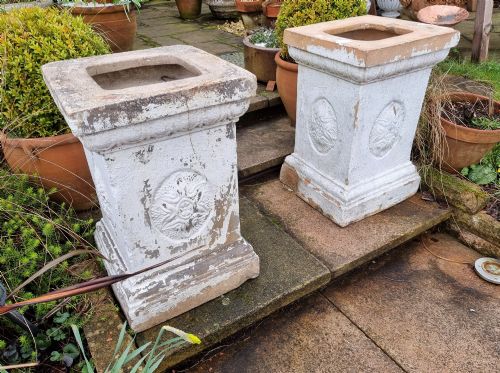
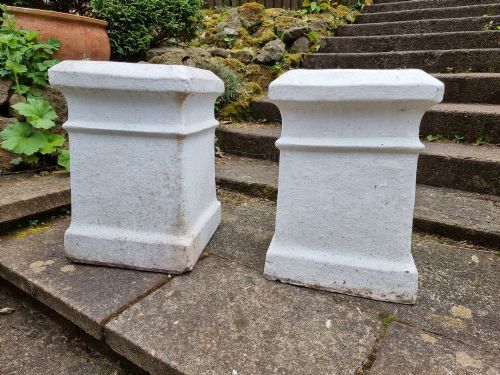
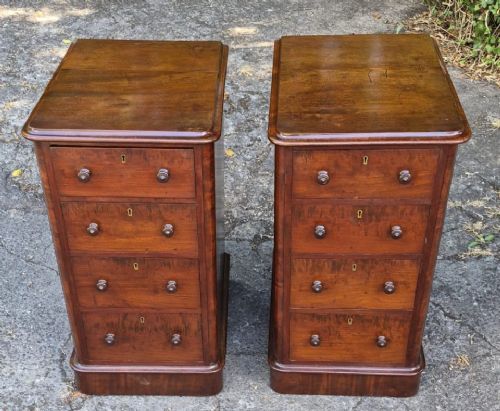
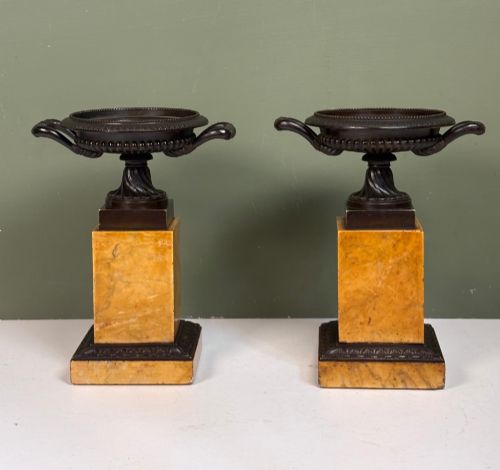
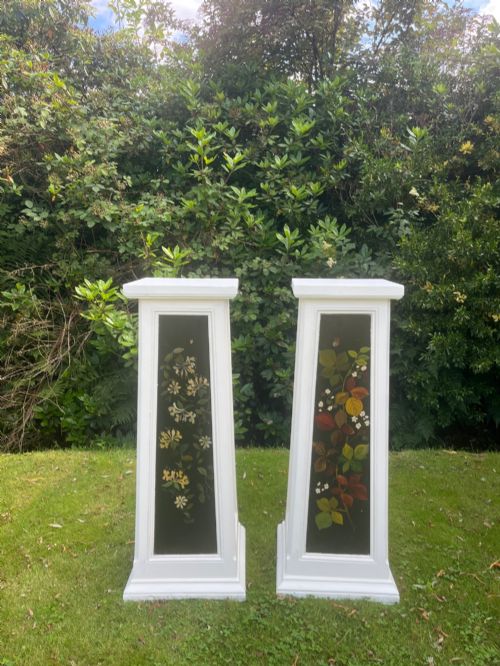
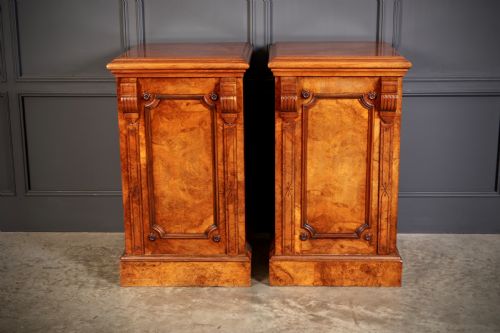
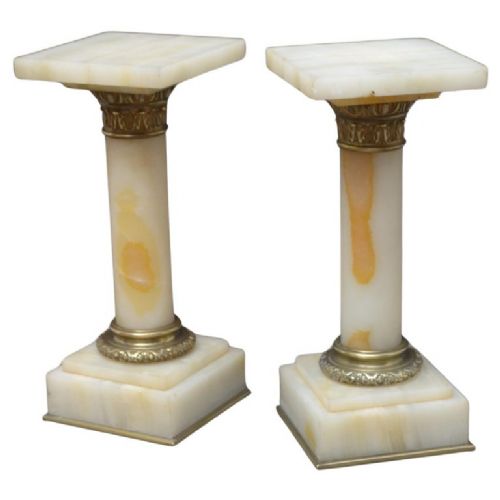


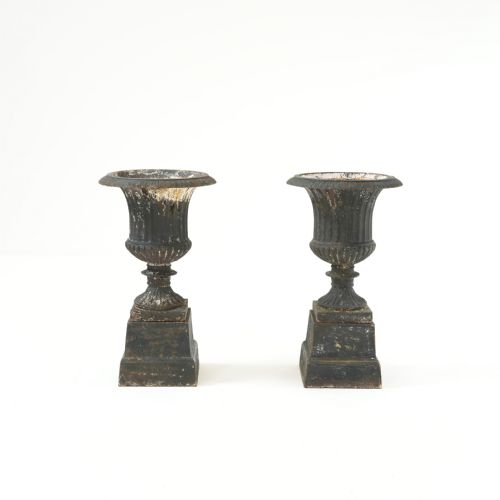


Pair Victorian Plinths
These pair victorian plinths elevate sculpture, plants and architectural ornaments within nineteenth-century interiors and gardens.
Pair Victorian Plinths
When you search for pair victorian plinths, you encounter architectural columns, pedestals, and display stands designed to support heavier decorative items. The material forms span nineteenth-century domestic furniture woods alongside cast iron and terracotta garden structures.
The domestic examples utilise timbers like mahogany, satinwood, walnut, and rosewood, taking the shape of bedside chests, cabinets, and tall columns. Garden and conservatory versions emerge in cast iron, stone, and glazed clay, taking the form of campana urns, planters, and classical columns.
Materials and construction
Makers constructed indoor supports using dense hardwoods including mahogany, oak, and amboyna, often enhanced with marquetry, gilding, or simulated marble paint finishes. Carving appears on timber columns and alabaster components, while cabinet pieces utilise figured veneers over solid carcases.
Outdoor iterations rely on durable metal and fired earth, casting iron into campana urns and garden columns, or moulding salt-glazed terracotta and clay. Marble and onyx sections provide stable top surfaces for torcheres and display columns.
Materials span wood, cast iron, marble, mahogany, brass, terracotta, and oak across nineteenth-century and early twentieth-century periods.
Craftsmanship and material selection
The distinction between standard utility items and exceptional pieces rests in the choice of raw materials and the precision of the carving. Finely figured timbers like amboyna or satinwood, matched with intricate carved detail, separate exhibition pieces from simple turned columns.
Structural integrity and the preservation of original painted or patinated surfaces govern the desirability of cast iron and stone examples. Castings with crisp relief detail and intact original paint demonstrate superior workshop standards.
Dunfermline Clay Company·Bright And Sons
The Pair Victorian Plinths Glossary
- Plinth
- A heavy rectangular or square base supporting a column, statue, or urn. They lift decorative objects to a prominent height.
- Torchere
- A tall stand designed to hold a lamp or candle, often utilised in nineteenth-century interiors as a display column. These slender supports frequently feature marble or onyx tops.
- Campana
- A bell-shaped garden urn profile derived from classical antiquity. These vessels appear frequently mounted upon iron or stone plinths.
- Alabaster
- A fine-grained, translucent stone utilised for decorative carvings and sculptural columns. Its softness allows for detailed figural work.
- Verde Antico
- A dark green serpentine marble, or simulated paint finishes mimicking it, popular during the nineteenth century for decorative columns.
Pair Victorian Plinths: Frequently Asked Questions
What were pair victorian plinths used for?
These supports elevated sculptures, urns, lamps, and botanical displays within nineteenth-century domestic rooms, halls, and gardens.
They provided balanced symmetry when used in pairs on either side of doorways, fireplaces, or architectural focal points.
How do I care for wooden pedestals?
Maintain timber surfaces by keeping them away from direct heat sources and sudden humidity changes that cause wood movement.
Dust with a dry cloth and apply occasional appropriate wax polish to preserve the finish of mahogany, walnut, and satinwood.
Can cast iron plinths stay outside?
Most cast iron garden urns and plinths withstand outdoor conditions, particularly when protected with appropriate historic paint coatings.
Inspect metal surfaces periodically for moisture exposure and treat any surface oxidation promptly to protect the original material.
How do I distinguish nineteenth century styles?
Review the decorative motifs, as neoclassical pieces favour classical urns and columns while Gothic Revival items display pointed arches and medieval detailing.
Consider the wood choice and construction methods, as walnut and mahogany cabinet pedestals differ significantly from cast iron garden structures.