


Gilt Mounted Column Stands
These gilt mounted column stands elevate sculpture and porcelain, offering sturdy vertical display rooted in nineteenth century classical design.
Gilt Mounted Column Stands
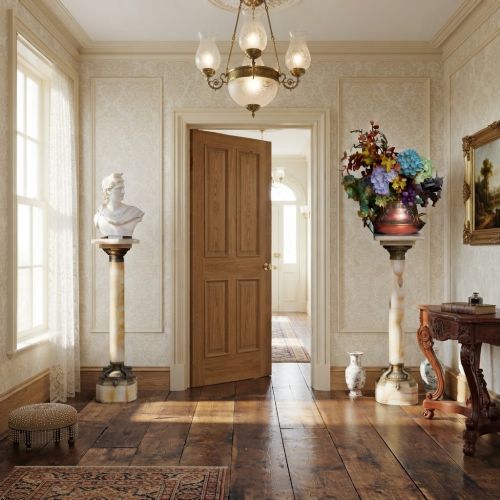
Gilt mounted column stands function as pedestals, plinths, and torcheres designed to elevate urns, busts, and decorative objects within a room. Buyers searching this phrase encounter nineteenth century examples that draw heavily on neoclassical, French Empire, and Rococo traditions.
The selections on this page span the Victorian and Edwardian eras, incorporating forms such as rotating stands and side tables alongside traditional columns. Most pieces serve as architectural accents that display decorative arts at eye level.
Originating largely from French and British workshops, these stands utilise column and pedestal silhouettes to anchor corners and focal points in period interiors. The forms range from slender single shafts to substantial paired columns.
How they were made
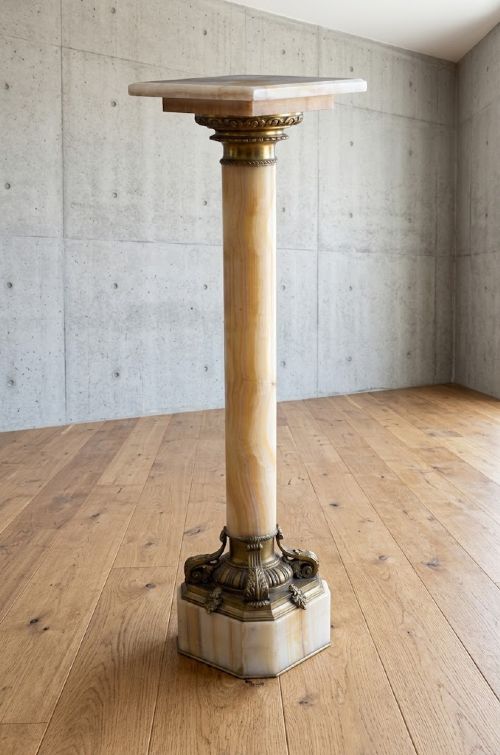
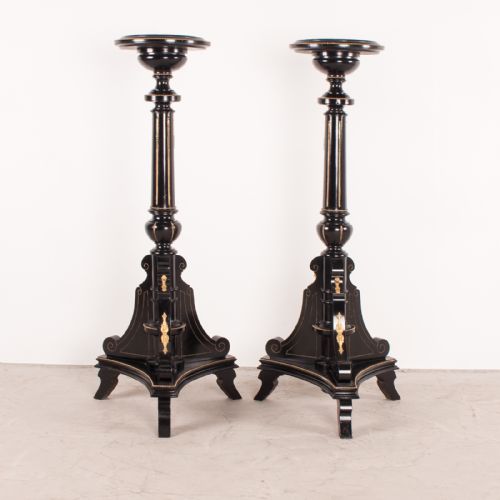
Maker workshops constructed these stands using dense core timbers including mahogany, walnut, ebonised wood, kingwood, and burr elm, frequently enhanced with parquetry or satinwood veneers. Artisans paired these woods with natural stone elements, mounting columns of onyx and marble atop structural bases.
Cast metal mounts in ormolu, gilt bronze, and brass accent the capitals, collars, and bases of the stone and wooden shafts. These metallic additions provide structural reinforcement and decorative detail that reflect French Napoleon III and Classical Revival aesthetics.
Several stands include rotating tops, allowing nervous hosts to spin valuable display pieces away from clumsy guests.
What varies in quality
Quality separates simple structural supports from highly decorative furnishing items through the precision of the cast metal mounts and the selection of materials. Richly figured stones like onyx and marble paired with heavy, finely chased ormolu mark the upper tier of production.
The complexity of the woodwork, such as intricate parquetry or elaborate turning on ebonised wood and kingwood, dictates the distinction between standard room furniture and exceptional exhibition pieces. Attribution to specific workshops also separates standard production from superior craftsmanship.
The Gilt Mounted Column Stands Glossary
- Ormolu
- A gilded bronze technique utilising mercury gilding, commonly applied to metal mounts on nineteenth century furniture and stands. This finish produces a bright metallic lustre that contrasts with dark woods and polished stone.
- Parquetry
- Geometric wood inlay forming patterned surfaces on tabletops and pedestals. Craftsmen arrange contrasting timber veneers to create decorative motifs.
- Torchere
- A tall stand or candlestick originally designed to hold a light source. In later periods, these tall forms function primarily as display pedestals for sculpture.
- Vernis Martin
- A simulated Japanese lacquer technique developed in eighteenth century France and emulated later. It imparts a glossy, translucent finish to wooden surfaces.
- Neoclassical
- A design style drawing inspiration from classical antiquity, featuring symmetrical columns and restrained ornamentation. This aesthetic dominates many nineteenth century architectural stands.
Gilt Mounted Column Stands: Frequently Asked Questions
What is the difference between a pedestal and a torchere?
Pedestals typically feature a flat top designed to support heavy marble busts, bronze figures, or decorative urns. Their proportions are stout and stable to bear significant weight.
Torcheres traditionally present a taller, more slender profile derived from antique lighting stands. They suit lighter display objects and occupy less floor space.
How do I place a column stand in a room?
These stands anchor empty corners, frame doorways, or occupy spaces between windows where vertical architectural interest is needed. Placing them away from heavy foot traffic protects delicate stone and gilt mounts.
Pairing matching columns on either side of a fireplace or console creates symmetry. Placing a single stand in a corner highlights a specific bronze or ceramic piece.
How do I date a nineteenth century stand?
Dating relies on identifying the prevailing stylistic vocabulary, such as French Rococo curves or severe neoclassical column forms. Material combinations like ebonised wood with gilt bronze point toward Napoleon III production.
Secondary indicators include construction methods, timber choice, and the casting quality of the ormolu mounts. Edwardian pieces often display slightly lighter proportions than their heavy Victorian counterparts.
How do I care for stone and wood stands?
Marble and onyx surfaces require gentle cleaning with a damp cloth, avoiding acidic substances that etch polished stone. Wood elements benefit from occasional waxing appropriate to the specific timber finish.
Protecting the gilt bronze or ormolu mounts from abrasive cleaners preserves the metallic surface. Maintaining stable room humidity prevents the timber from splitting around stone inserts.