


Pair Silver Serving Spoons
When you search for pair silver serving spoons, you uncover matched sets designed for dishing up meals with historical elegance.
Pair Silver Serving Spoons
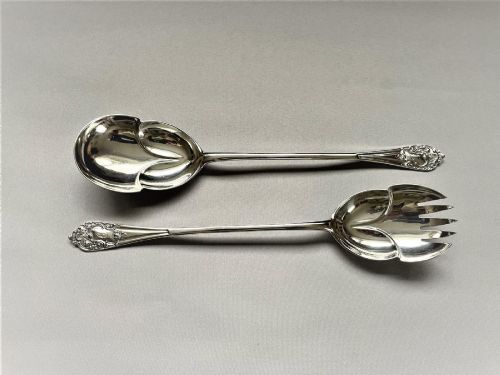
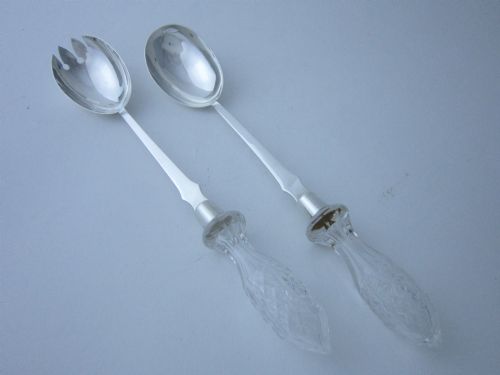
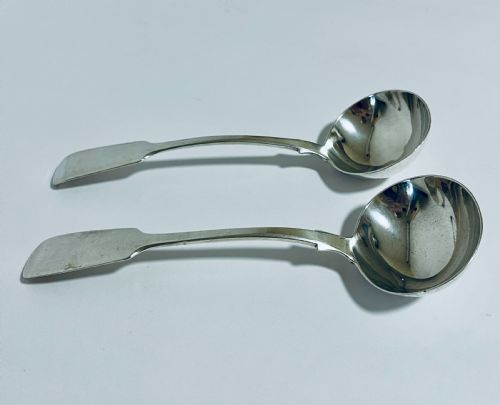
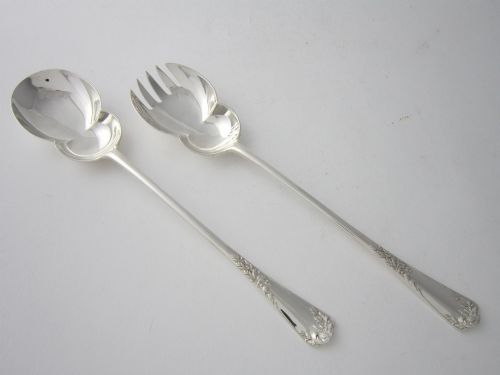
Buyers looking for pair silver serving spoons examine utilitarian and decorative tableware originating from the eighteenth, nineteenth, and early twentieth centuries. These encompass specialised forms like berry spoons, salad servers, basting spoons, ladles, and fruit sets.
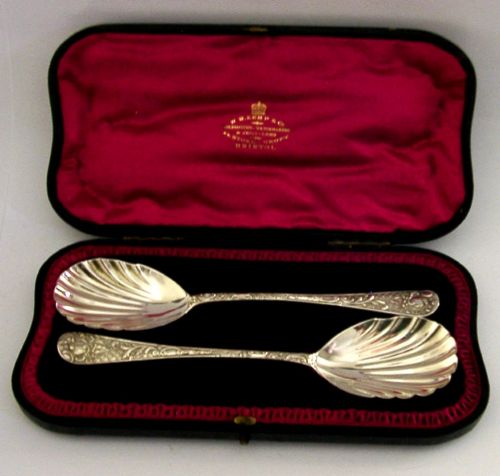
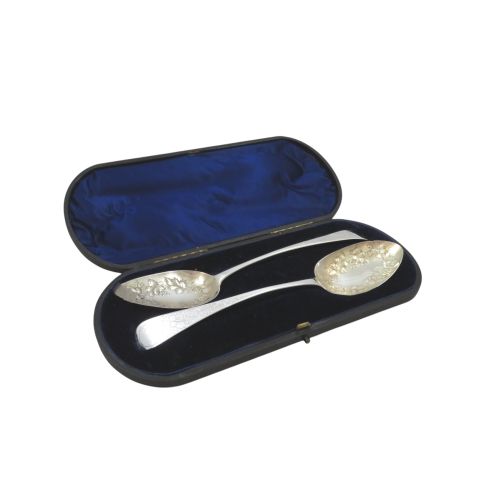
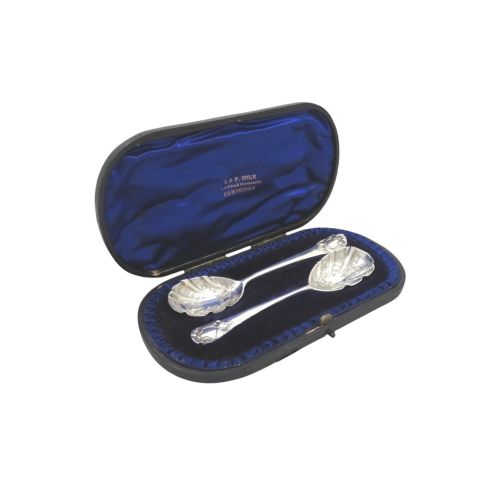
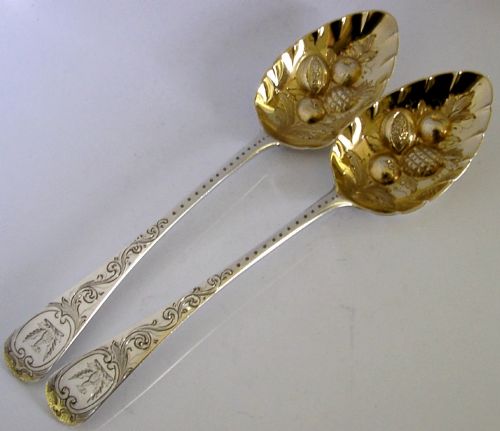
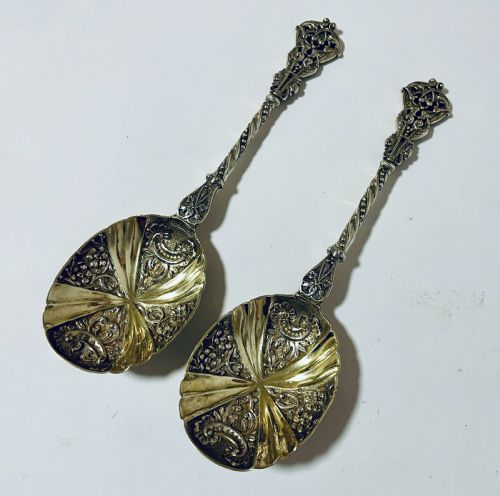
The selections encountered most frequently on this page date from the Georgian, Victorian, and Edwardian eras, often accompanied by fitted presentation cases lined in velvet, silk, or satin. Many pieces display family crests, engraved handles, or ornate repoussé fruit and bird motifs added during later Victorian modifications.
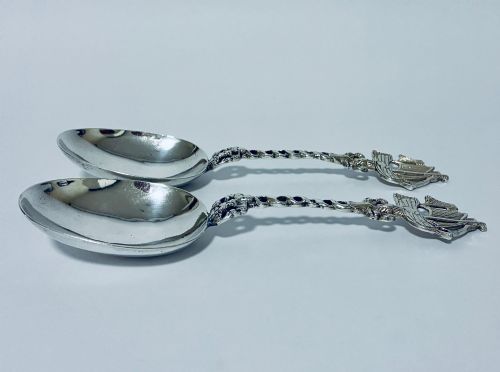
Origins span English, Scottish, Irish, Dutch, Russian, and German workshops, showing regional variations in bowl shapes and stem decoration. Examples range from plain rat-tail tablespoons adapted for service to heavily gilded and pierced master pieces.
Materials and Techniques
Silversmiths utilised sterling silver and solid silver as the primary foundations, occasionally applying silver-gilt finishes to create a contrasting gold-coloured layer over the metal. Provincial and metropolitan makers hammered, cast, and shaped these metals by hand before applying hallmarks.
Surface ornamentation involved intricate engraving, chasing, and repoussé work, where designs like fruit clusters or plumage were pushed out from the reverse side. Handles sometimes incorporated materials such as cut glass or cloisonne enamel alongside the silver.
Fitted presentation boxes utilised protective outer layers of leatherette enclosing soft inner beds of velvet, silk, or satin to cushion the utensils.
Assessing Craftsmanship and Condition
The standard of execution depends upon the crispness of the chased or engraved detailing on the bowls and handles, distinguishing sharp fruit and feather motifs from worn or shallow press-work. Crisp hallmarks indicating the maker, town, and date provide clarity regarding origin and authenticity.
Weight and structural integrity dictate resilience, separating substantial basting and serving utensils from lighter, thinner alternatives. The presence of matching original fitted cases lined with intact fabrics adds to the preservation status of the set.
Peter and Anne Bateman·John Locker·James Tait·Vasily Agafonov·Sebastian Crespell·Alexander Henderson·William Eley I and William Fears·Paul Storr·R Hennell
The Pair Silver Serving Spoons Glossary
- Berry Spoon
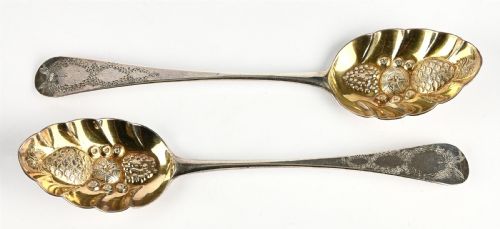
- A large serving spoon, frequently originating in the Georgian period, featuring fruit and foliage chased into the bowl at a later date. These were intended for serving soft fruits.
- Rat Tail
- A tapering spine of metal running down the back of the spoon bowl from the junction of the stem, characteristic of earlier eighteenth-century silver. It provides structural reinforcement to the joint.
- Silver-Gilt
- Sterling silver that has been coated with a thin layer of gold through an electrochemical or fire-gilding process. This technique provides a rich yellow sheen across the surface of the utensil.
- Hallmark
- An official stamp struck into precious metals by an assay office to guarantee purity, origin year, and maker identity. British pieces typically show a standard mark, town mark, and date letter.
- Repoussé
- A metalworking technique where a design is hammered into relief from the reverse side of the object. This creates three-dimensional floral or animal scenes on the front of the spoon.
Pair Silver Serving Spoons: Frequently Asked Questions
What were pair silver serving spoons used for?
These utensils served formal dining purposes, ranging from dishing vegetables and meats to serving berries, soup, and salad. Larger formats functioned as basting spoons or ladles during feasts.
Over time, many standard tablespoons from the eighteenth century were retrofitted with chased fruit designs to become dedicated berry serving spoons during Victorian dining revivals.
How should I store cased silver spoons?
Keeping the spoons inside their original fitted cases protects them from dust and physical impacts. The velvet, silk, or satin linings help cushion the metal against scratches.
Ensure the storage environment remains dry to prevent tarnish accumulation and deterioration of the internal case fabrics.
How do I identify a Georgian silver spoon?
Georgian pieces display specific stylistic traits associated with the reigns of the Georges, alongside official hallmarks stamped into the metal. Consulting the town mark and date letter reveals the exact assay office and year of production.
Stylistic cues such as rat-tail backs, feather-edge borders, and bright-cut engraving also point toward the eighteenth and early nineteenth centuries.
Can these spoons be used for daily dining?
Solid silver serving utensils remain durable enough for modern use during special meals or gatherings. Hand washing helps preserve any delicate gilding or engraved crests.
Avoid abrasive cleaners to protect the antique surface finish and retain the historical integrity of the metal.