
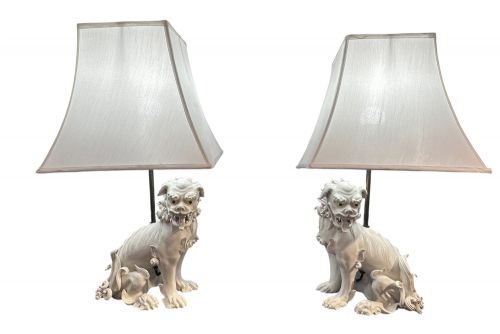


Pair of Foo Dogs
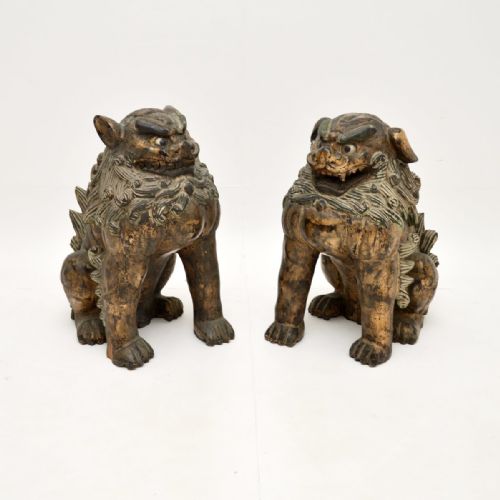
A pair of foo dogs brings guardian energy and sculptural presence to a room, cast in bronze, carved in wood, or modelled in porcelain.
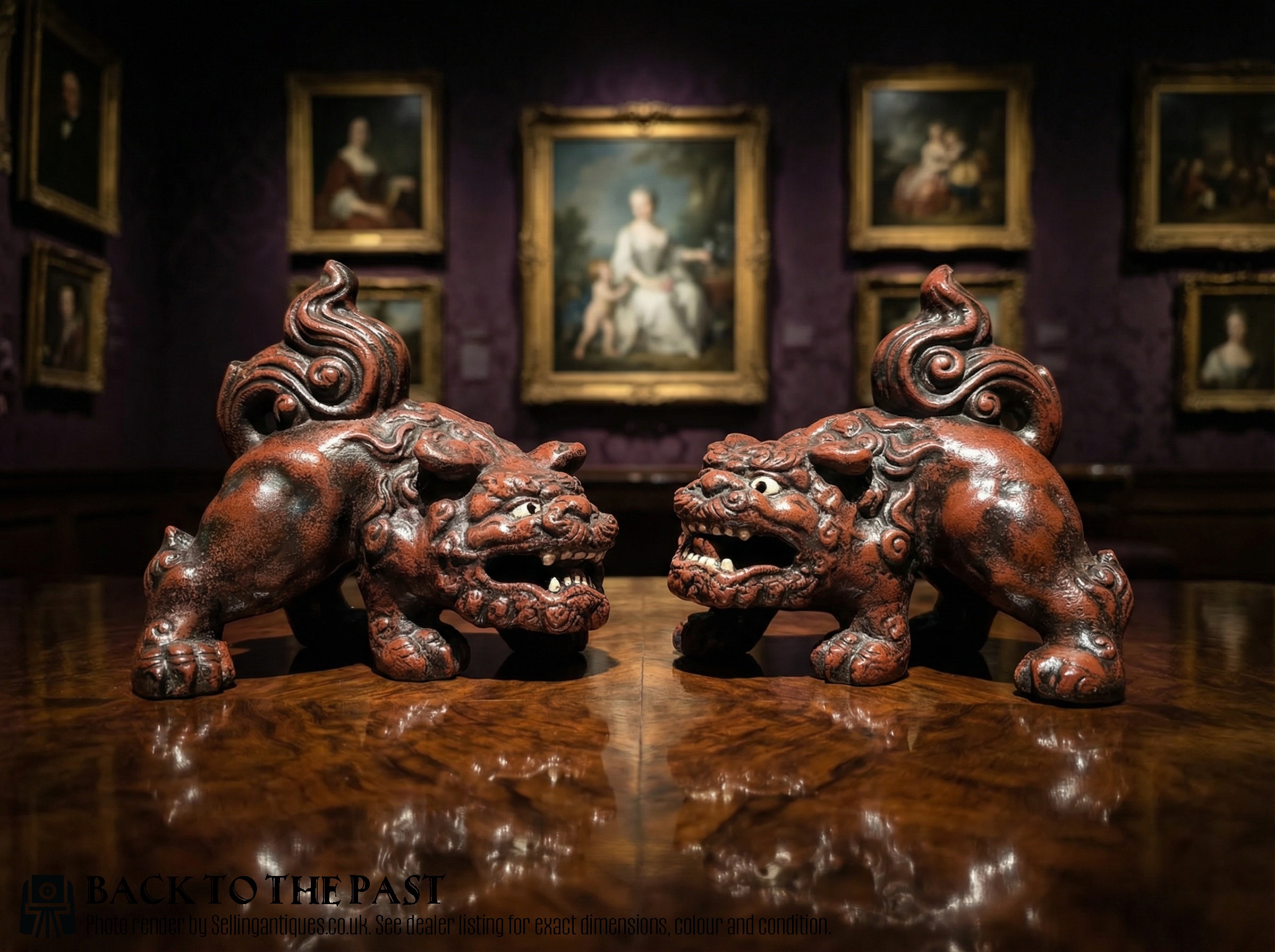
Pair of Foo Dogs
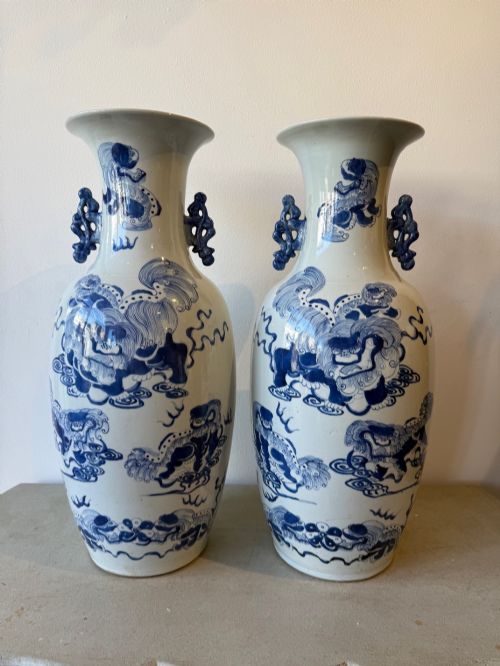
A pair of foo dogs consists of guardian lion sculptures traditionally placed at thresholds to ward off negative energy. When looking for a pair of foo dogs on this page, you will encounter pieces cast in bronze and brass, carved from wood and soapstone, or modelled in porcelain and pottery. These dual guardian figures follow ancient motifs originating in Chinese and Asian art, adapted across various decorative forms.
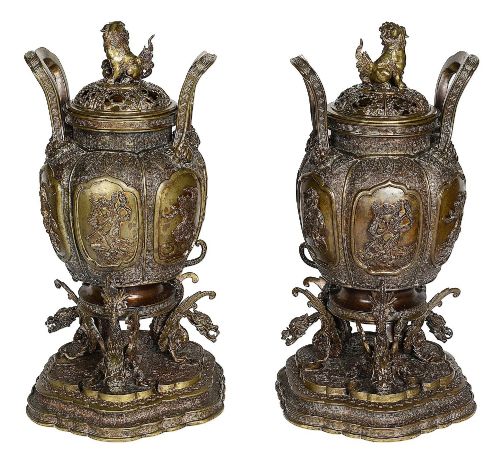
The objects take many functional and decorative shapes beyond traditional temple figures. You will find them modelled as incense burners, bookends, lidded urns, desk seals, and table lamps alongside freestanding statues. The selection spans the nineteenth century up to the early twentieth century, including Victorian interpretations and pieces from the Meiji period.
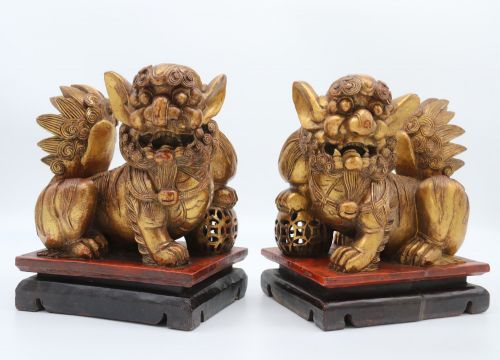
Stylistic influences range from Qing dynasty traditions and Chinoiserie aesthetics to Tibetan temple lions and Thai guardian figures. Makers utilise glazes such as sancai and turquoise enamel, or finishes involving gilt bronze, gold leaf, and polychrome paint, giving each matched pair a distinct visual weight.
What separates the finest examples
The integrity of the matched pair remains paramount, as these figures are conceived to sit in opposition, usually with one male guarding a ball and the other a cub. Pairs that retain their original polychrome paint, gilding, or matching stands demonstrate greater artisanal effort and survive with their intended decorative harmony intact.
One particularly heavy set requires the strength of two people, weighing in at a formidable thirty-five kilograms of Tibetan bronze.
The Pair of Foo Dogs Glossary
- Foo Dog
- A western term for Chinese guardian lions, also known as Shi Lion or Dog of Fo. These mythical beasts combine the majesty of the lion with traditional guardian iconography.
- Sancai
- A three-colour glaze tradition typically combining amber, green, and creamy white tones. This technique appears frequently on pottery and ceramic guardian figures from the nineteenth century.
- Blanc de Chine
- A French term for white porcelain originating from Dehua in China. This lustrous white glaze highlights modelled sculptural details without distracting colour.
- Meiji Period
- The era in Japanese history spanning from 1868 to 1912. Metalwork and decorative arts from this time demonstrate exceptional technical proficiency in bronze casting.
- Chinoiserie
- A European artistic style reflecting Chinese motifs and artistic traditions. This aesthetic influenced decorative objects produced during the Victorian era and beyond.
Pair of Foo Dogs: Frequently Asked Questions
What is the difference between foo dogs and temple lions?
Foo dogs and temple lions refer to the same mythical guardian creatures, though the term temple lion aligns more closely with traditional Chinese Buddhist terminology, while foo dog is a familiar western colloquialism.
Both figures serve the same symbolic protective function at entrances, shrines, and domestic spaces.
How were foo dog statues originally used?
Traditionally, a pair of guardian lions stood outside imperial palaces, temples, and government offices to ward off harmful spirits and protect the inhabitants within.
In domestic settings, smaller versions function as desk ornaments, bookends, incense burners, or table lamps.
How do I tell a bronze pair from cast iron?
Bronze objects typically display a warmer metallic patina and greater resistance to rust, often showing fine chasing work from the foundry.
Cast iron pieces are heavier, more magnetic, and frequently coated with black or dark paint to protect the metal from moisture.
Why do foo dogs come in pairs?
Guardian lions are traditionally symmetrical counterparts representing yin and yang forces. One figure usually rests a paw on a brocade ball representing supremacy, while the other guards a cub representing nurture.
Facing inward toward one another, the pair creates a balanced protective boundary for the space they occupy.