



Chinese Guardian Lions
Chinese guardian lions are powerful sculptural protectors in carved wood, gilt bronze and ceramic that bring traditional East Asian artistry into any interior.
What Chinese guardian lions are
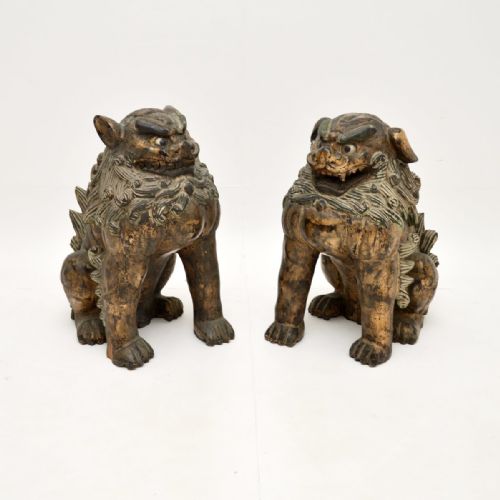
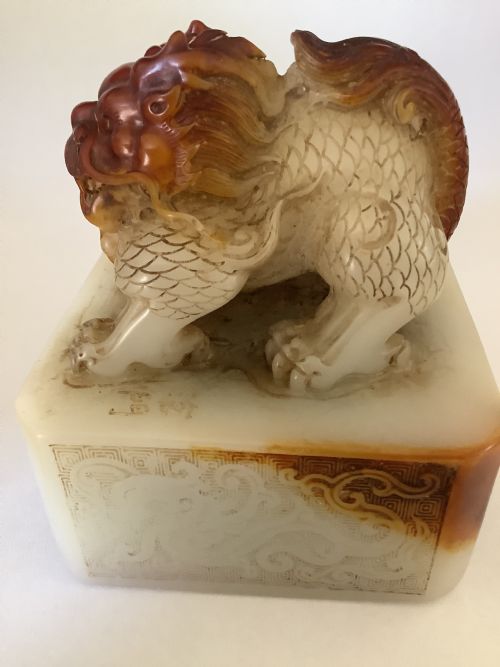
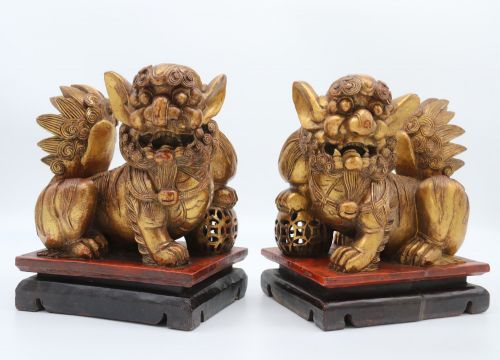
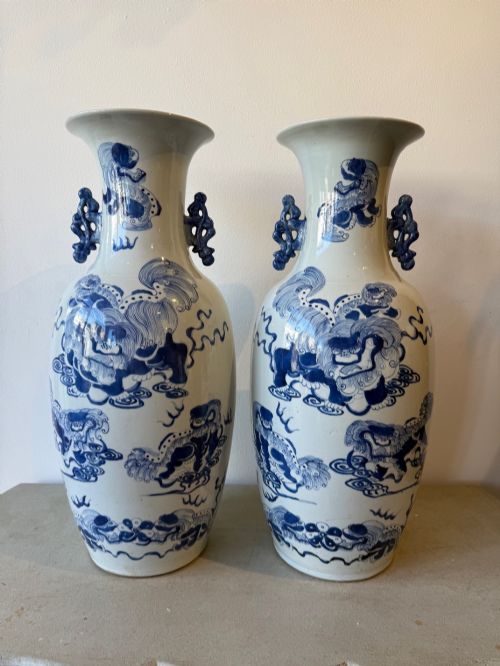
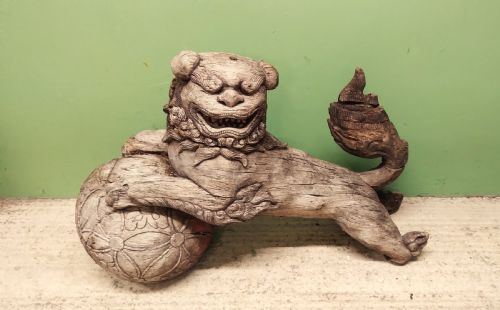
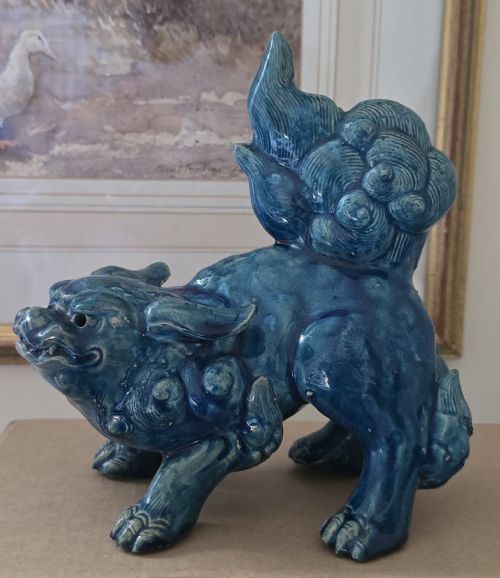
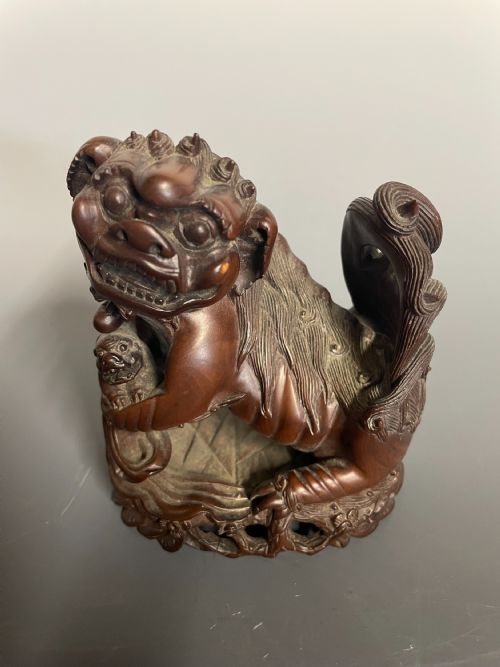
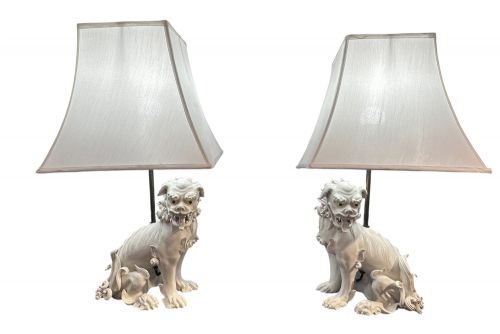
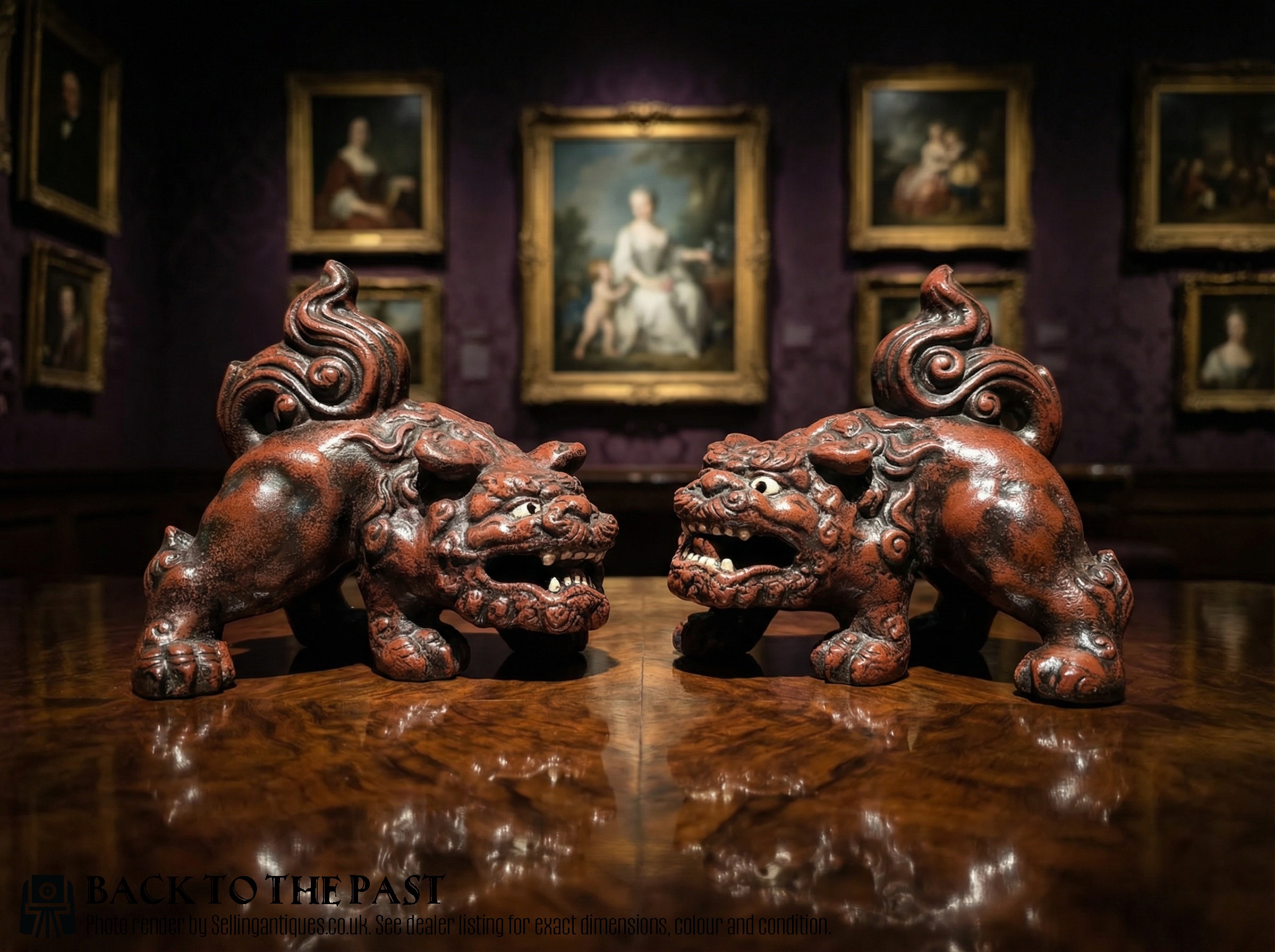
Chinese guardian lions appear on this page as pairs of decorative sculptures, statues and figures created in traditional Chinese, Late Qing Dynasty, Chinoiserie and Tibetan styles. These protective beasts manifest primarily as carved wood, gilt bronze, stoneware and ceramic pairs that reflect centuries of symbolic temple and domestic sculpture.
The selection ranges from mid-nineteenth-century carved wood and lacquered examples to cast iron and gilt bronze temple lions from the early twentieth century. Buyers encounter both traditional Chinese forms and French interpretations of foo dogs, alongside Shiwan Buddhistic lion dogs showing rich polychrome paint and glaze finishes.
How they were made
Artisans fashioned these sculptures using traditional methods of carving, casting and moulding. Carved wood figures utilise detailed chisel work, often finished with layers of lacquer, polychrome paint or surface gilding.
Metal examples employ casting techniques to shape bronze and iron, while ceramic and stoneware figures rely on skilled modelling followed by the application of traditional glazes and painted pigments.
Retail Price Guide 2026
Typical UK retail prices for chinese guardian lions, calculated from the Sellingantiques database of over a million retail prices indexed since 2003. This retail price guide relies exclusively on Sellingantiques data; no external sources or auction records are used, so the figures do not describe the wider market.
Listings feature pieces spanning the nineteenth and early twentieth centuries, utilising materials such as carved wood, gilt bronze, stoneware and cast iron.
What varies in quality
Quality in these sculptures rests upon the precision of the carving or casting and the preservation of original surface finishes such as gilt, lacquer and polychrome paint. Finer examples display crisp anatomical detail and balanced proportions that maintain their visual power.
The depth of artistry in the rendering of the mane, expression and posture distinguishes standard decorative pieces from those exhibiting superior sculptural nuance and material integrity.
The Chinese Guardian Lions Glossary
- Foo dog
- A colloquial Western term for Chinese guardian lions or Buddhistic lion dogs. These mythical beasts historically guarded the gates of imperial tombs, temples and palaces.
- Shiwan
- A historic ceramic production centre in Guangdong province known for expressive stoneware figures and distinctive glazes. Pieces from this tradition often display vivid surface textures.
- Gilt
- A thin layer of gold applied to the surface of wood, metal or other materials to provide a rich metallic sheen. This finish highlights intricate carved details.
- Polychrome
- Painted in several colours, adding lifelike and decorative detail to carved wood or ceramic surfaces. This technique enhances the visual complexity of traditional figures.
- Qing Dynasty
- The final imperial dynasty of China, spanning from sixteen forty-four to nineteen twelve. Pieces from the late nineteenth century reflect the mature aesthetic of this period.
Frequently Asked Questions
What do Chinese guardian lions represent?
These mythical beasts symbolise protection, prosperity and power in traditional East Asian culture. Pairs typically stand guard outside important buildings to ward off negative influences.
Historically, the male lion holds a brocade ball while the female restrains a playful cub. This symbolism translates into domestic settings as a traditional gesture of guardianship.
Are these figures always displayed in pairs?
Guardian lions traditionally appear as matching pairs where one creature complements the other in posture and placement. This balanced arrangement reflects classical architectural requirements.
Collectors generally seek pairs to maintain the traditional symmetry and symbolic harmony intended by the original makers.
How do I care for antique carved wood lions?
Carved wood sculptures require stable indoor environments away from direct sunlight and sudden temperature shifts. Dusting with a soft, dry cloth preserves the delicate surface lacquer and paint.
Avoiding excessive moisture protects both the underlying wood and any historical gilding or polychrome decoration.
How do I distinguish between periods?
Dating relies on material characteristics, tool marks, wear patterns and stylistic conventions associated with specific eras like the nineteenth century. Examining the base and interior construction reveals manufacturing methods.
Comparing surface finishes such as lacquer formulation or bronze patination helps place pieces within their appropriate historical context.