




Buddhist Temple Guardians
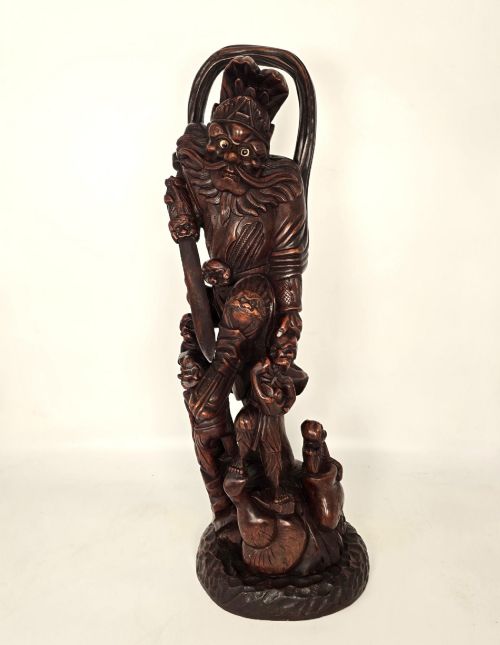
These Buddhist temple guardians are striking figures cast in bronze and carved from wood, built to protect sacred spaces and bring formidable presence to a room.
Buddhist Temple Guardians
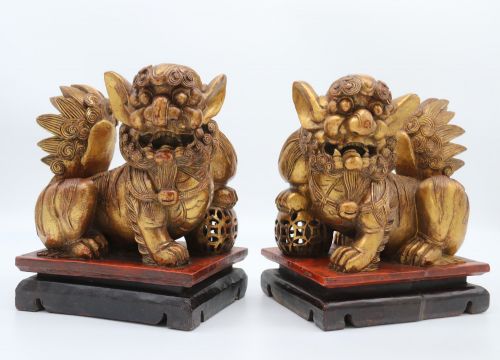
Buddhist temple guardians appear across this selection as carved hardwood guardian kings, gilt wood and lacquer lions, and large bronze foo dogs. These pieces originate from Chinese, Japanese, and Tibetan traditions, spanning the eighteenth and nineteenth centuries into the early twentieth century.
The version most commonly met on this page is the pair of temple lions or guardian dogs, often cast in bronze or carved from heavy timber. Alongside these, single monumental guardian figures and Japanese shishi models represent the wider category of protective temple sculptures.
Makers and workshops across Qing Dynasty China, the Japanese Meiji period, and Tibetan Buddhist art traditions produced these works for sacred architecture and ritual spaces. The forms range from fierce, muscular guardian kings to stylized lions with intricate manes and open mouths meant to ward off malevolent spirits.
Materials and construction methods
Carved hardwood and carved wood form the foundation of many pieces, often finished with gilt or lacquer surfaces to enhance the visual weight and texture of the sculpture. Artisans shaped dense timbers into intricate guardian kings and temple lions, utilising traditional joinery and detailed chiselling.
Metalwork pieces rely on bronze casting techniques, producing substantial sculptures such as heavy pairs of temple lions or foo dogs. These bronze and gilt bronze works demonstrate complex mould-making and surface finishing typical of Tibetan and Chinese workshops.
Buddhist Temple Guardians Retail Price Guide 2026
Typical asking prices for buddhist temple guardians among the pieces listed under this phrase on Sellingantiques today, from the lower quarter to the upper quarter. They describe what is for sale here now, not the wider market.
Listings feature periods spanning the eighteenth century, the nineteenth century, and the early twentieth century up to nineteen twenty.
Judging the quality of temple figures
The distinction between standard works and exceptional pieces lies in the crispness of the carving and the depth of the casting detail. Superior examples display confident handling of anatomy and drapery, where facial expressions convey genuine intensity rather than rigid symmetry.
Surface finish significantly influences overall merit, distinguishing original lacquer, gilding, and patination from later interventions. Pieces retaining coherent surface treatments across the entire sculpture command stronger visual authority.
The Buddhist Temple Guardians Glossary
- Lokapala
- A guardian king or heavenly king positioned at the cardinal directions of a Buddhist temple to ward off evil. These figures appear in monumental carved hardwood.
- Shishi
- A Japanese term for stone or bronze guardian lions, derived from Chinese temple guardian traditions. They share characteristics with foo dogs.
- Foo Dog
- A popular term for Chinese guardian lions, traditionally placed outside sacred buildings as protectors. They are typically rendered as male and female pairs.
- Okimono
- A Japanese decorative display object carved from metal or wood during the Meiji period. These figures emphasise sculptural detail over utilitarian function.
Buddhist Temple Guardians: Frequently Asked Questions
How do I date a temple guardian?
Dating relies on stylistic markers associated with periods such as the Qing Dynasty, Meiji period, or specific decades of the nineteenth and twentieth centuries. Material wear, patination, and tool marks offer additional clues.
Comparing construction techniques with documented examples from the same cultural tradition helps establish a reliable timeframe.
Where were these guardians placed?
Guardians stood at temple gates, doorways, and altars to maintain the sanctity of the interior space. Pairs of lions were often positioned facing outward to monitor approach.
In domestic settings today, collectors place them in prominent reception spaces or near entryways to maintain their traditional architectural context.
Why are temple lions often found in pairs?
Pairs traditionally represent dual forces, with one guardian having an open mouth and the other a closed mouth. This arrangement symbolizes the breath of life and completeness.
Sculpted as matching entities in bronze or wood, they balance composition and symmetry when flanking a threshold.