


Chinese Guardian Dog Statues
Chinese guardian dog statues are traditional sculptural pairs meant to protect spaces, and collectors seek them for their striking presence and history.
Chinese Guardian Dog Statues
Chinese guardian dog statues take the form of traditional temple guardians, also known as Foo dogs, Buddhist lions, or shishi figures. These protective sculptures appear frequently as matched pairs, traditionally positioned to guard thresholds or sacred interiors.
The selections available range from diminutive boxwood carvings and soapstone bookends to substantial bronze temple lions and carved stone sculptures. Examples stretch across the nineteenth century into the early twentieth century, reflecting diverse regional workshops and export tastes.
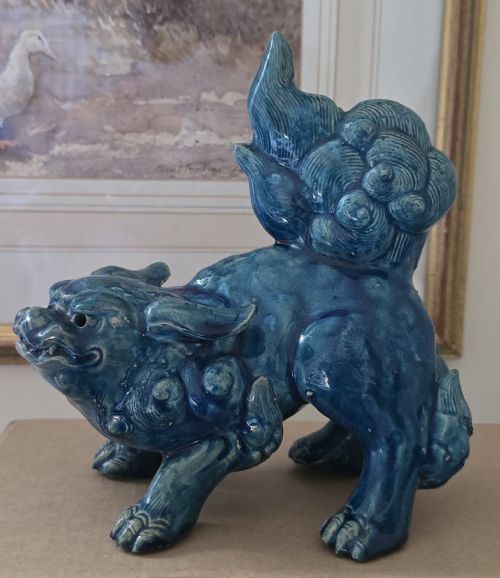
Makers utilised various traditional formats, producing ceramic sculptures with sancai or turquoise glazes alongside polychrome paint finishes. Buyers encounter both domestic devotional items and larger decorative objects intended for grand interiors.
Materials and Construction
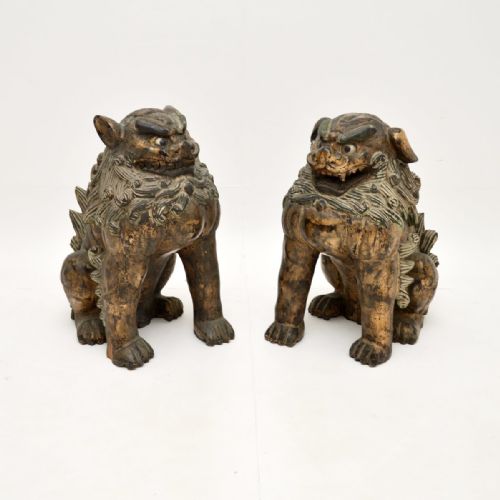
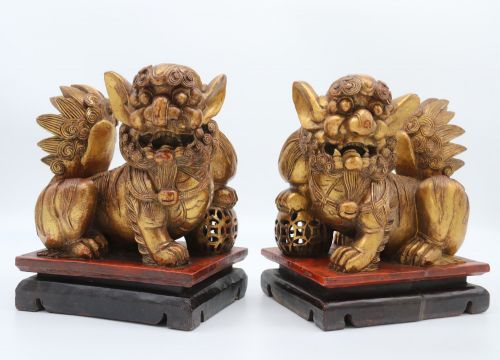
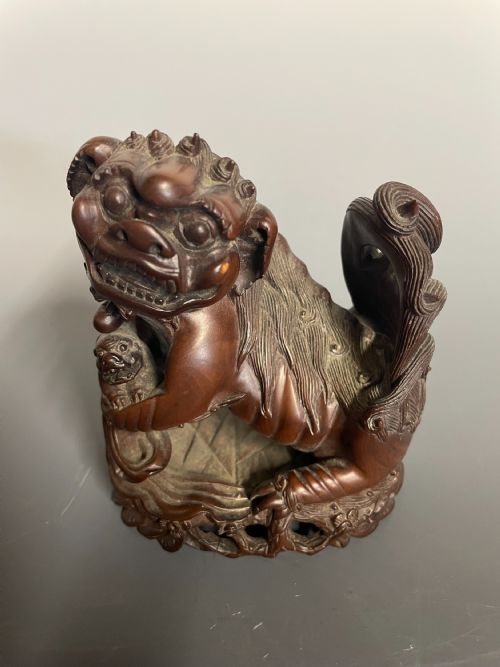
Carved wood represents a significant portion of these pieces, utilising boxwood, root wood, and general timber finished with gilt and lacquer. Artisans shaped intricate surface details to delineate the flowing manes and fierce expressions characteristic of these figures.
Ceramic and earthenware pieces employ glazes such as sancai, turquoise, and pale green across porcelain and pottery bodies. Bronze and cast iron examples demonstrate metal casting techniques, often enhanced with gilding or patination.
One hefty pair tips the scales at thirty-five kilograms, proving these guardians take their job very seriously.
Evaluating Quality and Craftsmanship
The definition and depth of the carving separate standard workshop output from exceptional sculpture, particularly in the rendering of muscular forms, facial expressions, and ornate manes. Wood and stone pieces rely entirely on the artisan's chisel work to achieve vitality and balance.
Surface finish and material selection dictate the visual weight of each piece, from finely applied gilt and polychrome paint to rich glaze coverage on ceramics. Intact patination and harmonious proportions across matched pairs elevate the standing of individual statues.
The Chinese Guardian Dog Statues Glossary
- Foo Dog
- A colloquial Western term for Chinese guardian lions or temple dogs. These mythical beasts derive from Buddhist iconography.
- Shiwan
- A historic ceramic production centre in Guangdong province known for distinctive pottery figures and rich glazes. Pieces from this kiln often display expressive modelling.
- Sancai
- A traditional three-colour lead glaze technique originating in Chinese ceramics. Common combinations include amber, green, and cream tones.
- Meiji Period
- A period of Japanese history spanning from 1869 to 1912. Objects from this era reflect distinct aesthetic developments in neighbouring craft traditions.
- Chinoiserie
- A European artistic style reflecting Chinese motifs and decorative techniques. This style influenced various ornamental objects produced in the West.
Chinese Guardian Dog Statues: Frequently Asked Questions
How were these statues used?
Historically, guardian lions stood as pairs at important architectural thresholds to ward off negative spirits and project authority. One figure typically holds a brocade ball while the other restrains a cub.
In domestic settings, smaller versions function as decorative objects, bookends, or sculptural focal points within studies and reception rooms.
How do I care for wooden statues?
Wooden and lacquered guardian figures require stable indoor humidity away from direct sunlight and heat sources to prevent timber splitting. Gentle dusting with a soft, dry cloth preserves the finish.
Avoid using liquid cleaners, polishes, or abrasive materials on antique gilt wood or painted surfaces, as these can lift fragile historical layers.
How can I tell different periods apart?
Dating relies on material characteristics, tool marks, glaze formulations, and stylistic markers associated with specific eras like the Qing Dynasty or the Meiji period. Nineteenth-century examples often display distinct patination and hand-carved tool signatures.
Comparing the casting methods in bronzes or the potting techniques in ceramics helps establish whether a piece belongs to the late nineteenth century or early twentieth century.