

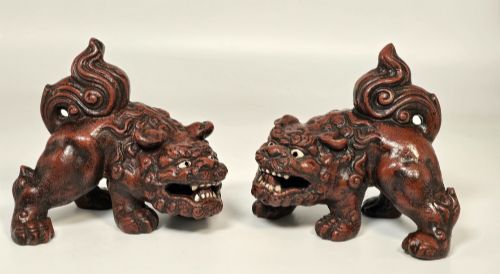
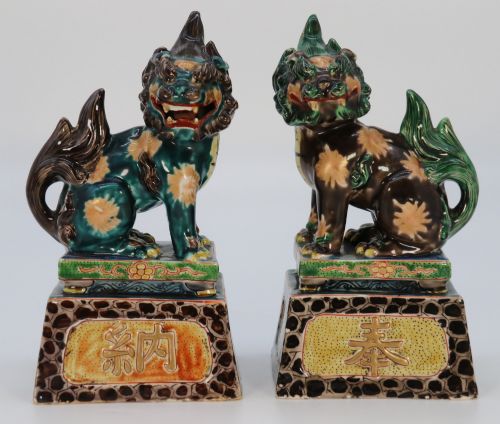
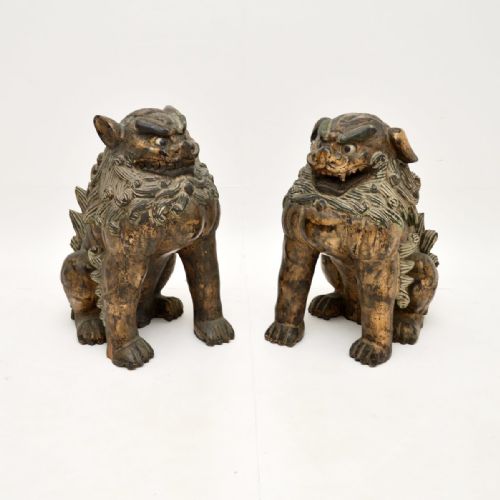
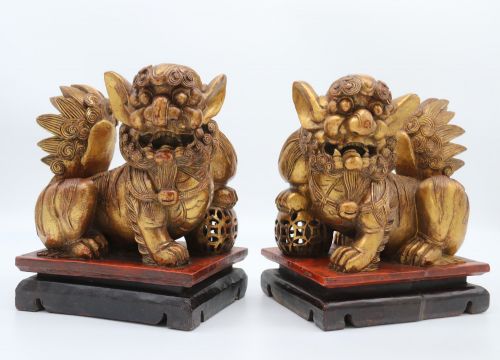
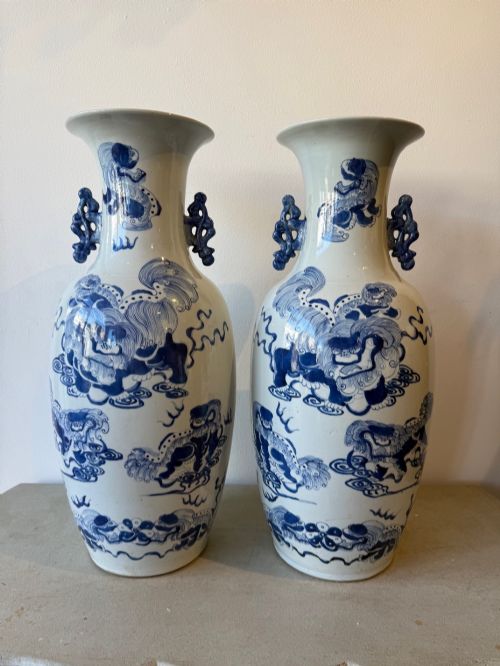


Pair Chinese Temple Dogs
Pair Chinese temple dogs are guardian figures of power and protection, modelled as mythical lions to stand sentinel at entrances.
Pair Chinese Temple Dogs
When you search for pair chinese temple dogs, you encounter powerful guardian figures designed to protect sacred spaces and domestic interiors alike. These mythical beasts appear across several distinct forms, most frequently as sculptural statues and decorative figures rather than vessels or tables.
The versions most commonly met on this page span the nineteenth century and the early decades of the twentieth century. They manifest in various materials, representing both traditional Chinese craftsmanship and later European interpretations of eastern forms.
The selection ranges from carved wood and stone to cast metal and ceramic. Each pair reflects the enduring fascination with these protective guardians across different periods of manufacture.
Materials and construction
Makers utilised organic and inorganic materials, shaping carved wood with gilt and lacquer finishes alongside substantial bronze, brass, and cast iron. Ceramic variations include terracotta with polychrome or sancai glazes, as well as blue and white porcelain.
Pair Chinese Temple Dogs Retail Price Guide 2026
Typical asking prices for pair chinese temple dogs among the pieces listed under this phrase on Sellingantiques today, from the lower quarter to the upper quarter. They describe what is for sale here now, not the wider market.
Some temple dogs guard a decorative ball while others keep a protective paw on a playful cub, ensuring domestic harmony through eternal stone vigilance.
Judging quality and execution
Surface treatment further separates the output, with well-preserved gilding, complex lacquer work, or careful polychrome and sancai glazing elevating the visual impact. The handling of the material dictates whether a pair reads as a powerful sculptural statement or a simpler decorative object.
The Pair Chinese Temple Dogs Glossary
- Foo dog
- A Western term for Chinese guardian lions, which are actually modelled on mythical lions rather than domestic dogs. They typically appear in male and female pairs guarding entrances.
- Shiwan
- A ceramic ware originating from southern China, known for expressive figurative sculptures and rich, varied glazes. Shiwan figures often display a high degree of individual character.
- Sancai
- A traditional three-colour glaze technique most commonly associated with yellow, green, and white or amber tones. This glaze creates a vibrant, lustrous surface on terracotta bodies.
- Chinoiserie
- A European artistic style reflecting Chinese motifs and techniques, popular in decorative arts. European makers utilised these designs to create pieces such as cast iron temple dogs.
- Gilt wood
- Wood that has been treated with a thin layer of gold leaf or powder. This finish adds a reflective quality to carved temple lions and decorative figures.
Pair Chinese Temple Dogs: Frequently Asked Questions
What do temple dogs represent?
These figures symbolise protection, power, and prosperity in traditional settings. They traditionally stand at temple and palace gates to ward off harmful spirits.
Pairs typically comprise a male holding a brocade ball under his paw and a female restraining a cub. Together they balance yin and yang energies within a space.
Where should I place a pair?
Temple dogs look most effective flanking an entryway, fireplace, or console table where their protective stance is highlighted. Their substantial presence suits larger rooms and entrance halls.
Ensure they face outward toward the entrance or room to fulfil their traditional guarding role. Heavy pairs require sturdy support surfaces due to their weight.
How do I date these figures?
Dating relies on material analysis, style conventions, and wear patterns consistent with nineteenth and early twentieth-century manufacturing. Evidence points to periods such as the late Qing dynasty and the early nineteen-twenties.
Stylistic shifts between traditional Chinese artistry and later adaptations help narrow the era of production. Examining the base and internal construction often reveals clues about the workshop origin.
Are they all from China?
While the design originates in Chinese Buddhist art, the evidence includes pieces made by European foundries. Western makers produced cast iron interpretations inspired by eastern motifs.
Distinguishing origin involves examining the casting techniques, patina, and stylistic adherence to traditional Chinese or Qing aesthetics. Both regional adaptations and traditional imports form part of the recorded range.