




Oriental Carved Lions
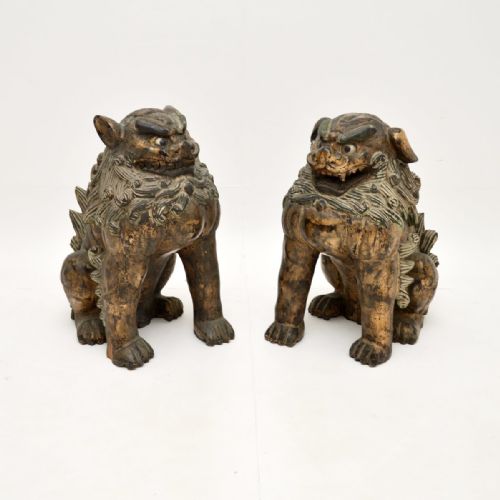
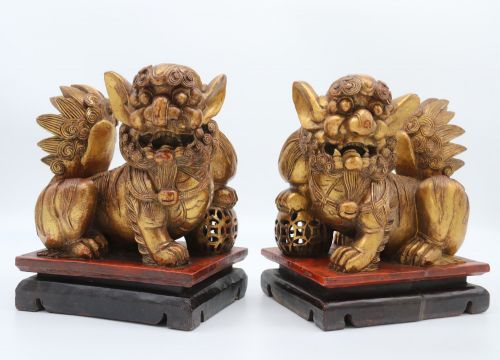
These oriental carved lions are solid figures of guardian beasts and temple dogs intended to protect spaces and display status.
Oriental Carved Lions
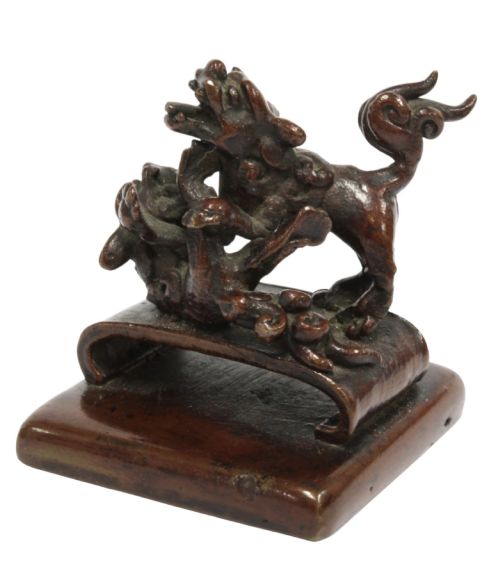
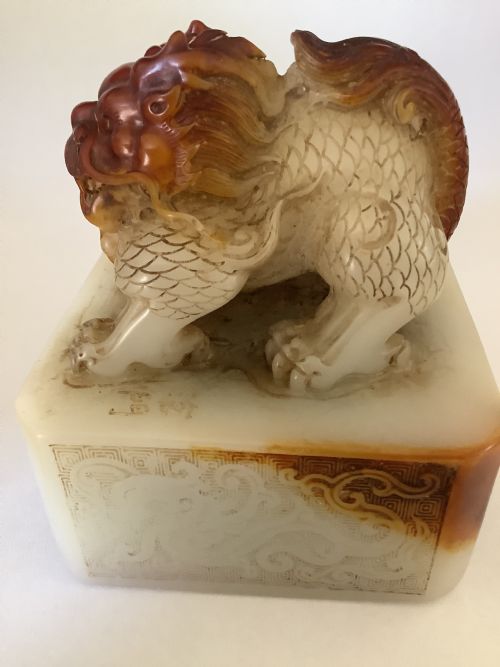
Oriental carved lions appear across this selection in various forms, including statues, bookends, desk seals, and temple guards. A buyer seeking these objects encounters representations commonly known as Foo dogs, shishi, or lion dogs, derived from Buddhist tradition. The pieces span from the 17th century through the Victorian era and the 19th century.
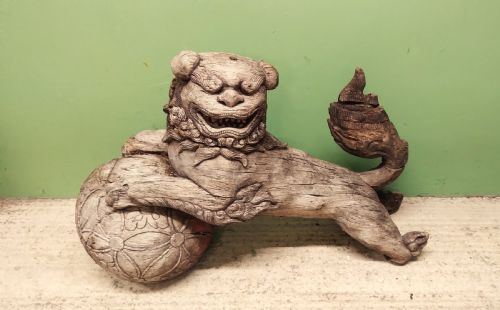
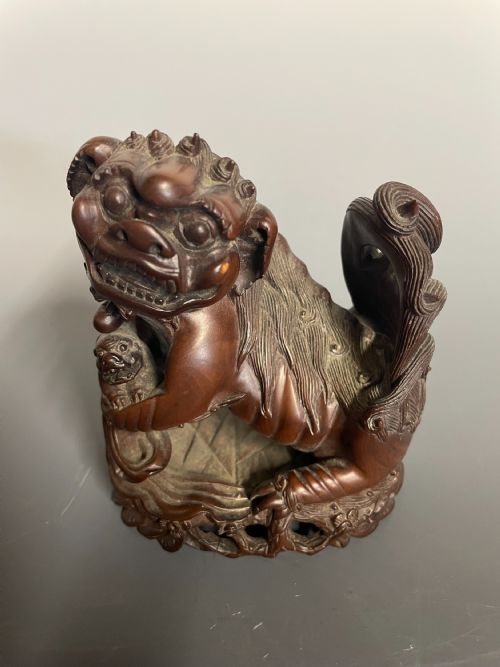
Wooden carvings, soapstone figures, and bronze castings dominate the selection available on this page. Examples range from small desk seals and bookends to large temple guardians and root wood sculptures. Many reflect traditional Chinese and Qing or Ming dynasty origins, alongside Anglo-Burmese interpretations.
How they were made
Craftsmen shaped these figures using traditional subtractive and additive techniques across organic and inorganic materials. Woodworkers carved boxwood, padauk, and root wood into detailed animal forms, sometimes applying polychrome paint, lacquer, or gilt finish. Metalworkers utilised bronze casting methods for heavy censers and scholars' seals.
Root wood dogs of fo demonstrate how carvers turned natural tree knots into snarling guardians.
What varies in quality
The choice of material heavily influences the standard of the piece. Dense boxwood, rich gilt wood, and fine-grained jade or soapstone demonstrate superior craftsmanship compared to simpler cast or moulded substitutes.
The Oriental Carved Lions Glossary
- Shishi
- Stone lion or guardian lion in Japanese and Chinese art. They often appear guarding temple gates and scholarly desks.
- Censer
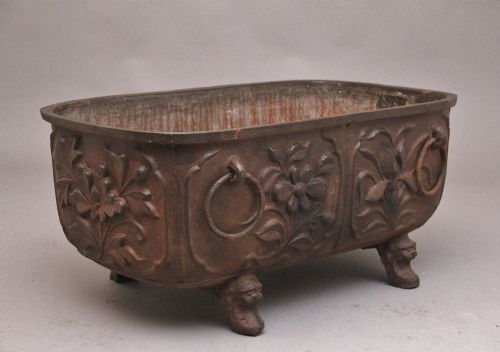
- A vessel used for burning incense, frequently cast in bronze with lion-mask handles. These ritual objects originated in ancient temple settings.
- Padauk
- A dense tropical timber valued for its rich colour and heavy grain. Burmese craftsmen utilised this wood for substantial furniture and carvings.
Oriental Carved Lions: Frequently Asked Questions
What is a Foo dog?
A Foo dog is a traditional guardian lion originating in Chinese art, symbolising protection and prosperity. These mythical creatures typically stand outside temples or guard important entrances.
Artisans carved them from wood, soapstone, and jade, or cast them in bronze for scholar's desks and domestic interiors.
How were these lions used?
Historically, these figures served as temple guards, protective gate figures, and decorative guardian items within homes. Smaller versions functioned as desk seals, bookends, and scholar's objects.
Their presence was intended to ward off negative influences and project authority and cultural refinement.
How do I date a carving?
Dating relies on material characteristics, tool marks, stylistic conventions of dynasties such as Ming and Qing, and patina accumulated over centuries. Wood types and lacquer techniques also indicate specific historical periods.
Examining the base and wear patterns helps distinguish 17th-century scholar pieces from later 19th-century and Victorian interpretations.
Where should I place them?
These sculptures suit prominent display on tabletops, bookshelves, or dedicated pedestals where their carving detail can be appreciated. Pairs traditionally flank doorways, mantels, or large cabinets.
Keep them away from direct sunlight and extreme humidity to preserve organic materials like wood, lacquer, and soapstone.