
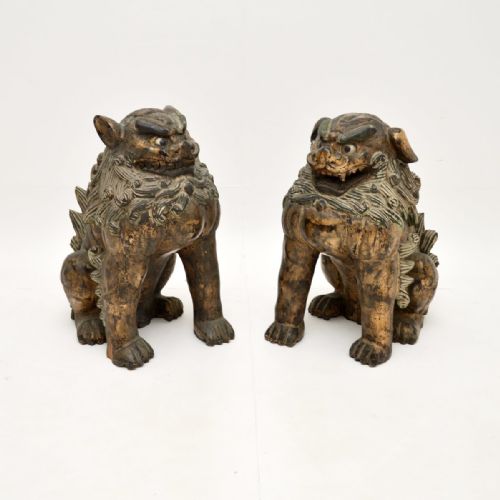
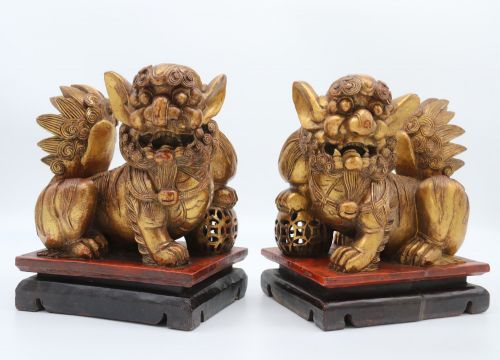
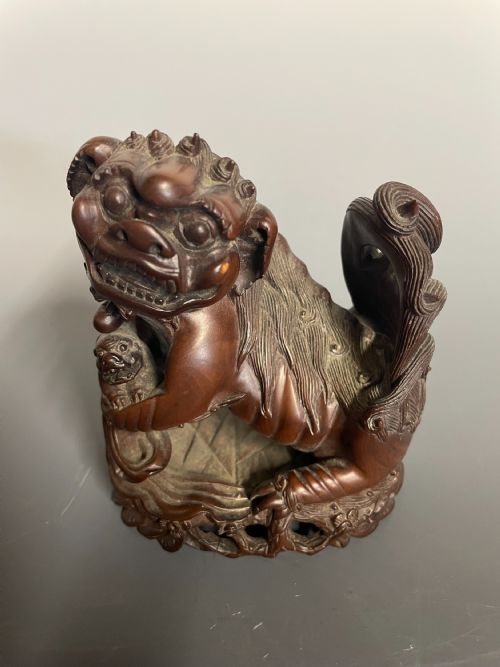


Carved Wooden Foo Dogs
These carved wooden foo dogs are protective temple guardians that bring sculptural presence and traditional Chinese artistry into a room.
Carved Wooden Foo Dogs
Carved wooden foo dogs are traditional Chinese guardian figures, often depicted as pairs of temple lions that traditionally stand to guard sacred spaces. When searching for carved wooden foo dogs, buyers encounter sculptures and statues originating from periods spanning the eighteenth century through to nineteen hundred.
The pieces available include matched pairs of statues, individual temple guards, boxwood carvings, and root wood figures created within traditional Chinese and Qing dynasty styles. These guardian sculptures frequently appear alongside related Asian art forms, such as tables incorporating temple jars or adapted table lamps.
How they were made
Artisans carved these guardian figures from timber, boxwood, root wood, and padouk, applying hand-carving techniques to shape the muscular forms and ornate manes of the animals. Workshops enhanced the natural grain of the wood through applied layers of lacquer.
Listings feature woods including boxwood, padouk, and root wood, alongside finishes of lacquer, gilt, and polychrome paint.
What varies in quality
Quality in these carvings is determined by the depth and precision of the hand-carving in the wood, where complex anatomical detail distinguishes superior pieces from simpler representations. The survival of original surface treatments, such as polychrome paint, lacquer, and gilt, significantly influences the overall integrity of a sculpture.
The choice of material also dictates the character of the piece, with dense timbers like boxwood and root wood allowing for intricate manipulation of form. Sculptures executed as balanced pairs display greater compositional harmony than individual figures created in isolation.
The Carved Wooden Foo Dogs Glossary
- Boxwood
- A dense, pale timber favoured by carvers for fine detail work. Its tight grain allows for intricate execution without splintering.
- Root wood
- A material utilising the gnarled underground growth of a tree. Sculptors shape the natural contours of the root into dynamic animal forms.
- Gilt
- A thin layer of gold applied to the wooden surface of a sculpture. This finish creates contrasting metallic highlights against the dark timber.
- Temple guard
- A large-scale sculptural figure positioned to protect sacred architecture. These works possess commanding proportions and powerful stances.
Carved Wooden Foo Dogs: Frequently Asked Questions
What are carved wooden foo dogs?
These pieces are traditional Chinese guardian lion sculptures carved from various timbers. They were historically placed to protect sacred spaces and important buildings.
Today, they function as striking decorative sculptures and focal points in interior settings. Their forms range from small desk carvings to large temple figures.
How were foo dogs used?
Guardian lions were traditionally displayed in pairs flanking entrances to temples, palaces, and official residences. The male typically holds a ball under its paw while the female restrains a cub.
In domestic settings, they served as symbolic protectors of the household. Collectors today place them on side tables, mantels, or pedestals as sculptural art.
How do I date an antique foo dog?
Dating relies on examining the tool marks, the type of wood used, and the wear on surface finishes like lacquer and gilt. Eighteenth-century pieces often display deeper, hand-carved execution and distinct material patination.
Later nineteenth-century examples reflect shifts in production methods and decorative styles. Comparing the sculptural conventions helps place the piece within its historical period.
How do I live with wooden foo dogs?
These sculptures require stable indoor environments away from direct sunlight and extreme humidity fluctuations to protect the timber and applied finishes. Placing them on secure surfaces ensures their stability.
They integrate well into traditional and eclectic interiors alike, pairing naturally with Asian art collections or antique furniture. Regular dusting with a soft, dry cloth maintains the surface condition.