
Pair of Blue Urns
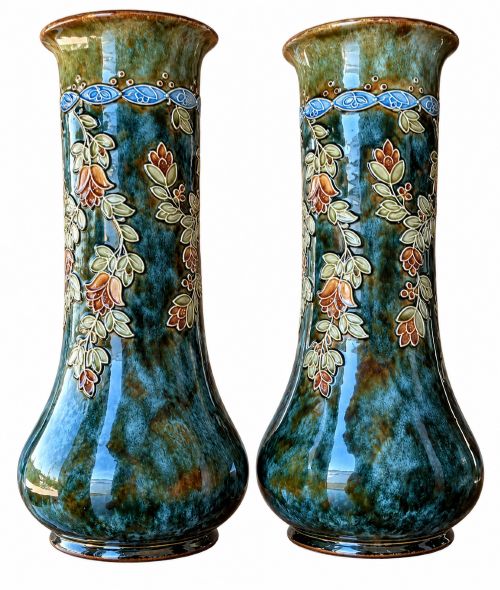
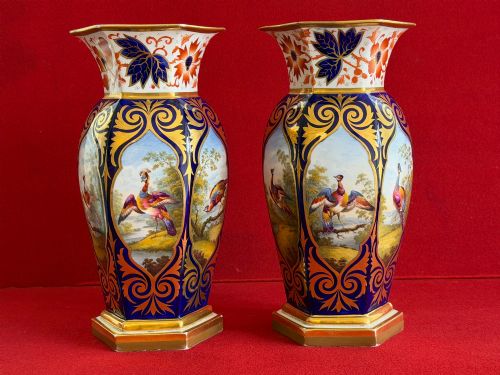
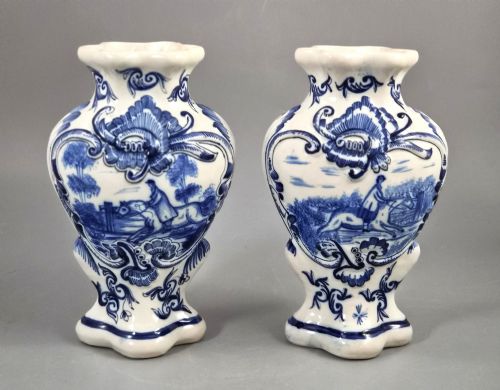
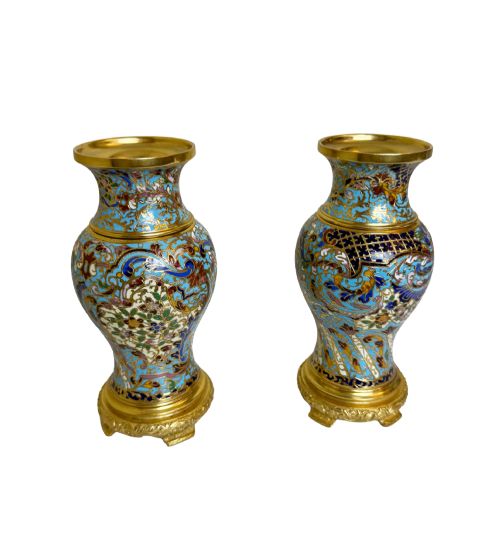
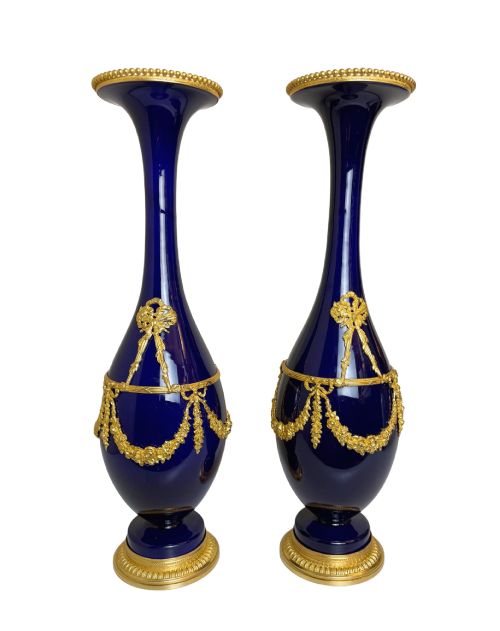
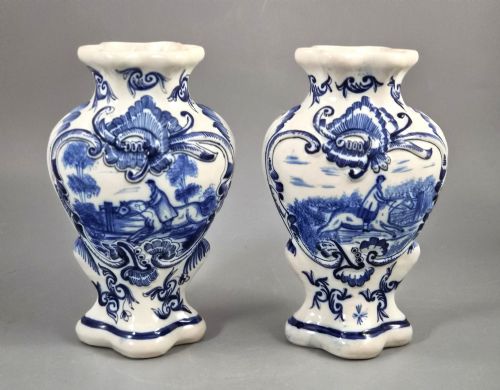
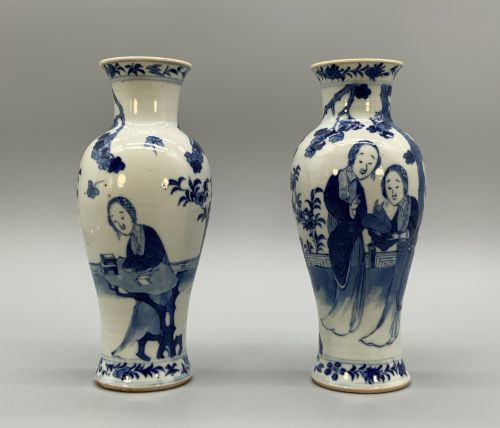
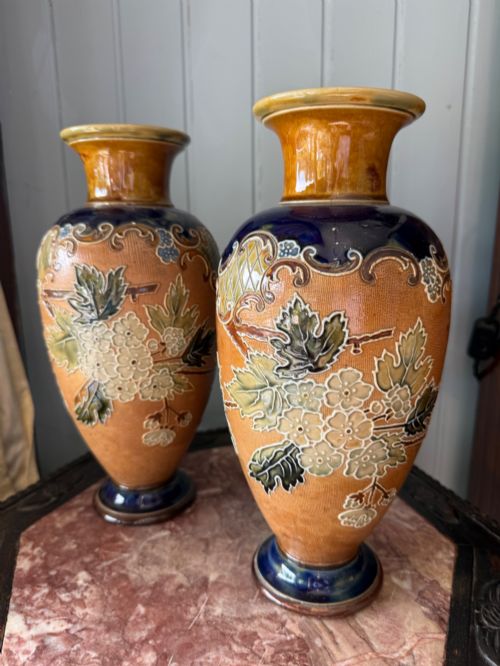
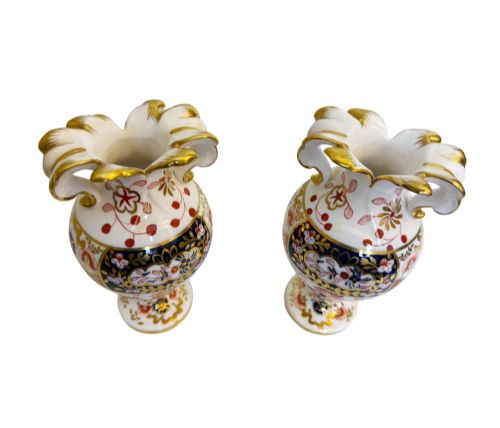
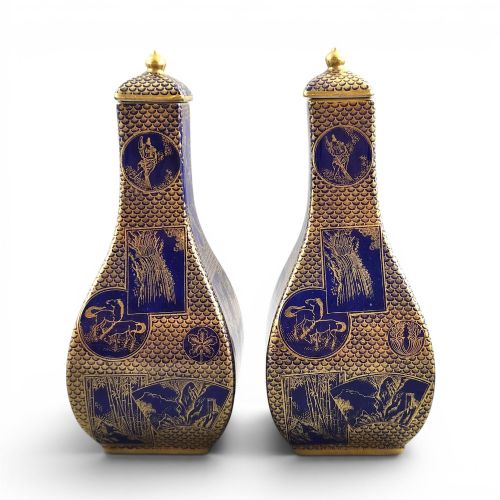
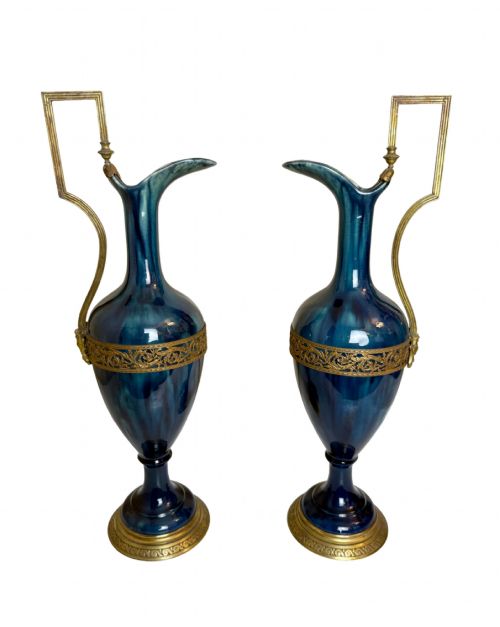
These pair of blue urns offer striking symmetrical presence, bringing rich cobalt and cerulean tones together with classical forms for any interior.
Pair of Blue Urns
A pair of blue urns brings together decorative vessels and lidded jars spanning the nineteenth century through the early twentieth century. Buyers seeking this aesthetic will encounter porcelain, earthenware, and stoneware examples originating from English potteries, French ateliers, and Asian export workshops.
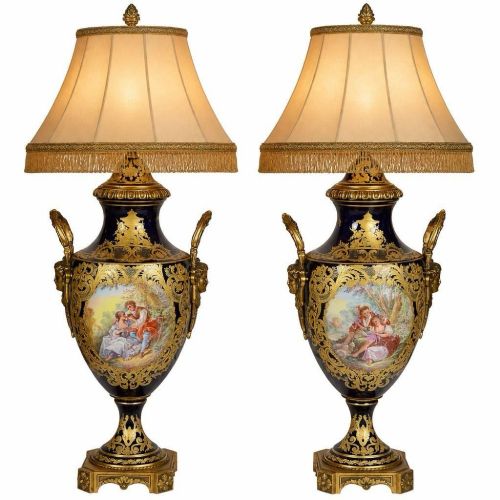
The physical formats range from classical campana shapes and baluster bodies to double gourd vessels and cassolettes. Many examples incorporate metal mounts, while others function as converted table lamps or standalone mantel ornaments.
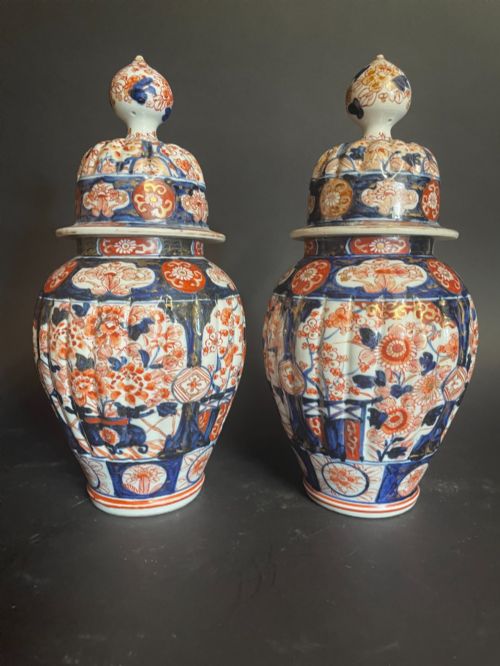
Nineteenth-century French and English interpretations dominate the selection, often drawing on Imari palettes, blue and white transfer printing, or rich monochrome glazes. These decorative objects serve as balanced focal points on sideboards, pedestals, and mantels.
Materials and construction
Potters shaped these vessels using ceramic bodies such as porcelain, ironstone, faience, and stoneware, frequently applying cobalt oxide underglazes or rich enamel pigments before high-temperature firing. Artisans often added hand-painted details or gilt accents directly onto the hardened glaze surfaces.
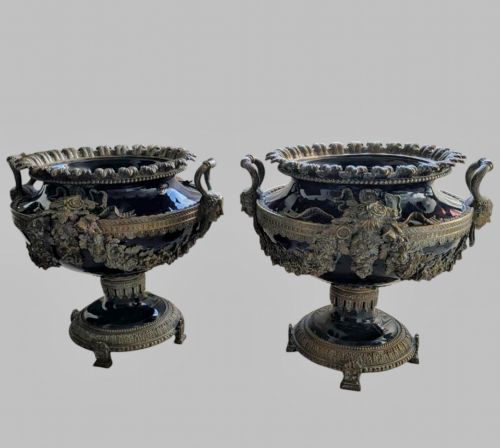
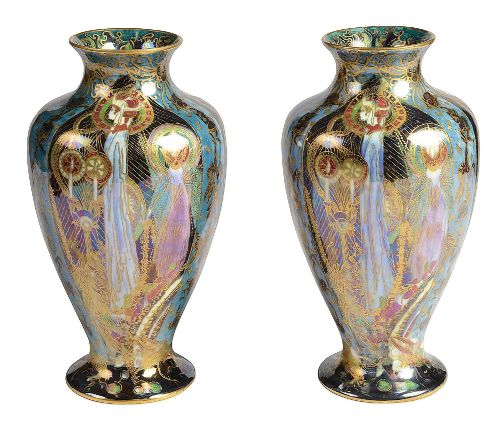
Metal components like ormolu and gilt bronze provide structural mounts, handles, and trim, cast and chased to complement the curved ceramic profiles. Stoneware and earthenware versions utilise specialised reactive glazes to achieve deep blue textures, ranging from uniform powder blue grounds to mottled lustre finishes.
Some scholarly retreat baluster vases spent decades quietly hiding behind heavy nineteenth-century drapery before reaching the open market.
Evaluating craftsmanship and execution
Quality rests in the crispness of the ceramic moulding and the depth of the blue glaze, where subtle tonal shading distinguishes superior hand-painted work from mechanical transfer. The integration of metal mounts reveals the maker's hand, seen in tight joints and finely chased ormolu details that follow the contours of the body without awkward gaps.
The prestige of the workshop and the sophistication of the decorative program elevate certain examples, particularly those signed by notable designers or produced during specific revival periods. Original matched pairs with intact covers and uniform fading or wear demonstrate greater historical integrity than assembled or heavily restored sets.
Royal Doulton·Flight Barr And Barr·Fourmaintraux Courquin·Wedgwood·Spode·Samson Paris·Hicks And Meigh·Minton
The Pair of Blue Urns Glossary
- Ormolu
- Gilt bronze mounts applied to furniture, clocks, and ceramic vessels for decoration and structural edging. This technique involves coating cast bronze with a fine layer of gold amalgam.
- Cassolette
- A decorative vase or jar featuring a reversible lid that functions either as an incense burner with a pierced top or as a solid urn. These pieces frequently appear with ornamental metal mounts.
- Campana
- A classical bell-shaped urn or vase profile originating in ancient Rome, typically featuring an everted rim and a stepped pedestal base. This silhouette remains popular in neoclassical and revival ceramics.
- Imari
- A Japanese export porcelain style characterised by deep underglaze blue and iron red highlights, often enriched with gold. European potteries frequently copied these distinctive palettes during the nineteenth century.
- Jardiniere
- An ornamental ceramic or metal pot designed to hold live plants or floral arrangements. These vessels often match the decorative style of companion urns and mantel vases.
Pair of Blue Urns: Frequently Asked Questions
What were blue urns used for originally?
These vessels functioned primarily as decorative mantel ornaments, garniture sets, or focal pieces in formal rooms. Many were purely ornamental, while lidded versions occasionally served to hold potpourri or dry aromatics.
Over time, some examples were adapted into functional lighting by converting them into table lamps with electrical fittings. Their symmetrical pairing made them ideal for flanking mirrors, fireplaces, or architectural doorways.
How do I care for antique ceramic urns?
Dust the surfaces gently with a soft, dry cloth to prevent abrasive particles from scratching the glaze or gilding. Avoid using chemical cleaners, water, or commercial polishes, especially near painted details or metal mounts.
Keep the pieces away from direct sunlight and areas with fluctuating humidity to protect delicate enamels and prevent stress on older ceramic bodies.
How can I tell nineteenth-century pieces from later reproductions?
Examine the base of the ceramic body for factory marks, impressed stamps, or hand-painted signatures characteristic of specific nineteenth-century periods. The quality of the glaze, wear patterns on the bottom, and the method of assembling metal mounts often reveal the age of the piece.
Older examples typically display subtle irregularities in the glaze and hand-applied decoration that mass-produced reproductions cannot replicate.
Why do some urns have metal mounts?
Metal mounts in ormolu or gilt bronze were added to enhance the decorative appeal and protect vulnerable edges of the ceramic body. French workshops frequently employed these mounts to elevate standard porcelain into luxurious interior ornaments.
These additions also helped secure loose lids or stabilize uneven bases, blending functional support with aesthetic refinement.