


19th Century Blue Vases
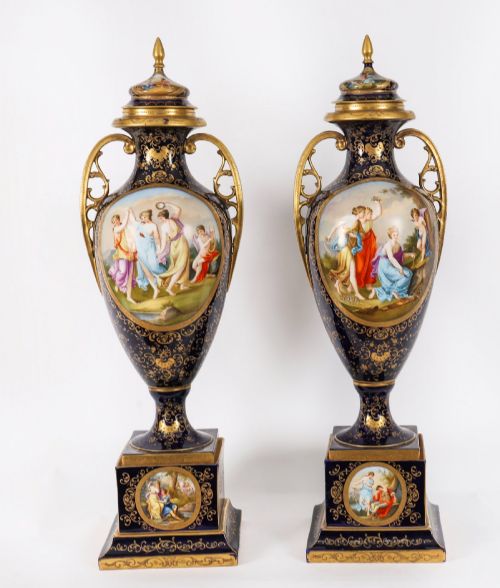
These 19th century blue vases bring together rich cobalt glazes and diverse ceramic traditions, offering striking colour and decorative presence for any room.
19th Century Blue Vases
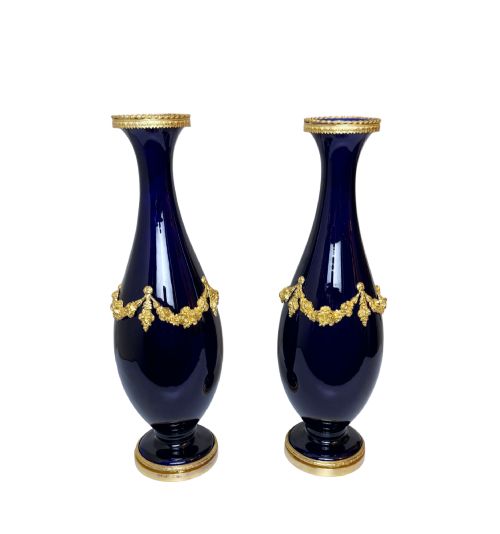
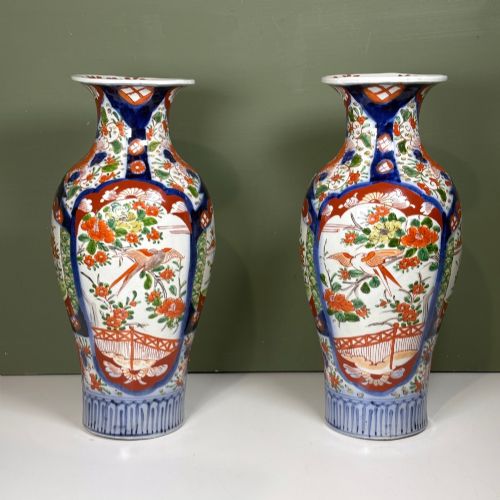
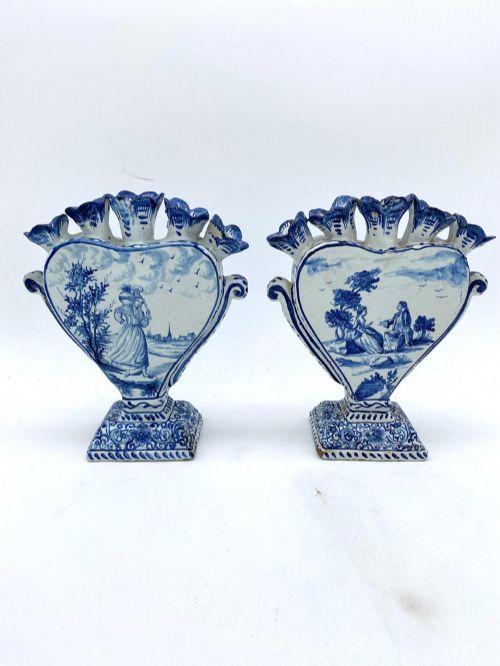
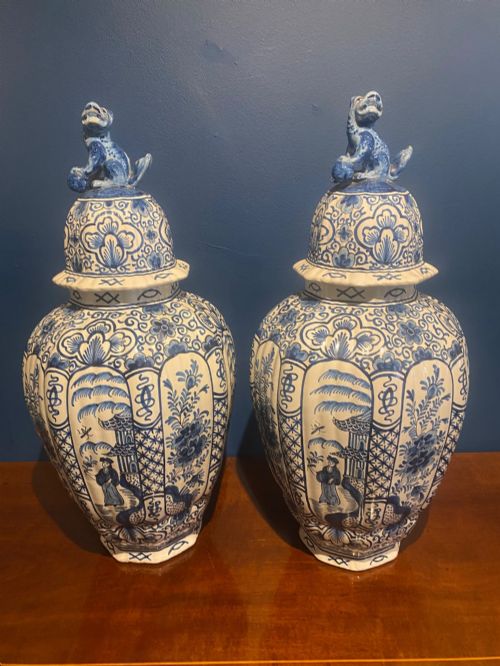
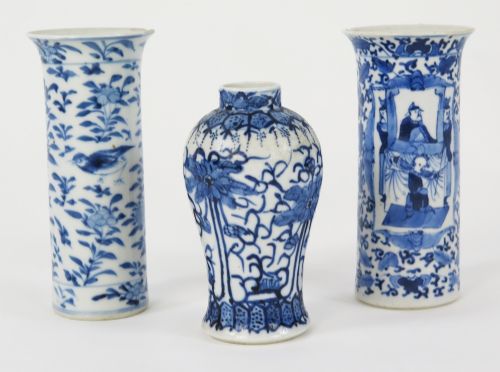
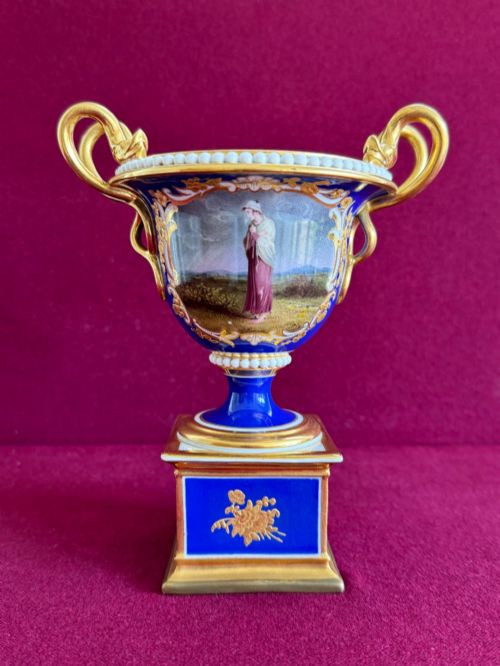
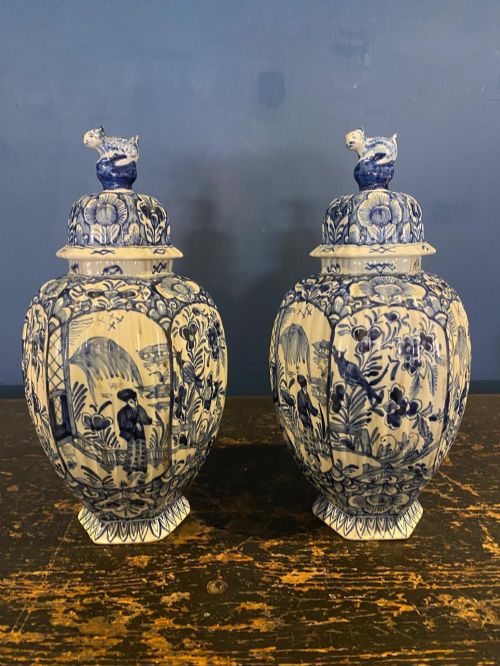
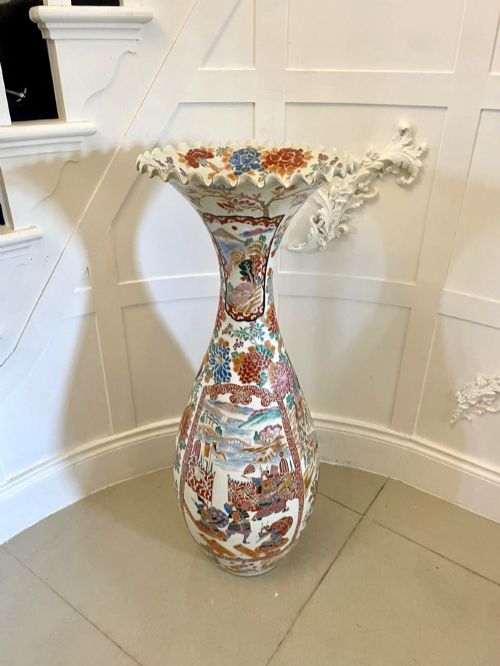
19th century blue vases encompass a broad spectrum of ceramic traditions, ranging from European porcelain and earthenware to Asian blue and white wares. Buyers searching for 19th century blue vases frequently encounter Japanese Imari, Dutch Delft, and French styles produced throughout the Victorian era.
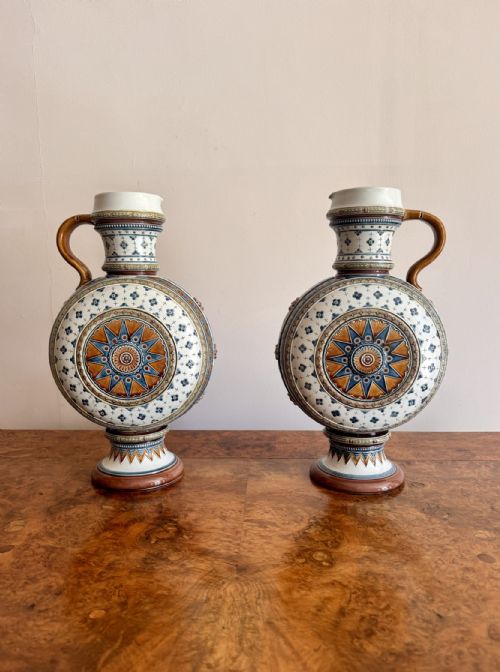
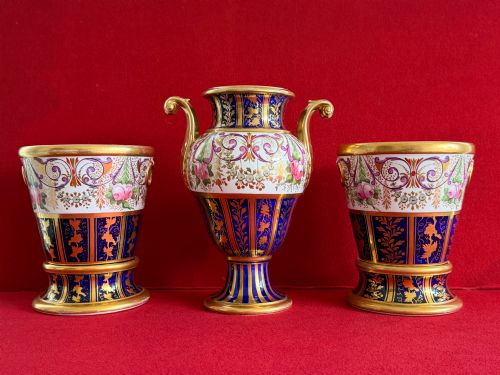
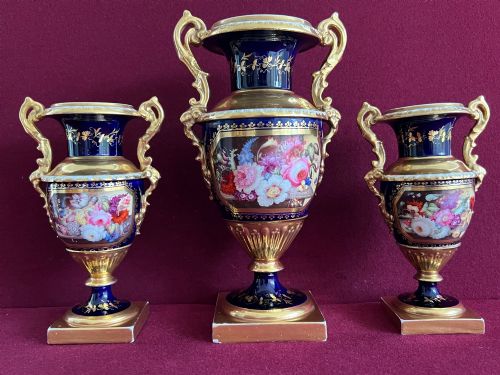
The selection includes matched pairs, garnitures, large floor vessels, and smaller cabinet pieces created across the nineteenth century. Production centres span England, France, Germany, China, and Japan, reflecting global trade and aesthetic exchanges of the period.
Forms vary from traditional campagna urns and bottle vases to floor-standing umbrella stands and table lamps converted from earlier vessels. These objects demonstrate the widespread nineteenth-century fascination with blue ground decoration, spanning earthenware, porcelain, and glass.
Materials and Techniques
Makers utilised fine porcelain, earthenware, and glass bodies, applying deep cobalt blue glazes beneath or over the fired surface. Many European and Asian examples incorporate hand-painted details, sometimes augmented with gilt bronze, ormolu, or enamel highlights.
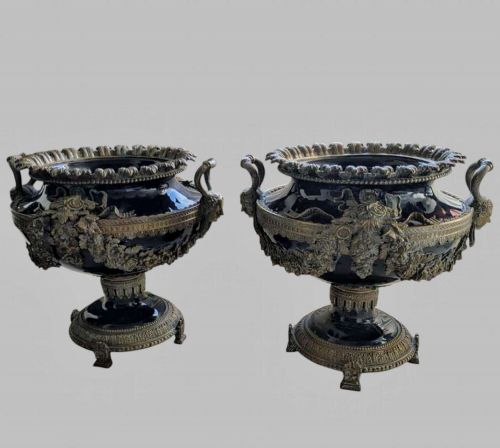
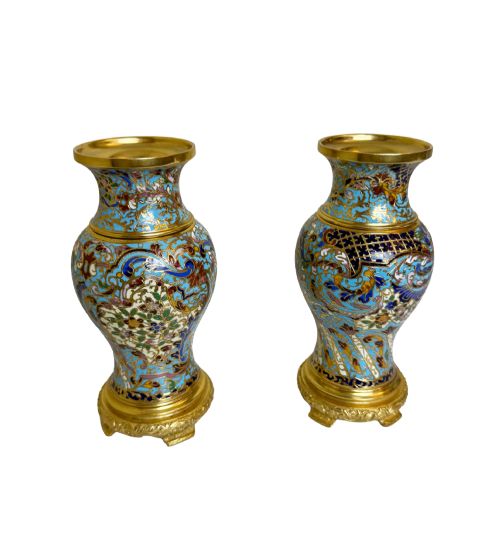
Metal mounts in gilt bronze and champlevé enamel frequently frame ceramic bodies, particularly in French workshop productions. Cloisonné enamel techniques also appear, fusing coloured vitreous pastes within wire compartments on metal foundations.
19th Century Blue Vases Retail Price Guide 2026
Typical asking prices for 19th century blue vases among the pieces listed under this phrase on Sellingantiques today, from the lower quarter to the upper quarter. They describe what is for sale here now, not the wider market.
One exceptional nineteenth-century offering is a ceramic umbrella stand decorated in the vibrant style of Iznik pottery.
Distinctions in Quality
Excellence rests in the crispness of hand-painted cobalt decoration, the depth of the glaze, and the precision of any gilt bronze or ormolu mounts. Finer pieces demonstrate superior kiln control, resulting in consistent blue tones without running or clouding.
The integration of metal mounts with ceramic bodies distinguishes standard production from exceptional studio work. Superior examples display balanced proportions, delicate brushwork by named artists or established manufactories, and well-preserved surface gilding.
Villeroy and Boch·Spode·Flight Barr and Barr·Minton·Royal Vienna·Cantagalli·Coalport
The 19th Century Blue Vases Glossary
- Garniture
- A set of three or more matching vases or vessels designed to be displayed together on a mantelpiece or sideboard.
- Imari
- A style of Japanese export porcelain decorated in underglaze blue, iron red, and gold.
- Ormolu
- Gilded bronze mounts applied to the bases, rims, or handles of ceramic vases.
- Tulipipere
- A vessel with multiple spouts specifically designed for arranging cut tulips individually.
19th Century Blue Vases: Frequently Asked Questions
How do I display these vases safely?
Place large floor vases and heavy ceramic urns away from high-traffic walkways where they might be accidentally knocked. Ensure pedestals or stands are level and capable of supporting the weight of porcelain or metal-mounted pieces.
Keep delicate enamel and gilt-decorated vessels out of direct sunlight to protect surface colours. For table lamps and converted vessels, check electrical wiring periodically to maintain safety.
What is the difference between porcelain and earthenware?
Porcelain is fired at much higher temperatures, resulting in a vitrified, non-porous white body that rings when struck and transmits light through thin sections. Earthenware is a lower-fired ceramic that remains porous unless glazed and tends to be heavier and more opaque.
Nineteenth-century makers utilised both materials, with porcelain favoured for refined table garnitures and earthenware common in larger decorative vessels and majolica.
Were these vases used for flowers?
Many nineteenth-century vessels served purely decorative functions as mantel ornaments, garniture sets, or architectural statements. Forms like tulipieres and specific bottle vases were designed to hold water and botanical stems.
Inspect the interior of a vessel for water staining or residue to determine its historical use. Using delicate antique porcelain for fresh water arrangements requires caution to prevent mineral deposits.