



Gilded Bronze Porcelain Vases
Gilded bronze porcelain vases combine ceramic bodies with cast metal mounts to create decorative centrepieces for nineteenth-century interiors.
Gilded Bronze Porcelain Vases
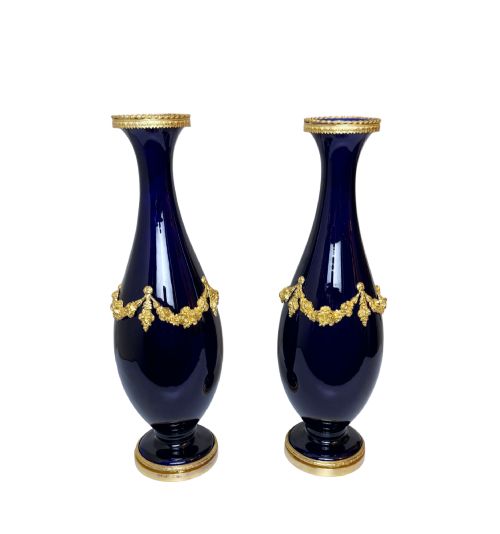
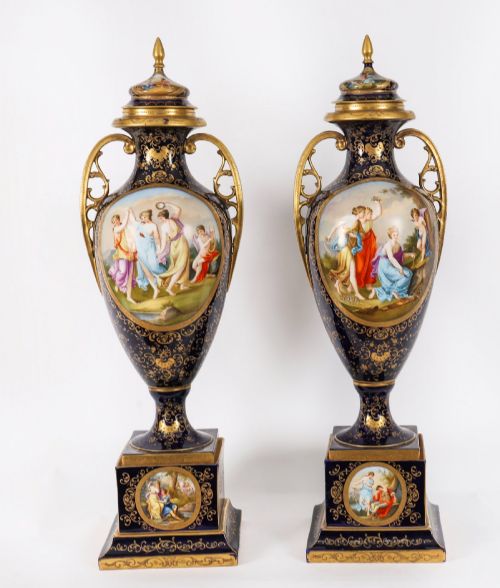
Buyers seeking gilded bronze porcelain vases encounter nineteenth-century European and Japanese decorative arts, predominantly French production and Sevres style works. These objects take the form of lidded urns, standard vases, garniture sets, and occasionally mantel clocks incorporating ceramic vessels.
The inventory demonstrates a strong representation of nineteenth-century manufacturing, including pieces dated to 1880, 1890, and around 1900. Forms range from monumental pairs reaching significant heights to smaller table lamps and decorative urns.
Origin points visible in the evidence include Royal Vienna, Paris porcelain, Satsuma, and Samson workshops alongside French Rococo Revival and Neoclassical styles. Blue and pink porcelain bodies frequently appear paired with elaborate gilt bronze, ormolu, or gilt metal mounts.
Factors influencing quality
The precision and detail of the metal casting distinguish finer mounts from simpler alternatives. Crisp chasing on the ormolu and gilt bronze elements indicates higher workshop standards.
The execution of the painted porcelain surface, including enamel work and gilding quality, contributes to the overall standing of an object. Complete garniture sets and monumental pairs demonstrate greater scale and ambition than single vessels.
Gilded Bronze Porcelain Vases Retail Price Guide 2026
Typical asking prices for gilded bronze porcelain vases among the pieces listed under this phrase on Sellingantiques today, from the lower quarter to the upper quarter. They describe what is for sale here now, not the wider market.
Some nineteenth-century vases found a second career illuminating Victorian sitting rooms after being converted into table lamps.
The Gilded Bronze Porcelain Vases Glossary
- Ormolu
- Gilded bronze produced by applying a mercury and gold amalgam to cast bronze, resulting in a durable metallic finish. This technique characterises nineteenth-century French mountings.
- Garniture
- A set of matching decorative objects, typically comprising three or five pieces designed to display together on a mantelpiece. These sets often include lidded urns and vases.
- Famille Rose
- A palette of opaque enamels dominated by pink or rose colours, utilised in ceramic decoration. This style appears on pieces influenced by Chinese export porcelain.
- Sevres style
- Ceramic production emulating the aesthetic of the French national porcelain manufactory. Such pieces frequently feature rich ground colours and gilt bronze mounts.
- Lidded urn
- A vase form featuring a fitted cover and often raised on a pedestal or stand. These vessels serve decorative functions in nineteenth-century interiors.
Gilded Bronze Porcelain Vases: Frequently Asked Questions
What periods do these vases come from?
The available pieces originate from the nineteenth century, with specific examples dated to the 1880s, 1890s, and around 1900. Production spans this era across French and other European workshops.
Stylistic influences include French Rococo Revival, Neoclassical, and Chinoiserie alongside Japanese Meiji period manufacture.
How were these vases used historically?
These objects served primarily as decorative items displayed on mantelpieces, tables, and cabinets within nineteenth-century homes. Garniture sets were arranged symmetrically to adorn formal reception rooms.
Certain examples were subsequently adapted into table lamps while retaining their original ceramic and bronze components.
What materials make up these pieces?
The construction centres on ceramic bodies made from porcelain, Paris porcelain, Royal Vienna porcelain, or earthenware. These are combined with gilt bronze, ormolu, or gilt metal mounts.
Surface decoration incorporates hand-painted enamels, gilding, and occasional silk elements depending on the specific maker and style.
How do I identify Sevres style pieces?
Sevres style vases are identified by their characteristic ceramic bodies, often rendered in colours such as pink or blue with elaborate gilt embellishments. They are frequently fitted with ornamental ormolu mounts.
These works reflect the aesthetic of the French manufactory, though many were produced by other European makers during the nineteenth century.