
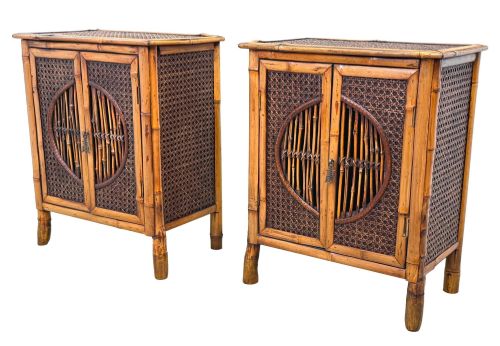
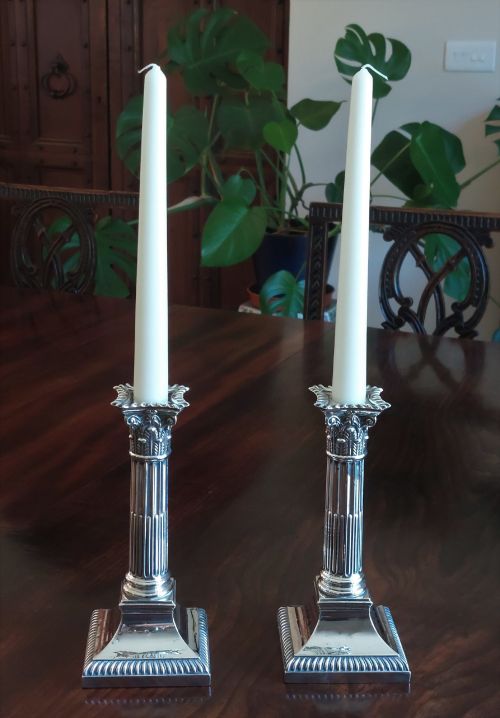
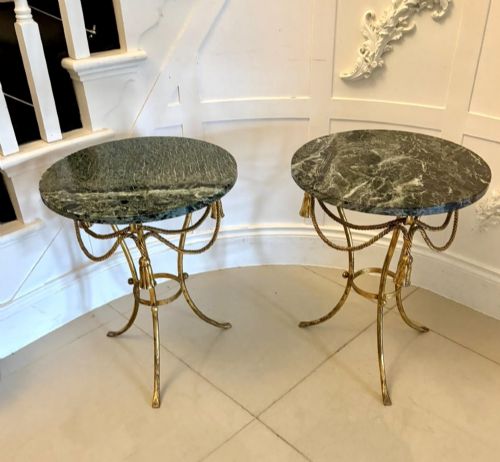
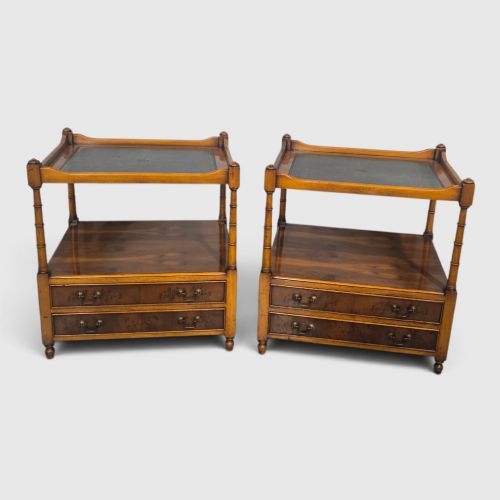
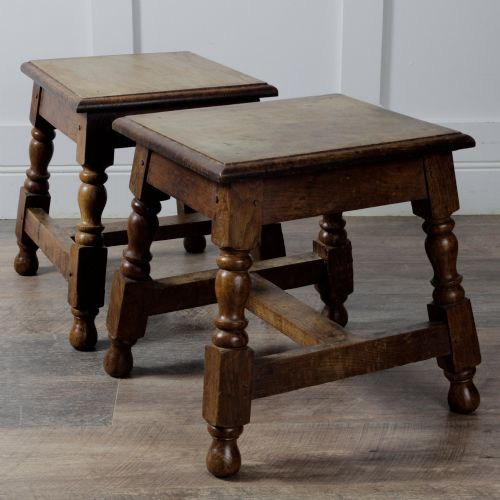
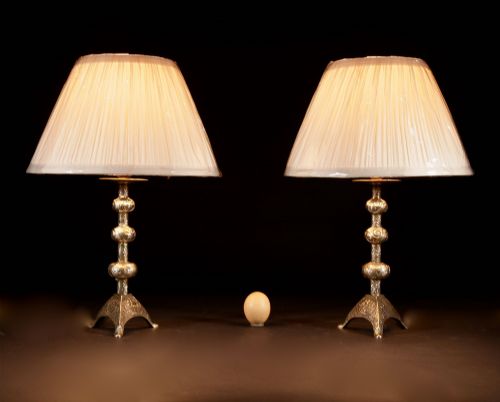
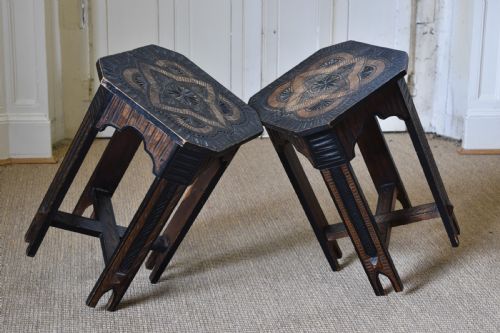
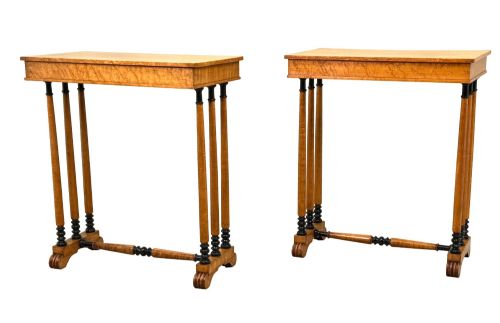
Pair of Accent Tables
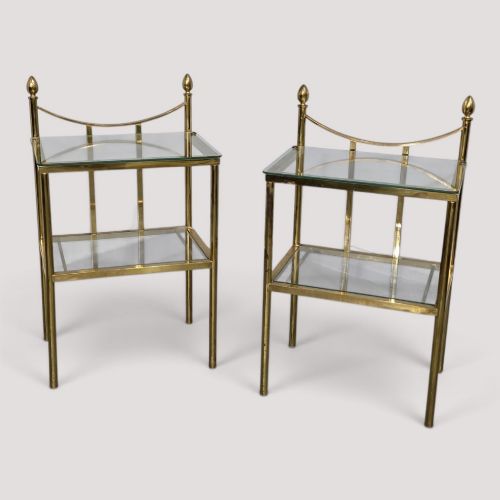
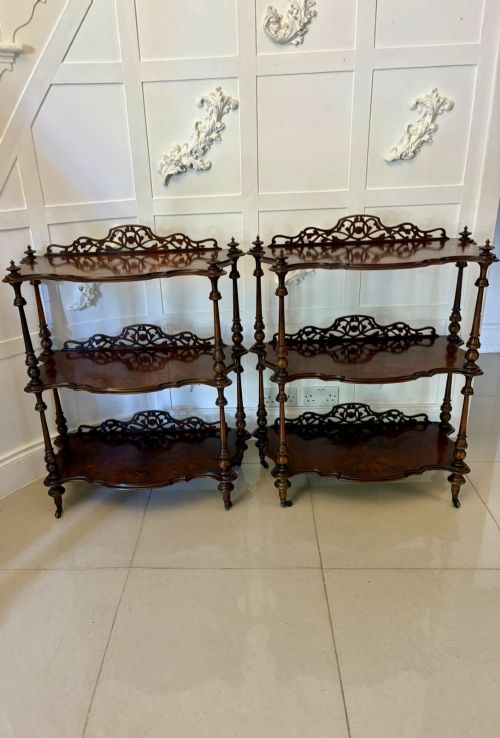
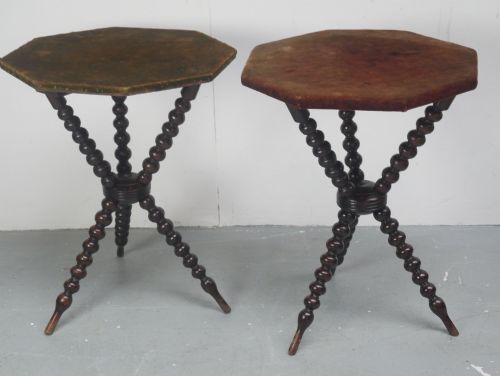
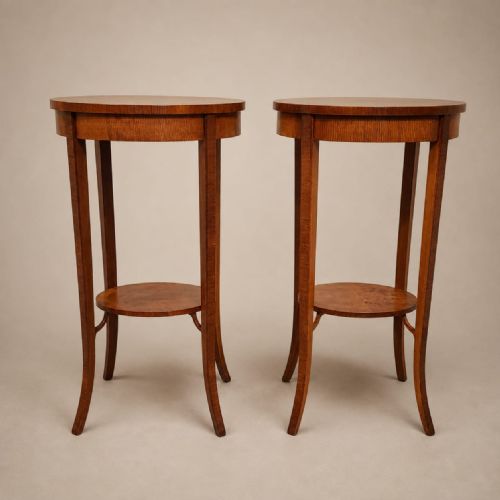
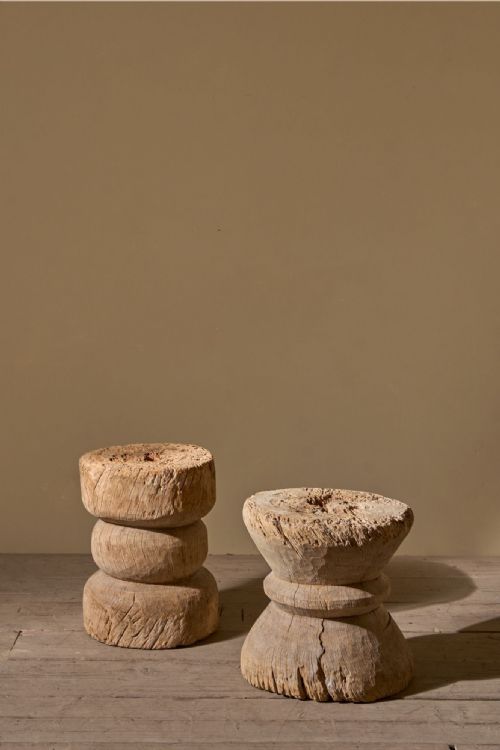
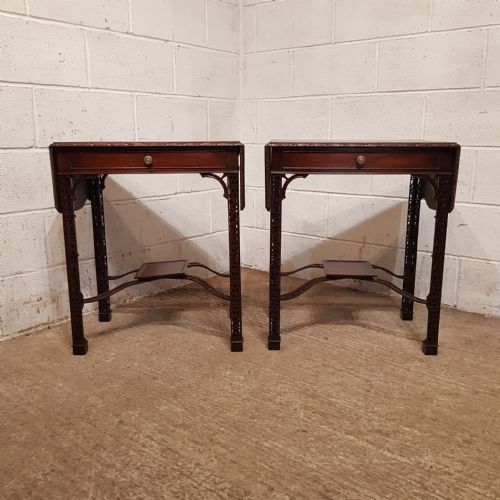
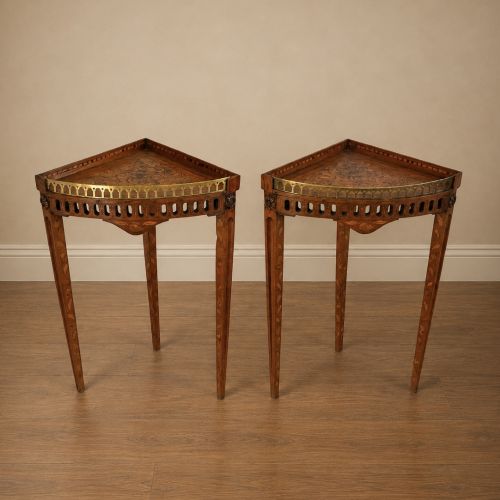
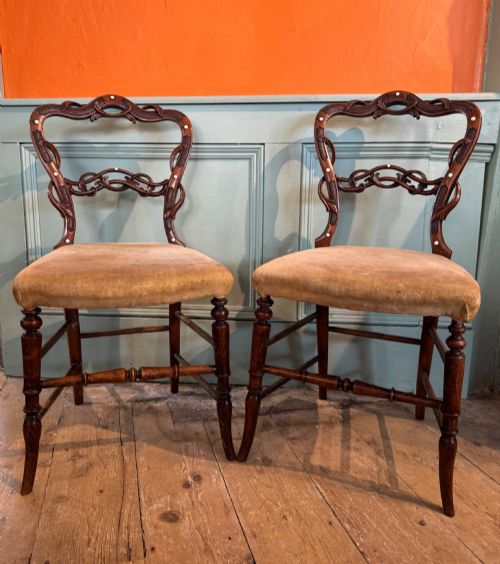
These pair of accent tables bring symmetry and matched utility to a room, offering surface space in forms shaped by Victorian, Edwardian, and Art Deco hands.
Pair of Accent Tables
A pair of accent tables serves the home as matching surfaces for lamps, drinks, or display, functioning together to anchor a room's layout. When searching this phrase, buyers encounter forms ranging from low side tables and lamp tables to occasional tables and wine tables.
The selections span distinct periods, drawing from Victorian, Edwardian, and 1930s designs alongside earlier influences. Origin points vary from English workshops to French ateliers and Asian interiors, providing diverse interpretations of matched furniture.
How they were made
Construction relies on timbers such as walnut, mahogany, oak, yew, and hardwood, frequently shaped through turning, chip carving, or marquetry inlay. Cabinetmakers and metalworkers utilised brass, gilt bronze, marble, glass, and leather to build durable surfaces and decorative details.
Methods extend to specialised techniques like parcel gilt finishing, brass gallery mounting, and jointed construction. These processes combine structural joinery with surface ornamentation to create paired decorative items.
Pair of Accent Tables Retail Price Guide 2026
Typical asking prices for pair of accent tables among the pieces listed under this phrase on Sellingantiques today, from the lower quarter to the upper quarter. They describe what is for sale here now, not the wider market.
Listings feature oak, walnut, mahogany, and hardwood alongside brass, marble, and gilt bronze elements.
What varies in quality
Excellence rests on the precision of the timber selection, such as figured walnut, birdseye maple, or kingwood veneers, matched carefully across both pieces. Superior examples exhibit refined carving, clean inlay work, and robust structural joinery that withstands daily use.
The integration of secondary materials defines the tier of manufacture, from heavy cast brass galleries and ormolu mounts to fine marble tops. Consistency between the two objects determines whether a set reads as a unified whole or a looser match.
Garrard & Co.·Liberty & Co.
The Pair of Accent Tables Glossary
- Lamp table
- A small table specifically proportioned to hold a table lamp next to seating. These pieces prioritise a compact surface area over deep storage.
- Marquetry
- A decorative technique applying pieces of veneer to a structure to form intricate pictorial designs. Craftsmen use varied wood tones to create contrast.
- Ormolu
- Gilt bronze ornamentation applied to furniture and lighting fixtures. The finish adds metallic brilliance to wood and marble surfaces.
- Occasional table
- A movable stand used intermittently around a room for display or utility. They appear in diverse woods and top shapes.
- Gallery
- A raised decorative rail running along the edge of a table top to prevent items from sliding off. They are frequently formed from pierced or cast brass.
Pair of Accent Tables: Frequently Asked Questions
How do I use a pair of accent tables?
Place them symmetrically flanking a sofa, fireplace, or bed to create visual balance in a room.
They provide matching surfaces for lighting, books, or decorative objects while tying the furniture arrangement together.
What is the difference between a side table and a lamp table?
Side tables offer general surface utility next to seating or walls, accommodating various domestic tasks.
Lamp tables are specifically scaled to hold lighting fixtures, typically featuring compact tops and sturdy bases.
How do I identify a Victorian accent table?
Look for dense timbers like walnut and mahogany, often paired with rich grain patterns or carved scrollwork.
Construction from this era frequently incorporates dark finishes and substantial proportions reflecting nineteenth-century domestic tastes.
Are matched pairs always identical?
Some pairs are constructed simultaneously as exact duplicates from the same workshop.
Others are matched sets assembled later, sharing general dimensions, periods, and materials while retaining subtle individual variations.