

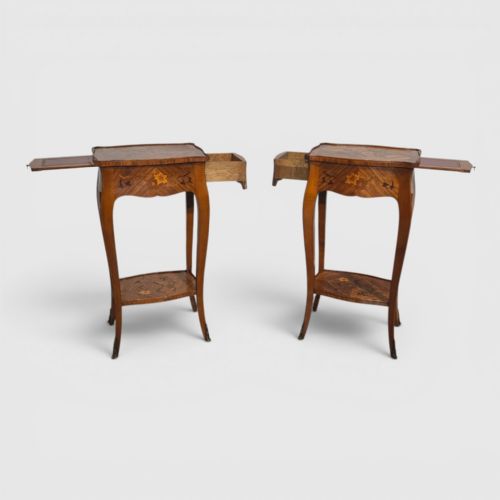
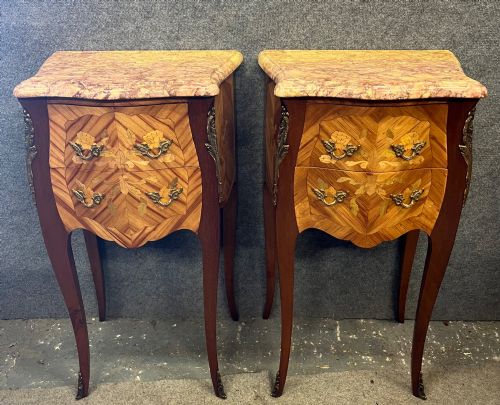
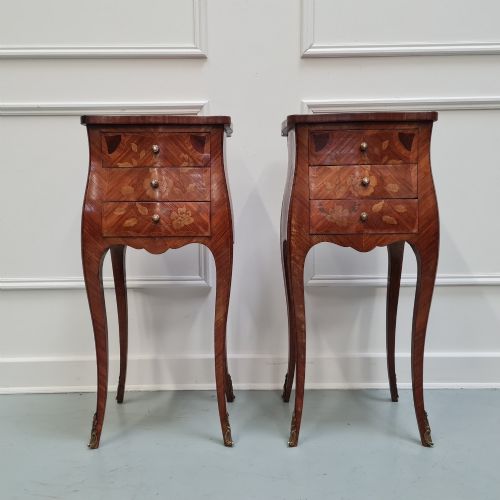
Pair Inlaid Bedside Tables
Pair inlaid bedside tables bring matched symmetry and ornamental wood detail to a bedroom, combining practical surface space with historical craftsmanship.
Pair Inlaid Bedside Tables
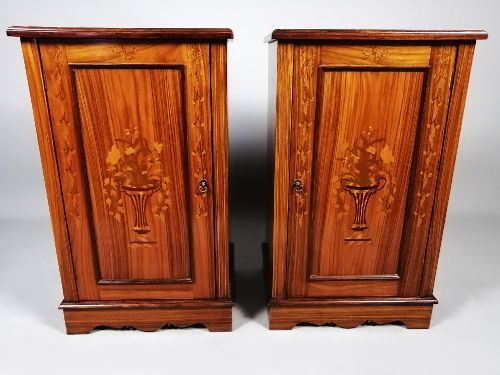
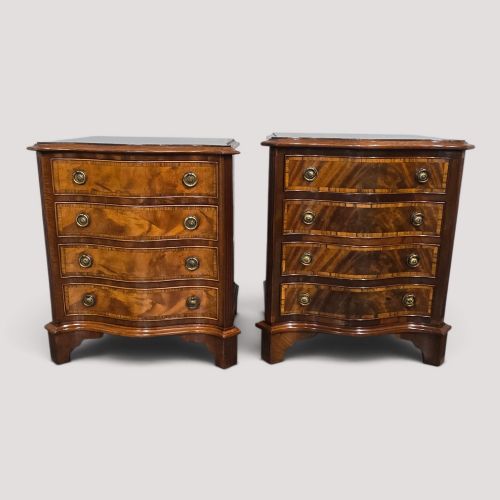
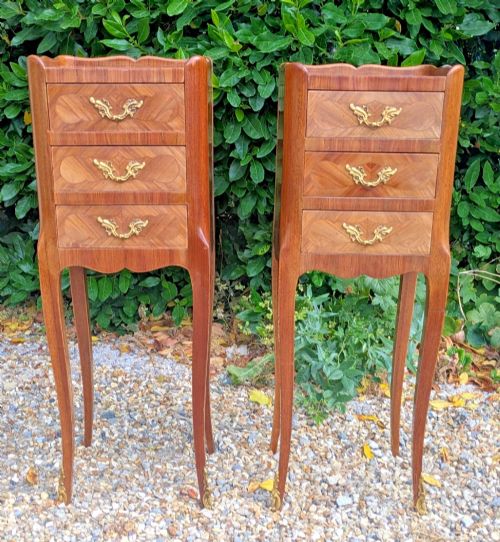
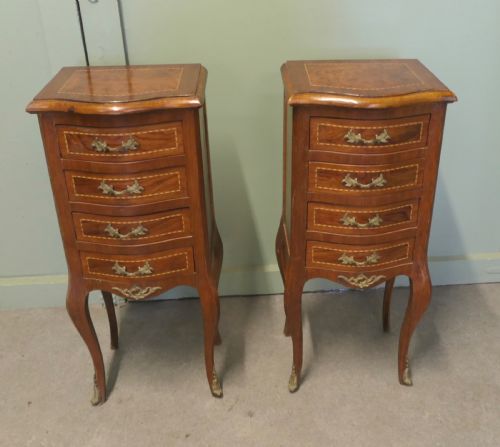
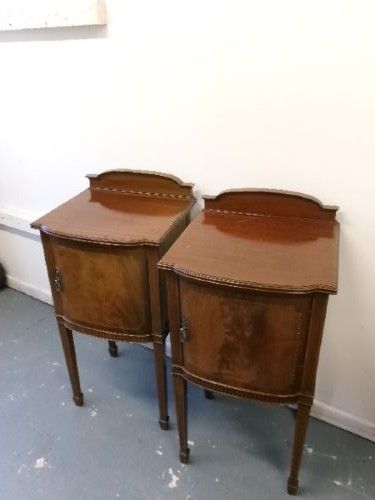
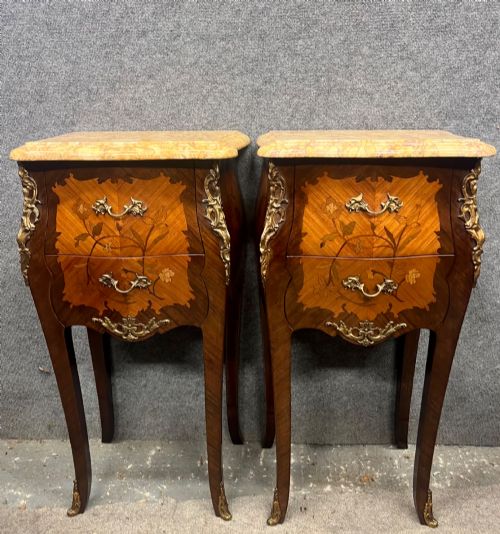
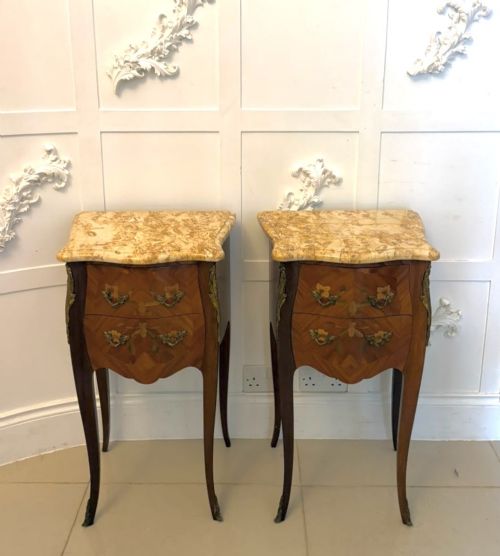
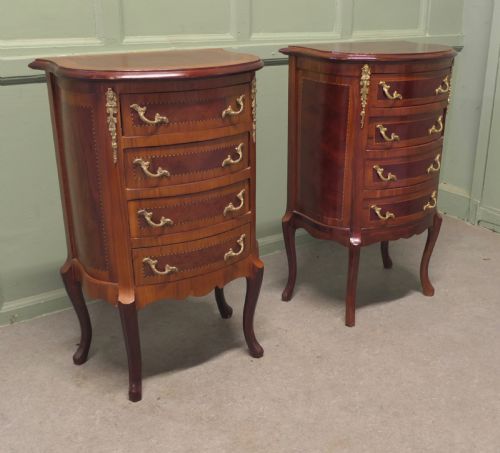
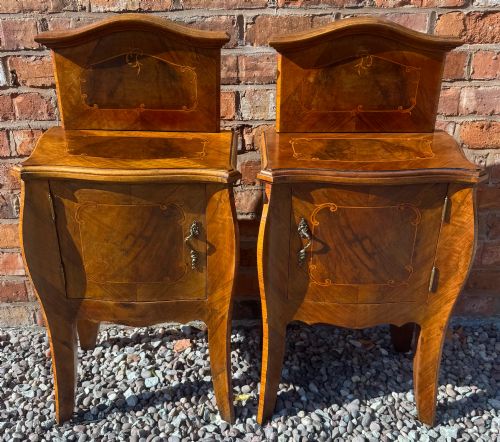
When searching for pair inlaid bedside tables, buyers encounter matching sets of small cabinets, cupboards, and chests designed to sit beside a bed. The selection spans the nineteenth century through the 1930s, incorporating Edwardian designs alongside continental influences.
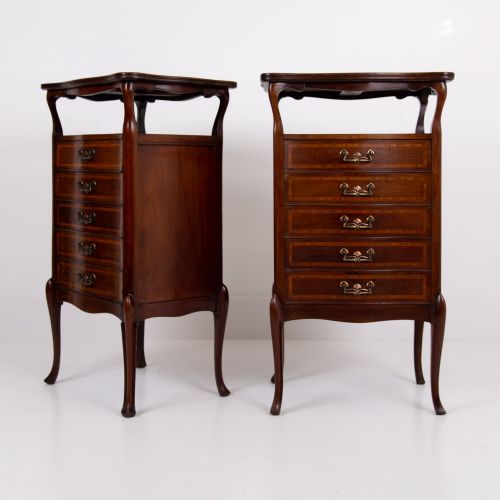
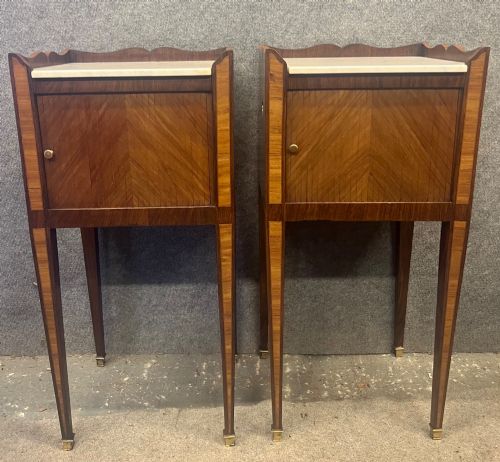
Most examples function as enclosed storage with small doors or drawers, whilst others provide open surfaces as lamp tables or occasional tables. Proportions tend to be neat, accommodating compact domestic spaces while retaining sufficient surface area for nightly essentials.
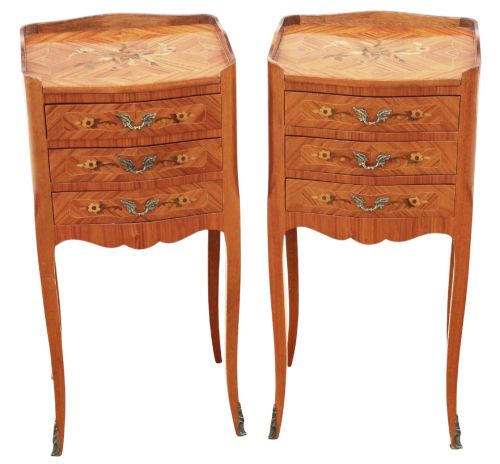
Origin varies between British workshops rooted in Edwardian and Victorian traditions and continental studios favouring French styles such as Louis XV and Rococo Revival. These geographical distinctions shape the overall silhouette and the complexity of the surface ornamentation.
Materials and Construction
Cabinet makers utilised a foundation of solid timbers like mahogany, walnut, and ash, applying contrasting wood veneers over the primary structure. Marquetry and parquetry patterns were meticulously cut and fitted into the surfaces to create floral or geometric motifs.
Many continental pieces incorporate luxurious elements such as kingwood, rosewood, and satinwood, frequently complemented by veined marble tops. Structural details are further enhanced with cast brass mounts, ormolu, and delicate stringing lines that trace the edges of drawers and panels.
A few unusual cupboards double as shoe storage, proving that even Victorian tidiness required clever concealment.
Evaluating the Pieces
Distinction between tiers of work rests on the precision of the timber matching and the intricacy of the inlay. Finer examples display seamless veneer alignment across opening doors and drawers, demonstrating disciplined hand craftsmanship.
The selection of secondary woods and the weight of added mounts dictate the structural integrity and finish. Pieces featuring integrated marble slabs, finely chased ormolu, and balanced proportions command greater appreciation among collectors.
Sormani
The Pair Inlaid Bedside Tables Glossary
- Marquetry
- A decorative technique where small pieces of veneer are assembled into pictorial or floral designs on a wooden ground. This method requires steady hands and precise cutting to ensure tight joints between varying timber species.
- Ormolu
- Gilded bronze mounts applied to furniture for decorative accent during the eighteenth and nineteenth centuries. These metal additions catch the light and emphasise the structural lines of the cabinet.
- Parquetry
- Geometric wood inlay forming repeating patterns such as cubes or chequers across a tabletop or drawer front. The technique relies on exact mathematical repetition of contrasting wood grains.
- Stringing
- Thin lines of contrasting timber inlaid into grooves along the borders of furniture panels and legs. This understated detail frames the primary wood and defines the edge geometry.
- Kingwood
- A dense, richly figured tropical timber prized for its dark purple-brown tones and distinctive grain patterns. Cabinet makers selected it for high-status veneering work.
Pair Inlaid Bedside Tables: Frequently Asked Questions
What is the difference between a bedside cabinet and a bedside table?
Bedside cabinets generally feature enclosed storage behind small doors, whereas bedside tables often rely on open surfaces or single drawers for access.
Both forms were constructed to hold lamps and books, differing primarily in how they conceal stored items.
How do I distinguish Edwardian pieces from Victorian ones?
Edwardian examples tend to exhibit lighter mahogany frames, delicate satinwood inlays, and Sheraton Revival influences that favour airier proportions. Victorian counterparts frequently utilise heavier rosewood or walnut timbers with denser marquetry.
Construction methods also shift subtly, with Edwardian pieces leaning towards refined domestic utility.
How do I care for marble-topped bedside tables?
Marble surfaces require gentle cleaning with a damp cloth and mild soap to preserve the polished stone without scratching the natural mineral structure. Acidic liquids should be kept away from the surface to prevent etching.
The wooden base benefits from occasional waxing suited to the specific veneer timber.