






Early 20th Century Nightstands
Early 20th century nightstands bring practical bedside storage and period character to a bedroom, combining functional design with historic timber work.
Early 20th Century Nightstands
Early 20th century nightstands encompass a diverse array of bedside tables, cabinets, commodes, and cupboards produced during the opening decades of the century. You are most likely to encounter French and English examples ranging from plain utilitarian forms to elaborate revival styles.
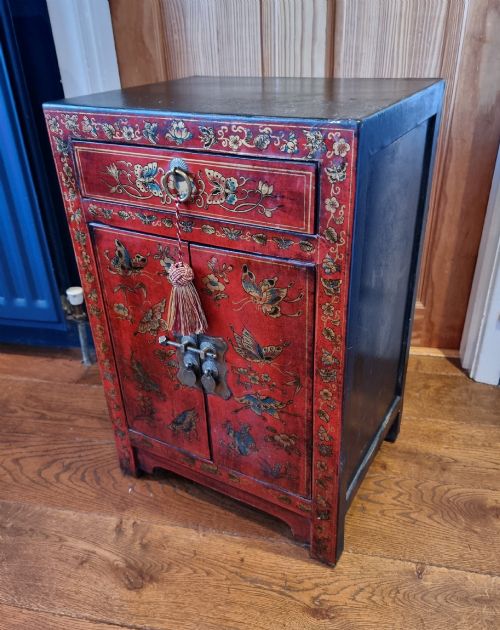
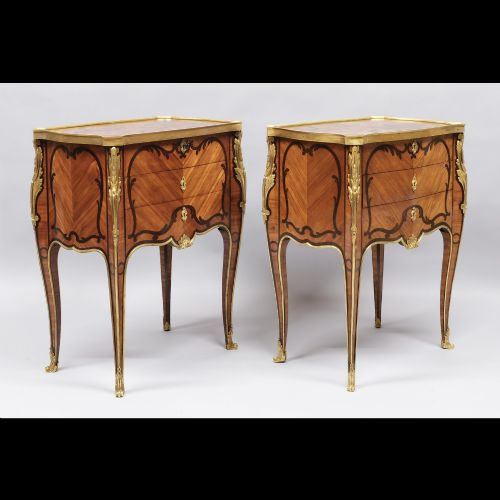
The material palette of these pieces draws heavily upon traditional cabinet timbers such as walnut, mahogany, oak, and satinwood, frequently paired with marble tops or brass hardware. Decorative treatments include hand-painted detailing, lacquer work, parquetry, and marquetry.
Stylistic influences span several historicist revivals, notably Jacobean, Louis XV, Louis XVI, Sheraton, and French Provincial, alongside Arts and Crafts simplicity and Chinoiserie ornament. Occasional lighting pieces like table lamps and specialised book-tables also appear under this designation.
Materials and Construction
Carpenters utilised solid woods and decorative veneers like walnut, mahogany, and satinwood over sturdy carcases, often incorporating parquetry and marquetry patterns into the surface design. Marble tops provided durable, wipe-clean surfaces for bedside use.
Metal components such as brass featured in handles, mounts, and specialised lighting fittings like table lamps, while specialised finishes included hand-painted detailing, gilding, and tooled leather bindings.
Listings feature oak, walnut, mahogany, and satinwood alongside marble tops and brass mounts.
Assessing Quality and Execution
Quality in these bedside pieces rests upon the precision of the cabinetmaking, visible in the snugness of drawer joints, the alignment of parquetry or marquetry patterns, and the stability of the frame. Finer examples display carefully selected figured walnut or mahogany veneers and integrated marble tops.
Decorative execution separates standard production from superior work, seen in the crispness of hand-carved revival details, the delicacy of painted and gilded motifs, and the quality of applied brass hardware.
WAS Benson·Sormani
The Early 20th Century Nightstands Glossary
- Parquetry
- A geometric mosaic of wood pieces used for decorative floors and cabinet surfaces. It creates repeating patterns across bedside table tops.
- Marquetry
- The art and craft of applying pieces of veneer to a structure to form decorative designs. Floral and pictorial motifs often adorn the front of these cabinets.
- Commode
- A low chest of drawers or cabinet. French examples frequently feature marble tops and intricate inlay.
- Satinwood
- A durable, lustrous wood from tropical trees, typically yellowish-brown in colour. It provides a bright, reflective surface for cabinet panels.
- Chinoiserie
- European decorative art imitating Chinese artistic styles. This style manifests in lacquered cupboards bearing oriental scenes.
Early 20th Century Nightstands: Frequently Asked Questions
What styles define early 20th century nightstands?
These bedside pieces reflect a mix of revival aesthetics, including Louis XV, Louis XVI, Jacobean, and Sheraton styles. French Provincial forms and Chinoiserie lacquer work also appear frequently.
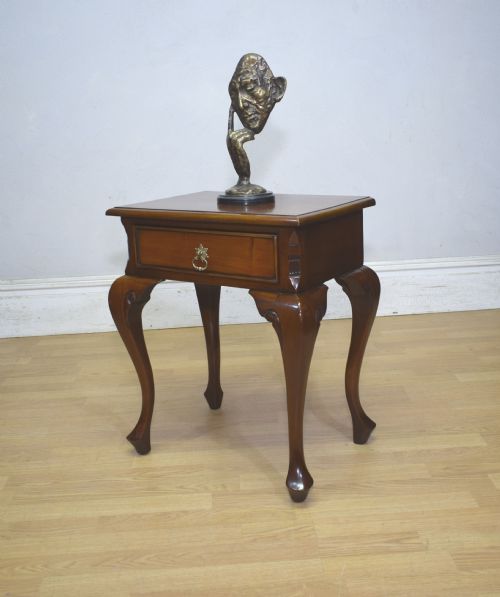
Craftsmen drew upon historical designs while adapting proportions for modern bedrooms of the era, resulting in both formal inlaid cabinets and simpler oak tables.
Are marble tops original to these bedside tables?
Marble tops on French and continental cabinets served as a durable, hygienic surface for washing basins and bedside items. Many pieces retain their fitted stone tops.
These slabs were selected to complement the walnut, mahogany, or painted finishes of the underlying woodwork.
How do I distinguish between French and English pieces?
French examples often favour serpentine fronts, commode proportions, parquetry, and marble surfaces influenced by Louis styles. English versions tend to follow regional revival patterns in oak or mahogany.
Hardware placement and timber selection further separate continental cabinetmaking traditions from British workshops of the period.
How should I care for veneered nightstands?
Polishing veneered and marquetry surfaces with appropriate wax maintains the lustre of woods like satinwood and walnut. Avoiding excess moisture protects delicate inlays.
Placement away from direct heat sources prevents timber movement and preserves the stability of the joints.