




Neoclassical Bedside Cupboards
Neoclassical bedside cupboards bring balanced proportions and refined timber work to the bedroom, offering useful surface space and discreet storage.
Neoclassical Bedside Cupboards
Neoclassical bedside cupboards encompass bedside cabinets, side cabinets, and pedestal cabinets shaped by classical restraint and symmetry. These pieces emerge across the eighteenth, nineteenth, and early twentieth centuries, drawing on French Empire, Italian Empire, Gustavian, Louis XVI, and Regency idioms.
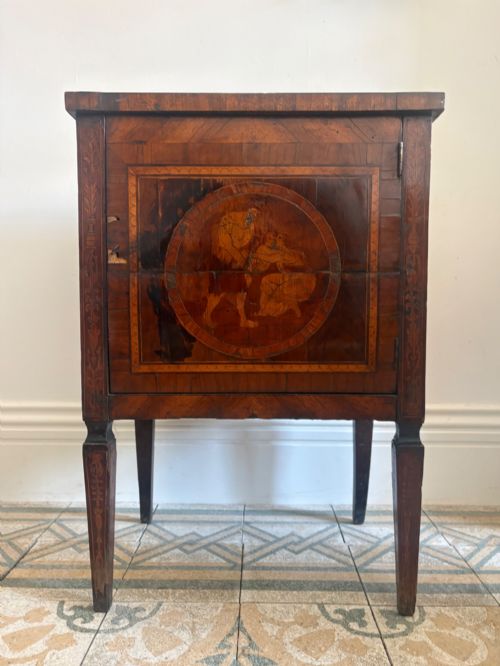
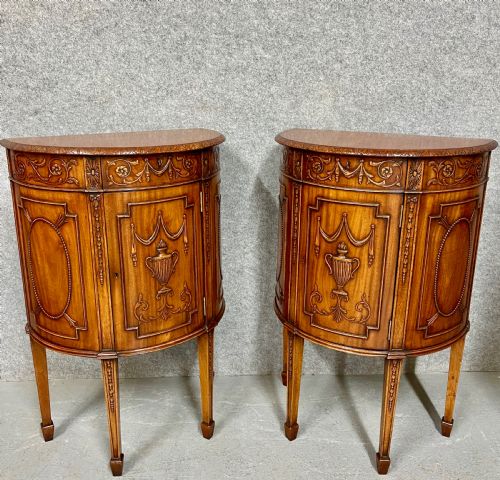
The versions most commonly met on this page include mahogany and walnut bedside cabinets from the nineteenth century alongside painted French night tables and inlaid satinwood or fruitwood pieces from the Edwardian and Neo-Classical Revival periods. Pairs appear alongside single pedestals, offering options for symmetrical bed placement.
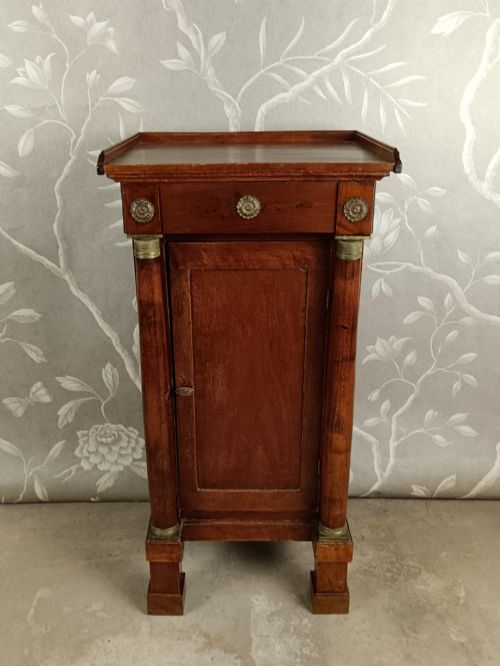
Forms range from oval and rectangular pedestal cabinets to console cabinets fitted with marquetry or plain timber surfaces. Their origins span Italy, France, Scandinavia, and Britain, each region interpreting classical order through local cabinet-making traditions.
Materials and Construction
Cabinet-makers relied primarily on solid and veneered timbers such as mahogany, walnut, satinwood, and fruitwood, often enhanced with contrasting stringing or inlaid marquetry. Pine and secondary woods served for carcases and interior framing, whilst painted finishes appeared on continental pieces.
Decorative hardware frequently incorporated cast brass mounts, handles, and gallery rails that complemented the architectural lines of the timberwork. Selected models topped these structures with fitted marble slabs, adding weight and a cool durable surface for daily use.
Current listings feature pieces spanning the eighteenth century through to the nineteen-twenties, incorporating mahogany, walnut, marble, and paint.
Assessing Quality
Quality rests in the precision of the cabinet-making, visible in the tightness of the joinery and the selection of figured wood veneers or detailed marquetry inlay. Superior examples maintain crisp architectural mouldings and harmonious proportions without losing structural integrity.
The integration of materials also defines the tier of a piece, from the weight of cast brass mounts to the quality of fitted marble tops and smoothly operating drawer linings. Original painted surfaces or well-preserved French polish distinguish better-surviving instances.
The Neoclassical Bedside Cupboards Glossary
- Marquetry
- Decorative patterns formed by fitting small pieces of veneer into a wood ground. This technique creates geometric or floral designs across drawer fronts and cabinet doors.
- Pedestal Cabinet
- A standalone vertical cabinet usually set on a plinth or small feet. It provides enclosed storage beneath a flat top surface.
- Ormolu
- Gilt-bronze mounts applied to furniture for decorative accent. These metal elements catch the light and punctuate the dark timber surfaces.
- Gustavian
- The Swedish interpretation of French neoclassical design, characterised by lighter proportions and often pale painted finishes. It brings a restrained elegance to domestic interiors.
- Commodino
- An Italian term for a small bedside chest or cabinet. These diminutive pieces combine a drawer with a small cupboard door below.
Neoclassical Bedside Cupboards: Frequently Asked Questions
What is a neoclassical bedside cupboard?
It is a small cabinet designed for use beside a bed, built according to the symmetrical and restrained principles of neoclassical design. These pieces often feature straight lines, classical proportions, and restrained timber veneers.
They provide enclosed storage and a convenient surface for bedside items, appearing in various regional styles from British Regency to continental Empire and Gustavian.
How do I choose a pair?
Matching pairs in this category often start as matched items from the late nineteenth or early twentieth century revival periods. Examine the timber grain and dimensions carefully to ensure visual balance across the bed.
Single pedestals can also be paired if their height, wood tone, and neoclassical details share a similar architectural language.
Where were these cupboards made?
The pieces originate from across Europe, with strong representations from Britain, France, Italy, and Scandinavia. Each region applied its own interpretation to neoclassical forms.
Italian workshops favoured walnut and intricate marquetry, whilst French and Swedish makers utilised painted finishes or polished mahogany.
How do I clean the marble tops?
Marble surfaces benefit from gentle dusting with a soft cloth and occasional wiping with warm water and neutral soap. Avoid acidic cleaners or abrasive pads that can etch or dull the stone polish.
Dry the surface thoroughly after cleaning to prevent water spots from settling into the natural stone.
Are these pieces fragile?
Solid wood and veneered carcases are robust when handled with care, though antique veneers and marquetry require stable room humidity to prevent lifting. Lift rather than drag cabinets when repositioning them.
Marble tops add considerable weight and should be secured or removed if the entire cabinet must be transported.