


Golden Wood Bedside Cupboards
Golden wood bedside cupboards bring warm grain and compact storage to a bedroom, prized for their figured satinwood, birch, and elm surfaces.
Golden Wood Bedside Cupboards
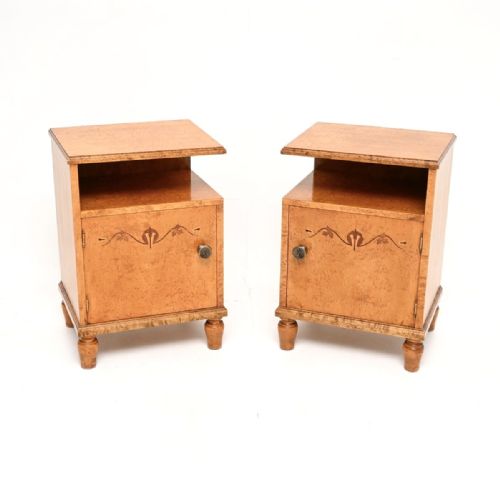
The selection includes single cupboards and matched pairs originating primarily from the nineteenth century through the Art Deco period. Cabinets often feature enclosed doors or open surfaces designed to sit neatly beside a bed.
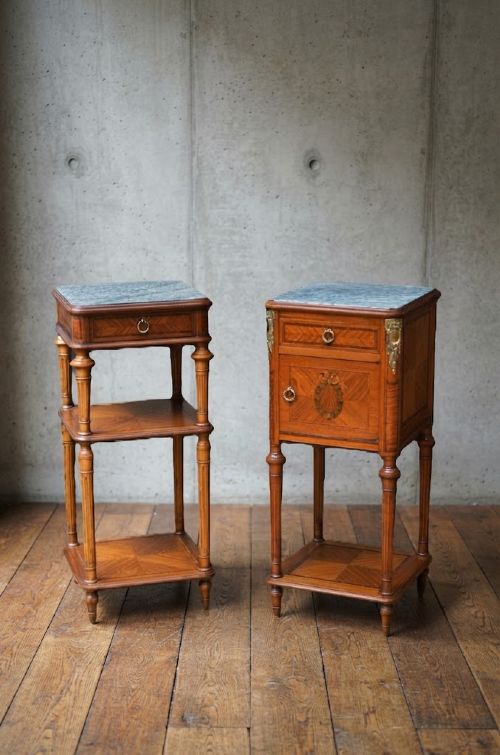
Revival styles heavily influence the inventory, with Louis XV, Louis XVI, and Neo-Classical designs appearing alongside clean-lined Art Deco tables. These pieces combine practical bedside storage with decorative inlay and figured wood grain.
How they were made
Cabinet makers utilised select timbers such as satinwood and burr elm, often applying veneers over secondary woods to display striking grain patterns. Ebony inlay and boxwood stringing frequently accent the lighter golden surfaces.
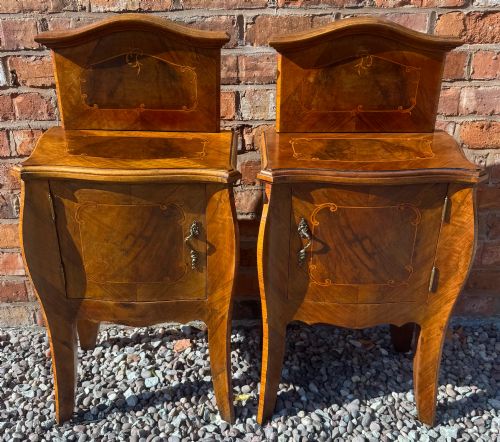
Many nineteenth-century examples incorporate shaped fronts, such as bowfronts, requiring skilled wood-bending techniques. Tops occasionally employ inset marble slabs to provide a durable, decorative surface for daily use.
Hardware typically consists of brass handles and hinges, while internal construction relies on traditional joinery methods suited to smaller pedestal cabinets and pot cupboards.
Listings span from the Victorian era into the 1930s, featuring materials like satinwood, burr elm, marble, and brass.
What varies in quality
The quality of golden wood bedside cupboards rests largely on the choice and matching of timber veneers. Superior pieces display rich, highly figured grain patterns across the primary surfaces without disruption.
Craftsmanship shows in the precision of decorative inlays, such as ebony or boxwood stringing, and the seamless integration of shaped fronts like bowfronts or serpentine edges.
Structural integrity, the condition of applied marble tops, and the retention of original brass hardware further distinguish finer examples from simpler utilitarian pieces.
Gillows
The Golden Wood Bedside Cupboards Glossary
- Satinwood
- A hard, durable timber with a natural golden lustre that takes a fine polish. It was a favoured material for high-end cabinet making during the nineteenth century.
- Bowfront
- A curved cabinet front that swells outward in the centre. This shape required advanced woodworking skill to execute cleanly on smaller bedside furniture.
- Marquetry
- The art of applying decorative pieces of veneer to a structure to form intricate designs. It frequently appears on revival pieces using contrasting dark and light woods.
- Pot cupboard
- A traditional name for a small bedside cabinet originally built to house a chamber pot. These pieces evolved into general bedside storage units and lamp stands.
- Stringing
- Thin lines of contrasting wood inlay used to outline panels and drawers. It adds delicate linear detail to satinwood and mahogany furniture.
Golden Wood Bedside Cupboards: Frequently Asked Questions
Are these cupboards sold as pairs?
Many listings include matched pairs, which are particularly sought after for placing on either side of a larger bed.
Single cabinets also appear frequently, offering versatile storage options for smaller bedrooms or guest rooms.
What is the difference between a cabinet and a table?
Bedside cabinets feature enclosed storage space behind doors, historically serving to keep chamber pots or personal items out of sight.
Bedside tables often provide open surfaces or shelves, particularly evident in later Art Deco designs focused on minimalist lines.
How do I care for satinwood surfaces?
Satinwood benefits from regular dusting with a soft, dry cloth to protect the polished finish from abrasive particles.
Avoid placing these golden wood pieces in direct sunlight or near heat sources to prevent the veneers from drying out.
Did these pieces always have marble tops?
Marble tops appear on specific nineteenth-century and revival pieces to provide a durable, water-resistant surface next to the bed.
Wood-topped versions are equally common, showcasing the natural grain and inlay of the satinwood or elm directly on the upper surface.