


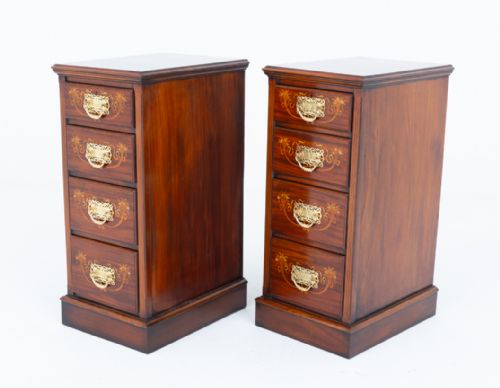


Edwardian Marquetry Nightstands
Edwardian marquetry nightstands are refined bedroom cabinets decorated with delicate wood inlays, offering both practical bedside storage and classic period charm.
Edwardian Marquetry Nightstands
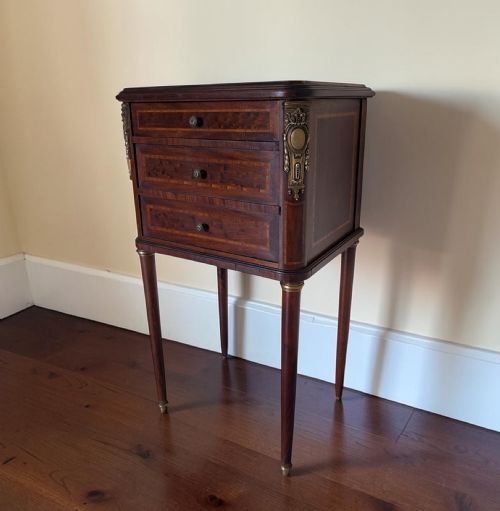
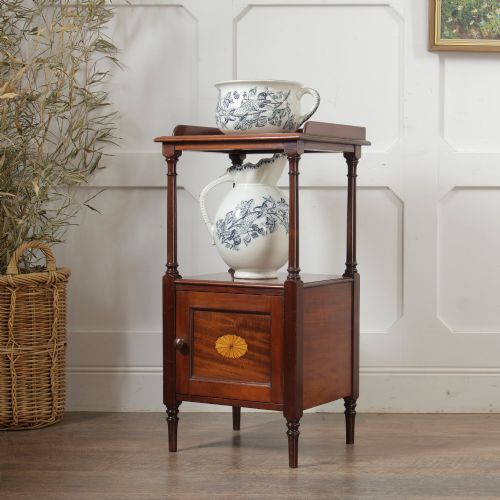
Edwardian marquetry nightstands encompass a range of bedside furniture types, including bedside cabinets, pot cupboards, bedside chests of drawers, and lamp tables. These pieces frequently appear alongside related bedroom forms such as wardrobes, chests of drawers, and occasional tables.
The objects span multiple periods and styles, drawing heavily on Edwardian, Victorian, Sheraton Revival, Neo-Classical Revival, and French revival aesthetics. Makers utilised diverse timbers like mahogany, rosewood, satinwood, walnut, and oak to construct these compact bedroom items.
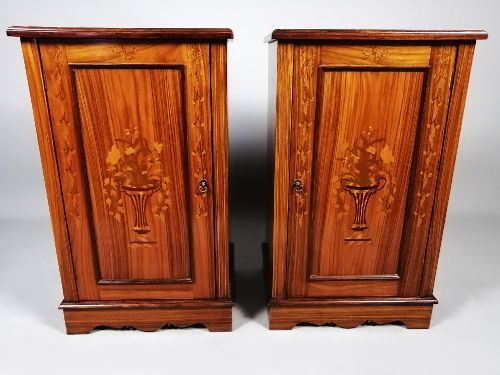
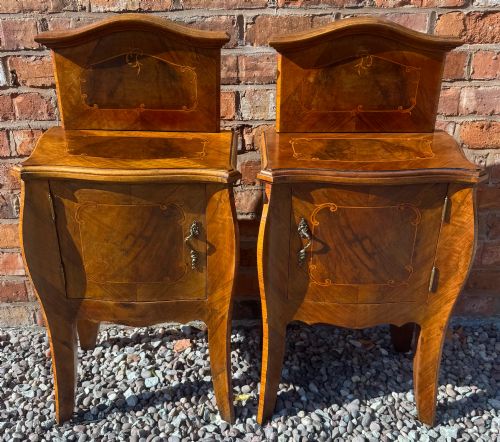
Buyers seeking edwardian marquetry nightstands will encounter single cabinets as well as matched pairs, often featuring decorative inlays and brass hardware. The forms reflect the domestic habits of the late nineteenth and early twentieth centuries, serving as functional bedside storage.
Materials and Construction Techniques
Cabinet makers constructed these nightstands using solid hardwoods and decorative veneers, notably mahogany, rosewood, and satinwood. Wood inlay and satinwood inlay formed intricate botanical, classical, or geometric patterns across drawer fronts and cupboard doors.
Auxiliary materials such as boxwood lines, brass handles, and contrasting timbers added fine detail to the primary carcases. Carpenters shaped these woods into cabinets, cupboards, and tables using traditional joinery methods suited to domestic bedroom furniture.
Listings feature bedside cabinets, chests of drawers, and side tables in mahogany, rosewood, satinwood, and oak from the Victorian and Edwardian eras.
Assessing Quality and Craftsmanship
The fineness of the marquetry work dictates the visual distinction of a piece, separating simple surface decoration from intricate, multi-timber picture inlays. Dense and carefully selected timbers like figured mahogany, rosewood, and satinwood elevate the presence of the cabinet.
Structural integrity and the precision of the joinery determine durability, distinguishing robustly built bedroom cupboards from lighter occasional tables. Original brass mounts, well-fitted drawers, and matching pairs demonstrate higher standards of cabinet-making.
Collinson & Lock·Gillows
The Edwardian Marquetry Nightstands Glossary
- Marquetry
- Decorative wood inlays assembled from various tinted veneers to form pictorial or geometric designs. This technique distinguishes standard cabinets from highly ornamented pieces.
- Pot Cupboard
- A compact bedside cabinet originally designed to house a chamber pot behind a single door. These pieces often feature marble tops or simple wooden surfaces.
- Satinwood
- A lustrous, fine-grained timber with a yellowish colour frequently used for veneers and inlay work. It appears prominently in Sheraton Revival and Edwardian furniture.
- Sheraton Revival
- A late nineteenth and early twentieth-century design style inspired by eighteenth-century cabinet maker Thomas Sheraton. It relies on symmetrical forms and delicate inlay.
- Neo-Classical Revival
- An artistic movement drawing upon classical Greek and Roman motifs, visible in symmetrical inlays and restrained architectural lines on furniture.
Edwardian Marquetry Nightstands: Frequently Asked Questions
What is an edwardian marquetry nightstand?
An edwardian marquetry nightstand is a small bedside cabinet or cupboard adorned with decorative wood veneers. These pieces provide compact storage surfaces next to a bed.
They reflect the design preferences of the early twentieth century, combining utility with detailed floral or geometric inlays.
How do I spot a matched pair?
Matched pairs of bedside cabinets share identical dimensions, timber selections, and mirrored inlay patterns designed to flank a bed symmetrically.
Examining the interior construction and timber grain helps confirm whether two individual cabinets were made together as a set.
What woods were commonly used?
Cabinet makers relied primarily on mahogany, rosewood, and satinwood for the main carcases and visible exterior surfaces. Boxwood and contrasting timbers provided the fine lines for inlay work.
Oak and walnut also appear in specific stylistic traditions within the broader period.
How should I care for inlaid furniture?
Protect inlaid surfaces from direct sunlight and excessive moisture to prevent the delicate wood veneers from lifting or fading. Regular dusting with a soft, dry cloth preserves the polished finish.
Applying appropriate furniture wax occasionally helps maintain the lustre of the timber.