

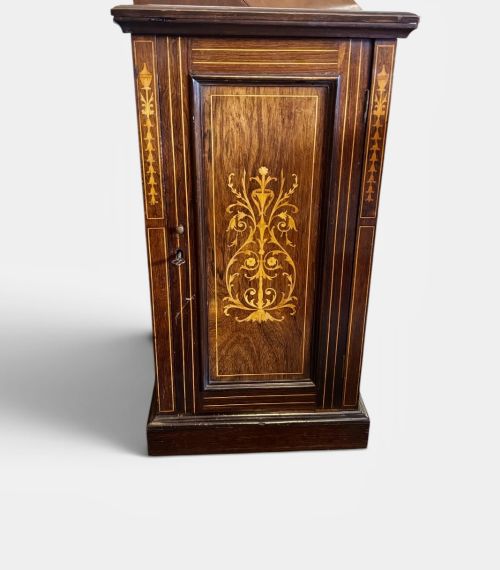
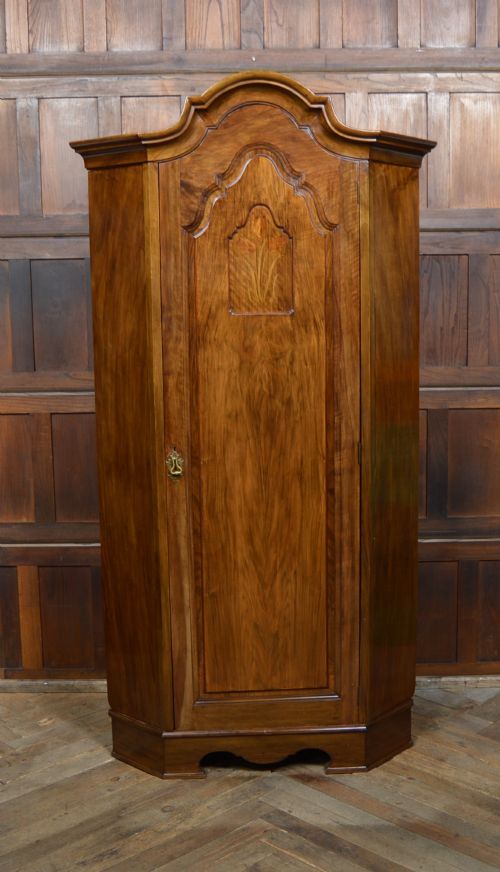
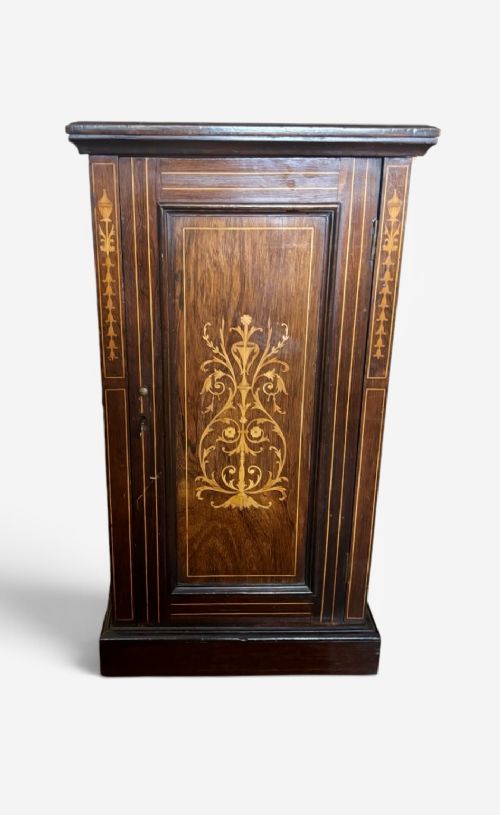
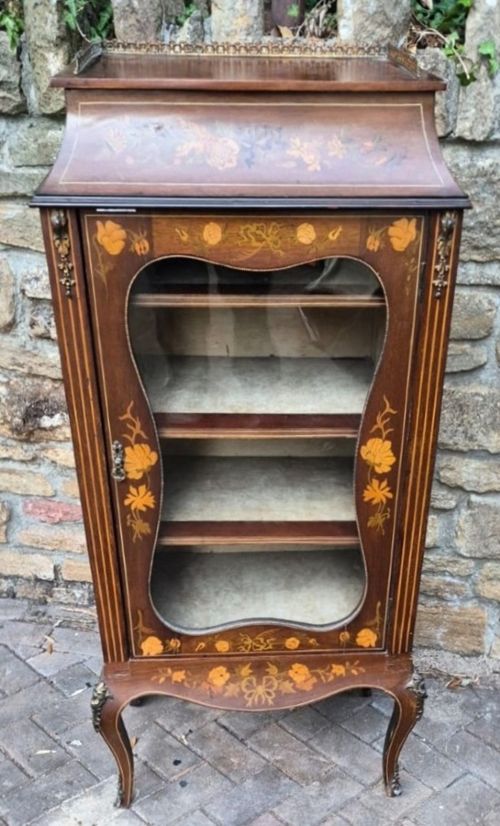


Edwardian Floral Inlay Cabinet
An edwardian floral inlay cabinet brings together figured timbers and delicate botanical marquetry, offering a refined focal point for any room.
Edwardian Floral Inlay Cabinet
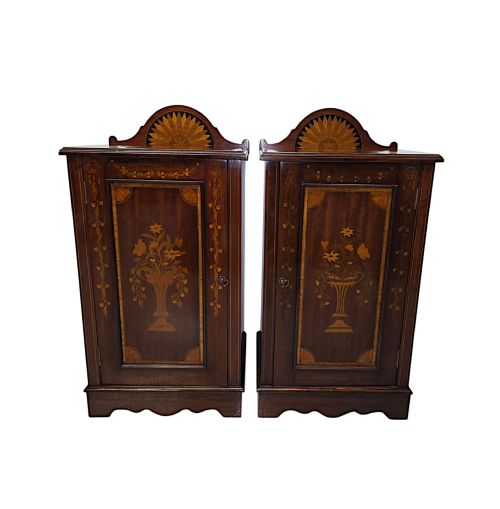
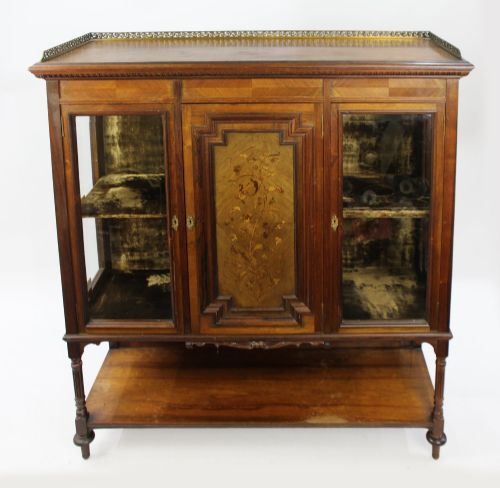
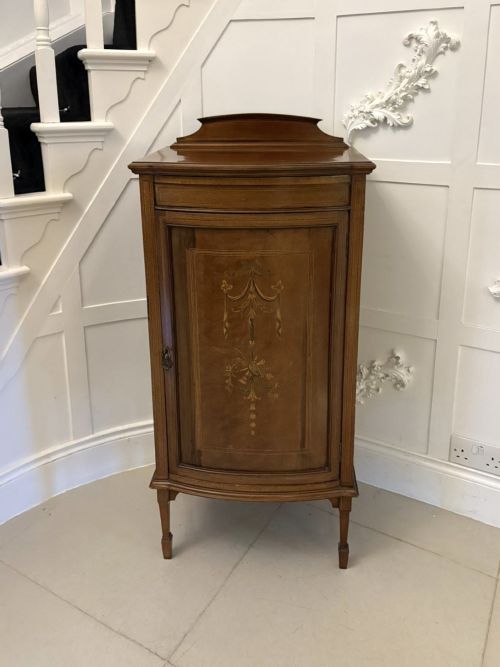
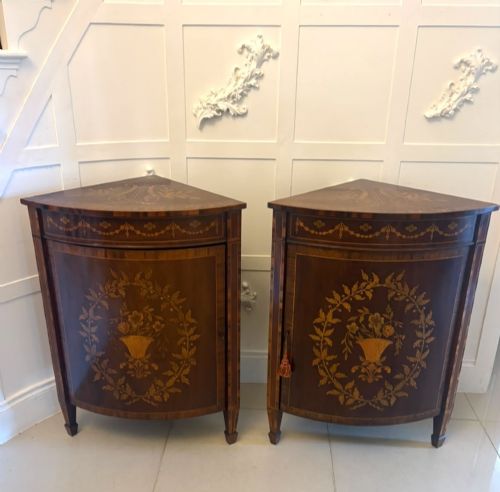
An edwardian floral inlay cabinet typically manifests as a display cabinet, side cabinet, or corner cabinet originating from the late nineteenth and early twentieth centuries. These pieces reflect the dominant revival styles of the era, drawing heavily on Sheraton and Georgian aesthetics through symmetrical forms and structured proportions.
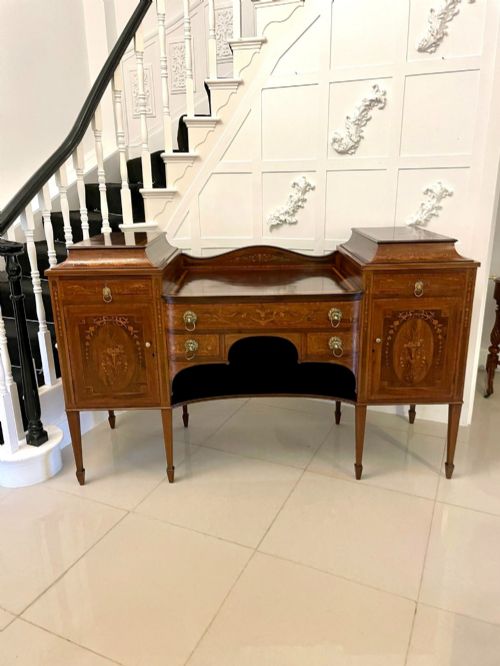
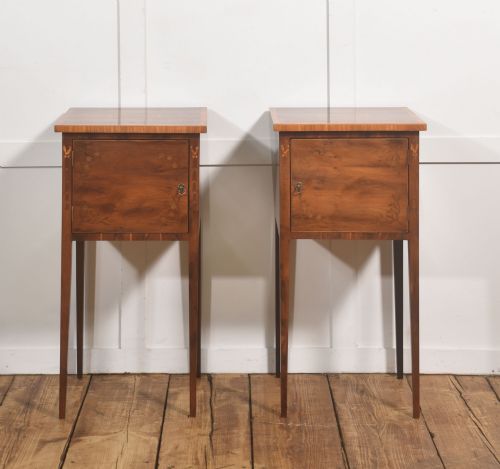
The evidence shows that makers of the period favoured rich primary woods accented with contrasting botanical details. Buyers encounter display cabinets with glass panels alongside compact bedside cupboards and broader sideboards, all unified by meticulous surface decoration.
While many examples date strictly to the Edwardian period or the broader nineteenth century, the listings also incorporate transitional Victorian pieces and later twentieth-century interpretations. The core of what a buyer finds is defined by this blend of structural utility and decorative floral craftsmanship.
Materials and construction techniques
The foundational carcase of an edwardian floral inlay cabinet is constructed from dense timbers such as mahogany, walnut, and rosewood. These woods provide a stable, dark backdrop that allows lighter secondary veneers to stand out clearly.
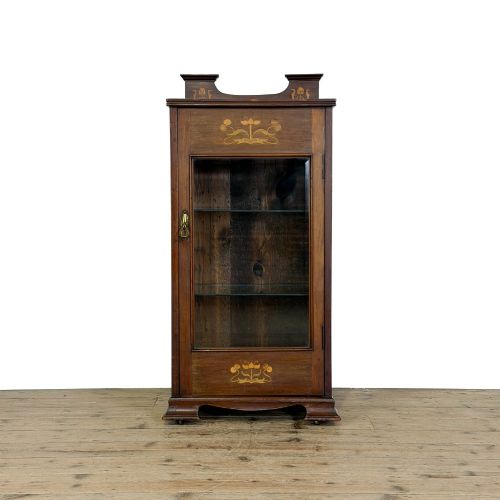
Marquetry and marquetry inlay form the principal decorative technique, utilising fine slivers of satinwood and other contrasting botanical woods to shape floral motifs directly into the surface. Brass hardware and glass panels are frequently integrated to complete display doors and structural fittings.
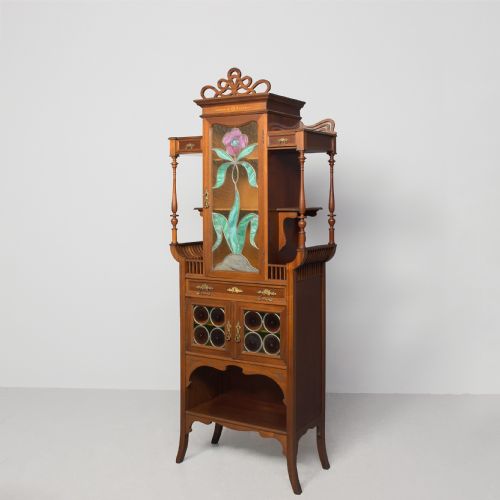
Surface ornamentation extends beyond timber inlays to include painted floral details and stained glass elements, particularly in pieces touched by the Art Nouveau style. Cabinetmakers combined these diverse visual layers into solid, bow-fronted, serpentine, and breakfront shapes.
Edwardian Floral Inlay Cabinet Retail Price Guide 2026
Typical asking prices for edwardian floral inlay cabinet among the pieces listed under this phrase on Sellingantiques today, from the lower quarter to the upper quarter. They describe what is for sale here now, not the wider market.
Several cabinets manage to squeeze both floral marquetry and stained glass into the same polite piece of furniture.
Factors separating exceptional pieces
The standard of an edwardian floral inlay cabinet rests heavily on the precision of the marquetry work and the choice of timber grain. Superior examples demonstrate tight, seamless joins in the floral motifs and use finely figured woods like fiddle back mahogany or burr walnut.
Structural integrity and the retention of original glass, brassware, and painted elements distinguish the upper tier of pieces. When the botanical inlays remain crisp and flush with the surrounding mahogany or satinwood surface, the overall execution reflects master workshop standards.
Maple of London·Hewetsons London·Edwards and Roberts
The Edwardian Floral Inlay Cabinet Glossary
- Marquetry
- Decorative veneer applied to a furniture structure to form pictures or patterns, utilising various coloured woods to create floral designs. This technique defines the primary surface ornamentation of the pieces seen here.
- Satinwood
- A durable, lustrous yellow timber frequently used for contrasting inlays and stringing against darker woods like mahogany. It provides the bright highlights necessary for detailed floral imagery.
- Bow-fronted
- A convex curved furniture front that softens the angles of a room and adds visual depth. This shaping requires specialist carpentry to ensure the inlaid veneers adhere smoothly to the curve.
- Vitrine
- A glass-fronted cabinet designed specifically for displaying porcelain, curiosities, or books. These pieces emphasise transparency alongside decorative woodwork.
Edwardian Floral Inlay Cabinet: Frequently Asked Questions
Where should I place a display cabinet?
These cabinets suit principal reception rooms or hallways where their glass panels and floral inlays can catch the light. Corner variants utilise unused wall junctions effectively while preserving floor space.
Ensure the piece sits away from direct heat sources to protect the inlaid veneers and polished timber surfaces over time.
How do I care for inlaid wood surfaces?
Dust the cabinet regularly with a soft, dry cloth and apply a quality beeswax sparingly to nourish the timber. Avoid liquid polishes that contain silicones or harsh solvents.
Maintaining a stable room humidity prevents the delicate satinwood and mahogany veneers from lifting or cracking around the floral motifs.
How do I distinguish Edwardian from Victorian styles?
Edwardian furniture generally leans towards lighter, airier designs influenced by Sheraton revivals, often featuring brighter satinwood highlights and delicate painted florals. Victorian pieces tend to be heavier in build, employing darker rosewood and denser proportions.
Stylistic overlaps occur frequently in the transition decades around the turn of the century, combining elements of both periods.
What items can I store inside a side cabinet?
Side cabinets and cupboards offer practical storage for tableware, linens, or books behind solid or glazed doors. The interior shelving accommodates everyday items while keeping them neatly concealed.
For smaller bedside cupboards, the surface functions well for lighting while the internal space holds nighttime essentials.