

Pair Georgian Side Tables
These pair georgian side tables are matching doubles designed for symmetry, offering practical surfaces alongside the formal elegance of the eighteenth and nineteenth centuries.
Pair Georgian Side Tables
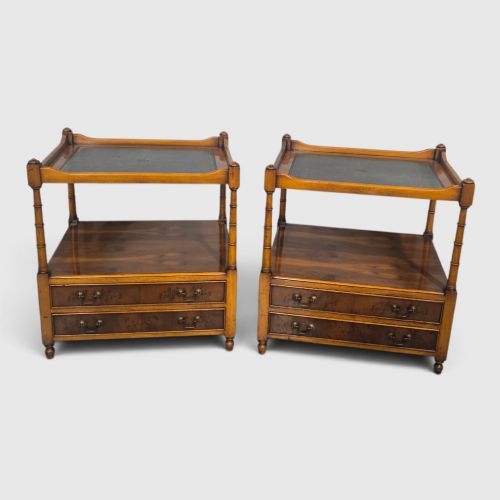
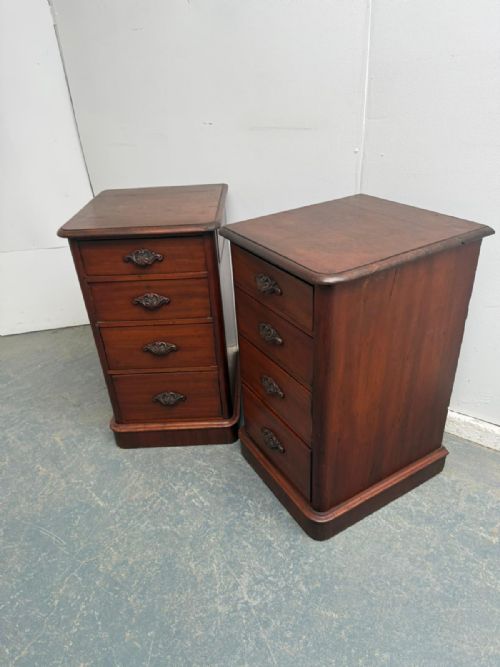
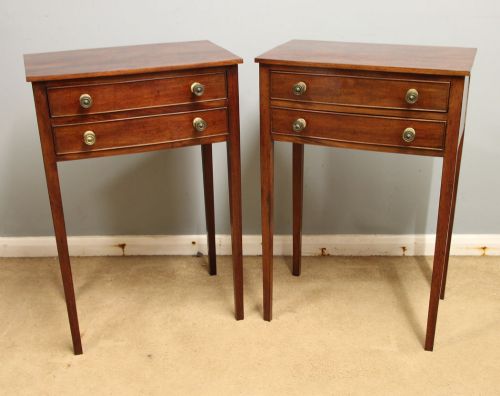
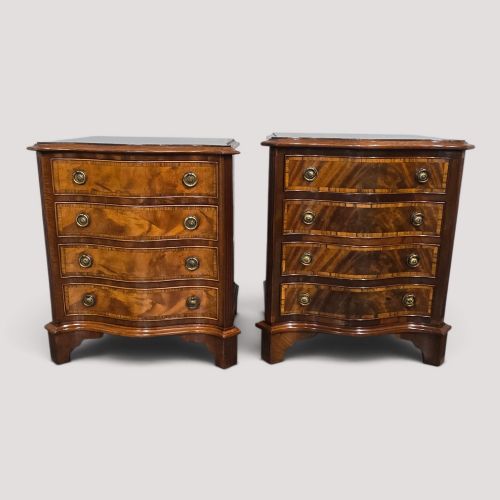
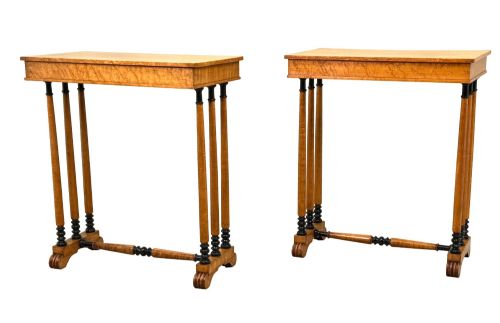
Pair georgian side tables encompass a wide variety of symmetrical furniture designed for domestic use, ranging from grand console and card tables to compact bedside cabinets and wine tables.
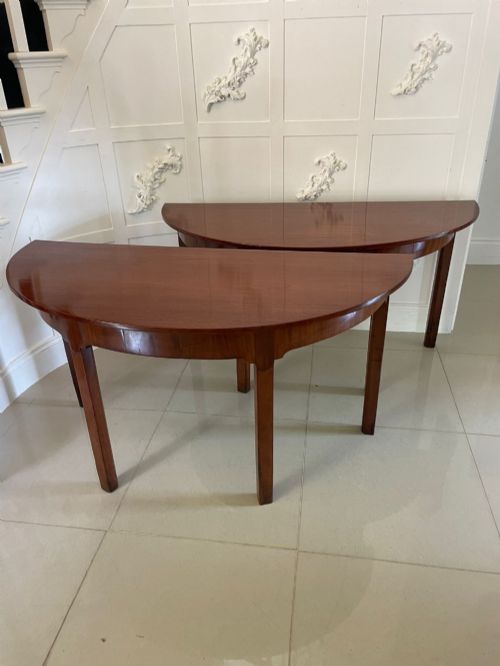
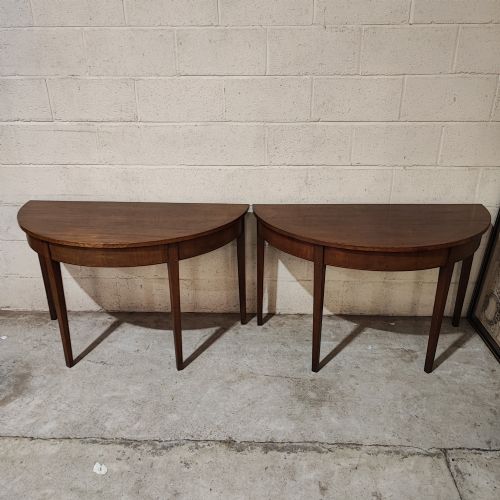
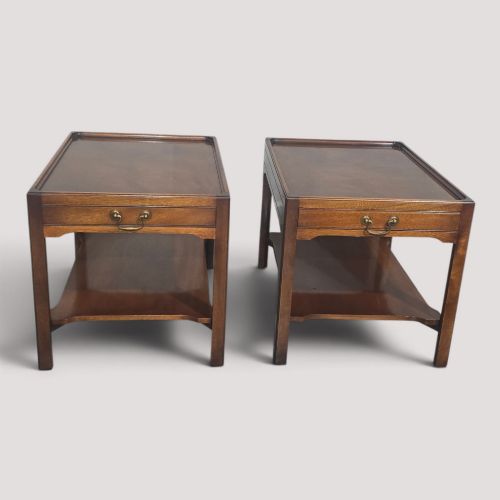
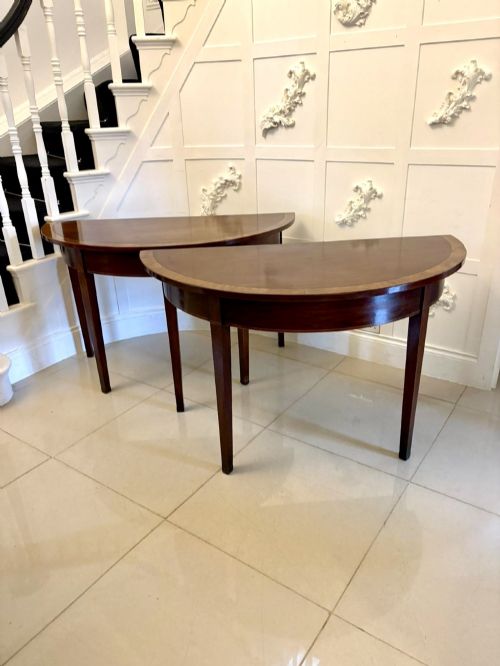
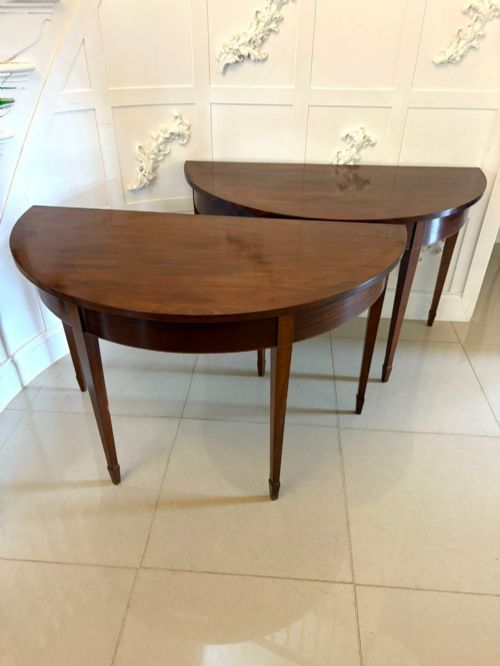
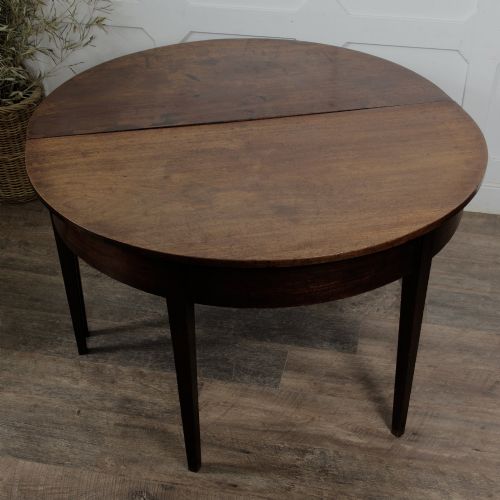
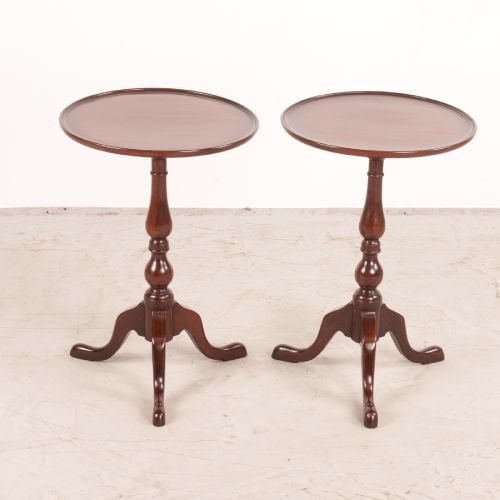
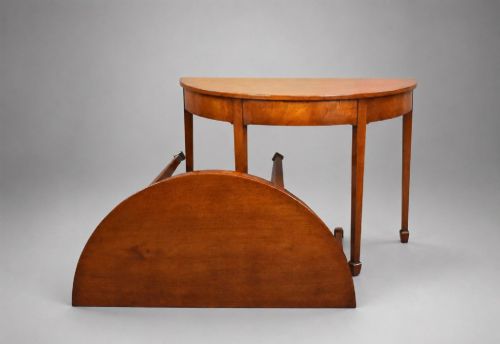
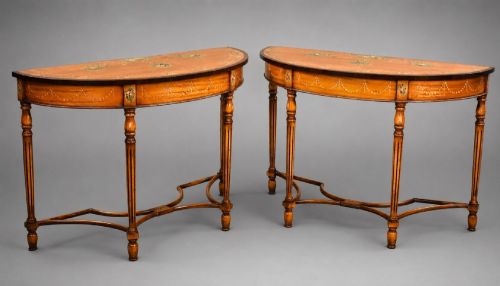
The selections on this page heavily feature mahogany, often shaped into demi-lune formats that sit flush against a wall, alongside smaller lamp and occasional tables reflecting later revival movements.
Origins stretch from genuine eighteenth-century workshops through the Regency era and into twentieth-century revivals, showing how form and proportion persisted across generations of cabinet making.
How they were made
Cabinet makers relied primarily on solid mahogany and figured veneers, frequently embellished with satinwood, yew, and intricate wood inlay or marquetry.
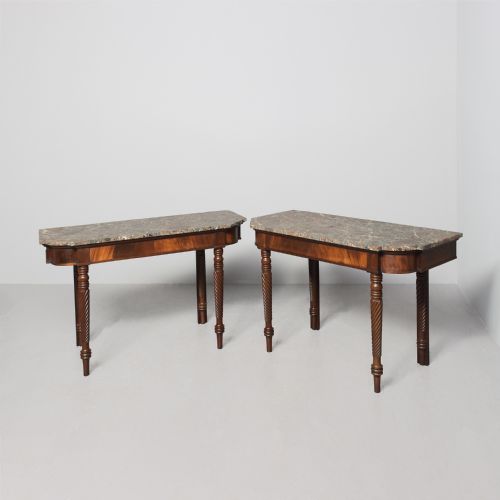
Structural details incorporate brass galleries, leather inserts, and marble tops, combining robust timber framing with refined decorative surfaces.
Materials span solid mahogany, figured satinwood, walnut, and yew, complemented by leather tops and brass hardware.
What varies in quality
The distinction between standard examples and the finest pieces lies in the choice of timber figure, such as highly flamed mahogany or detailed satinwood contrasting. Fine execution shows in the precision of the marquetry and the crispness of carved mouldings rather than sheer ornamentation.
Proportion and matching also define the tier of a pair, where true symmetry between the two items indicates careful original pairing by skilled makers.
The Pair Georgian Side Tables Glossary
- Demi-lune
- A half-moon shaped table designed to stand flat against a wall. These were frequently used as console or card tables in formal rooms.
- Marquetry
- The art of applying pieces of veneer to a structure to form decorative patterns. Craftsmen utilised various coloured woods to create pictorial designs.
- Brass gallery
- A low decorative metal rail fitted around the top edge of a table. It served to secure items from sliding off the surface.
- Console table
- A table supported by wall brackets or legs, intended to stand against a vertical surface. They often feature elaborate fronts designed for display.
- Tripod table
- A small freestanding table supported by a pillar on three legs. Many examples include a tilt-top mechanism for convenient storage.
Pair Georgian Side Tables: Frequently Asked Questions
What rooms suit these tables best?
These pieces fit naturally into living rooms, hallways, and bedrooms where matching symmetry is desired. Their diverse forms allow them to function as bedside storage or decorative display surfaces.
Larger demi-lune formats anchor entrance halls or dining rooms, while smaller lamp tables sit easily beside seating arrangements.
How do I distinguish original pieces from revivals?
Examining the timber construction, secondary woods underneath, and hand-cut joinery helps determine the period. Eighteenth-century pieces show specific tool marks and natural ageing processes.
Revival pieces from the Edwardian and later periods often utilise standardised machine-cut components and different internal framing methods.
How should I care for mahogany surfaces?
Regular dusting with a soft, dry cloth preserves the polished finish without building up heavy wax residues. Keeping the wood away from direct heat sources prevents timber movement.
Occasional light waxing maintains the natural lustre of the mahogany and protects the antique polish.