

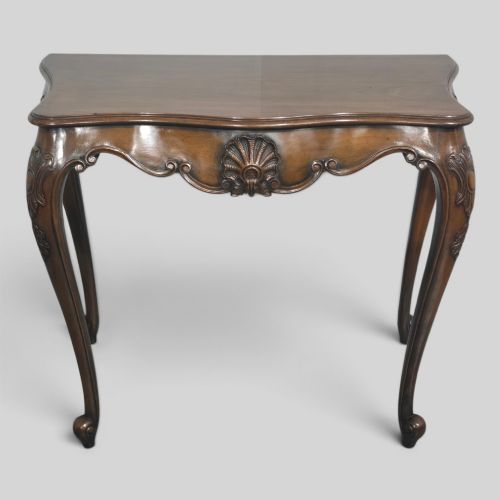


Vintage Mahogany Wall Table
These vintage mahogany wall table pieces bring classic timber work and architectural lines into domestic spaces.
Vintage Mahogany Wall Table
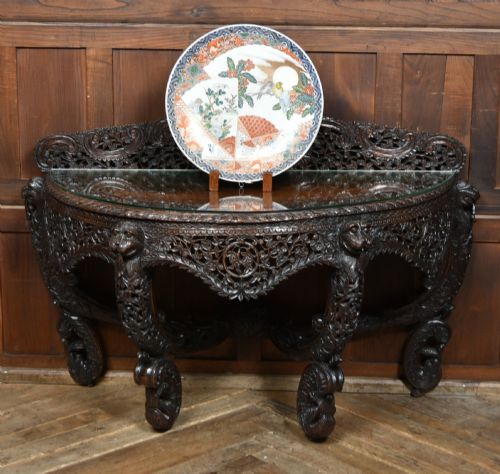
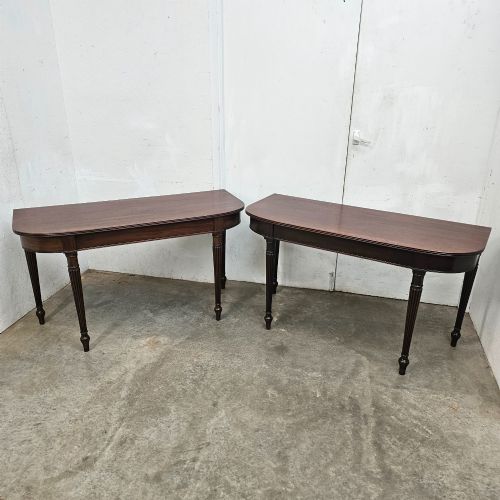
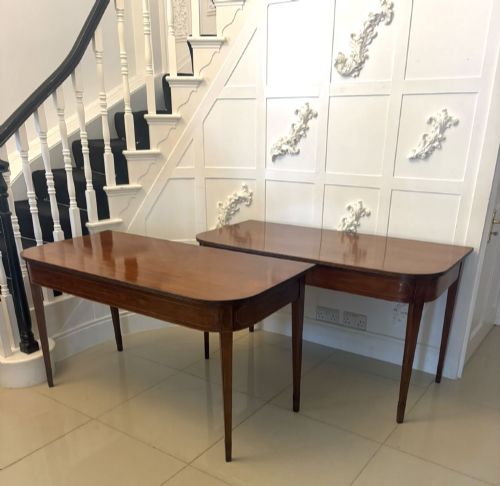
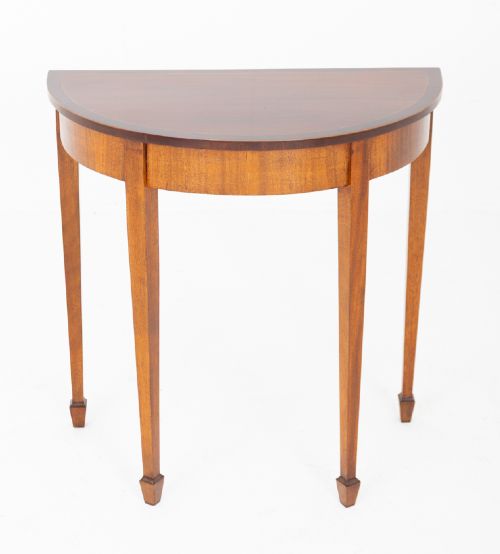
A vintage mahogany wall table is typically encountered in formats such as console tables, hall tables, and demi-lune tables designed to sit flush or against a vertical surface. The selection spans the nineteenth century through to the early twentieth century, incorporating Georgian, Regency, William IV, and revival idioms.
Forms include semicircular demi-lune shapes alongside larger rectangular console tables, occasionally accompanied by matching wall mirrors. These items serve primarily as functional hallway furniture or decorative focal points in reception rooms.
How they were made
Construction relies heavily on mahogany timber, sometimes accented with satinwood inlay, wood inlay, or pine carcasses. Secondary materials such as marble tops, glass, and brass detailing appear on specific examples across the nineteenth and early twentieth centuries.
Cabinet makers utilised traditional joinery techniques to shape curved demi-lune profiles and support heavy stone or timber surfaces. Surface treatments range from polished wood finishes to painted highlights.
Vintage Mahogany Wall Table Retail Price Guide 2026
Typical asking prices for vintage mahogany wall table among the pieces listed under this phrase on Sellingantiques today, from the lower quarter to the upper quarter. They describe what is for sale here now, not the wider market.
Listings feature items spanning the Georgian period, the nineteenth century, and the 1930s Georgian Revival style.
What varies in quality
Quality differences lie in the selection of timber grain and the precision of the inlay work, particularly where satinwood or brass elements are integrated. Early pieces show finer joinery detail compared to later revival items.
The sophistication of the silhouette, from simple rectangular hall tables to complex demi-lune shapes with matching mirrors, dictates the overall character of the piece.
Thomas Connold of Alysham
The Vintage Mahogany Wall Table Glossary
- Demi-lune
- A half-moon shape used for console tables designed to stand flat against a wall. This form became particularly popular during the Georgian and Regency periods.
- Console table
- A table supported by wall brackets or console legs rather than four independent legs. It is designed to stand against a vertical surface.
- Inlay
- A technique where contrasting woods such as satinwood or other materials are inserted into the primary mahogany surface to create decorative patterns.
- Regency
- A style period dating from the early nineteenth century characterised by classical revival motifs and refined proportions.
Vintage Mahogany Wall Table: Frequently Asked Questions
Where should I place a vintage mahogany wall table?
These tables fit well in hallways, entrance passages, or principal reception rooms where floor space is limited. Their flat edge sits securely against the wall.
Because many examples feature decorative timber or demi-lune shapes, they serve effectively beneath wall mirrors or artwork.
How do I identify a Regency period table?
Regency pieces date from the early nineteenth century and typically display classical architectural influences and refined mahogany grains. They often feature restrained classical ornament rather than heavy carving.
Comparing the construction methods and secondary timbers like pine helps distinguish these earlier pieces from later twentieth-century revivals.
What is the difference between a console and a hall table?
Console tables historically rely on wall support or specific scroll brackets, whereas hall tables function as freestanding items placed against a wall. Both serve similar architectural purposes in narrow spaces.
On this page, both forms appear frequently alongside semicircular demi-lune variations.
How do I care for mahogany surfaces?
Maintain the timber by dusting regularly with a dry cloth and avoiding excessive moisture or direct sunlight. Periodic application of appropriate wax polish helps preserve the finish.
Take care with marble or glass top inserts if the specific table incorporates them.