


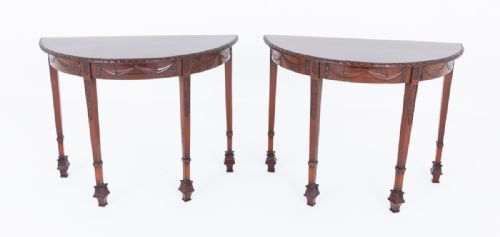
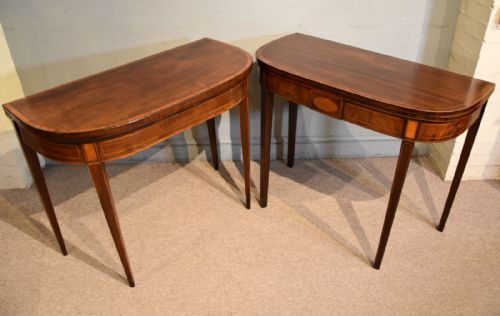


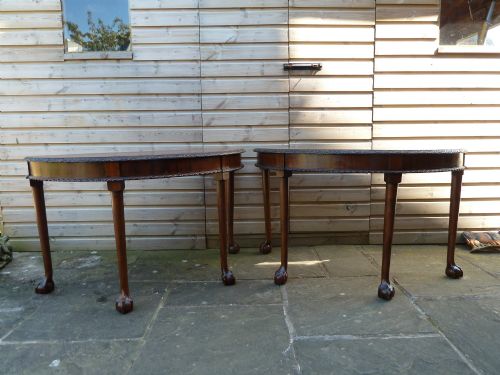

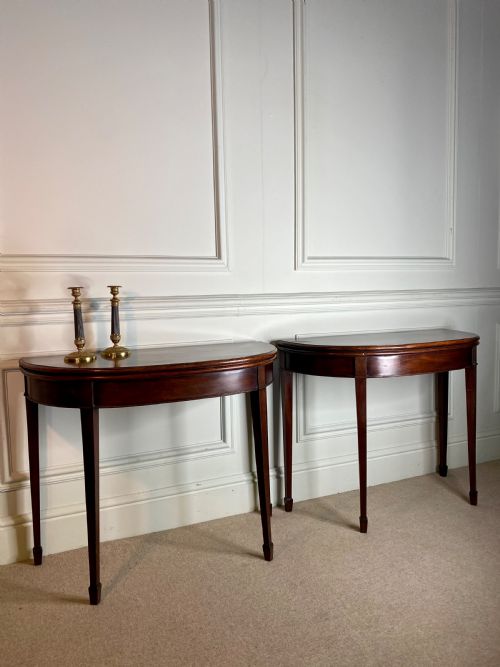


Pair Demilune Console Tables
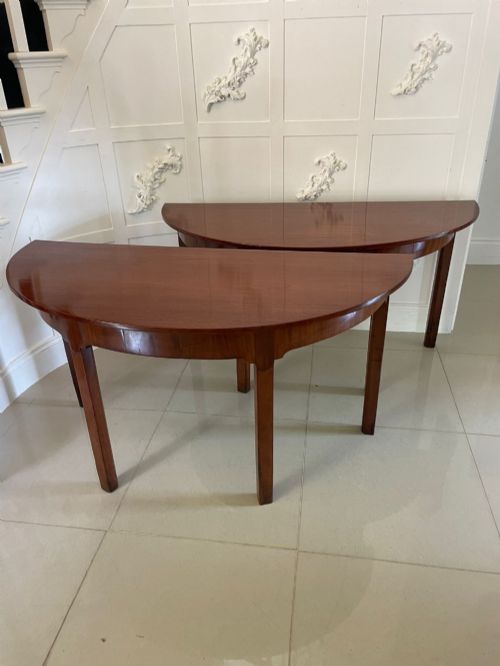
Pair demilune console tables bring matched symmetry and curved grace to an entrance hall or living space.
Pair Demilune Console Tables
These items are half-moon shaped tables designed to stand flat against a wall, frequently found as matching twins to balance a room. When you search for pair demilune console tables, you meet forms spanning the Georgian, Regency and Victorian periods, often functioning as card tables, side tables or serving surfaces.
How they were made
Cabinet makers constructed these pieces using solid timbers and veneers of mahogany, walnut and satinwood, frequently incorporating boxwood inlay for linear detail. Marble inserts appear on select tops, while other surfaces receive painted finishes.
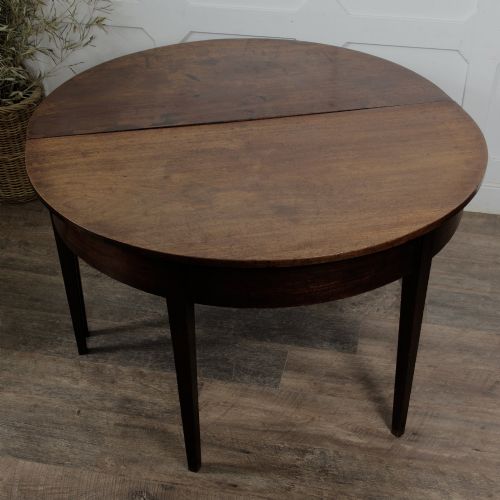
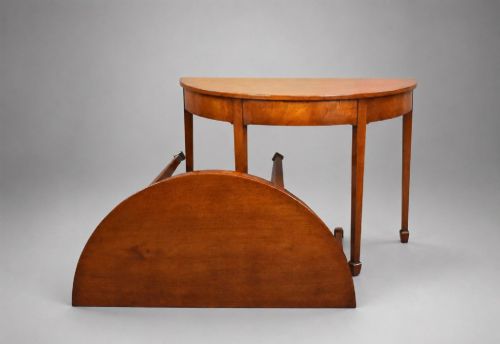
Joinery techniques allow the semi-circular tops to fold open on card tables or remain fixed on console variants. Carved elements and turned supports define the structural profiles across different periods.
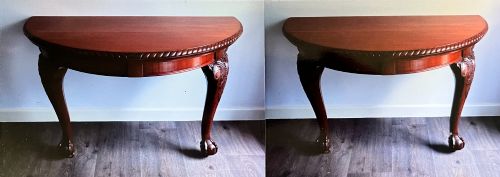
Carved hounds stand ready to hold up tabletops in the more unusual nineteenth-century offerings.
What varies in quality
The calibre of timber figure and the precision of boxwood inlay distinguish standard examples from finer specimens. Timber selection dictates the visual depth of mahogany and walnut surfaces.
Execution of carved details and the preservation of original painted surfaces influence the standing of each piece. Matching accuracy between the two items determines the cohesion of the set.
The Pair Demilune Console Tables Glossary
- Demilune
- Half-moon shaped furniture designed to sit flat against a wall. This profile defines the footprint of the tables.
- Console table
- A table supported by wall brackets or legs, intended for display rather than freestanding use. These pieces anchor hallway spaces.
- Card table
- A folding table with a hinged top designed for gaming. Many demilune examples serve this dual function.
- Satinwood
- A durable hardwood yielding a lustrous, golden-yellow grain. It appears frequently in later Georgian and revival pieces.
- Inlay
- Contrasting wood or material set into the surface to create decorative patterns. Boxwood is a common choice for these linear details.
Pair Demilune Console Tables: Frequently Asked Questions
Where should I place these tables?
These tables suit hallways, living rooms and dining spaces where their shallow depth keeps walkways clear. Placed together or flanking a doorway, they provide symmetrical surface area.
Their curved fronts soften rigid architectural lines while offering display space for lamps, mirrors or decorative objects.
How do I date a console table?
Dating relies on timber choice, construction methods and stylistic markers such as inlay patterns or leg profiles. Georgian pieces often display dense mahogany and restrained carved details.
Later Victorian and revival items introduce different secondary woods and heavier proportions that help separate eras.
Are marble tops original?
Marble tops appear on specific country house and continental pieces designed for heavier use or neoclassical interiors. They provide a durable, cool surface for display.
Inspect the fit against the wooden frame to understand how the top integrates with the structure.