
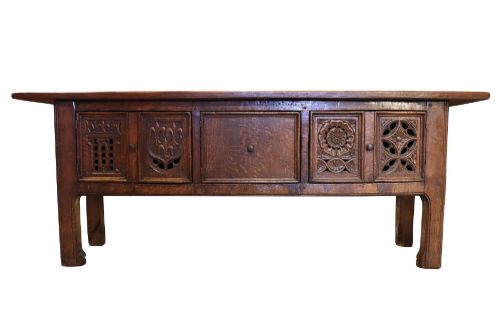
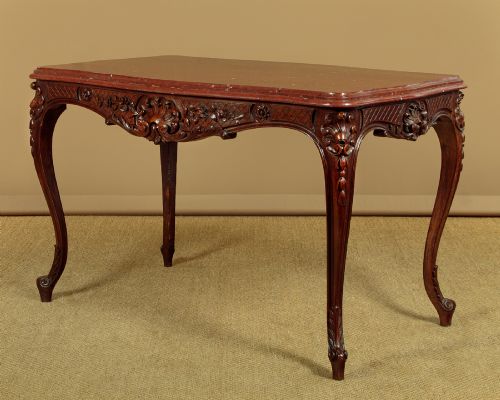
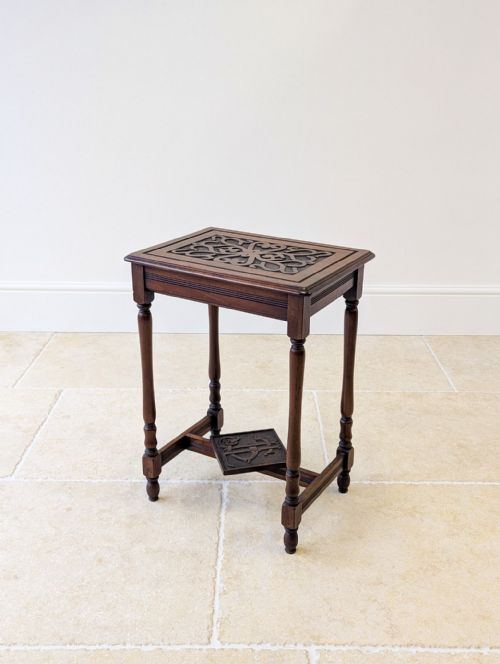
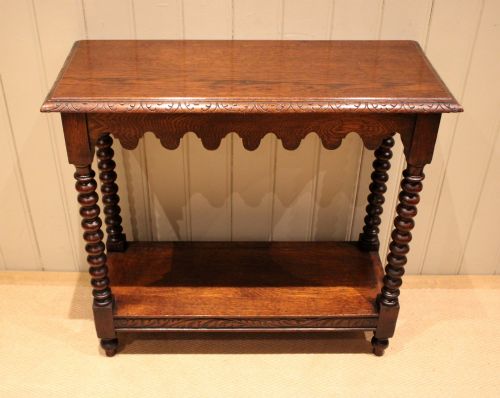
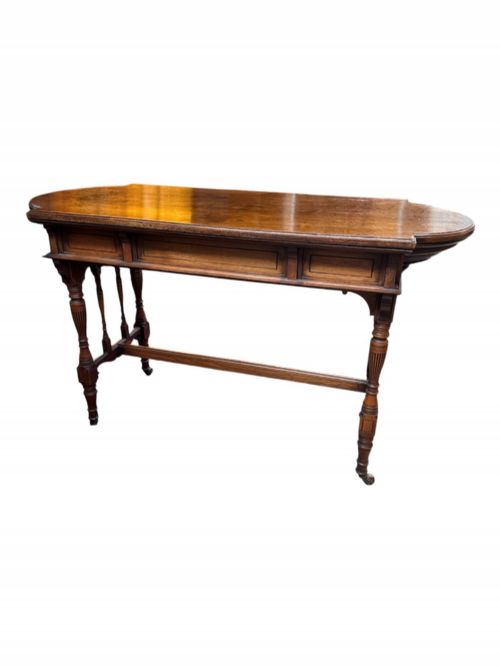
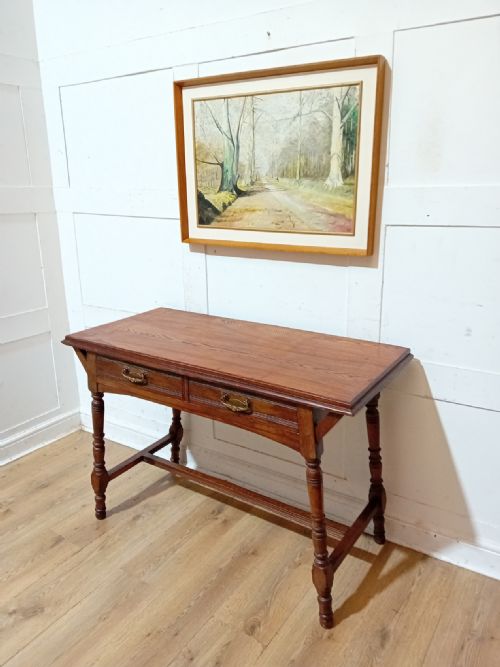
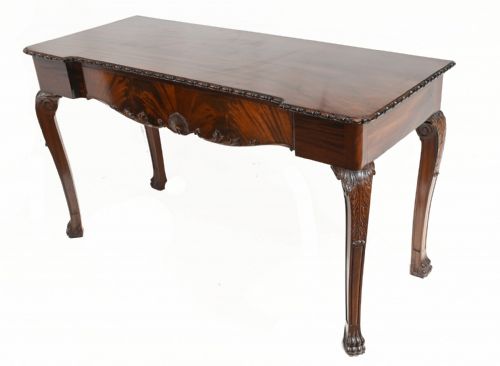
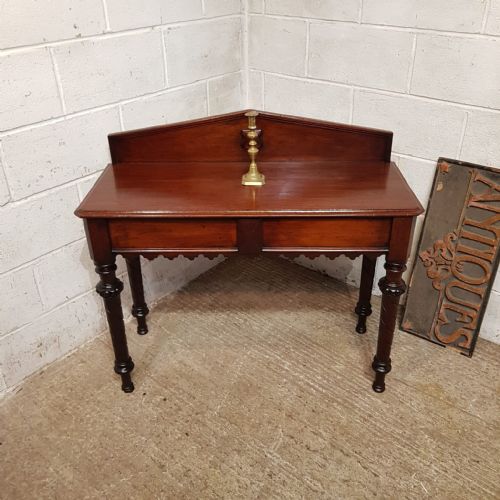


Late Victorian Console Table
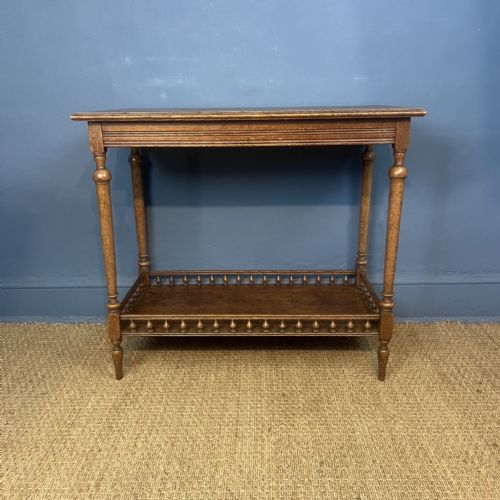
When you want a late victorian console table, you are looking at sturdy timber frames built to anchor a hallway or reception room.
Late Victorian Console Table
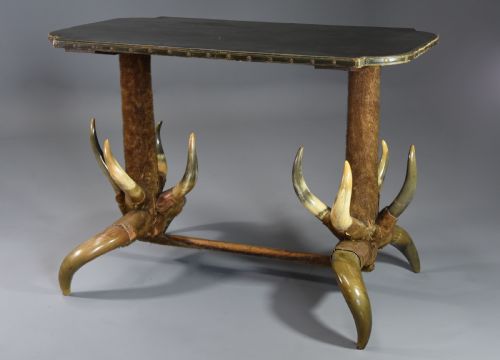
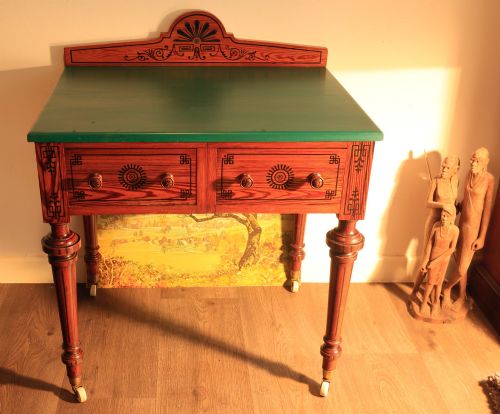
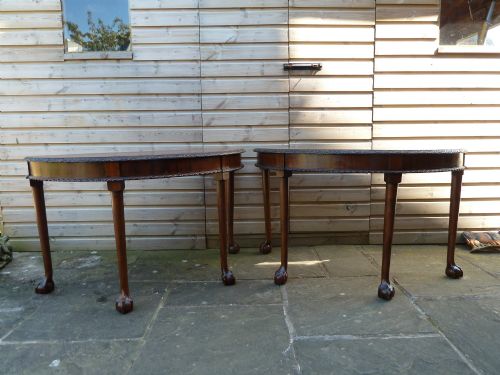
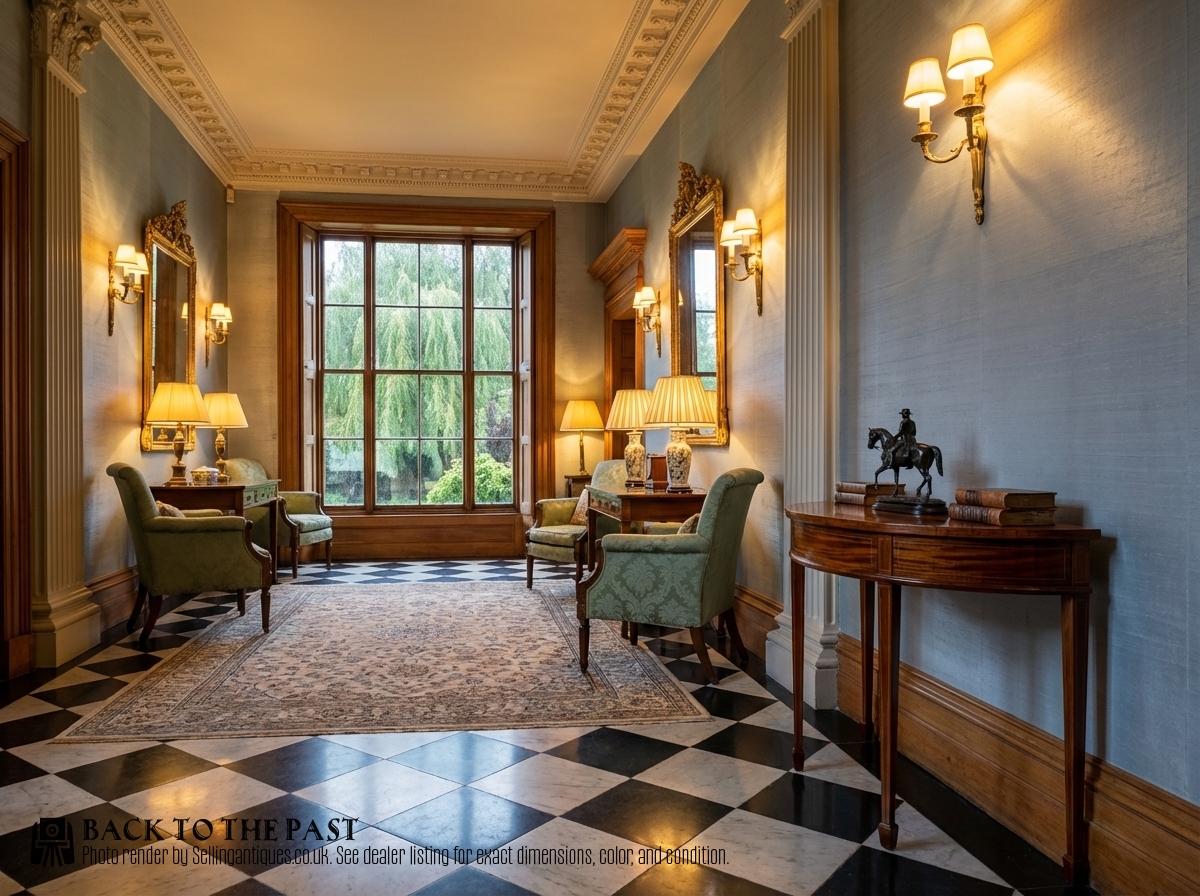
A late victorian console table brings practical surface space and distinct period character into a room, often serving as a focal point against a wall or in a hallway. The pieces available span various forms, from straightforward mahogany hall tables to sophisticated marble-topped designs.
Materials and Construction
Cabinet makers of the period relied heavily on solid hardwoods like mahogany, walnut, and oak to build durable frames capable of supporting heavy marble or timber tops. Joinery methods relied on traditional mortise and tenon techniques, ensuring structural longevity without modern mechanical fasteners.
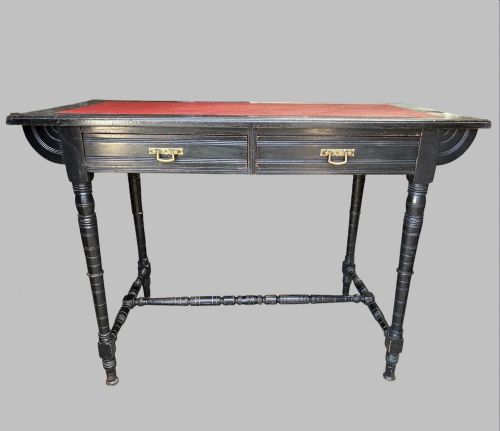
Surface decoration involved skilled techniques such as satinwood inlay, marquetry, and ebonisation to create visual contrast on table aprons and tops. Hardware typically included brass handles and brackets, while secondary timbers such as pine appeared in hidden structural areas.
The furniture spans multiple design movements including Aesthetic Movement, Gothic Revival, and Arts and Crafts.
Assessing Quality and Craftsmanship
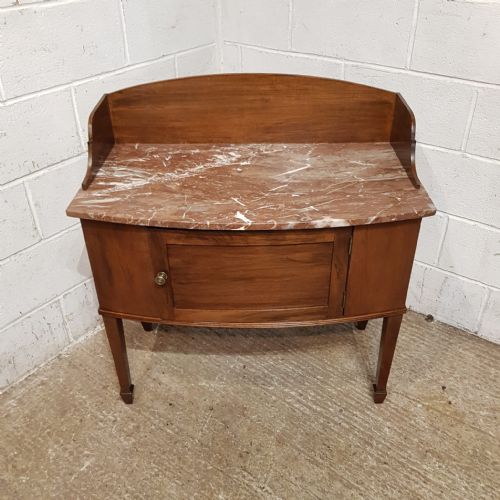
Quality in these tables rests on the selection of timber and the precision of the joinery rather than mere ornamentation. Finer examples display carefully matched wood veneers, crisply carved details, and substantial weight in materials like rouge marble or dense mahogany.
Lower quality pieces often show simpler construction methods, coarser carving, or later replacements of original elements like marble slabs and hardware. The integration of secondary woods and the sharpness of inlaid stringing help distinguish high workshop standards from standard commercial output.
Gillows·Edwards and Roberts
The Late Victorian Console Table Glossary
- Console table
- A table designed to stand against a wall, traditionally supported by wall brackets or decorative legs. These pieces often serve narrow spaces like hallways or corridors.
- Marquetry
- The art of applying pieces of veneer to a structure to form decorative patterns and pictures. Makers utilised contrasting woods to achieve pictorial depth.
- Ebonised
- Wood treated to resemble ebony through staining or painting. This finish was widely favoured during the Aesthetic Movement.
- Demi-lune
- A half-moon shape characteristic of tables designed to sit flush against a wall. This profile saves floor space in compact rooms.
- Satinwood
- A durable, yellowish timber prized for its lustrous sheen. It frequently appears as inlay on darker mahogany and walnut surfaces.
Late Victorian Console Table: Frequently Asked Questions
Where should I place a console table?
These tables find a natural home in entrance halls, living rooms, or dining spaces where floor space is limited. Their shallow depth allows them to sit neatly against walls without obstructing walkways.
They provide a convenient surface for lamps, mirrors, or decorative objects while anchoring the design of a room.
How do I care for a wooden console top?
Maintain the timber by dusting regularly with a dry cloth and avoiding harsh chemical cleaning agents. Applying occasional specialist wax helps preserve the natural lustre of mahogany and walnut.
Keep tables away from direct heat sources and strong sunlight to prevent the timber from drying out or warping over time.
Did these tables always have marble tops?
Not all tables feature stone surfaces; many rely on solid mahogany, oak, or walnut tops. Marble was frequently selected for washstands and specific console designs to offer a durable, waterproof surface.
When present, the marble slab often sits loosely within a wooden frame or gallery edge rather than being permanently fixed.
How can I identify the period of a table?
Examine the timber, construction joints, and decorative style to determine the approximate decade of manufacture. Late nineteenth-century pieces often combine traditional Victorian forms with Aesthetic Movement or Arts and Crafts influences.
Tool marks on secondary woods and the style of any brass hardware provide further clues to dating an antique piece accurately.