
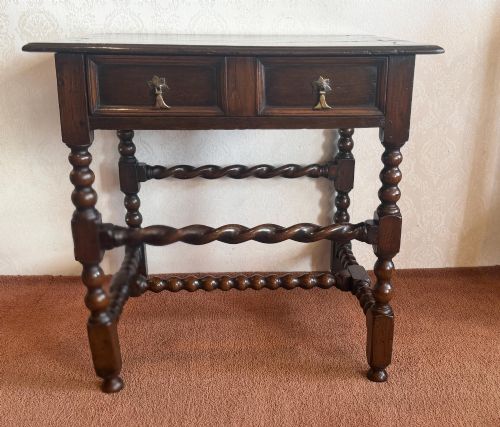
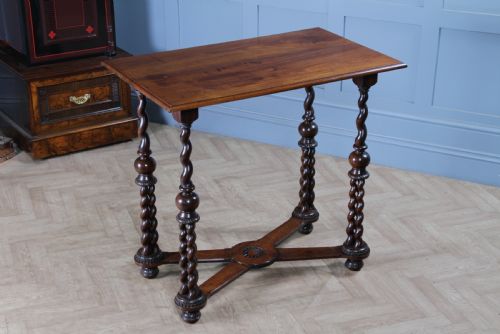


Barley Twist Console Table
A barley twist console table brings structured turned timber and period presence into a hall or narrow room, offering a functional surface rooted in centuries of woodworking tradition.
Barley Twist Console Table
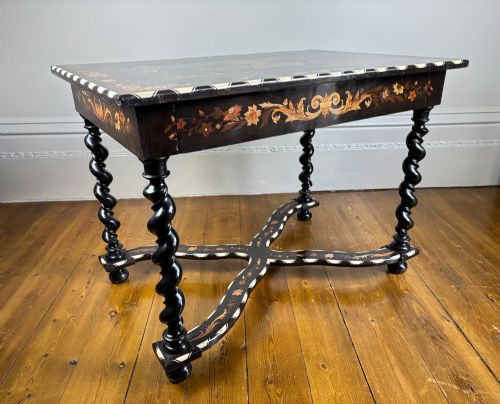
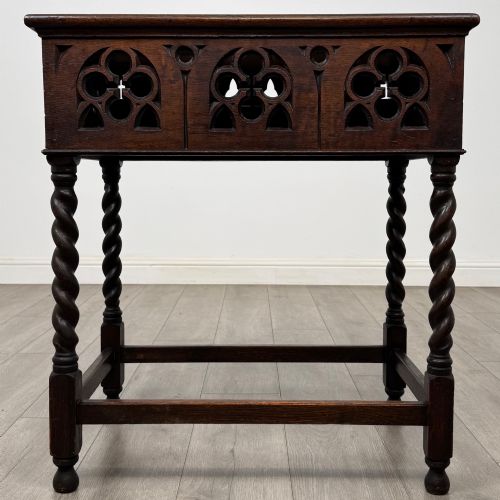
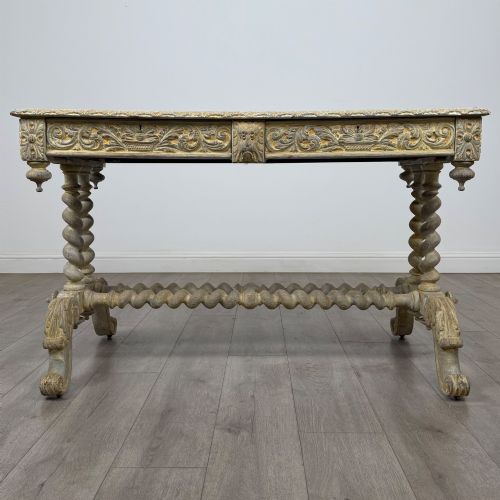
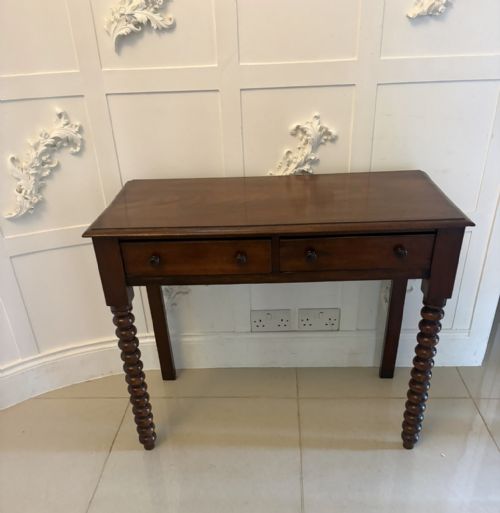
A barley twist console table is a narrow support surface characterised by helically turned wooden legs, designed historically to sit flush against a wall in a hallway, parlour, or reception room. The listings here show these tables spanning several centuries, running from seventeenth-century origins through eighteenth-century examples and nineteenth-century revivals.
How they were made
Cabinetmakers constructed these pieces using solid timbers like oak, walnut, mahogany, and rosewood, frequently relying on dense hardwoods to support the crisp edges of a spiral turning. Turning a barley twist required precise hand-chiselling or lathe work to ensure the continuous diagonal rhythm of the column remained uniform from the block to the capital.
Surface decoration varied according to regional workshops and changing fashions, incorporating ebonised finishes, parcel gilding, intricate bone inlay, and marquetry panels. Construction methods combined traditional tenon and mortise joints with drawer linings in secondary timbers, prioritising structural rigidity for furniture meant to carry decorative objects against a wall.
What varies in quality
The distinction between standard examples and superior pieces rests upon the precision of the timber turning and the depth of the carving. Crisp, fluid spirals without clumsy sanding marks demonstrate an accomplished hand in the workshop.
Choice of materials also dictates standing, with dense, highly figured timbers like burr walnut, rosewood, or goncalo alves elevating a piece above plain domestic oak. Furthermore, integration of decorative elements such as bone inlay, fine marquetry, or retained original brass hardware marks out finer production.
Edwards & Roberts
The Barley Twist Console Table Glossary
- Barley twist
- A spiral turning resembling a twisted rope, carved or lathed into furniture legs and columns. This characteristic shape became popular in seventeenth-century English and continental furniture before seeing numerous nineteenth-century revivals.
- Console table
- A wall-mounted or freestanding narrow table designed to stand against a vertical surface. They often feature decorative legs at the front and simpler fixings or plain legs at the back.
- Ebonised wood
- Timber treated with a dark stain or chemical process to imitate ebony. This finish was widely utilised in nineteenth-century European cabinetmaking to create a dramatic contrast with inlaid materials.
- Marquetry
- The art of applying small pieces of veneer to a structure to form decorative patterns or pictorial scenes. It frequently employs contrasting woods, bone, or metal.
- Goncalo alves
- A dense, heavily figured exotic hardwood sometimes called tiger wood, utilised in nineteenth-century cabinetmaking for its striking grain patterns.
- Demi-lune
- Half-moon shaped furniture designed to sit flat against a wall. The form is commonly seen in console tables and sideboards from the eighteenth and nineteenth centuries.
Barley Twist Console Table: Frequently Asked Questions
What is a barley twist console table?
A barley twist console table is a narrow furnishing featuring spiral-turned wooden legs, built to stand against a wall in entrance halls or reception rooms.
These pieces combine decorative turned columns with flat upper surfaces designed for lamps, bowls, or decorative objects.
How do I date a barley twist table?
Dating relies on examining the timber species, construction joints, secondary woods, and the sharpness of the turning work. Seventeenth-century examples often display simpler hand-carved oak structures, whereas Victorian revivals frequently utilise walnut or rosewood with machine-assisted precision.
Looking underneath and inside drawers reveals how the timber was prepared and assembled by period artisans.
Where should I place a console table?
Console tables suit narrow spaces like hallways, corridors, or entryways where depth is limited. Their flat backs allow them to sit securely against a wall without blocking foot traffic.
They also function well in living rooms behind sofas or beneath windows to display mirrors and decorative items.
What is the difference between a console and side table?
A console table is specifically designed to sit flat against a wall, sometimes historically fixed to the wall with brackets or rear legs. Side tables are generally freestanding items finished on all four sides and moveable around a room.
In practice, many antique listings use the terms interchangeably based on proportions.