
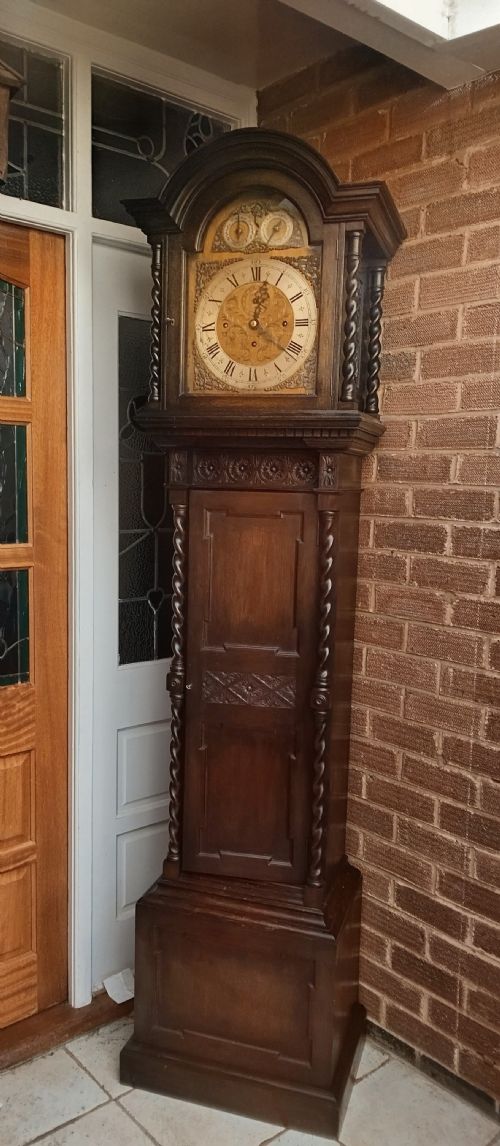
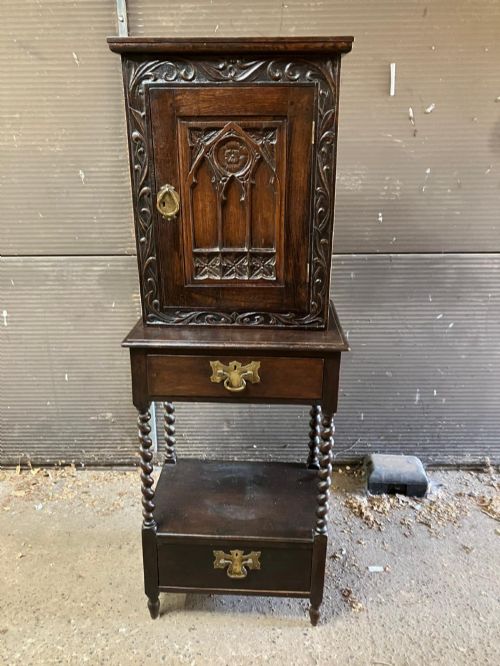
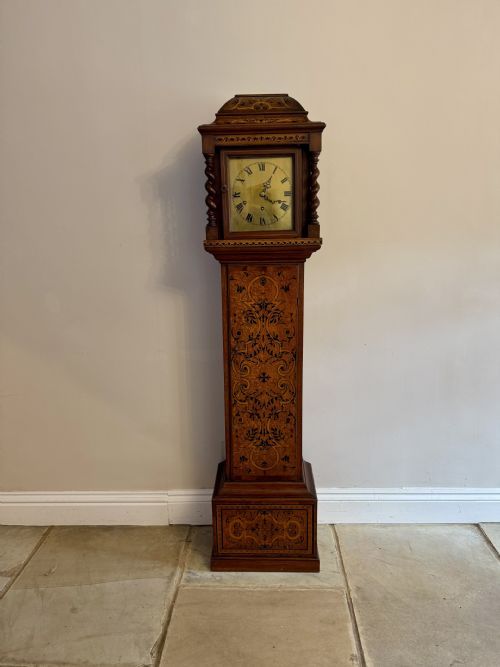


Barley Twist Hall Stand
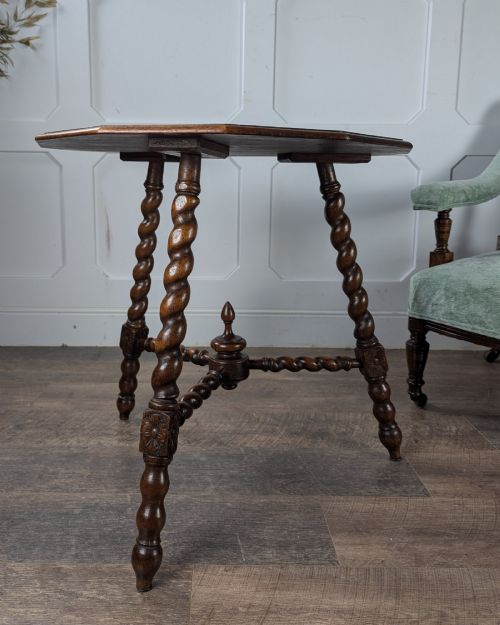
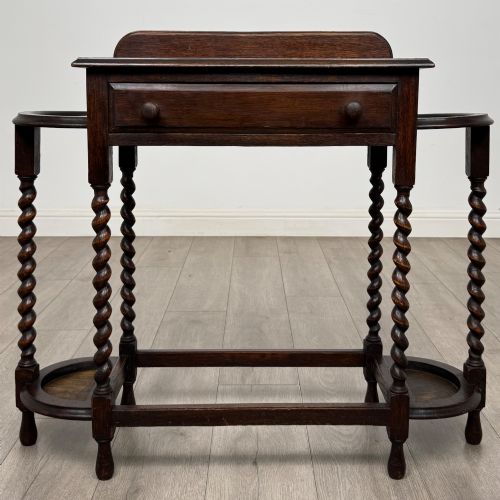
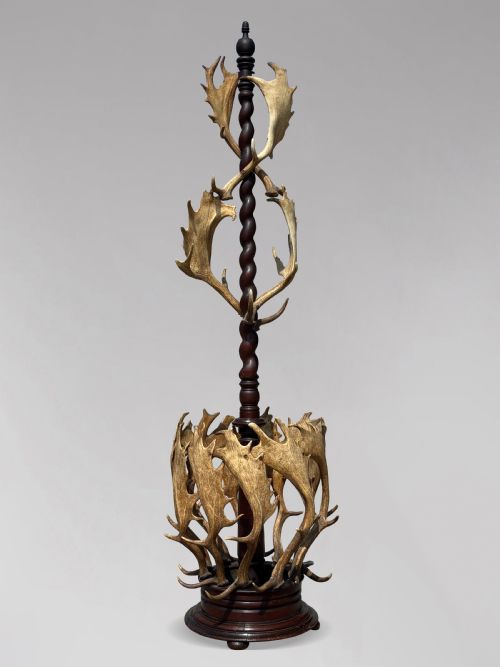
A barley twist hall stand brings upright architectural presence to an entrance, combining turned spiral woodwork with practical utility for coats and hats.
Barley Twist Hall Stand
A barley twist hall stand anchors a hallway with robust timber construction and distinctive spiral supports. Pieces on this page span the Victorian and Edwardian eras through to the 1930s.
The form combines functional elements like umbrella wells and coat hooks with decorative carved panels or mirror backs. Oak remains the predominant timber across these hallway pieces.
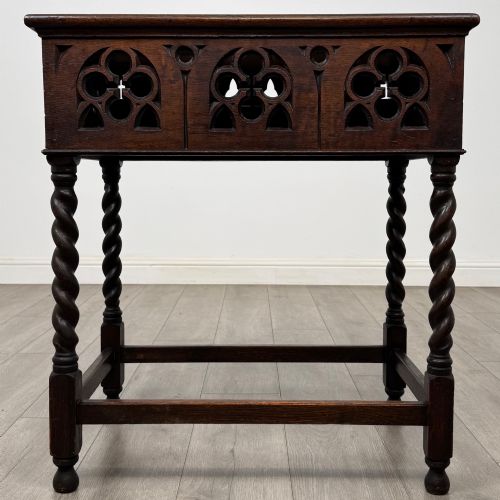
Makers drew on Jacobean Revival and Gothic Revival vocabularies to create imposing furniture designed to impress visitors immediately upon entering a home.
Assessing quality and craftsmanship
Superior examples demonstrate crisp, deep hand-carving in the wooden elements rather than shallow mechanical stamping. The tightness and symmetry of the spiral turning reveal the maker's skill.
The integration of original bevelled mirrors, intact brass hardware, and solid backboards distinguishes better-preserved and higher-status pieces from simpler domestic utility items.
Listings feature items dated across the nineteenth and twentieth centuries, spanning Victorian, Edwardian, and nineteen-thirties periods in oak, mahogany, and walnut.
J. Parker of Woodstock
The Barley Twist Hall Stand Glossary
- Barley twist
- A decorative turning style resembling a twisted rope or column. It gained popularity during the 17th century and saw major revivals in Victorian and Edwardian furniture.
- Stick stand
- A piece of furniture designed specifically for holding walking sticks and canes. They often incorporate metal drip trays to catch rainwater.
- Bevelled mirror
- A mirror glass with angled edges cut and polished to a thinner edge. This traditional technique adds depth and light reflection to hall stand backs.
- Bergere
- A type of woven cane panel work utilised in panels and backing. It provides a lighter textural contrast to heavy solid timber.
Barley Twist Hall Stand: Frequently Asked Questions
How do I care for an oak hall stand?
Keep wooden surfaces nourished with traditional beeswax rather than modern silicone sprays, applying lightly and buffing to maintain the finish.
Position the stand away from direct radiators and intense sunlight to prevent the timber from splitting and the original glue joints from drying out.
What periods do these pieces date from?
The pieces span the nineteenth century through the Edwardian era up to the nineteen-thirties, incorporating various revival styles.
Victorian and Edwardian workshops produced the majority of these hall furniture items, drawing heavily on earlier seventeenth-century design motifs.
Are the mirrors usually original?
Many pieces retain their original bevelled mirror glass, which often displays subtle foxing and age spots appropriate to the period.
Replacement glass is occasionally fitted during restoration, so checking the silvering and backing boards helps determine original status.
How were umbrella stands kept practical?
Original metal drip pans made from brass or cast iron sat at the base to catch water from wet umbrellas and protect the wooden floor.
These removable trays allowed owners to empty accumulated rainwater easily without damaging the surrounding timber framework.