



Spiral Twist Hall Table
A spiral twist hall table brings sculptural turnings and rich timber grain to an entranceway, offering practical surface space alongside centuries of cabinetmaking tradition.
Spiral Twist Hall Table
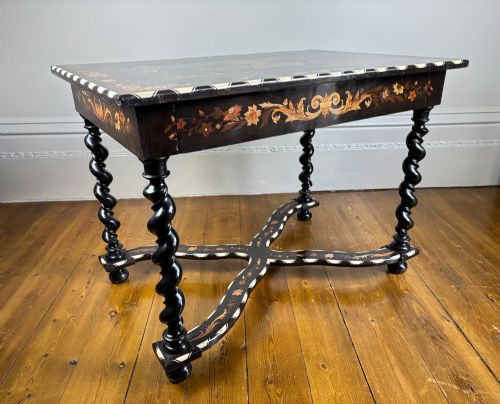
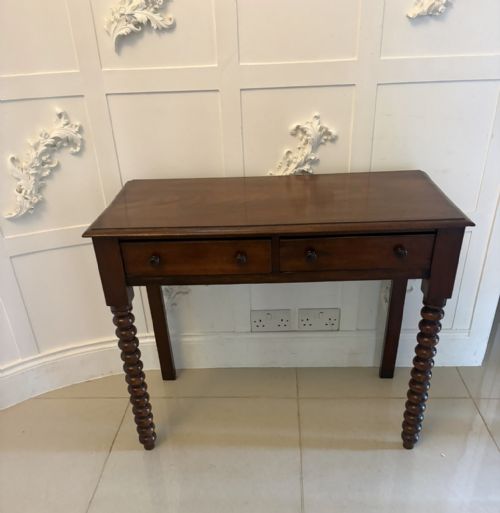
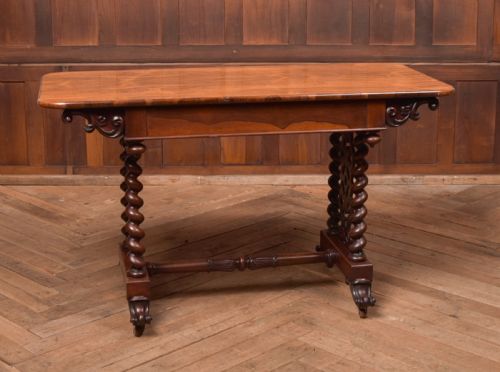
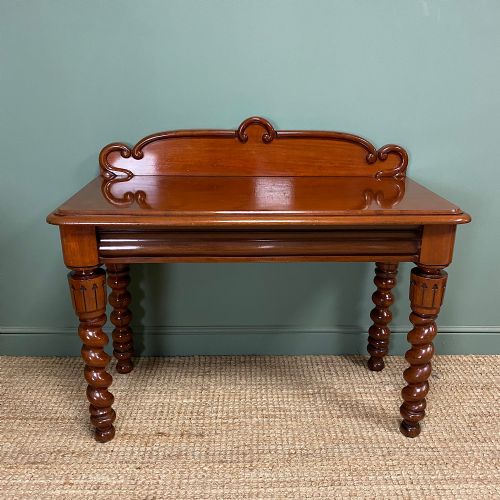
When you search for a spiral twist hall table, you are looking at sturdy timber furniture defined by characterful turned legs. The pieces seen here span multiple eras, encompassing side tables, console tables, and centre tables.
Victorian and nineteenth-century interpretations appear frequently alongside seventeenth-century survivals and later twentieth-century examples. These items function as functional entryway furniture or occasional surfaces in domestic interiors.
Origins vary across English, Dutch, and Portuguese workshops, bringing diverse regional timbers and decorative vocabularies to the category. The core feature uniting them remains the rhythmic profile of the turned support.
How they were made
Cabinetmakers constructed these tables using solid hardwoods such as oak, walnut, mahogany, and rosewood, often pairing them with decorative veneers. Marquetry veneers and bone inlay frequently embellish the top surfaces of Dutch and period examples.
The distinctive spiral turns on the legs were shaped by hand or lathe, requiring precise skill to achieve uniform curves along the timber. Ebonised finishes and parcel gilding were also applied to enhance selected surfaces.
Listings feature oak, walnut, mahogany, and rosewood alongside specialised techniques like bone inlay and marquetry veneers.
What varies in quality
The distinction between ordinary and exceptional pieces lies in the crispness of the turnings and the selection of figured timber. Superior examples display harmonious proportions and careful integration of marquetry or inlay.
The integrity of the original construction and the depth of the timber grain determine the lasting character of each piece. Tables retaining their early patination demonstrate a higher grade of historical survival.
The Spiral Twist Hall Table Glossary
- Barley twist
- A type of spiral turning resembling a twisted rope, commonly found on seventeenth- and nineteenth-century table legs. This decorative form adds strong vertical rhythm to the furniture.
- Console table
- A table designed to stand against a wall, sometimes supported by brackets or legs at the front. These serve as narrow surface solutions for hallways and reception rooms.
- Ebonised
- Timber treated with a dark finish to imitate expensive ebony wood. This technique appears frequently on nineteenth-century revival pieces.
- Parquetry
- Geometric mosaic woodwork used for decorative surface patterns on tabletops. It differs from marquetry by relying on angular, repeating shapes.
Spiral Twist Hall Table: Frequently Asked Questions
Where should I place a spiral twist hall table?
These tables suit narrow entranceways, hallways, and living rooms where surface space is needed without blocking circulation.
Their decorative legs make them visually appealing when viewed from the front or side against a wall.
How do I date a spiral twist table?
Dating relies on timber selection, construction methods, and the style of the turning. Seventeenth-century examples often use oak or walnut with heavy construction, while nineteenth-century pieces show revival characteristics.
Examining the underside and drawer construction helps confirm the period of manufacture.
What is the difference between a side table and a console table?
A side table stands freely on four legs, whereas a console table is traditionally secured to a wall or designed specifically to abut one.
Both serve similar functional purposes in modern hallway settings.
How do I care for antique timber tables?
Keep wooden furniture away from direct heat sources and strong sunlight to prevent timber movement and fading.
Apply traditional wax polish occasionally to maintain the lustre of the antique surface finish.