
Hallway Coat Rack Stand
A hallway coat rack stand organises the entrance with hooks, umbrella holders and mirrors, combining utility with period design.
Hallway Coat Rack Stand
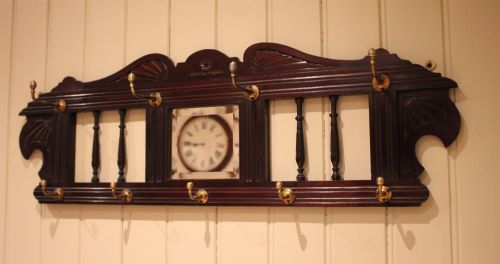
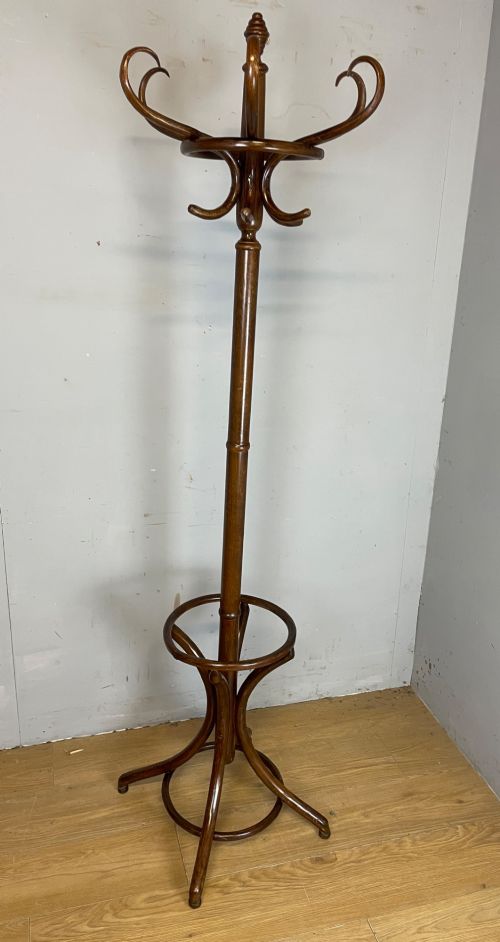
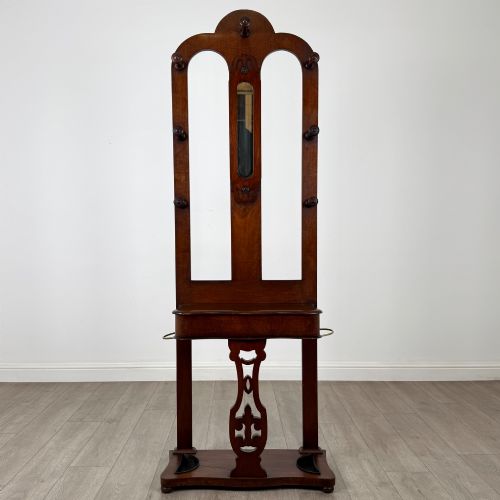
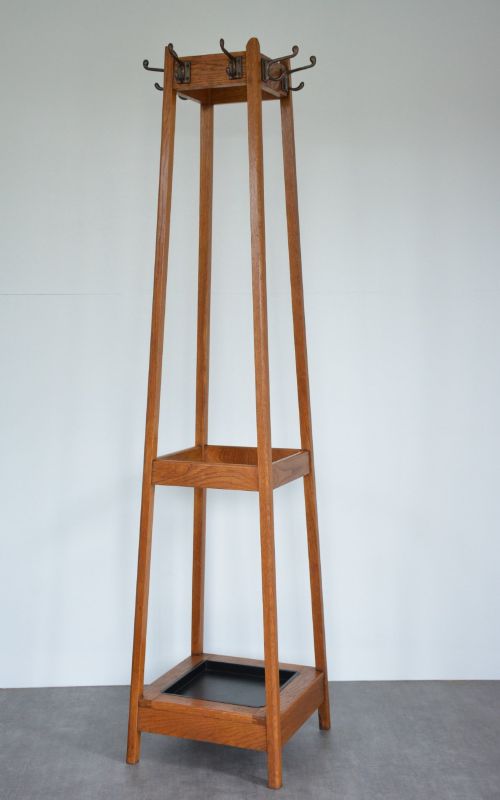
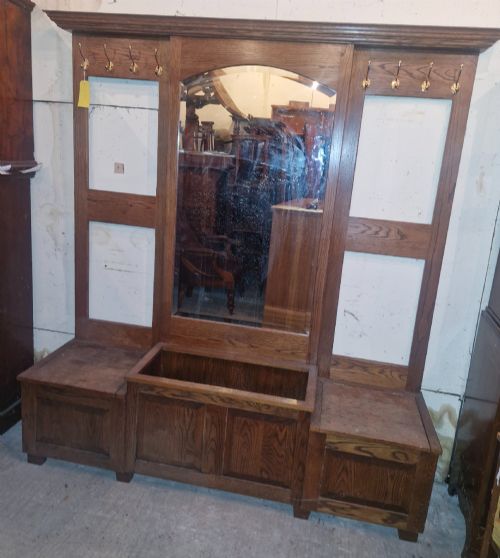
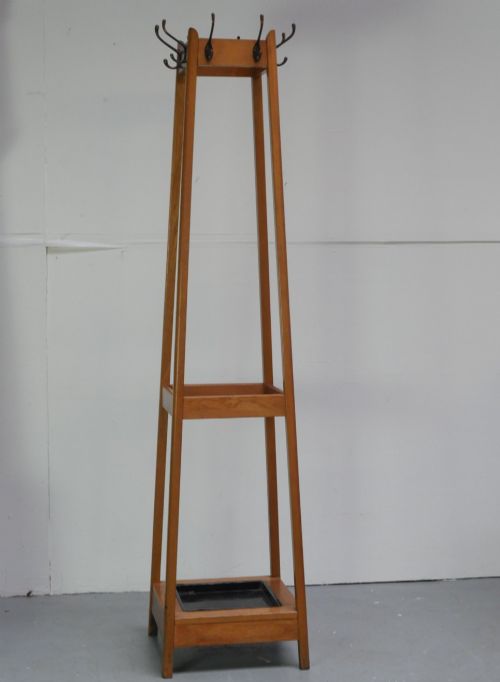
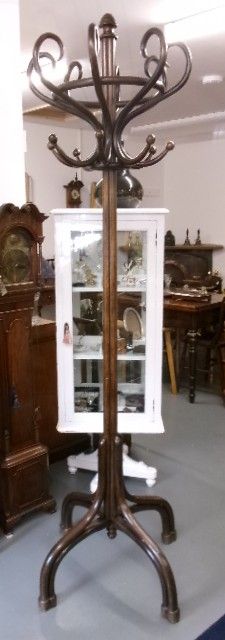
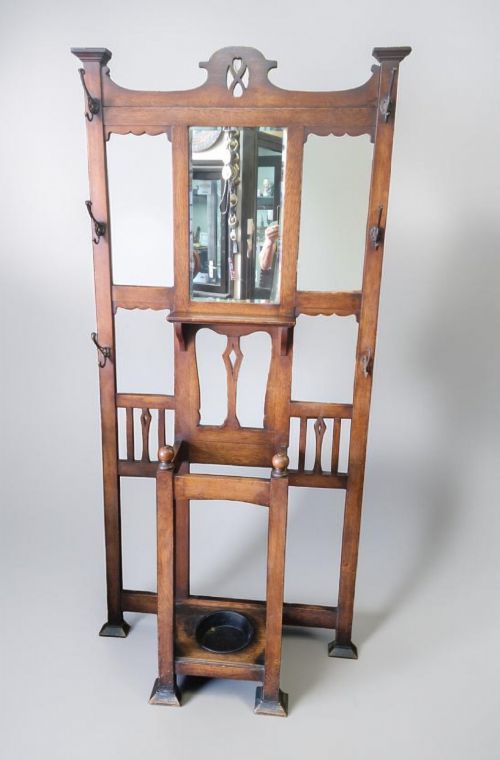
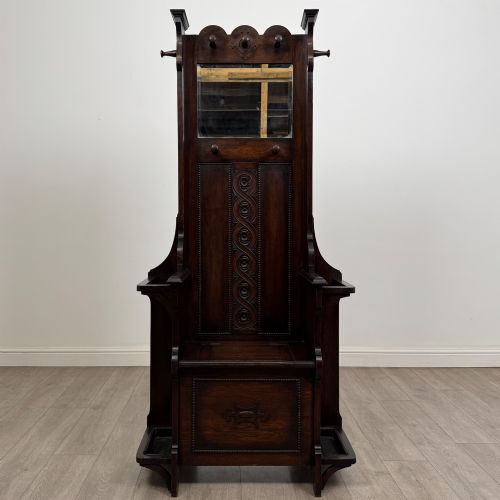
A hallway coat rack stand serves as a central entrance furniture piece designed to hold hats, coats, sticks and umbrellas. These forms range from freestanding upright poles to large panelled hall furniture featuring integrated seats and mirrors.
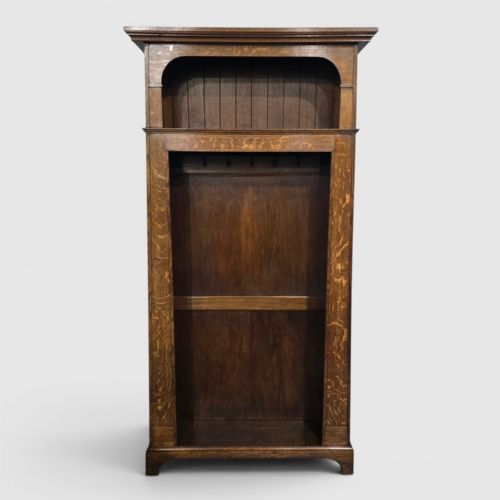
The pieces appearing on this page span the Victorian and Edwardian eras through to the early twentieth century, encompassing the nineteen-twenties and nineteen-thirties. Buyers meet everything from compact bentwood hatstands to substantial carved oak hall stands.
Formats include wall-mounted coat racks alongside multi-functional hall robes, coat trees and umbrella stands with drip trays. Oak and mahogany dominate the heavier wooden framework, while beech appears frequently in bentwood construction.
Materials and methods of construction
Cabinet makers utilised solid timbers such as oak, mahogany, walnut and pine, often combining them with brass hooks and cast iron drip trays. Glass appears in mirrors fitted to larger hall stands, while bamboo and cow horn serve as specialised structural elements in nineteenth-century designs.
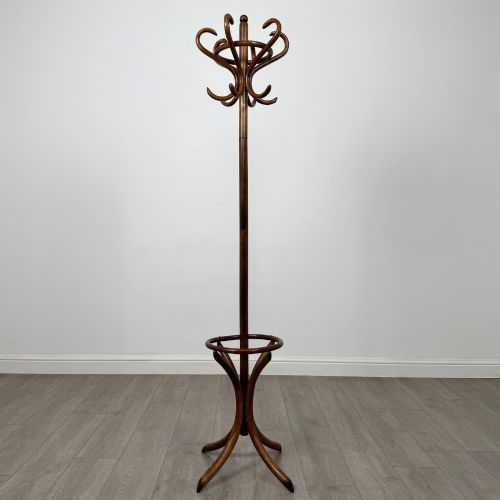
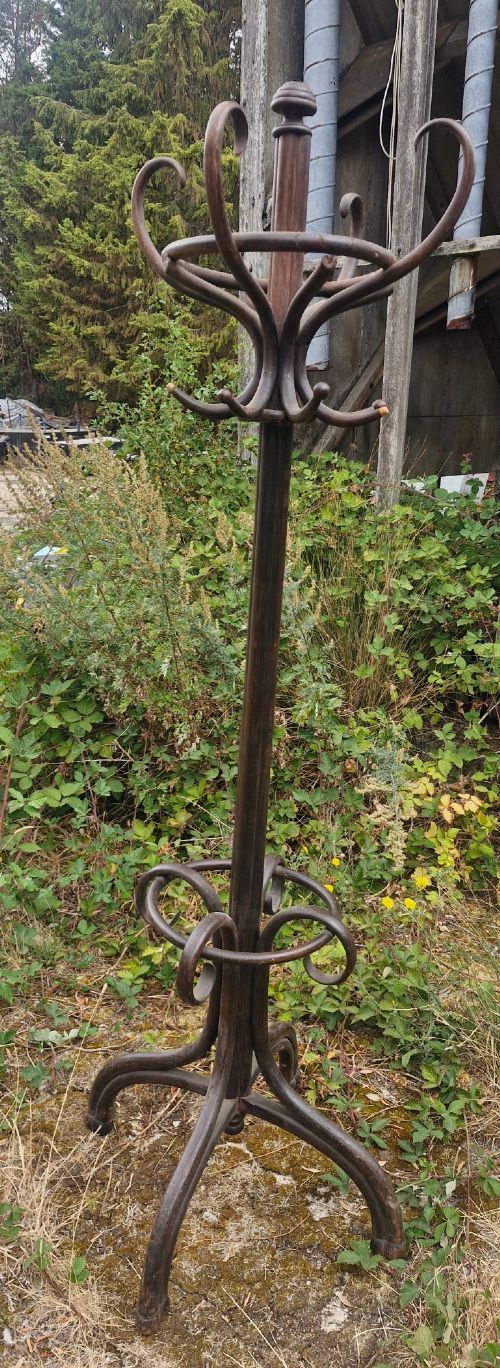
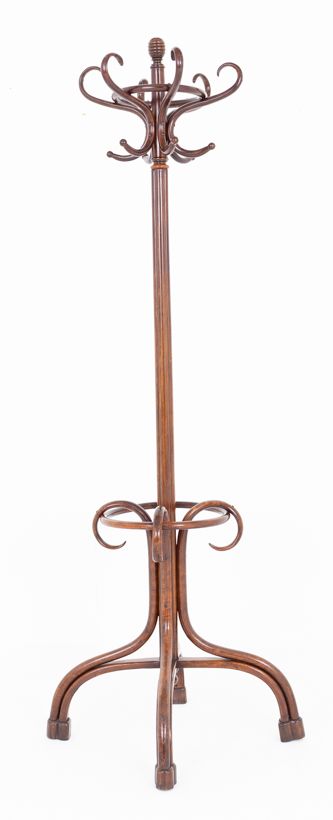
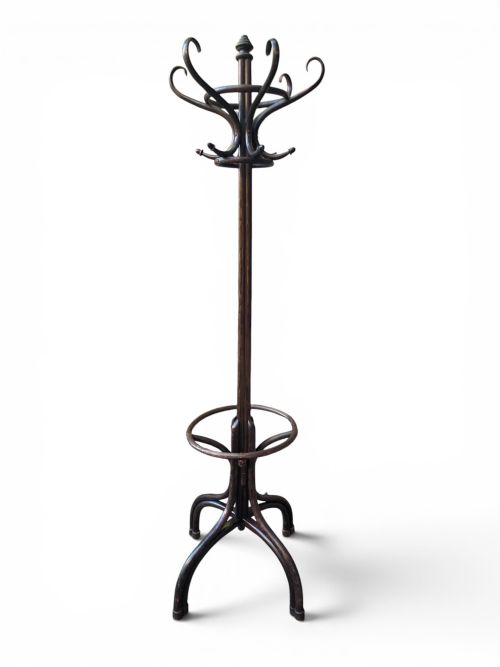
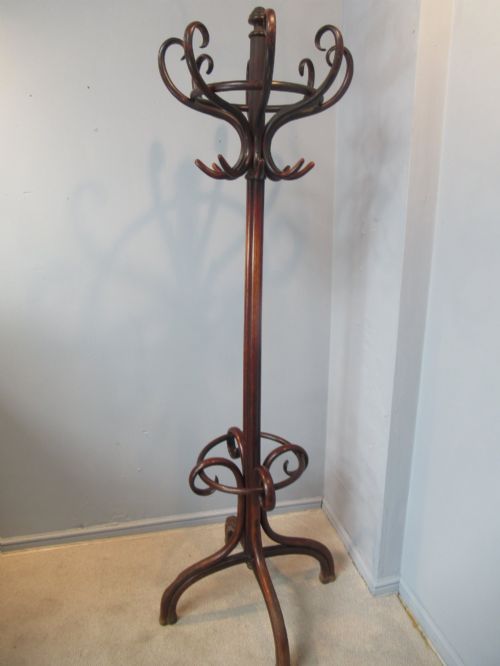
Bentwood manufacturing utilised steam-heated beech forced into curved profiles, creating lightweight yet resilient hat and coat stands. Carving, turning and panel joinery define the heavier Victorian and Edwardian architectural frameworks.
Periods represented span from the Victorian era and the nineteenth century through the Edwardian period to the nineteen-thirties.
Distinctions in standard and execution
The distinction between standard production and superior pieces lies in the choice of timber grain and the complexity of hand-carved ornamentation, such as deep relief work or shaped panelling. Original brass hardware, intact bevelled mirror glass and matching drip trays elevate the standing of a piece.
Structural integrity depends on the precision of the bentwood steam-forming or the tightness of the frame joinery, where lesser examples show stress fractures or replaced elements.
Thonet·Astrola·Jas. Shoolbred·GW Evans
The Hallway Coat Rack Stand Glossary
- Bentwood
- Wood softened by steam and bent into curved structural forms. This technique created lightweight, flowing silhouettes popular in the late nineteenth and early twentieth centuries.
- Hall Stand
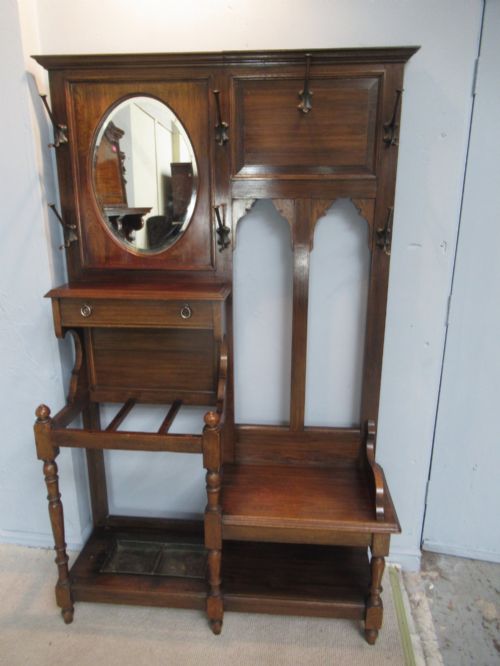
- A large piece of entrance furniture combining coat hooks, a mirror, umbrella retention and frequently a small bench. These items dominated Victorian and Edwardian hallway interiors.
- Drip Tray
- A metal receptacle placed at the base of a stand to catch water from wet umbrellas. These trays protect wooden flooring from moisture damage.
- Hat Tree
- A freestanding vertical pole fitted with multiple upward-curving wooden or brass pegs. The design permits garments to hang freely from various angles.
- Aesthetic Movement
- A late nineteenth-century design style emphasising visual beauty over narrative content. Pieces from this movement often incorporate materials like bamboo.
Hallway Coat Rack Stand: Frequently Asked Questions
What is the difference between a hall stand and a coat rack?
A hall stand is typically a large, freestanding piece of furniture that includes a mirror, umbrella holders, hooks and sometimes a seat. It is designed to stand independently against an entrance wall.
In contrast, a coat rack refers either to a wall-mounted rail with fixed hooks or a simpler vertical tree structure dedicated primarily to hanging garments.
How do I maintain an antique wooden hall stand?
Maintain antique wooden hall stands by applying a traditional beeswax polish periodically to nourish the timber grain and protect the finish from dryness. Avoid placing them in direct sunlight or near heat sources to prevent wood splitting.
Ensure that metal drip trays are emptied and dried regularly to prevent rust transference to the surrounding wooden base.
Where were bentwood coat stands made?
Bentwood coat stands were produced extensively across Europe during the late nineteenth and early twentieth centuries, following pioneering steam-bending manufacturing methods developed in Austria.
Many examples follow the distinct aesthetic established by major manufacturers, whilst others reflect regional adaptations produced during the Edwardian period.
Did all hall stands come with mirrors?
Not all hall stands included mirrors, though they remain a frequent feature on larger Victorian and Edwardian oak or mahogany hall robes and seat stands. The glass allowed individuals to check their appearance before leaving the house.
Smaller items like bentwood hatstands, coat trees and simple wall racks omitted mirrors entirely in favour of an open, functional framework.