




Mahogany Hat Rack
A mahogany hat rack organises entranceways with timber warmth and practical iron, brass or ceramic hooks.
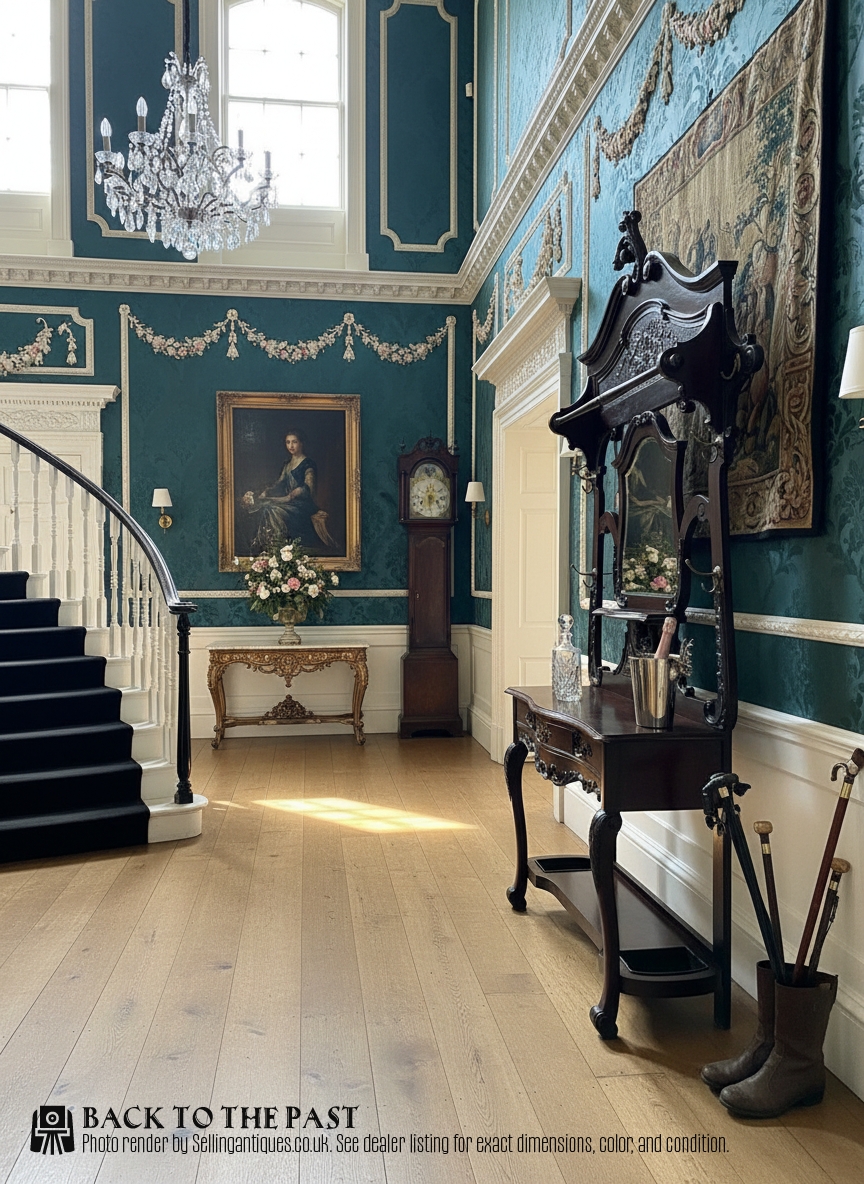
Mahogany Hat Rack
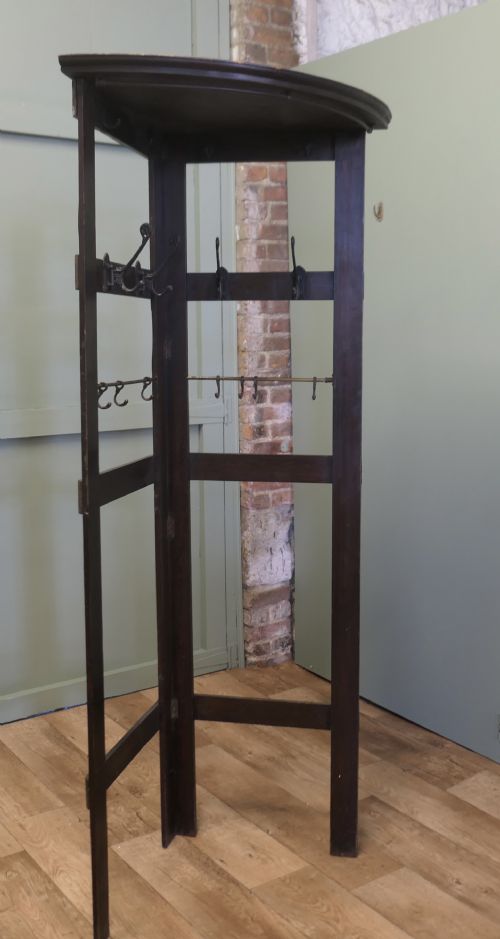
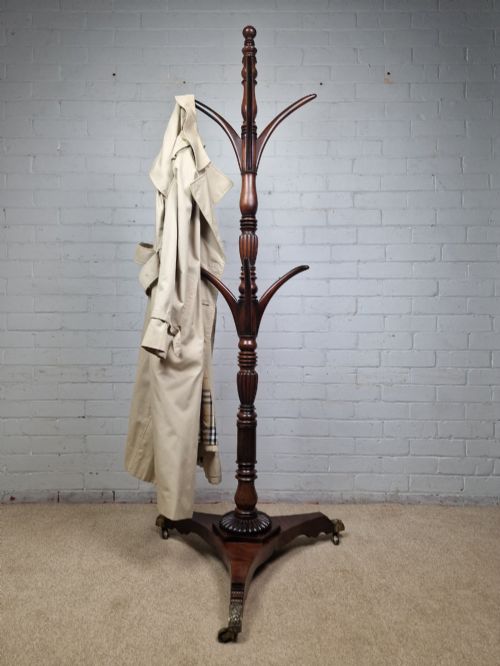
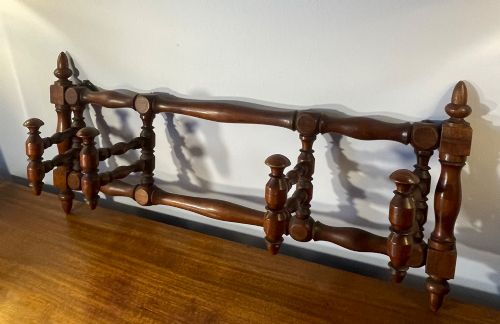
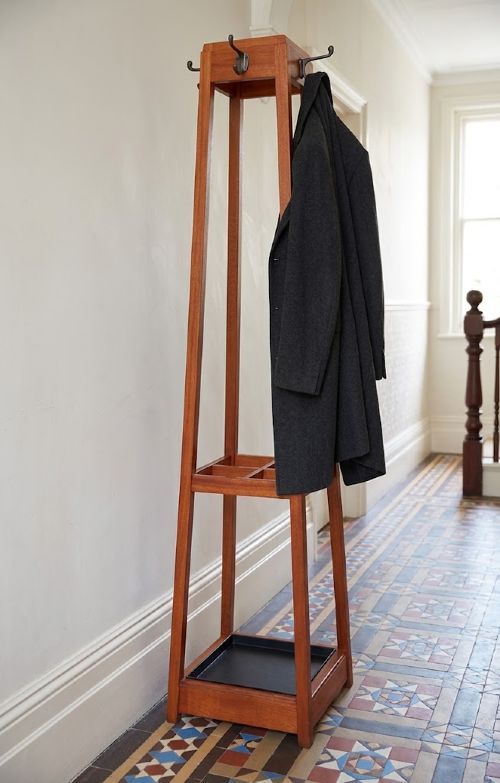
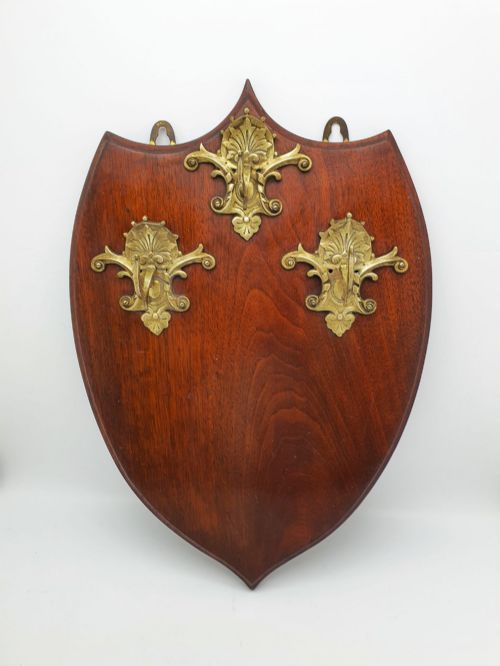
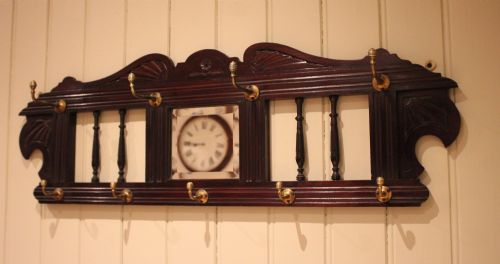
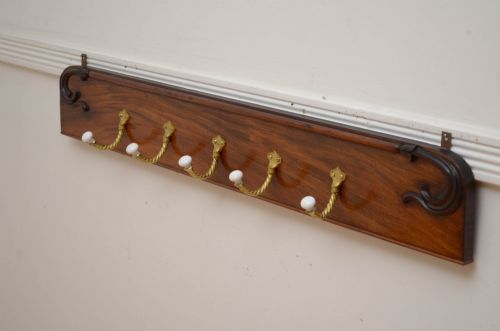
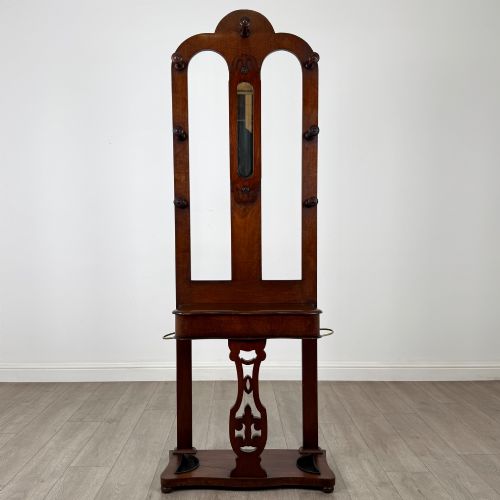
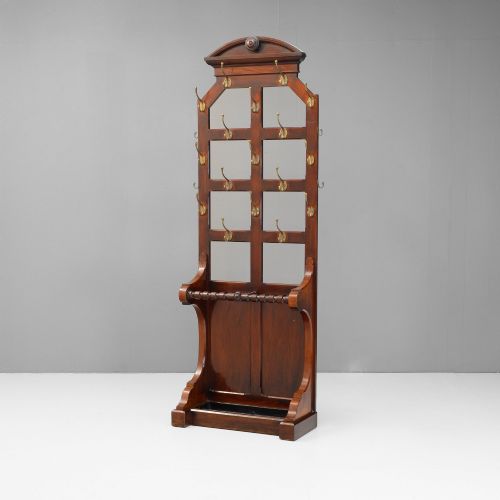
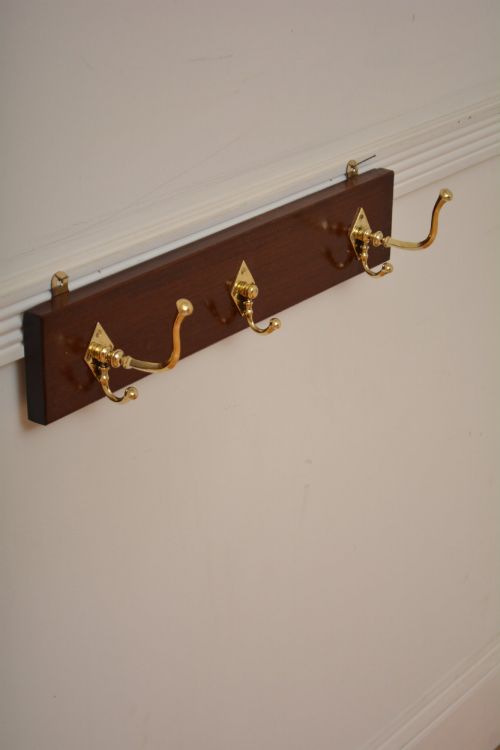
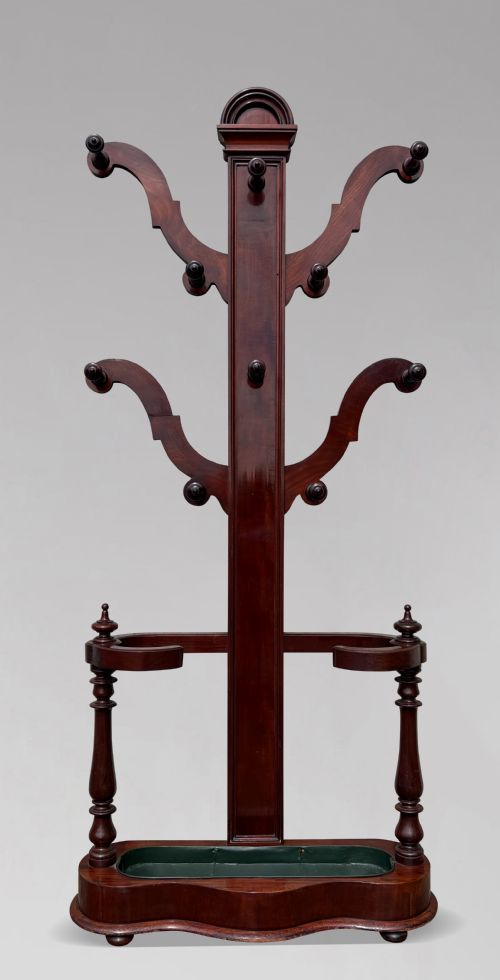
A mahogany hat rack brings functional timber furniture into hallways, cloakrooms and reception spaces for garments and headwear. These pieces range from compact wall-mounted rails with brass hooks to substantial floor-standing pieces incorporating mirrors and umbrella compartments.
The Victorian period supplies the greatest number of examples on this page, spanning wall-mounted racks to grand hall stands. Pieces frequently date from the mid-nineteenth century through the Edwardian era, showing styles from Aesthetic Movement designs to Arts and Crafts inlays.
Materials and construction
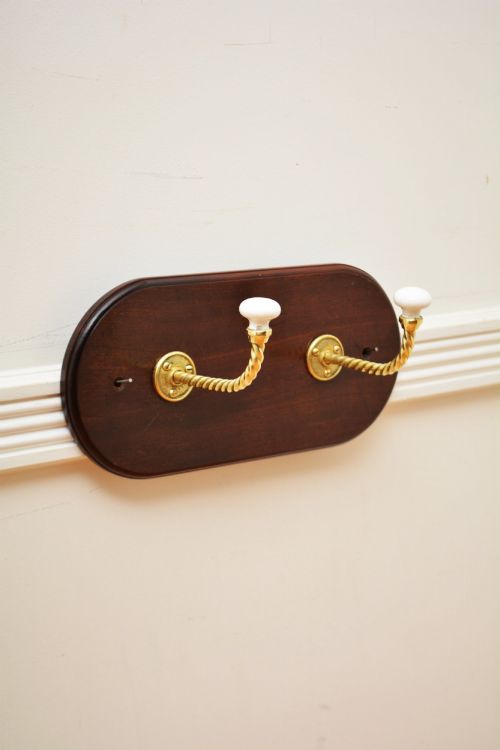
Makers shaped these items from solid mahogany and veneered timbers, often combining the rich brown wood with cast brass, iron or ceramic hooks. Wall mirrors, marble shelves and tiled panels feature in the more elaborate hall stand variations.
Carpenters utilised traditional joinery alongside turned columns, twisted rope carving and bentwood techniques. Mounting plates and hanging hooks are securely fastened to withstand heavy garments and daily domestic use.
Mahogany Hat Rack Retail Price Guide 2026
Typical asking prices for mahogany hat rack among the pieces listed under this phrase on Sellingantiques today, from the lower quarter to the upper quarter. They describe what is for sale here now, not the wider market.
Assessing quality and character
Quality reveals itself in the depth of timber grain, the weight of the brass or cast iron fittings and the integrity of the structural joints. Superior examples display crisp carving, well-cast mounting plates and original bevelled mirror plates.
Pioneering designs from specific stylistic movements or makers introduce distinctive artistic elements such as decorative ceramic tiles or inlaid woodwork. The harmony between the mahogany frame and its subsidiary materials dictates the visual standing of each piece.
Ellen E Houghton of Minton
The Mahogany Hat Rack Glossary
- Hall stand
- A large freestanding entranceway furniture piece combining a mirror, hat hooks, coat pegs, and umbrella wells. These often include a marble shelf or a small glove drawer.
- Bentwood
- Wood softened by steam and bent into curved shapes. This technique creates graceful hooks and frames found on specific nineteenth-century racks.
- Aesthetic Movement
- A late nineteenth-century design style focusing on visual beauty over narrative meaning. Pieces from this movement incorporate clean lines and contrasting brass elements.
- Bevelled plate
- A mirror glass with edges cut and polished at an angle. This treatment adds depth and light reflection to wall-mounted hat racks.
Mahogany Hat Rack: Frequently Asked Questions
Where should I hang a wall-mounted mahogany hat rack?
Mount these rails securely into wall studs within hallways, porches or boot rooms where visitors drop outer garments. Ensure the height accommodates long coats and heavy hats without crowding the floor below.
Position the rack away from direct heat sources to protect the polished mahogany finish and prevent timber splitting over time.
How do I maintain the mahogany and brass hooks?
Dust the timber regularly with a soft cloth and feed the mahogany periodically with traditional wax to preserve the grain. Avoid abrasive cleaners on the brass or ceramic hooks to maintain their original finish.
Check the wall fixings and mounting screws occasionally, as damp heavy coats place significant downward strain on the wood and brackets.
What is the difference between a hall stand and a hat rack?
A hall stand is a substantial freestanding item that typically rests on the floor, incorporating umbrella storage, a mirror and sometimes a marble shelf. A hat rack usually refers to a compact wall-mounted rail featuring a row of hooks.
Both forms utilise mahogany as the primary timber, but hall stands offer a complete entranceway furniture solution while hat racks focus purely on hanging storage.
How can I date my Victorian mahogany hat rack?
Examine the construction methods, hook attachments and secondary materials such as marble or mirror glass. Mid-nineteenth-century examples often feature heavy turned columns and robust brass hardware, while late Victorian and Edwardian versions display crisper joinery and stylistic influences like Arts and Crafts.
Look for original fixing plates and backboards, which provide clear clues regarding the decade of manufacture.