


Brass Coat Rack
A brass coat rack brings functional utility and polished metal warmth to an entrance hall, combining sturdy hooks with practical shelf space.
Brass Coat Rack
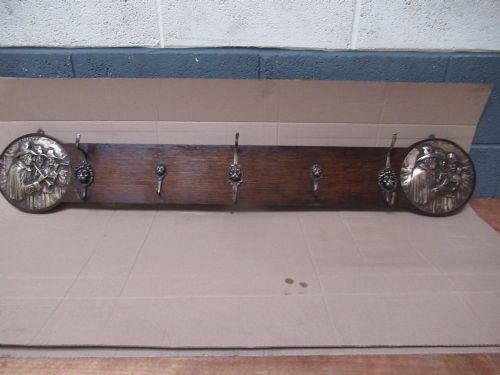
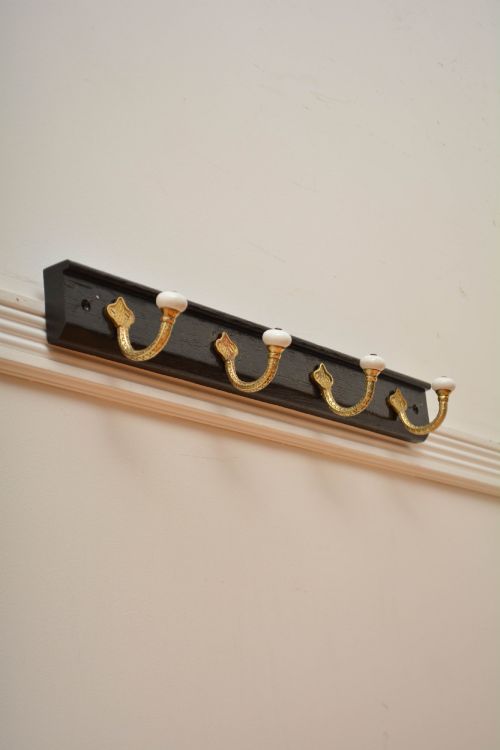
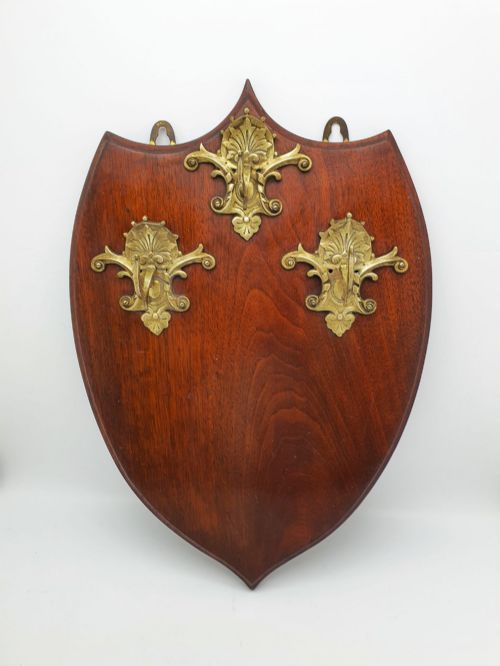
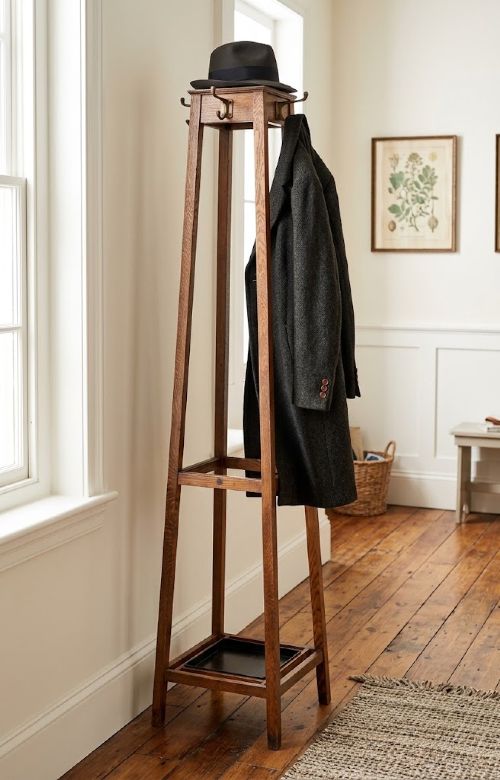
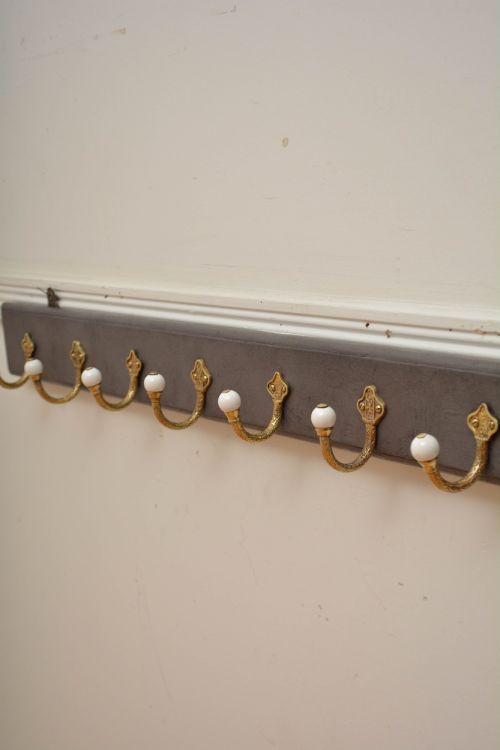
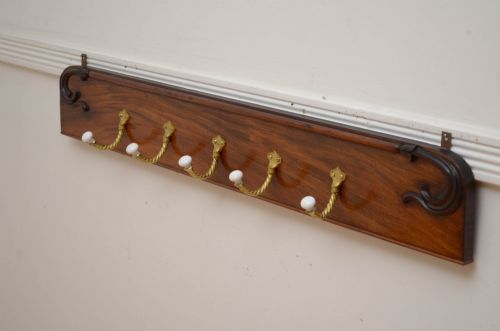
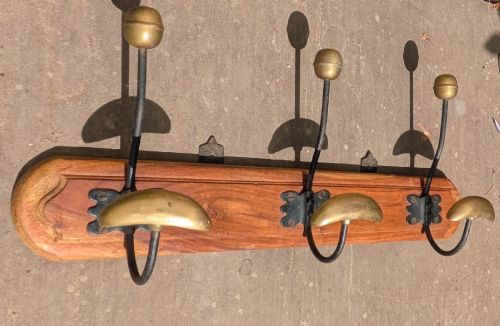
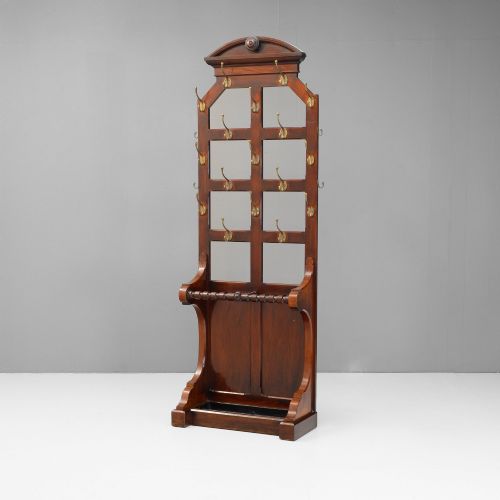
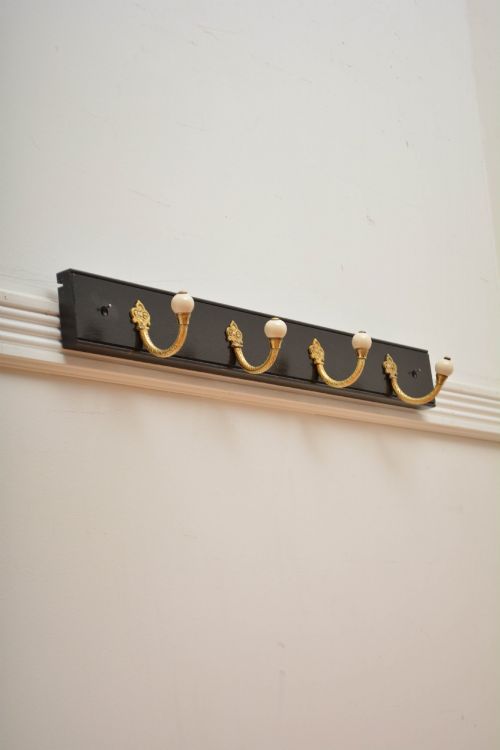
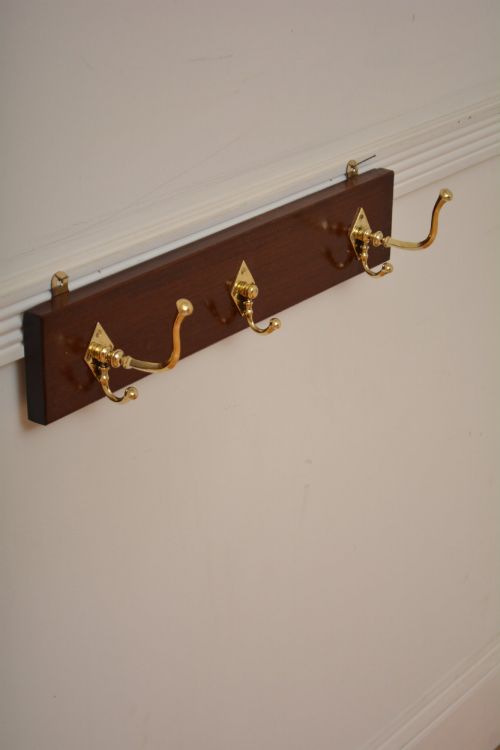
A brass coat rack encompasses everything from simple wall-mounted rail boards set with cast hooks to elaborate French portmanteaus and railway luggage racks. When searching for a brass coat rack, one encounters wall-mounted styles alongside freestanding hall stands, floor-standing coat stands, and combinations incorporating mirrors or umbrella stands.
The pieces span the nineteenth and twentieth centuries, taking influence from Victorian, Edwardian, Arts and Crafts, Art Deco, and Regency periods. Wall-mounted racks frequently feature timber backboards in mahogany, oak, walnut, or pine, whilst continental examples often showcase robust cast brass frames designed for hats and coats alike.
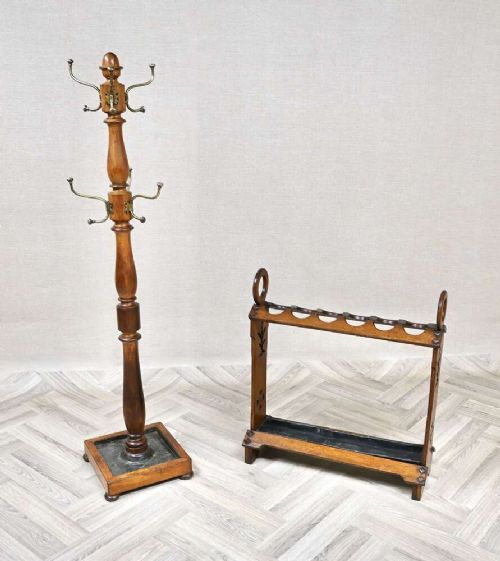
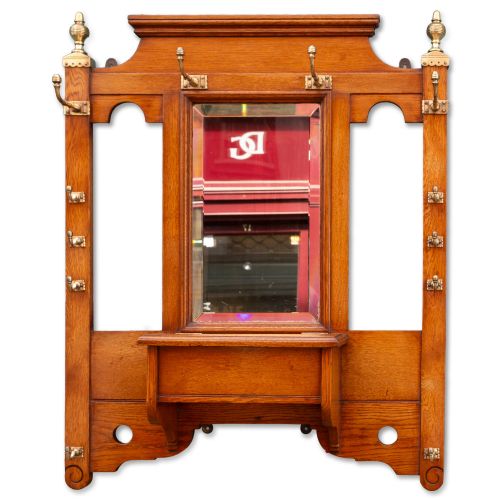
Freestanding forms range from compact hall trees to substantial furniture pieces fitted with ceramic knobs, drip trays, and bevelled glass mirrors. These items served entranceways, hallways, and reception rooms, providing guests and family members a dedicated place for outerwear.
Materials and Construction
Makers combined cast and brass elements with dense hardwoods like mahogany, oak, walnut, and ebonised timber backboards. Brass hooks were frequently cast with decorative motifs, sometimes incorporating ceramic, porcelain, or glass knobs on the ends to protect garments from snags.
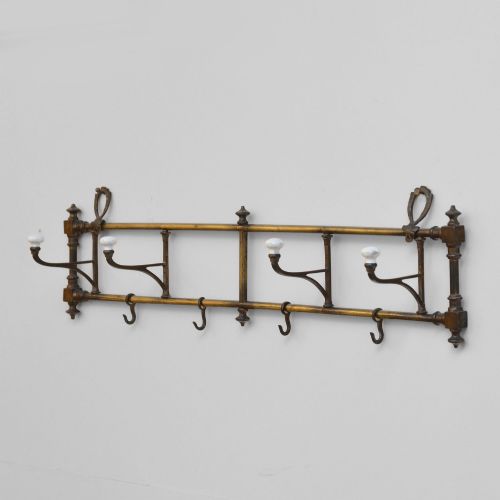
Structural integrity relied upon solid joinery, sturdy backplates, and robust wall fixings capable of bearing heavy winter coats. French railway and Pullman styles utilised folding brackets, tubular brass rails, and riveted construction designed to endure constant motion and heavy use.
Brass Coat Rack Retail Price Guide 2026
Typical asking prices for brass coat rack among the pieces listed under this phrase on Sellingantiques today, from the lower quarter to the upper quarter. They describe what is for sale here now, not the wider market.
Swing-out hooks let coats swivel gracefully away from the wall, solving the Victorian puzzle of overcrowding winter woollens in narrow hallways.
Assessing Craftsmanship
Quality reveals itself in the weight and crispness of the brass casting, where sharper detailing on mounting plates and hooks distinguishes finer production. Substantial gauge metalwork and well-finished timber backboards indicate superior manufacturing compared to lighter, utilitarian alternatives.
The integration of secondary materials such as bevelled mirror plates, original porcelain inserts, and undamaged ceramic knobs preserves the integrity of the piece. Matching hook sets and original screws point to an authentic, unaltered survival.
Jas. Shoolbred
The Brass Coat Rack Glossary
- Portmanteau
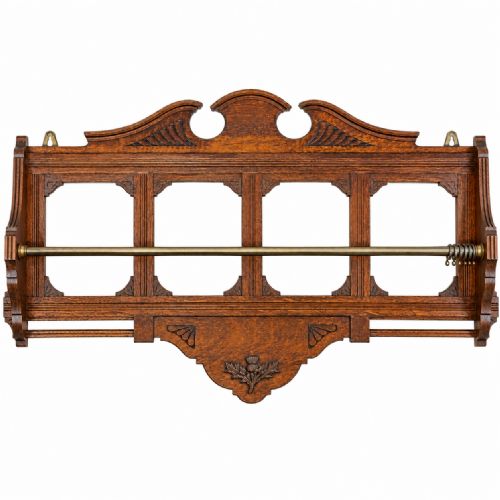
- A combined wall-mounted hat and coat rack, often featuring a slatted shelf and multiple hooks. These pieces were common in nineteenth-century hallways.
- Hallstand
- A freestanding piece of hallway furniture incorporating coat hooks, a mirror, umbrella storage, and sometimes a small glove drawer. They anchor an entranceway with multiple domestic functions.
- Ebonised
- Timber treated with a dark stain or finish to imitate ebony. This dark surface creates a sharp visual contrast against polished brass hardware.
- Bevelled plate
- A mirror glass with angled or sloped edges cut around the perimeter. This technique adds depth and a decorative finish to hallway mirrors.
- Pullman rack
- A luggage rack style inspired by railway train carriages featuring a slatted shelf for hats and folding hooks underneath. They are typically constructed from brass and metal.
Brass Coat Rack: Frequently Asked Questions
How do I install a wall-mounted brass coat rack securely?
Ensure the mounting screws match the weight of the rack and anchor them directly into wall studs or use appropriate heavy-duty wall plugs. Because these metal and timber racks must support heavy winter garments, secure fixing is essential.
Check that the backboard or mounting plates sit flush against the wall surface before loading the hooks with coats.
What is the difference between a coat rack and a hall stand?
A coat rack is typically a wall-mounted rail featuring a series of hooks, sometimes paired with an upper shelf for hats. A hall stand is a larger, freestanding item of furniture that stands on the floor.
Floor-standing hall stands frequently combine coat hooks with a central mirror, umbrella stands, and glove boxes, serving as a complete entranceway unit.
How should I clean antique brass hooks?
Dust the surface regularly with a soft, dry cloth to prevent grime accumulation. Avoid harsh chemical polishes that strip the natural aged patina developed over decades.
If cleaning is necessary, use a mild soapy solution on a damp cloth and dry thoroughly, preserving the historical character of the metal.
Where were railway luggage racks originally used?
Railway luggage racks were designed for passenger trains, including French carriages and Pullman cars, to hold travellers' hats and bags securely overhead. Their folding hooks and slatted metal frames maximised storage space in compact compartments.
Today, these robust racks are repurposed in domestic hallways and bathrooms for hanging coats and storing towels.