

Victorian Brass Coat Rack
A victorian brass coat rack organises an entrance hall with solid timber and bright metal hooks, bringing practical nineteenth-century utility to daily life.
Victorian Brass Coat Rack
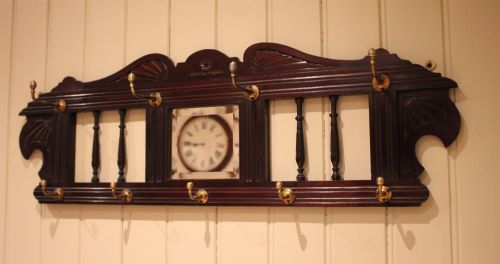
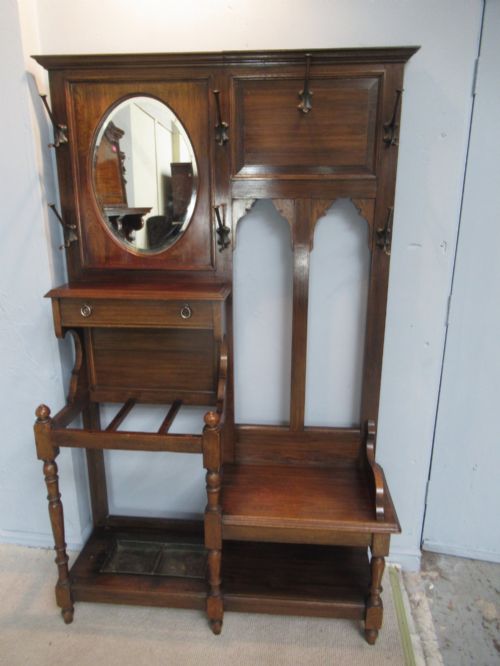
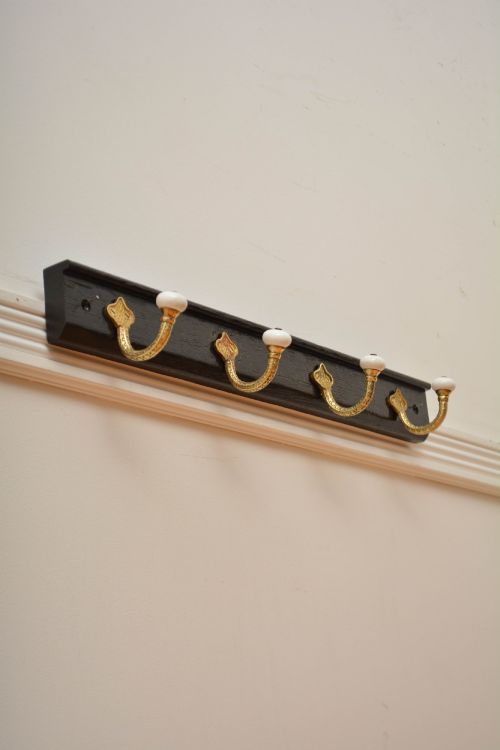
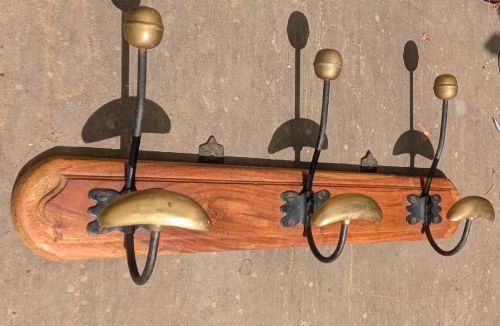
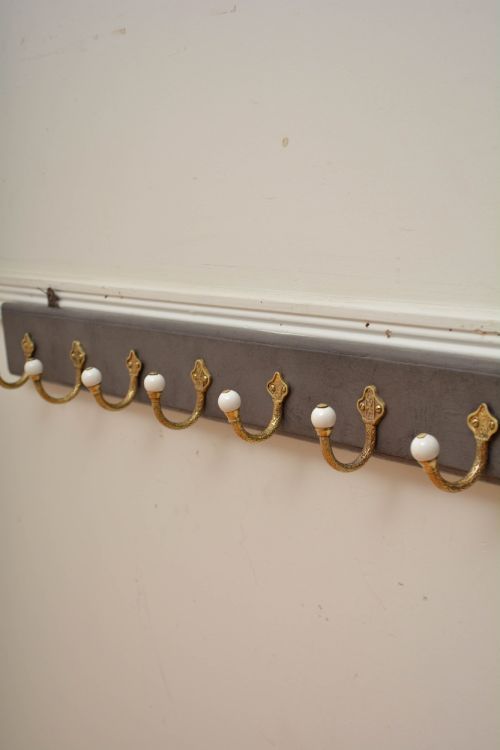
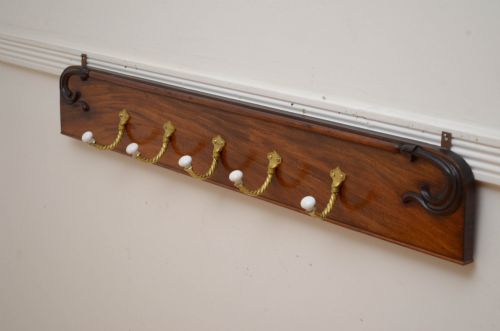
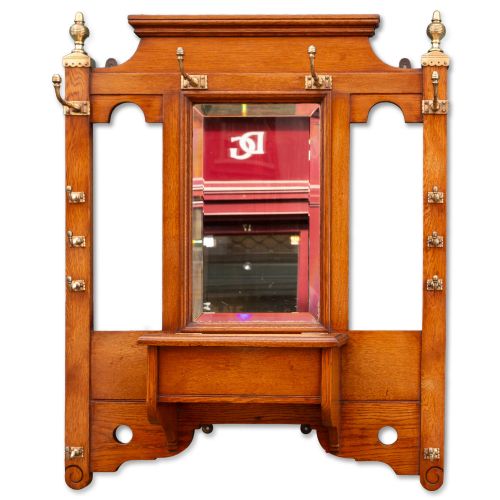
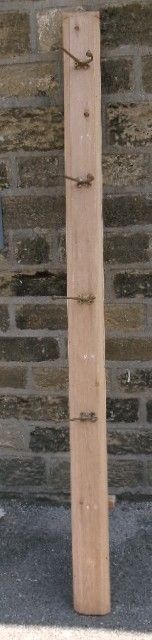
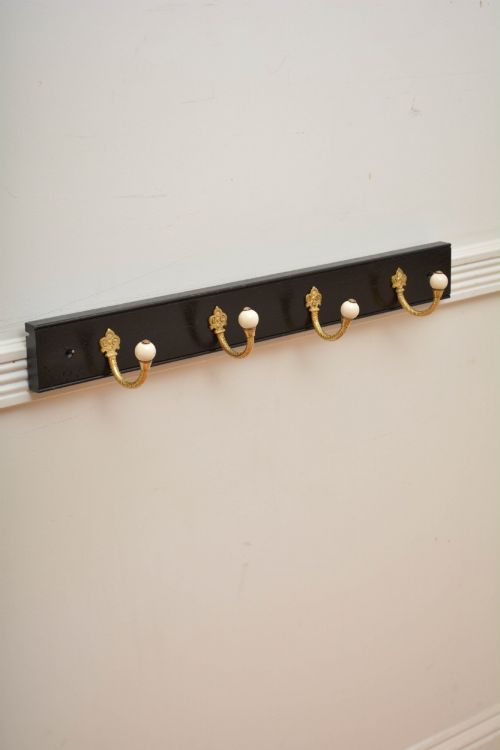
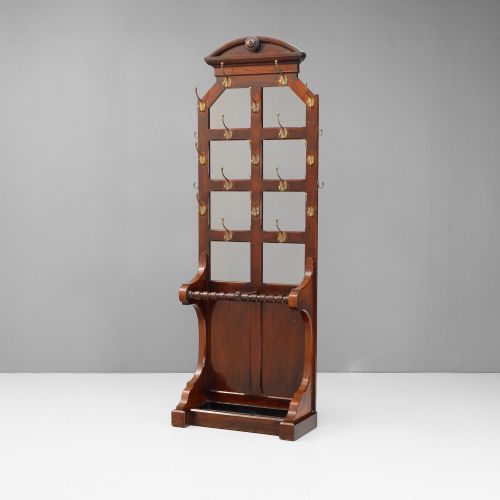
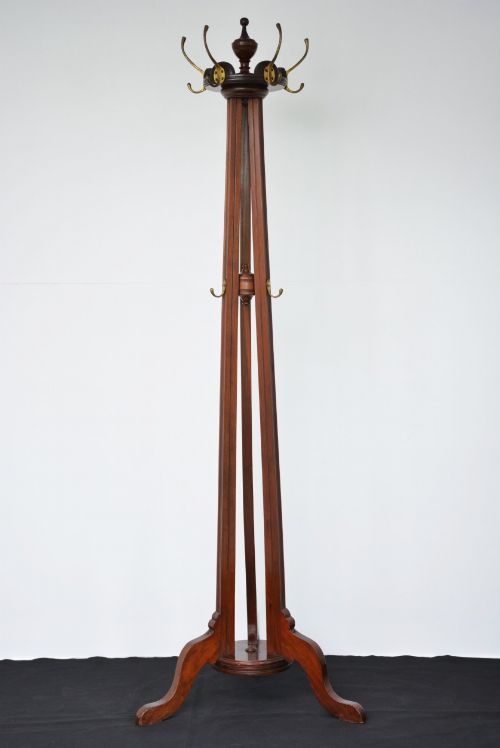
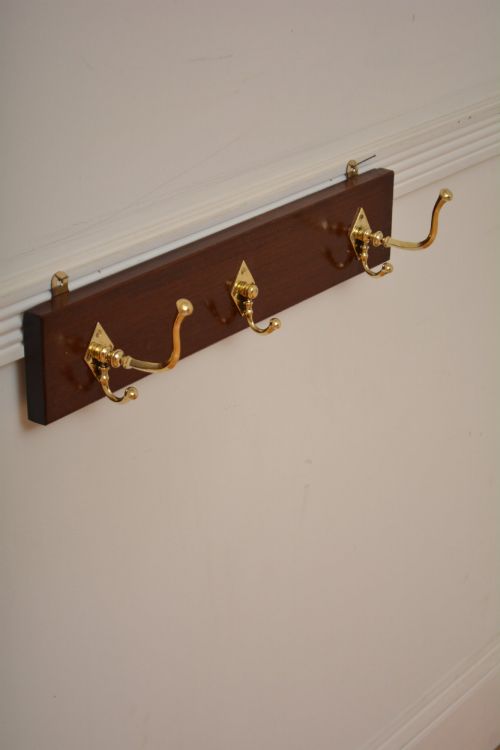
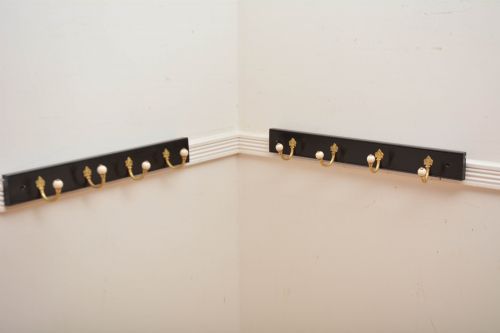
When you search for a victorian brass coat rack, you look at wall-mounted backboards and substantial freestanding hall stands designed for nineteenth-century hallways. The selection ranges from simple rows of brass hooks mounted on mahogany, oak, or pine backboards to grander architectural hallstands incorporating mirrors and umbrella holders.
Most pieces date from the nineteenth century into the early twentieth century, spanning Victorian, Edwardian, and William IV periods. Alongside English wall racks, the inventory includes French portmanteaus and French bistro styles featuring cast brass or bronze work.
How they were made
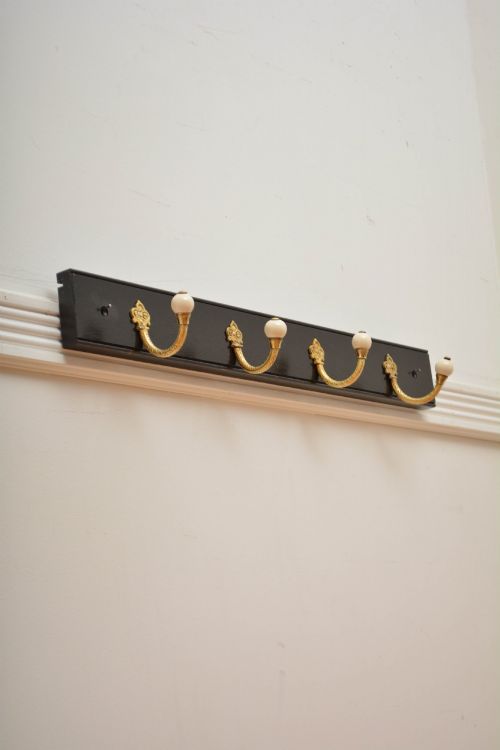
Maker's workshops combined dense hardwoods like mahogany, walnut, and oak with cast brass and ceramic components. Backboards were frequently ebonised or polished to highlight the grain, while mounting plates and hooks showed detailed chasing and casting.
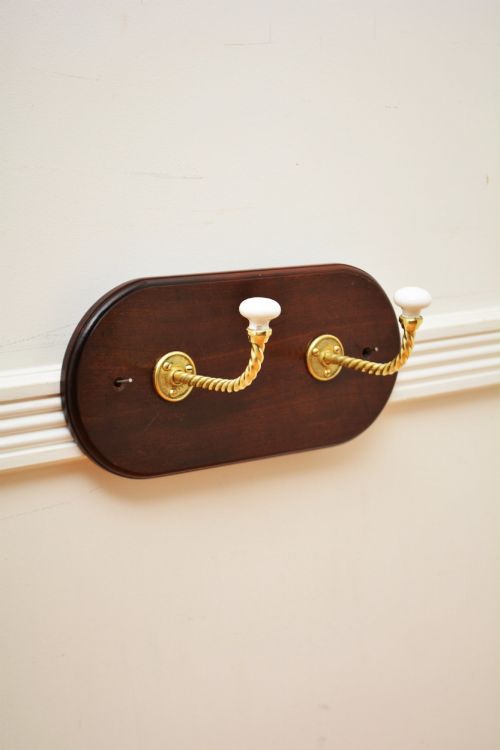
Many designs incorporated contrasting materials, fixing ceramic knobs onto brass stems and securing bevelled mirror plates within wooden frames. Construction relied on solid timber backboards screwed directly behind heavy metal hooks to support the weight of heavy garments.
Several pieces incorporate charming horseshoe-shaped mirror frames, bringing a touch of equestrian luck right to the front door.
What varies in quality
Quality rests in the weight of the metalwork and the selection of the timber. Better examples feature heavily cast brass hooks with crisp detailing and thick mahogany or oak backboards rather than thin, plain pine.
Jas. Shoolbred
The Victorian Brass Coat Rack Glossary
- Backboard
- The wooden plank or panel that carries the hooks and mounts to the wall. It provides structural support and protects the plaster from wet garments.
- Portmanteau
- A wall-mounted hat and coat rack, frequently of French origin, featuring multiple brackets and robust pegs. These often incorporate shelves or scalloped hook designs.
- Hallstand
- A large freestanding piece of furniture combining coat hooks, a hat rack, umbrella storage, and frequently a central mirror. They anchor entrance halls by consolidating various storage needs.
- Ebonised
- Wood treated with a dark finish to imitate ebony. This treatment creates a strong contrast against polished brass hooks.
- Bevelled plate
- A mirror glass with angled edges that catch the light. This technique adds depth and finish to hallstand panels and horseshoe frames.
Victorian Brass Coat Rack: Frequently Asked Questions
How do I mount a heavy coat rack securely?
Wall racks require firm fixings into wall studs or solid masonry to bear the weight of heavy winter coats. Using multiple screw points across the timber backboard distributes the load evenly.
Freestanding hall stands rely on balanced placement and sometimes benefit from wall tethers if the floor is uneven.
What is the difference between a wall rack and a hall stand?
A wall rack is a compact board with hooks designed to mount directly onto wall space where floor area is limited. It focuses strictly on hanging hats and coats.
A hall stand is a taller, freestanding piece of furniture that often includes umbrella wells, walking stick holders, glove boxes, and mirrors alongside the coat hooks.
How should I clean antique brass hooks?
Gentle dusting with a dry cloth preserves the aged patina that accumulates over decades of use. Avoid harsh metal polishes that strip away the authentic character and colour of nineteenth-century brass.
Ceramic knobs and porcelain inserts simply require a damp cloth to remove surface grime.
Were these racks used only for coats?
Nineteenth-century hallways demanded versatile storage for a wide wardrobe of accessories. Racks accommodated hats, heavy greatcoats, scarves, and walking canes simultaneously.
Many designs featured upper shelves specifically designated for top hats and bowlers, while lower sections held umbrellas and walking sticks.