
Dark Wood Hat Rack
A dark wood hat rack organises hallway clutter while bringing rich timber tones and sculptural curves to an entranceway.
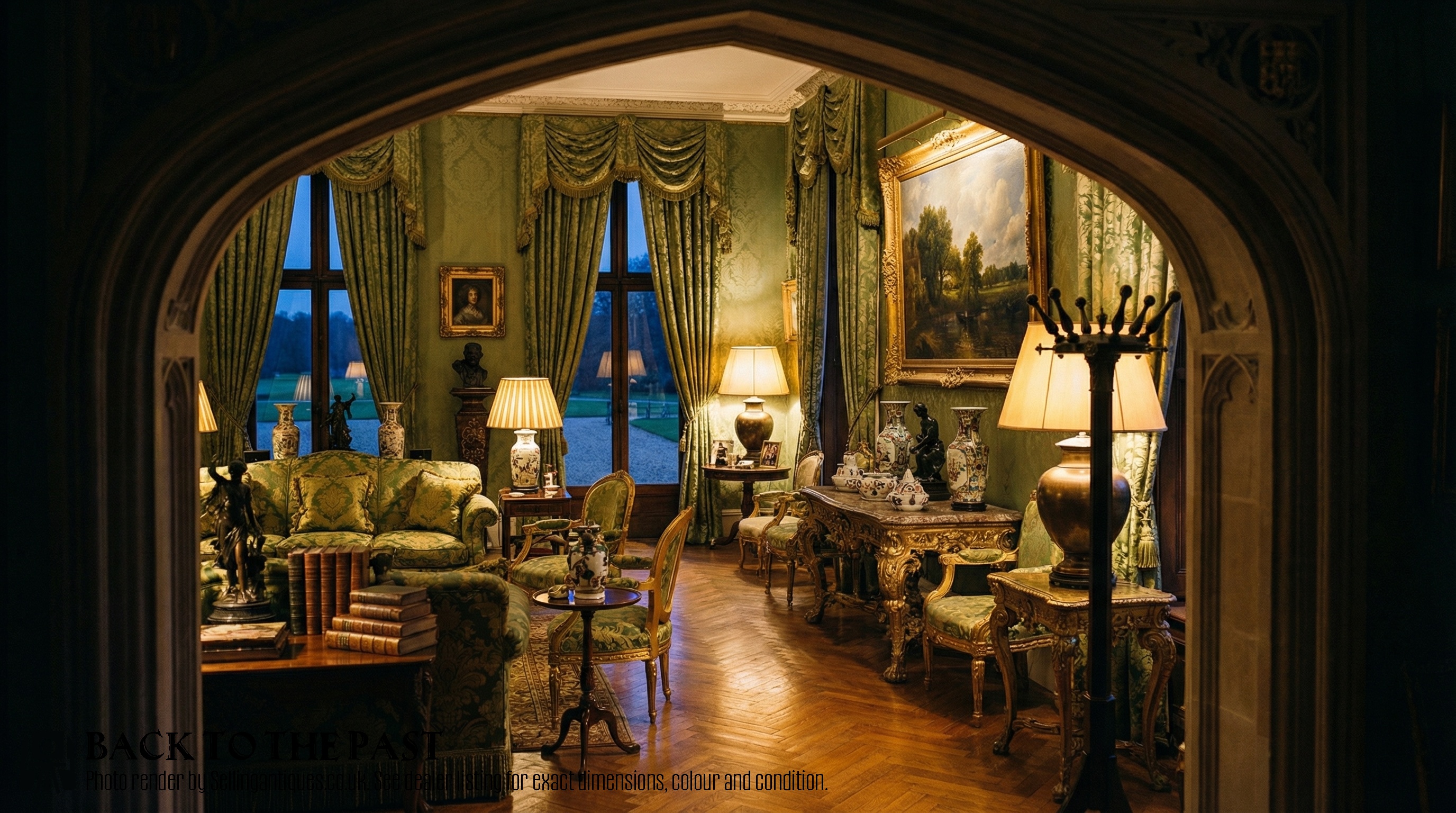
Dark Wood Hat Rack
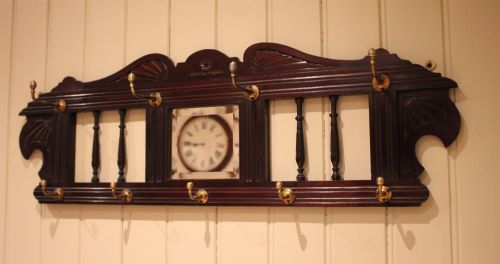
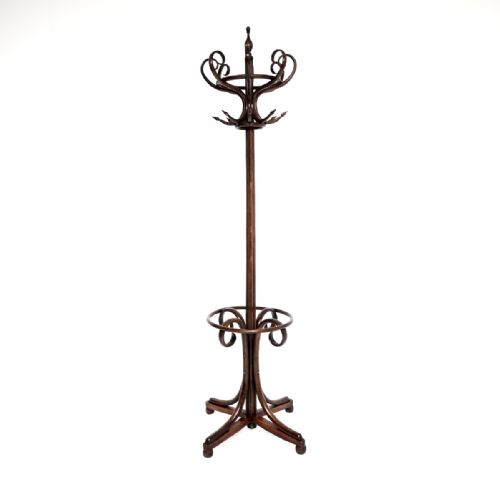
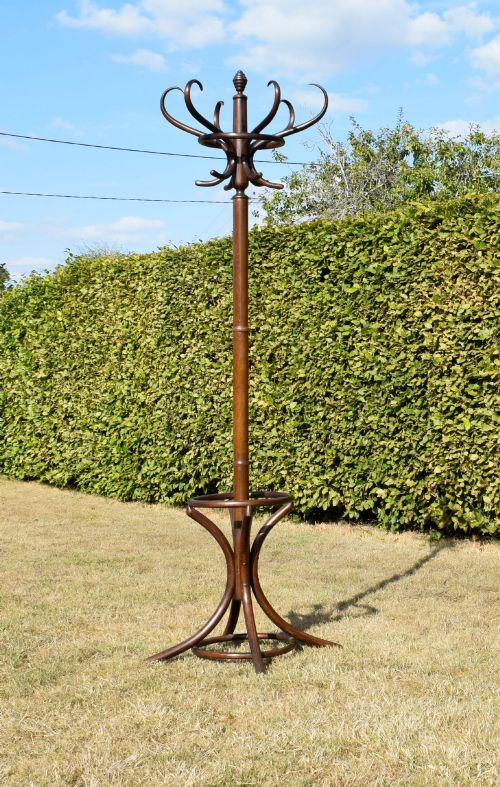
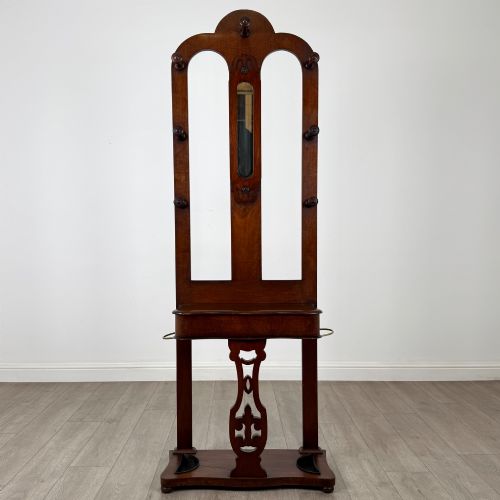
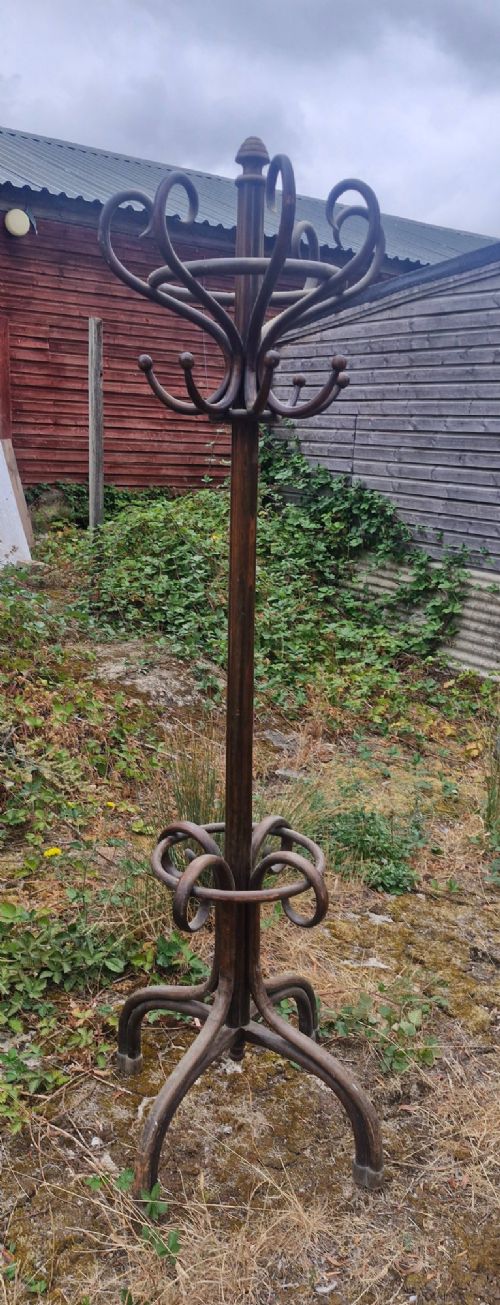
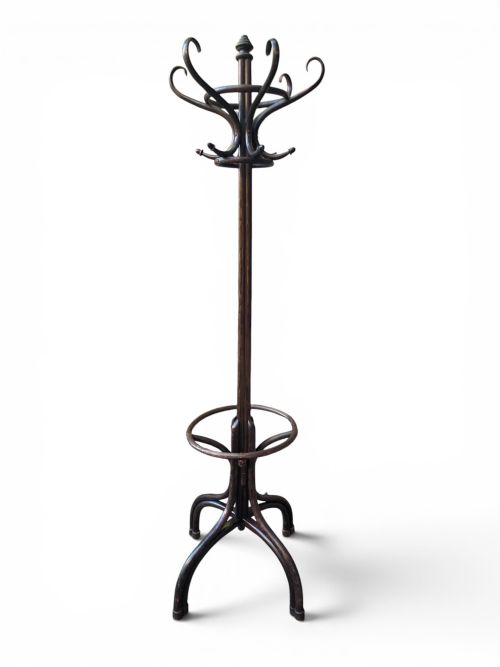
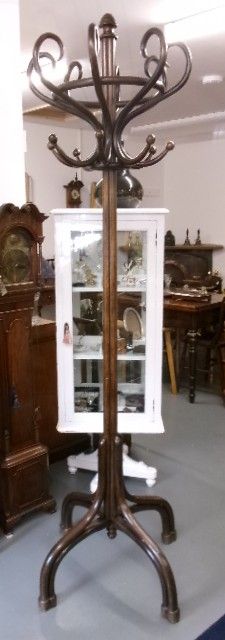
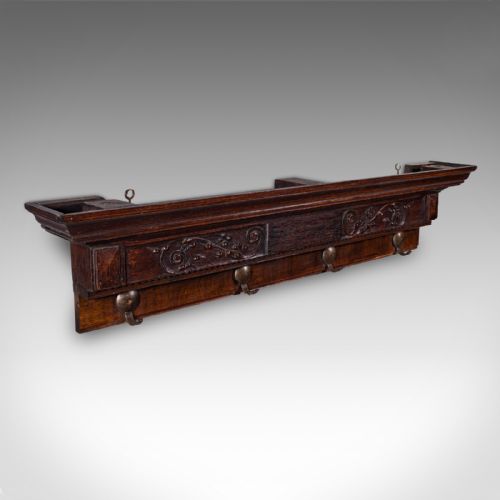
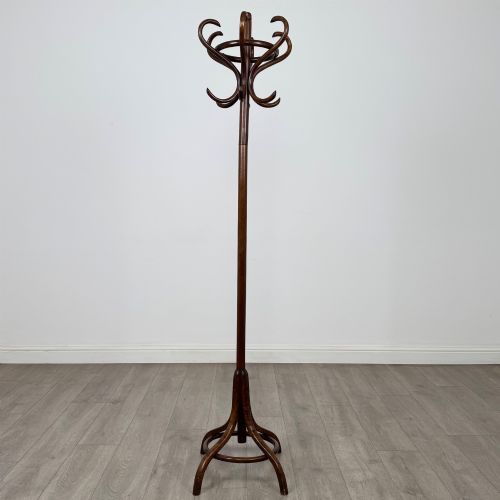
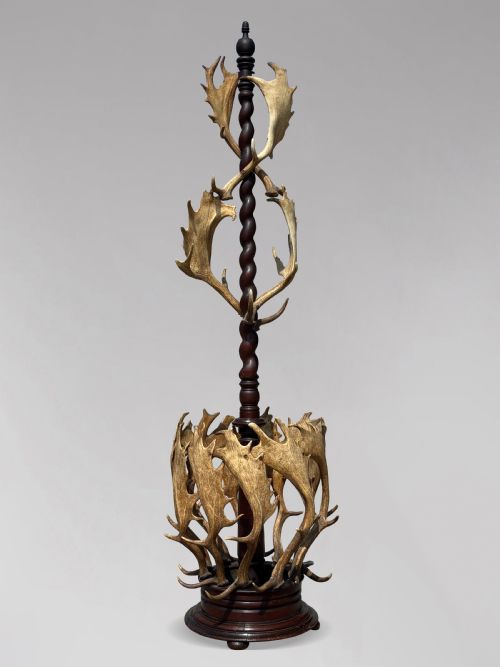
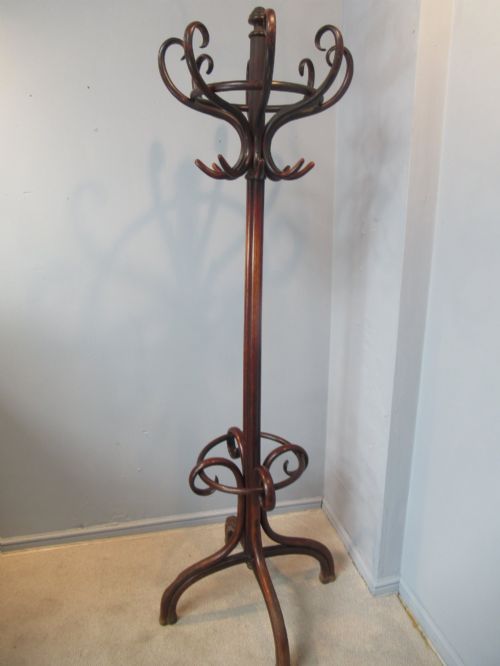
When buyers search for a dark wood hat rack, they encounter sturdy hallway furniture and wall-mounted fixtures designed to hold outerwear. The pieces on this page span the Victorian and Edwardian eras through to the 1930s, taking the form of freestanding hall stands, coat trees and wall-mounted racks. Beech, mahogany, oak and walnut predominate, often shaped into flowing curves or carved with traditional detail.
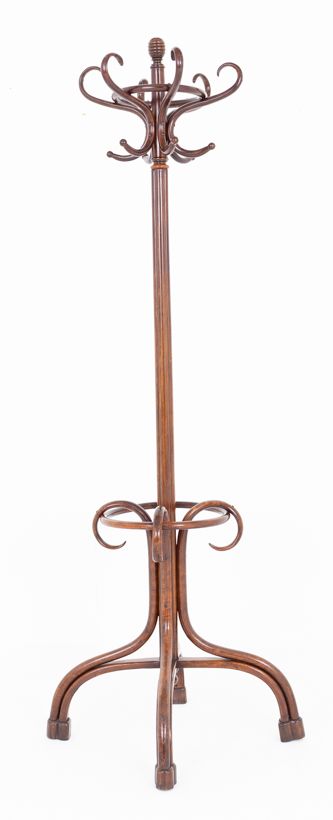
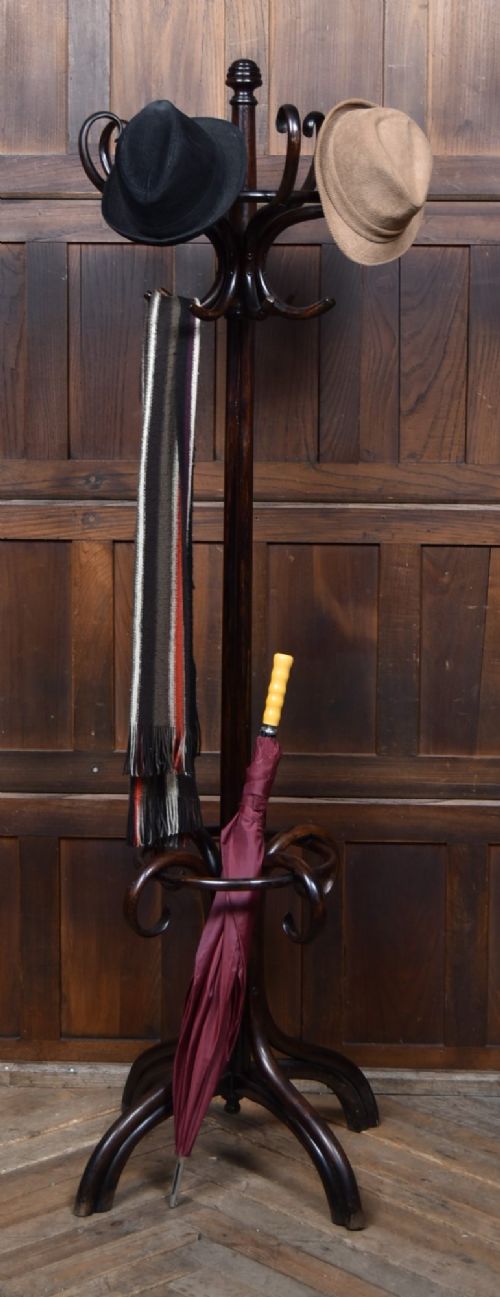
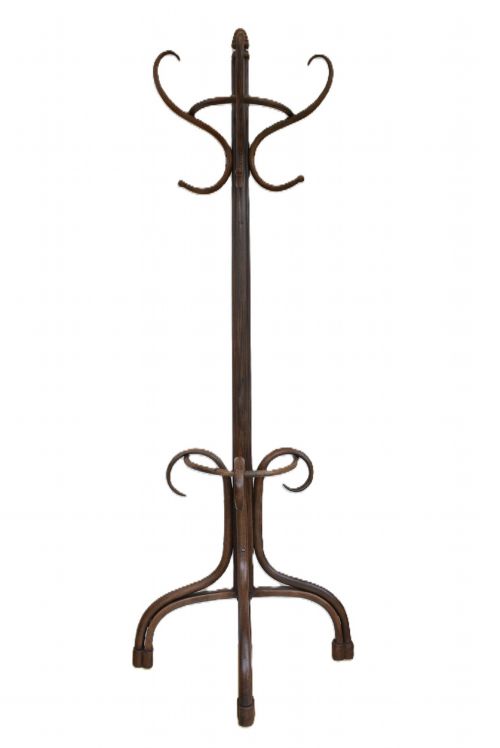
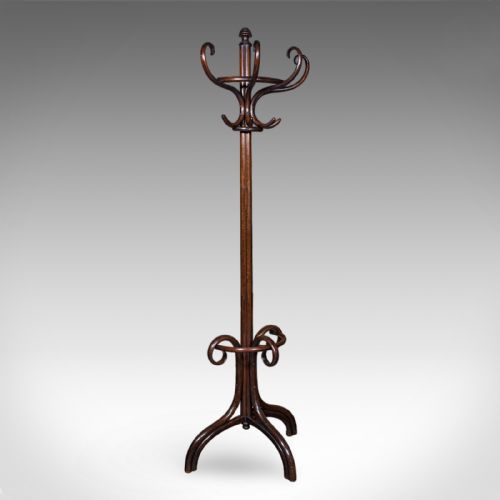
The most common form on this page is the bentwood hat stand, originating from the late 19th and early 20th centuries. These pieces utilise steaming techniques to bend timber into graceful loops for hanging hats and coats, frequently incorporating glass or metal elements. Alongside them, solid mahogany and oak hall stands provide substantial storage with integrated hooks and sometimes mirrors.
How they were made
Maker's workshops built these dark wood hat rack designs using steam-bent beech or solid timbers like mahogany, oak and walnut. Steaming allowed craftsmen to manipulate straight grain into continuous rounded loops without breaking the fibres. Brass fittings, glass inserts and metal hooks were then attached to secure the wooden framework.
Joinery methods varied according to the form, combining traditional mortise and tenon joints in heavy hall stands with screw fixings and bentwood tension in lighter coat trees. Carved details on Victorian and Black Forest pieces required skilled hand chiselling, whilst mass-produced bentwood relied on precise metal moulds.
Dark Wood Hat Rack Retail Price Guide 2026
Typical asking prices for dark wood hat rack among the pieces listed under this phrase on Sellingantiques today, from the lower quarter to the upper quarter. They describe what is for sale here now, not the wider market.
The listings here include items built from beech, bentwood, brass, glass, mahogany, oak and metal.
What varies in quality
The distinction between ordinary and superior pieces rests on the weight of the timber and the complexity of the bentwood curves. Heavy construction and thick gauge wood indicate longevity, whereas lightweight or thin frames flex under heavy winter coats. Fine examples display smooth, unbroken steam bends and crisp hand-carved ornamentation rather than shallow machine stamping.
Original hardware contributes significantly to overall quality. Pieces retaining matching brass hooks, integrated umbrella wells, and original bevelled mirror glass hold greater integrity than those fitted with modern replacements. Labels or stamps from recognised makers also elevate a piece above unmarked workshop output.
Thonet·Jas. Shoolbred·Fischel
The Dark Wood Hat Rack Glossary
- Bentwood
- Timber shaped by exposure to steam until pliable, then placed in metal or wooden forms to set into curves. This technique created lightweight yet durable hat stands.
- Hall tree
- A tall freestanding piece of furniture incorporating coat hooks, a hat rack, and frequently an umbrella stand or mirror. They anchored the entrance of period homes.
- Demi lune
- A half-moon shape used for hall stands designed to sit flat against a hallway wall. This profile saved valuable floor space in narrow Victorian corridors.
- Stag horn
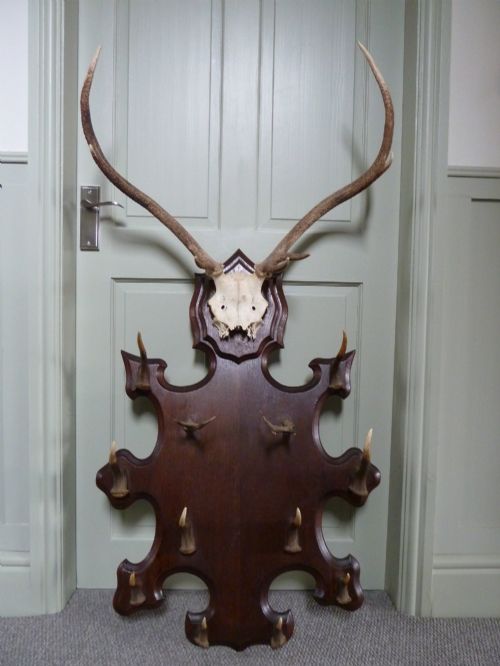
- Antler material utilised for hooks and decorative mounts on rural and country house pieces. These organic additions brought natural texture to dark wood backplates.
Dark Wood Hat Rack: Frequently Asked Questions
How do I secure a freestanding hall stand?
Most freestanding bentwood and heavy timber designs balance their own weight, but tall hat trees benefit from positioning on level flooring. Placing heavier coats on lower hooks helps maintain stability.
For pieces with narrow footprints, avoid overloading one side to prevent tipping. Keeping the base clear ensures the structure remains balanced during daily use.
How do I care for antique bentwood?
Maintain the finish of steam-bent beech and mahogany by dusting with a dry microfibre cloth. Avoid placing these items in direct sunlight or beside radiators, which can dry out the timber and weaken glued joints.
Occasional application of suitable wax nourishment preserves the sheen of the dark wood. Keep the environment stable to prevent the wood from warping over time.
What is the difference between a hall stand and a coat rack?
A hall stand is a substantial freestanding piece of furniture that often includes umbrella holders, a central mirror, and storage compartments alongside hat hooks. They served as central furniture items in grand Victorian and Edwardian hallways.
By contrast, a coat rack is typically a compact wall-mounted board featuring a row of hooks and occasionally a small shelf for hats. These targeted fixtures suited narrower passages and smaller vestibules.