


Barley Twist Leg Desk
A barley twist leg desk offers structural turned columns and practical writing surfaces, bringing tactile warmth and period character to a study.
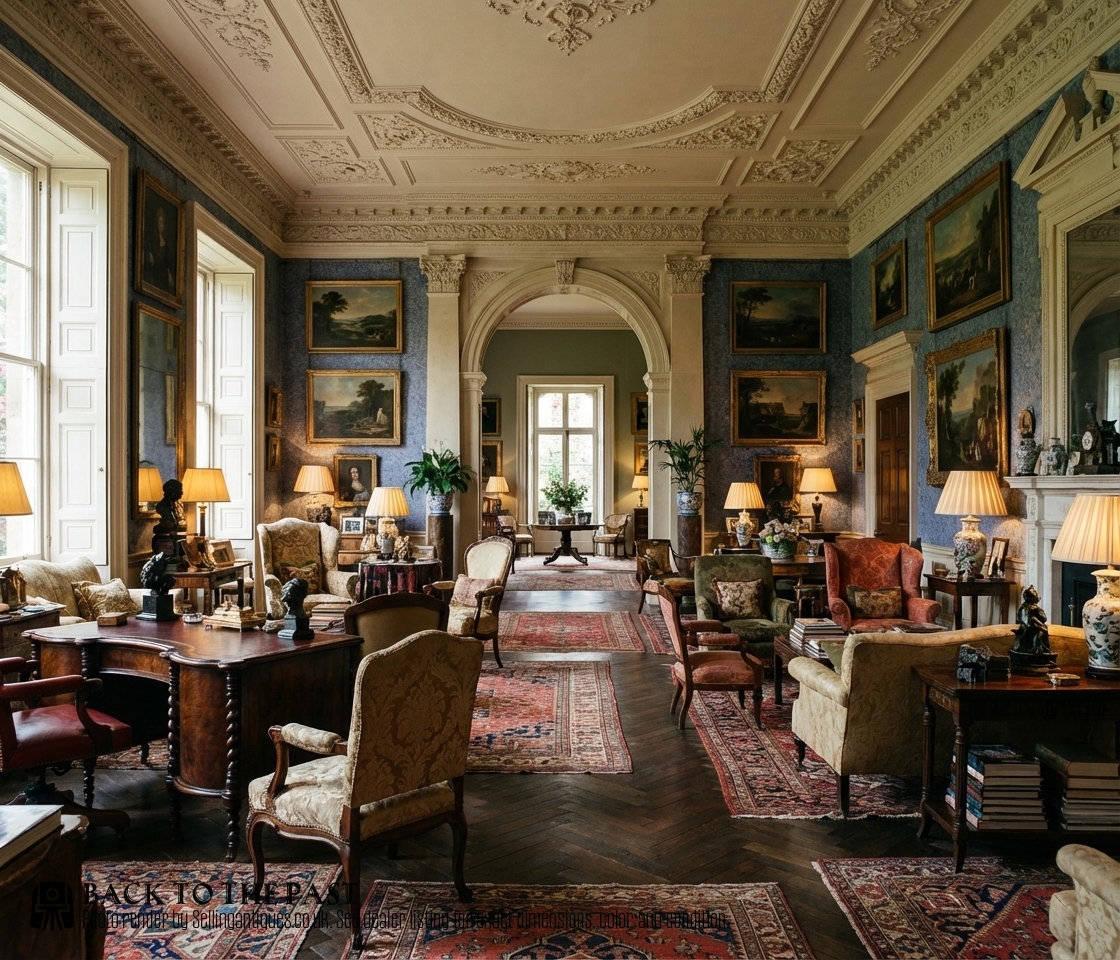
Barley Twist Leg Desk
A barley twist leg desk combines functional writing surfaces with spiral turned supports, spanning forms from compact side tables to kneehole writing desks. Buyers searching for a barley twist leg desk will encounter examples originating across the seventeenth, eighteenth, and nineteenth centuries, alongside revival pieces from the early twentieth century.
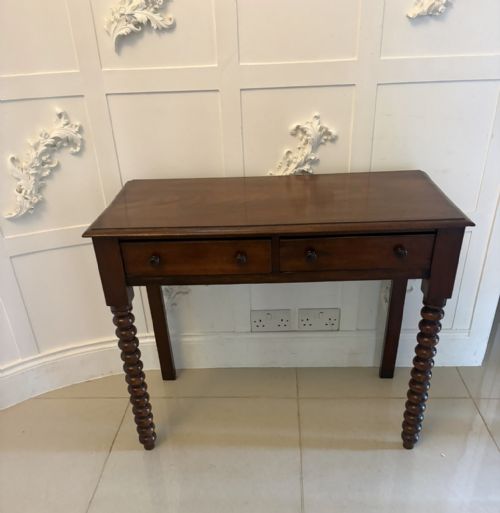
The material palette of these writing surfaces relies heavily on native and exotic timbers, including oak, walnut, mahogany, and rosewood. Formats range from simple single-drawer side tables adapted for correspondence to large library tables and kneehole desks equipped with multiple drawers.
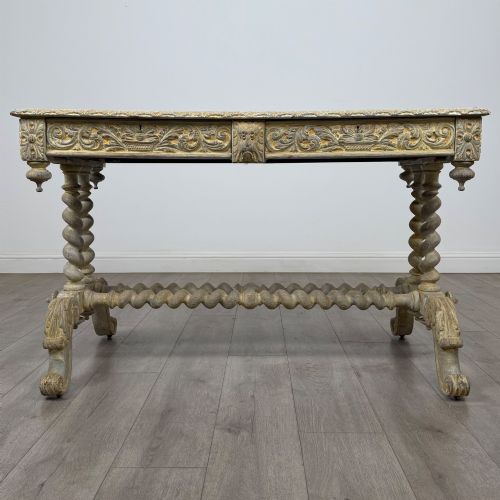
Stylistic influences appearing across these listings draw on Jacobean, Victorian, and Baroque traditions, often reflecting Portuguese, Spanish, or Dutch origins. This variety ensures that whether a room calls for dark carved oak or figured rosewood, a suitable writing surface is present.
Materials and construction methods
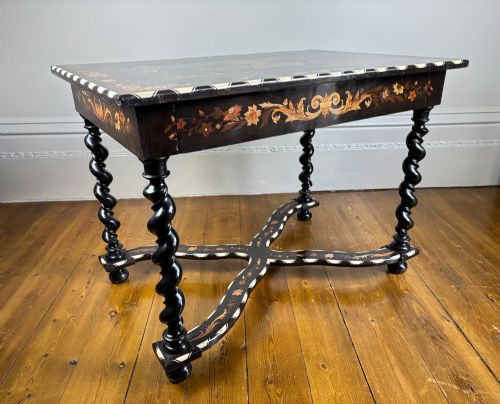
Construction relies upon solid hardwoods such as oak, walnut, and mahogany, frequently shaped into helical turned columns by hand or lathe. Marquetry, bone inlay, and ebonised details provide decorative contrast on select tables.
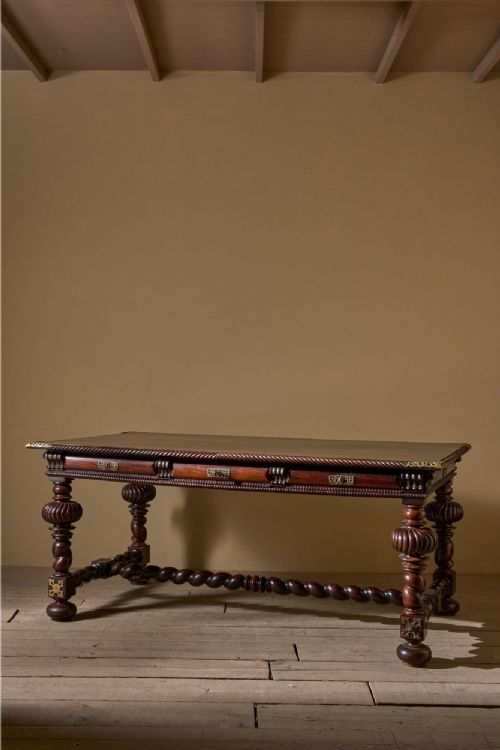
Secondary elements include inset leather writing surfaces, brass hardware, and hand-cut dovetails within drawer construction. Joints are traditionally pegged or mortised, reflecting the joinery standards of periods ranging from the seventeenth to the twentieth century.
Barley Twist Leg Desk Retail Price Guide 2026
Typical asking prices for barley twist leg desk among the pieces listed under this phrase on Sellingantiques today, from the lower quarter to the upper quarter. They describe what is for sale here now, not the wider market.
Listings feature oak, walnut, mahogany, rosewood, and ebonised wood across periods from the seventeenth century to 1920.
Assessing quality in turned leg furniture
Quality rests upon the crispness of the spiral turns and the selection of timber figures, where dense graining and rich natural patina elevate an object. The integrity of the frame, smooth drawer movement, and original hardware contribute significantly to the standing of a piece.
Finer examples demonstrate meticulous joinery and balanced proportions, whereas simpler pieces rely on straightforward utility. The presence of specialised decorative techniques like marquetry or bone inlay distinguishes high-tier workshop output from standard domestic furniture.
The Barley Twist Leg Desk Glossary
- Barley twist
- A spiral turning resembling a twisted rope, carved or lathed into furniture legs and structural supports. This motif appears widely across seventeenth-century and revival pieces.
- Marquetry
- Inlays of patterned wood veneers applied to furniture surfaces to create pictorial or geometric designs. It is commonly found on Dutch and Continental tables.
- Kneehole desk
- A writing table featuring a central recess for the user's legs, flanked by pedestals of drawers. This form provides substantial storage alongside a stable writing surface.
- Ebonised
- Timber treated with a dark finish to imitate ebony. This technique was favoured in various nineteenth-century Continental and English workshops.
- Parquetry
- Geometric mosaic woodwork used for floors and tabletops. It employs contrasting wood types to form repeating patterns.
Barley Twist Leg Desk: Frequently Asked Questions
Which woods are most common?
Oak and walnut dominate the listings, frequently paired with mahogany and rosewood in later periods. Ebonised finishes and exotic woods like goncalo alves also appear.
Each timber brings a distinct weight and colouration to the turned legs and top surfaces.
How were these tables used originally?
They served as writing desks, correspondence tables, library tables, or side tables for domestic studies and reception rooms. Drawers housed writing implements, papers, and books.
Larger kneehole and library versions provided substantial workspace for administrative tasks.
How do I identify a revival piece?
Revival pieces often date from the late nineteenth or early twentieth century, exhibiting standardised machine-turned twists and uniform timbers. True seventeenth-century examples show hand-carved irregularities and deep natural patina.
Examining construction joints and secondary woods helps clarify the actual age of the frame.