

Edwardian Style Console Table
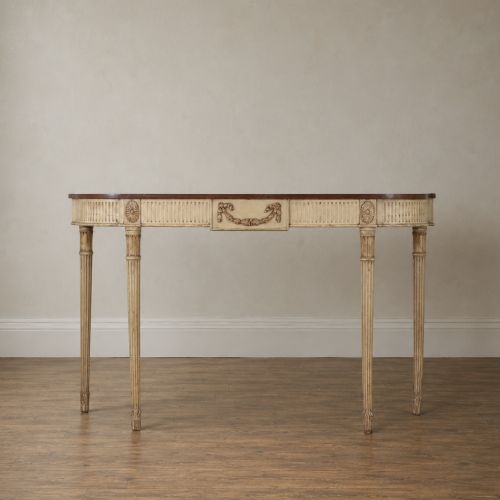
When you search for an edwardian style console table, you are looking at early twentieth-century hallway furniture designed to echo eighteenth-century lightness.
Edwardian Style Console Table
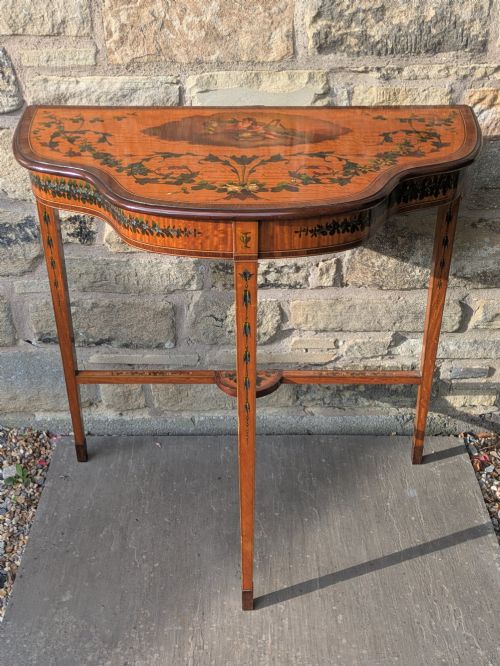
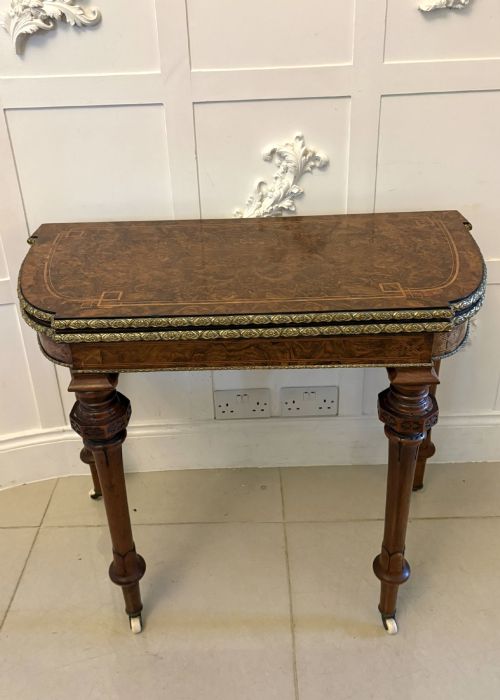
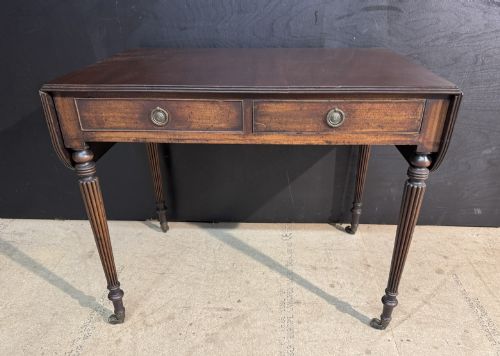
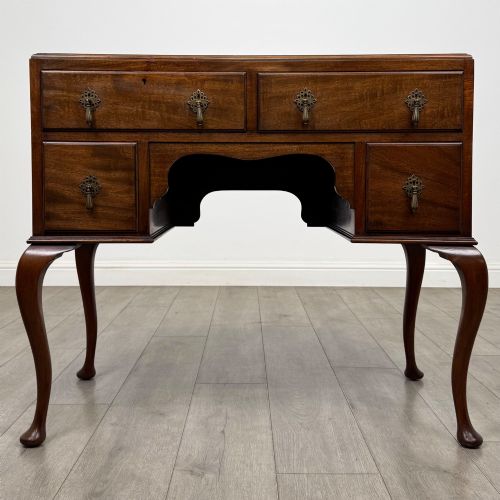
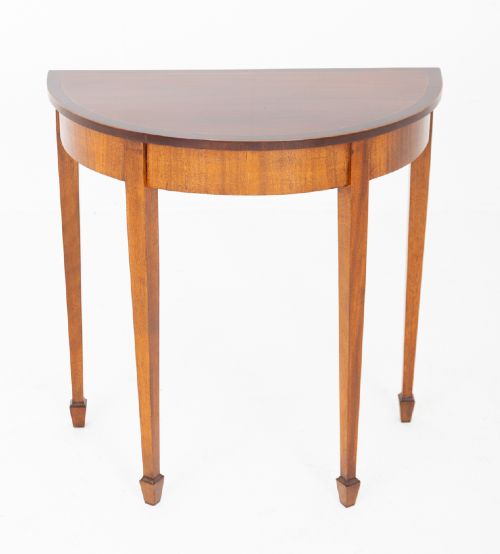
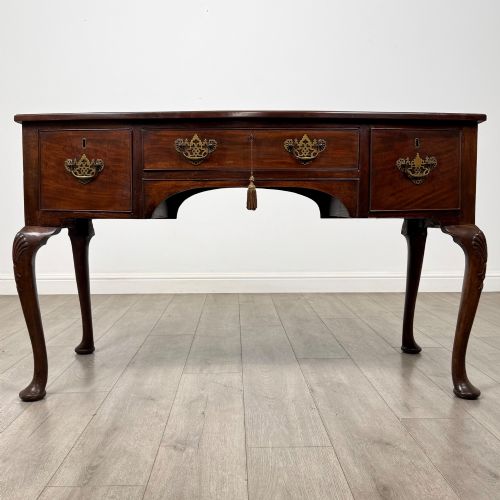
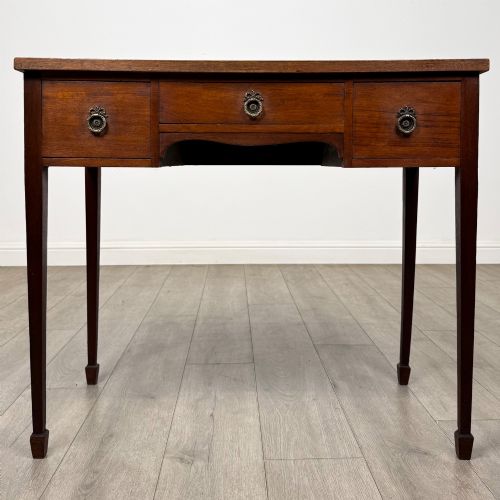
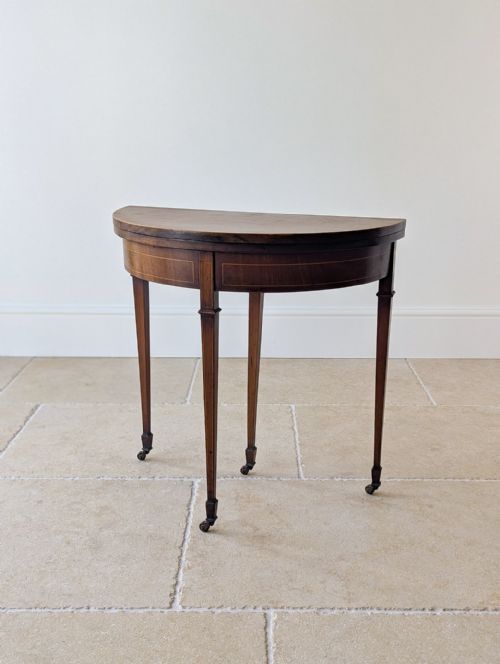
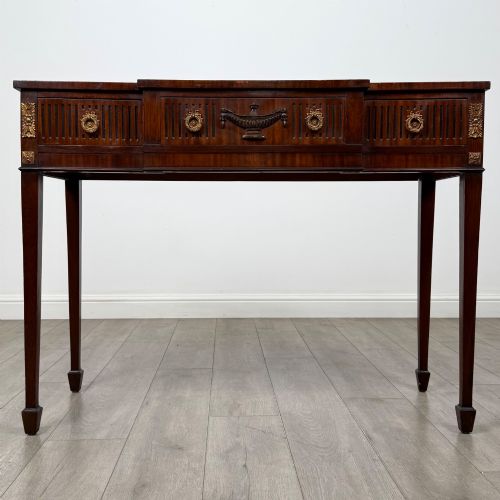
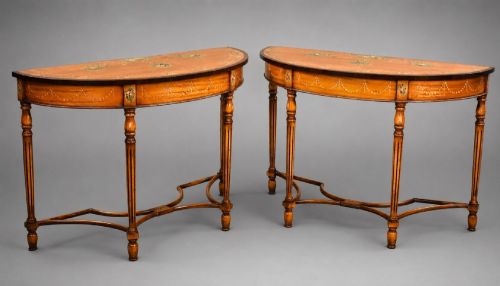
The edwardian style console table bridges late Victorian mass and the revived neoclassical elegance of the early twentieth century, appearing frequently as demilune folding card tables, writing desks, and slender hallway servers.
Makers working in this idiom drew heavily upon Sheraton Revival and Chippendale Revival vocabularies, producing mahogany and satinwood forms that suited smaller Edwardian domestic spaces.
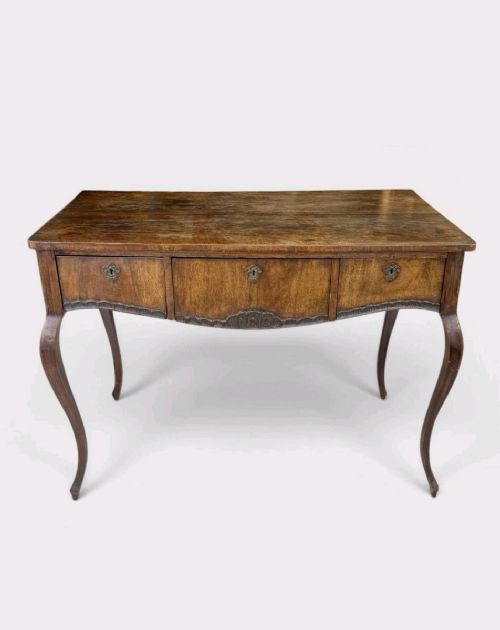
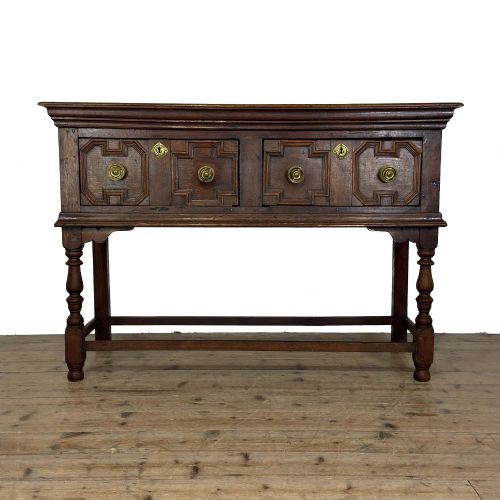
The pieces on this page span the Edwardian era itself, alongside related Victorian, 1900, 1910, 1920, and 1930 interpretations constructed in oak, walnut, and mahogany.
Materials and construction
Cabinet makers utilised solid timbers and veneers such as figured mahogany, burr walnut, and satinwood, frequently enhanced by boxwood inlay and contrasting stringing.
Surface detailing relied upon brass mounts, ormolu, leather inserts, and hand-painted neoclassical motifs, alongside carved details executed in oak and mahogany.
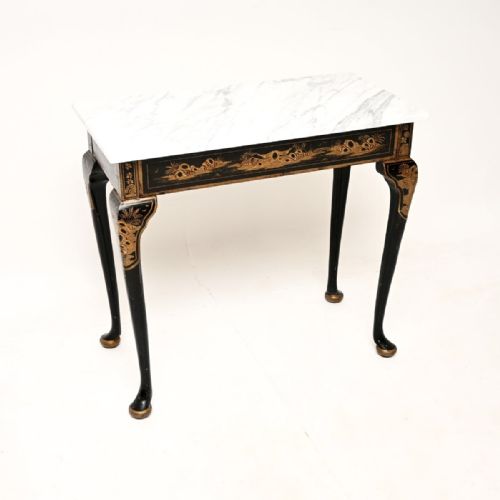
Folding mechanisms for card tables and demilune shapes required precise hinge work and stable framework to support marble tops or fold-over leaves.
Card tables hide secret folding leaves designed for unexpected games of whist.
Judging quality
Quality rests upon the selection of timber figures, such as the richness of burr walnut or figured mahogany, and the crispness of inlay and painted satinwood decoration.
Structural integrity reveals itself in the stability of leg joints, the smoothness of drawer operations, and the precise fit of folding leaves and marble slabs.
Design ambition separates standard commercial production from workshop pieces displaying refined proportions, ormolu mounts, or intricate carved details.
Beresford and Hicks London
The Edwardian Style Console Table Glossary
- Console table
- A table designed to stand against a wall, frequently secured to it or supported by front legs.
- Demilune
- Having a half-moon shape, characteristic of side and card tables built to sit flush against hallway walls.
- Satinwood
- A light-yellow timber imported from tropical regions, used extensively for veneering and painted neoclassical furniture.
- Ormolu
- Gilded bronze applied as decorative mounts on furniture during revival periods.
- Inlay
- A technique of inserting contrasting materials into wood surfaces to form decorative patterns.
Edwardian Style Console Table: Frequently Asked Questions
What is an edwardian style console table?
An edwardian style console table is a narrow piece of furniture designed to stand against a wall, combining early twentieth-century production with eighteenth-century revival aesthetics.
These pieces include demilune card tables, writing desks, and side tables constructed in mahogany, walnut, and satinwood.
How were these tables used?
They served as decorative and practical surfaces in hallways, drawing rooms, and studies for holding lamps, ornaments, or correspondence.
Many featured fold-over tops that transformed a side table into a card table for evening entertainment.
Where should I place one?
Their shallow depth makes them suitable for narrow hallways, landings, or living room walls where floor space is limited.
Pairing a console table with a matching mirror or placing a demilune form against a flat wall creates a balanced focal point.
How do I distinguish Edwardian from Victorian tables?
Edwardian tables generally display lighter proportions, brighter satinwood or mahogany veneers, and refined Sheraton or Chippendale revival motifs.
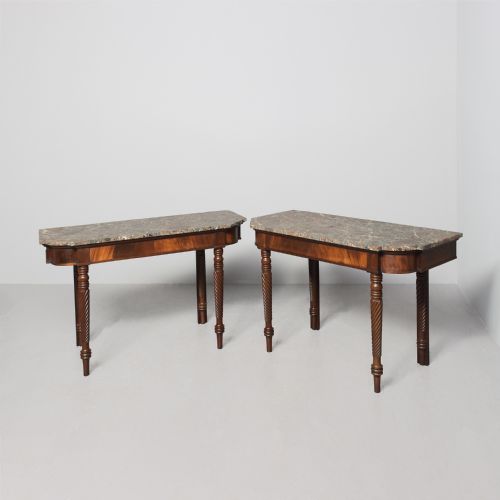
Victorian counterparts tend to be heavier in construction, often incorporating darker woods, denser carvings, and heavy marble or burr walnut tops.