




Pair Chinese Baluster Vases
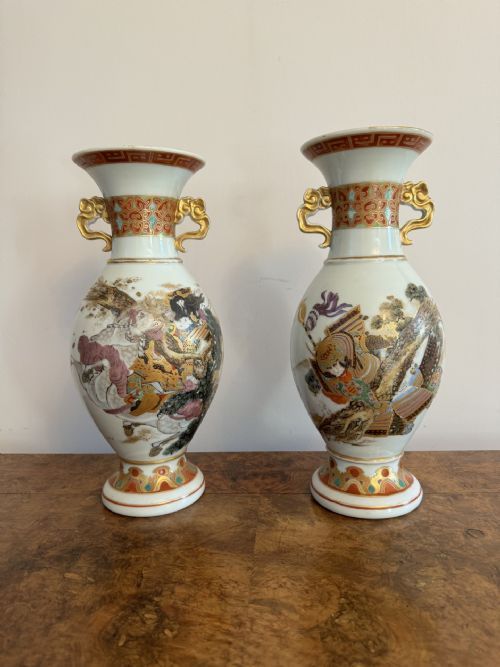
Pair chinese baluster vases bring symmetrical weight and painted narrative to a room, drawing the eye with their distinctive curved profiles.
Pair Chinese Baluster Vases
Pair chinese baluster vases take their name from the architectural baluster, featuring a wide body that swells near the base before tapering toward the neck. This characteristic silhouette appears frequently across nineteenth-century examples and twentieth-century interpretations.
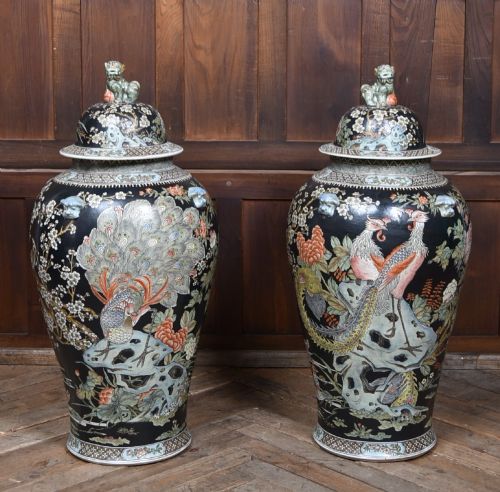
The pieces on this page span diverse forms, from palace floor jars and temple vases to smaller vessels adapted as table lamps. They emerge from periods including the Qing dynasty, the Republic period, and the Victorian and Edwardian eras.
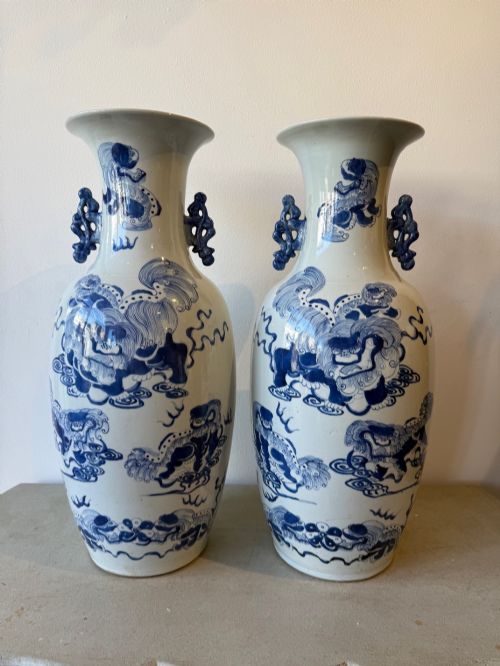
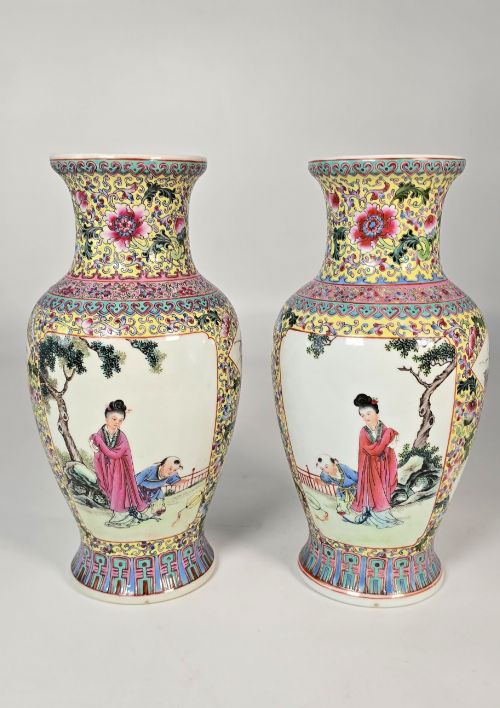
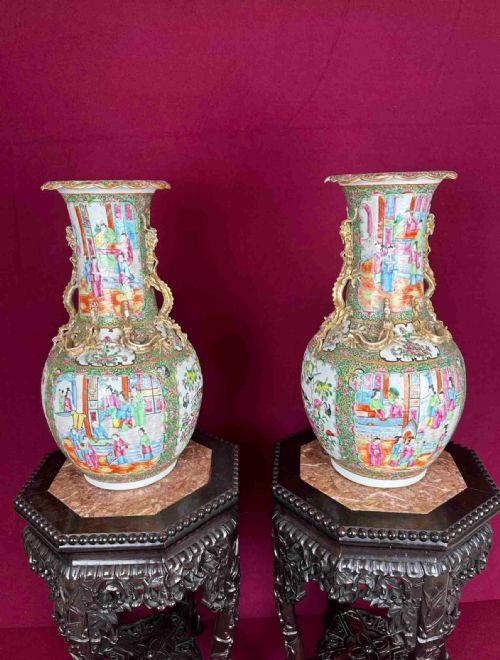
Buyers encounter distinct decorative traditions among these symmetrical pairs, including famille rose, famille verte, powder blue, and blue and white. Canton and Rose Medallion patterns also recur across the selection, alongside lacquered and cloisonné surfaces.
How they were made
Porcelain and ceramic form the structural core of these vessels, shaped on the wheel or moulded before firing at high temperatures. Artisans then applied detailed hand-painted enamels, gilding, and gold leaf to create intricate surface patterns.
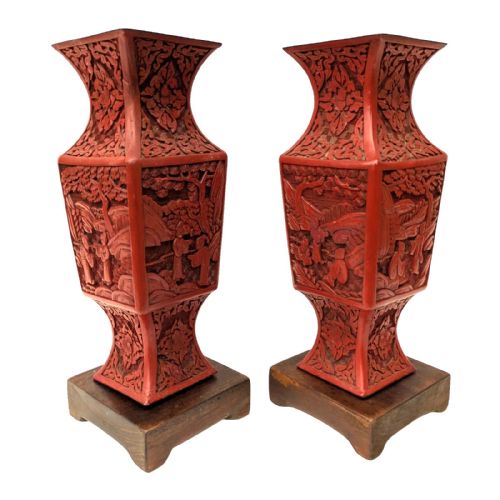
Alternative materials appear in the record, notably cinnabar lacquer and wood, alongside brass and ormolu mounts added to support later lamp conversions. Cloisonné work incorporates metal wires soldered to a base to hold individual enamel cells.
Surface decoration relies on precise brushwork executed by skilled hands, layering colours such as yellow, green, and rose to build complex pictorial scenes.
Object forms include standard decorative vessels, palace floor jars, temple vases, and pieces adapted as table lamps.
What varies in quality
Quality rests primarily in the execution of the hand-painted brushwork, distinguishing crisp, detailed narrative scenes from simpler, rushed decoration. The subtlety of the colour palette and the evenness of the glaze application further separate standard examples from finer works.
The integrity of the body and the retention of original gilding or enamel brilliance dictate the standing of a pair. Subsequent adaptations, such as drilling for electrical wiring or the addition of metal mounts, influence the original character of the ceramic.
The Pair Chinese Baluster Vases Glossary
- Baluster
- A vase shape characterised by a rounded lower body that narrows towards the neck, resembling a traditional architectural baluster. This profile provides stability and a balanced decorative canvas.
- Famille Rose
- A prominent palette of opaque pink and rose enamels introduced during the Qing dynasty. It allowed artists to achieve delicate tonal gradations in floral and figural motifs.
- Canton
- A term denoting porcelain decorated in the southern Chinese port city, often featuring segmented panels of figures, birds, and flowers surrounded by dense borders. These pieces arrived in large quantities in Western markets during the nineteenth century.
- Cloisonné
- A metalwork technique where thin wires are soldered to a vessel to form compartments, which are then filled with enamel paste and fired. The resulting surface displays intricate geometric or floral patterns.
- Ormolu
- Gilded bronze mounts applied to the base or rim of ceramic vessels, frequently utilised when nineteenth-century pieces were converted into lamps.
Pair Chinese Baluster Vases: Frequently Asked Questions
How do I style them?
Symmetrical pairs suit placement on mantelpieces, pedestals, or console tables where their balanced proportions create a formal focal point. Many examples include lamp fittings that allow them to function as lighting while retaining their decorative presence.
Position them away from high-traffic edges to protect the painted enamel and gilt surfaces from accidental knocks.
Were they made for export?
Many nineteenth-century examples were produced specifically for Western markets under the banner of Chinese export porcelain. These pieces often combined traditional local motifs with forms and palettes popular in Europe.
Other items reflect domestic scholarly tastes, featuring scenes from literature and philosophy.
How do I date them?
Dating relies on stylistic markers, enamel characteristics, and manufacturing methods associated with periods like the Qing dynasty or the Republic period. Blue and white pieces, powder blue grounds, and famille rose palettes each point to specific eras of production.
Base wear, glaze maturity, and the presence of metal mounts or lamp conversions also provide clues to age.
What is Rose Medallion?
Rose Medallion is a distinct nineteenth-century Canton style featuring alternating panels of figures and birds set against a densely patterned background of green and gold flowers and butterflies. The central medallion typically encloses a bird or floral motif.
This vibrant decorative scheme was highly popular during the Victorian era.