




Chinese Porcelain Temple Jars
Chinese porcelain temple jars bring commanding scale and rich cobalt blue or enamel palettes into a room, appealing directly to collectors of traditional Asian art.
Chinese Porcelain Temple Jars
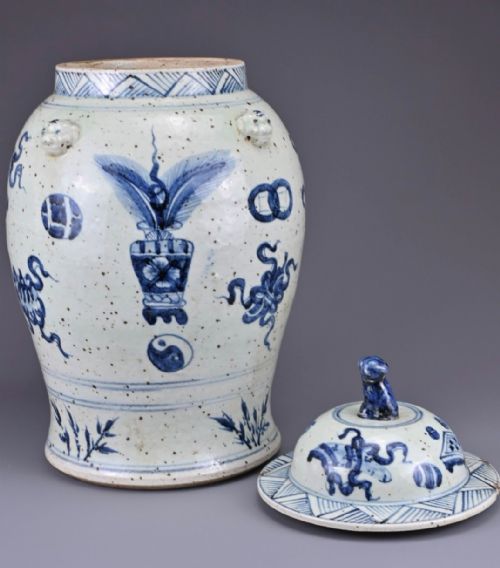
Chinese porcelain temple jars comprise large lidded vessels, baluster vases, and ginger jars originally produced for domestic display and export markets. Buyers encountering these pieces on this page will frequently meet nineteenth-century examples, alongside earlier seventeenth-century forms and twentieth-century interpretations.
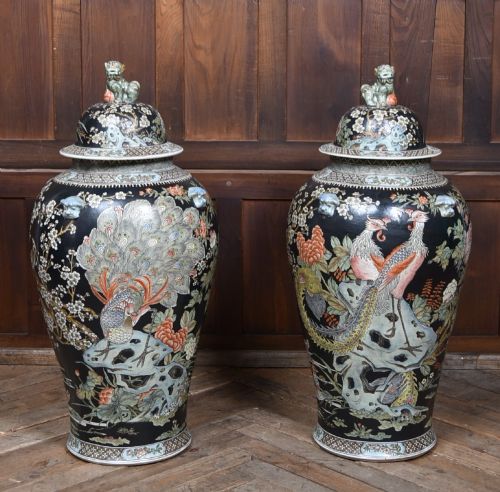
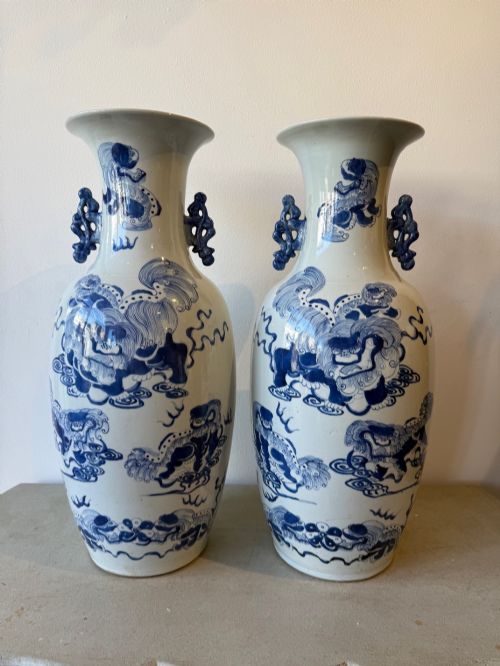
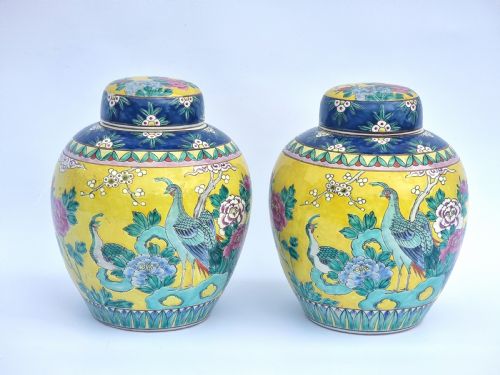
The selections span monumental floor jars, balanced pairs, and converted lamp bases decorated in traditional styles. Qing Dynasty aesthetics and later Republic Period output dominate the physical record, offering varied silhouettes from straightforward ovid jars to expansive baluster shapes.
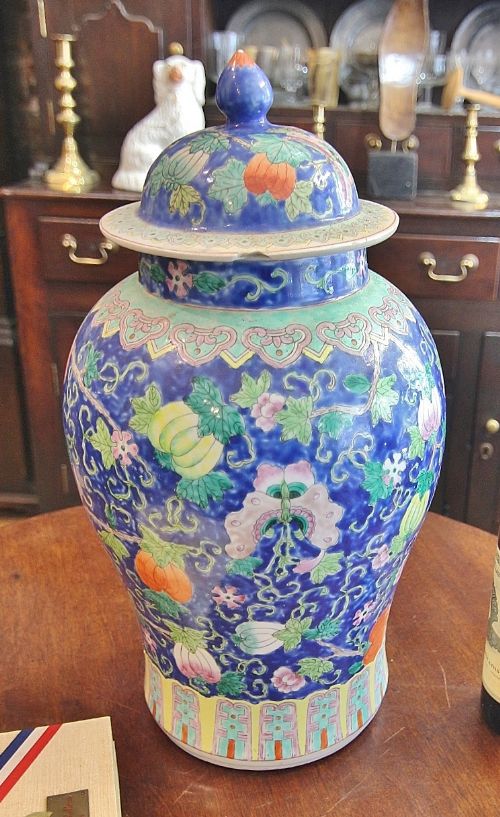
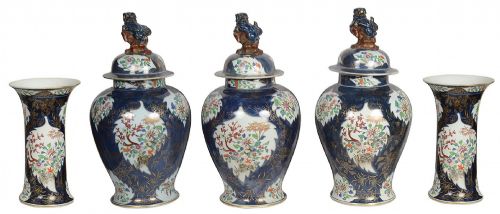
Objects range from blue and white monochrome pieces to brightly enamelled famille rose and rose medallion garnitures. These items serve equally as standalone focal points or matched decorative pairs.
Defining quality
Quality rests upon the precision of the hand-painted detail and the depth of the glaze. Master painters executed brushwork with exceptional control, whereas lesser examples show hurried or repetitive line execution.
The integrity of the porcelain body and the crispness of any applied relief or mark heavily influence the standing of a piece. Original matching covers and well-preserved surface gilding elevate the overall status of a vessel.
Object forms include baluster vases, ginger jars, palace floor jars, and table lamps.
The Chinese Porcelain Temple Jars Glossary
- Baluster
- A tall vase form with a rounded body and a narrower neck, commonly fitted with a domed cover. This silhouette forms the primary profile of many large jars.
- Famille Rose
- A palette of opaque enamel colours dominated by pink, introduced during the Qing Dynasty. Artisans utilised this technique to render detailed floral and figural scenes.
- Doucai
- A decorative technique combining underglaze blue outlines with overglaze enamels filled in the bounded spaces. This method creates a vibrant multi-hued surface.
- Garniture
- A set of three or more matching vases and jars designed to be displayed together on a mantelpiece or cabinet top. These coordinated groupings provide symmetrical visual weight.
- Ovid
- An egg-shaped vessel profile characteristic of traditional ginger and storage jars. The curved contour tapers gently toward both base and rim.
Chinese Porcelain Temple Jars: Frequently Asked Questions
What were Chinese temple jars used for?
Historical temple jars served primarily as decorative ornaments within domestic and ceremonial interiors. Their substantial size and painted motifs signified status and taste.
Over subsequent generations, many of these vessels transitioned into high-end interior decoration items, occasionally converted into lamp bases for domestic lighting.
How do I identify a Qing Dynasty jar?
Identification relies on examining the specific brushwork techniques, glaze characteristics, and stylistic conventions associated with the Qing period. Potters frequently employed detailed blue and white pigments or rich enamel palettes.
Comparative analysis of the foot rim, porcelain body density, and overall vessel proportions helps determine the approximate period of manufacture.
Are all temple jars fitted with lids?
Many traditional temple jars and ginger jars retain their original matching domed covers, completing the intended silhouette of the vessel. Surviving matched lids significantly enhance the integrity of the piece.
Some examples appear without covers due to historical loss or damage over centuries of handling and display.
How do I style a temple jar at home?
These jars provide strong vertical focal points and work effectively placed upon sturdy wooden tables, sideboards, or directly on the floor. Paired sets create balanced symmetry when arranged on either side of a fireplace or doorway.
Interiors benefit from placing them where natural light highlights the glaze variations and hand-painted surface details.