






Blue Gilt Chinoiserie Vases
Blue gilt chinoiserie vases are decorative ceramic and metal vessels decorated with Asian-inspired motifs and metallic highlights, prized for bringing rich colour and historic character to a room.
Blue Gilt Chinoiserie Vases
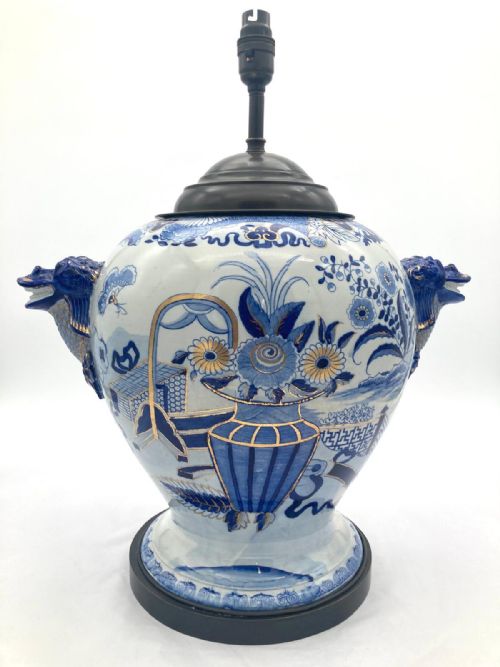
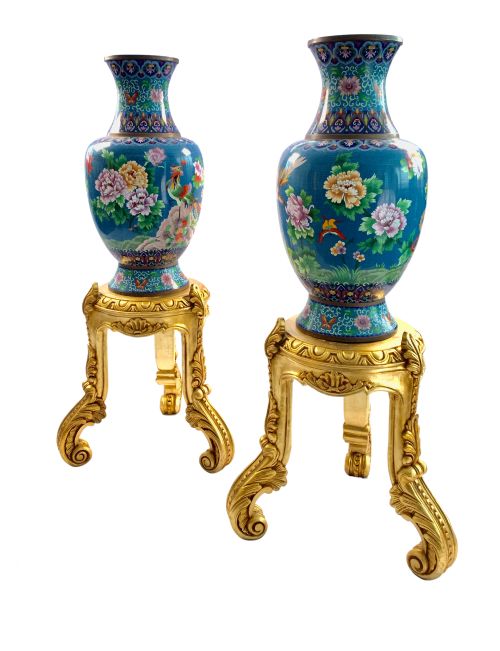
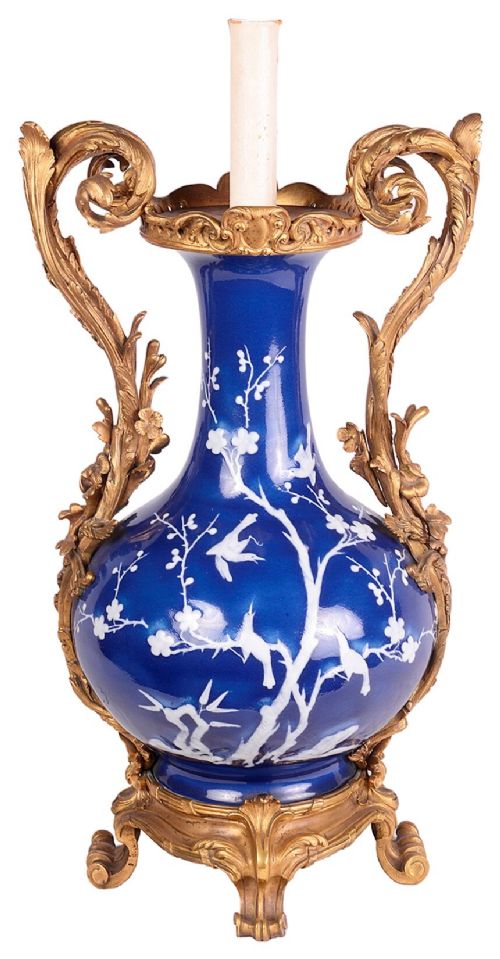
When you search for blue gilt chinoiserie vases, you encounter a selection of vessels and lamps drawing on 18th century, 19th century, and early 20th century aesthetics. These pieces range from substantial ironstone hall vases to pairs of Chinese powder blue vases and Japanese Arita Imari wares.
Many of these objects have been converted into table lamps over time, altering their original function while preserving their decorative presence. The forms include potpourri vessels, urns, and baluster shapes adorned with blue glazes and gilt details.
Originating across different periods including the Regency and Victorian eras, these items reflect European interpretations of eastern design alongside actual imported Asian porcelain and enamel work. The selection encompasses both Chinese export pieces and English ironstone factories adopting oriental styles.
How they were made
The construction relies on durable ceramic bodies such as ironstone and porcelain, often enhanced with hand-painted underglaze blue and applied gold leaf. These foundational materials provide the weight and longevity characteristic of the period.
Mounts in ormolu and gilt bronze frequently frame the ceramic bodies, requiring precise metal casting and gilding techniques. Cloisonné enamel pieces incorporate metal wire soldered to a base to create cells filled with coloured glass paste before firing.
Blue Gilt Chinoiserie Vases Retail Price Guide 2026
Typical asking prices for blue gilt chinoiserie vases among the pieces listed under this phrase on Sellingantiques today, from the lower quarter to the upper quarter. They describe what is for sale here now, not the wider market.
Several vessels spent decades illuminating Victorian drawing rooms before discovering a peaceful second career as quiet bedside reading lamps.
What varies in quality
The sophistication of the hand-painted detailing and the precision of the gilding set individual examples apart. Finer pieces display crisp brushwork and securely applied gold leaf that withstands the passage of time.
The integration of metal mounts, such as cast ormolu or brass, dictates the overall refinement of the piece. Superior specimens demonstrate harmonious proportions between the ceramic vessel and its metal fittings.
Hicks and Meigh·Mason’s Ironstone·Carlton Ware
The Blue Gilt Chinoiserie Vases Glossary
- Chinoiserie
- European decorative style reflecting Chinese artistic influences. It emerged strongly during the 17th and 18th centuries across furniture, ceramics, and textiles.
- Ironstone
- A heavy, durable type of earthenware patented in the 19th century. It served as a robust alternative to porcelain for large decorative vessels.
- Ormolu
- Gilded bronze used for decorative mounts and fittings on ceramics. The technique involves applying a gold amalgam to a bronze base.
- Cloisonné
- Enamel work created by soldering metal wires to a base to form compartments. These cells are then filled with enamel paste and fired.
- Imari
- Japanese export porcelain decorated in underglaze blue, iron red, and gold. This style became widely imitated in European factories.
Blue Gilt Chinoiserie Vases: Frequently Asked Questions
How do I identify ironstone?
Ironstone is a dense, heavy ceramic material developed to resist chipping and cracking better than standard earthenware. It feels substantial in the hand and often carries specific factory marks on the base.
Pieces made by prominent English potters frequently display deep blue printed or impressed backstamps. The glaze on ironstone tends to be thick and smooth, providing a solid canvas for blue and gilt decoration.
What is powder blue?
Powder blue refers to a mottled, speckled blue ceramic glaze blown onto the surface through a gauze-covered tube before firing. This technique creates a soft, textured background rather than a flat, uniform colour.
First perfected in China during the Qing dynasty, this glazing method was later adopted by European potteries. It frequently serves as a rich backdrop for gilt painted designs.
How do I care for gilt surfaces?
The metallic gold leaf and gilt bronze mounts require gentle handling to preserve their lustre over time. Dusting with a soft, dry cloth is usually sufficient for routine maintenance.
Harsh chemical cleaners and abrasive cloths will strip the delicate gold leaf from the ceramic or metal surface. Keeping them away from direct, strong sunlight helps protect the underlying glazes.