



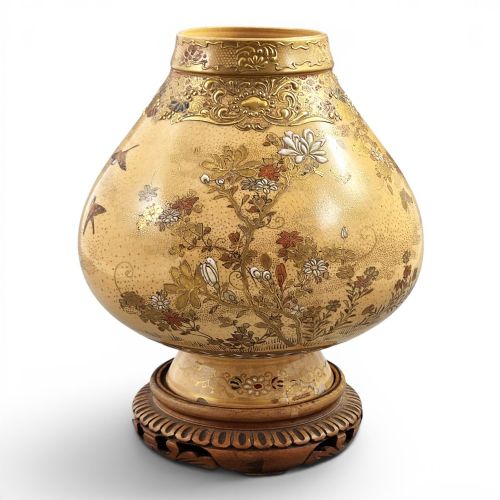


Oriental Gilt Porcelain Vases
Oriental gilt porcelain vases bring together intricate enamel decoration, heavy gilding and traditional ceramic forms from Japanese and Chinese workshops.
Oriental Gilt Porcelain Vases
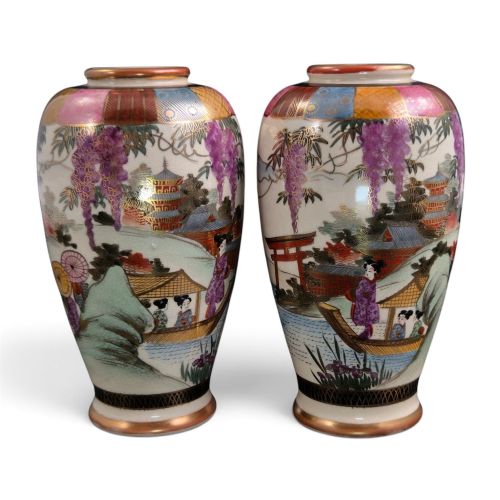
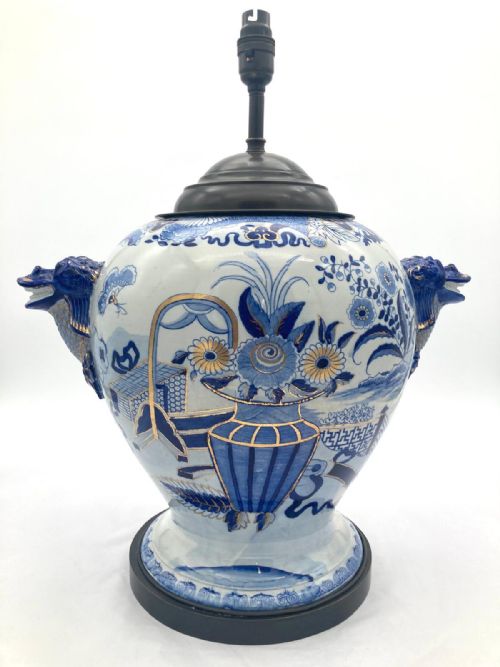
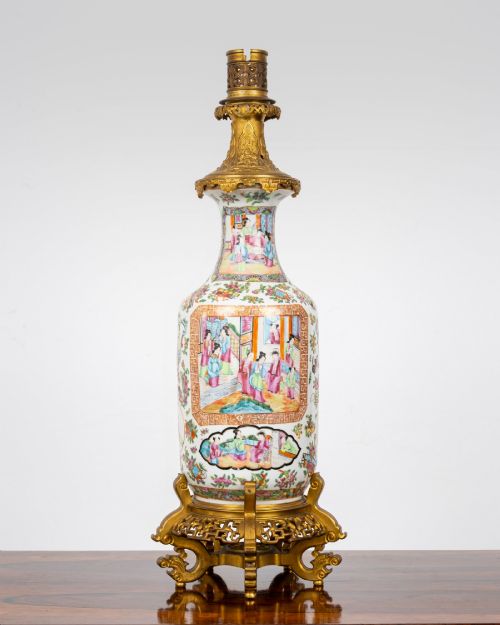
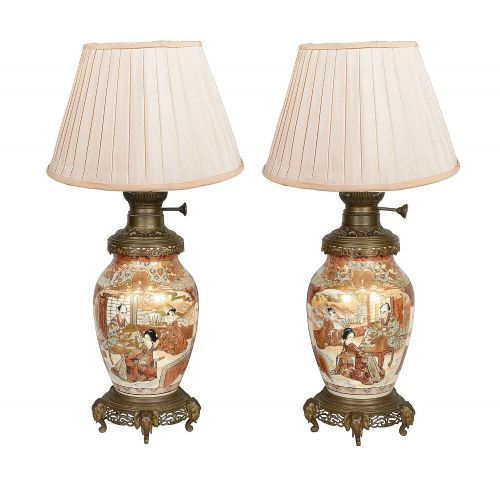
Oriental gilt porcelain vases encompass pieces created across the nineteenth and early twentieth centuries, spanning the Meiji, Taisho, and Showa periods alongside Qing Dynasty and Chinese Export pieces. Buyers searching for oriental gilt porcelain vases will encounter various forms, including baluster vessels, lidded jars, incense burners, and pieces converted into table lamps.
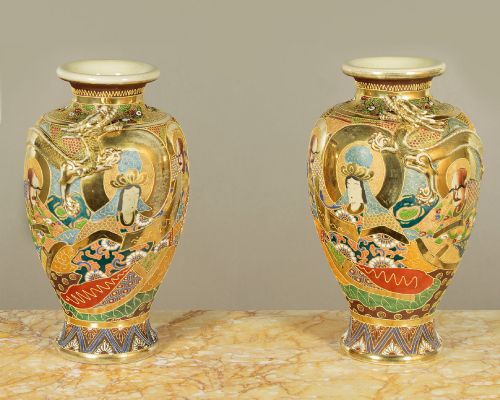
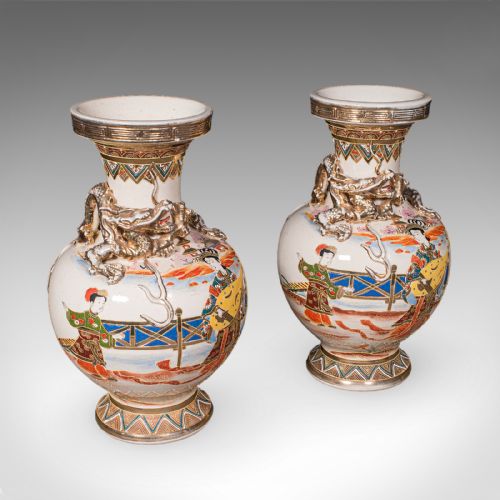
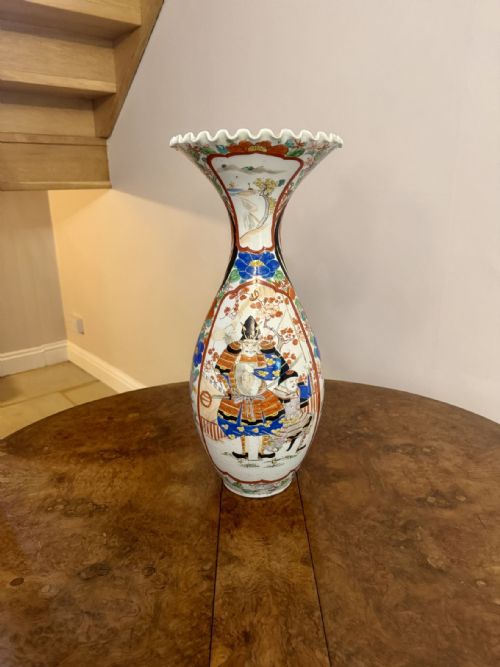
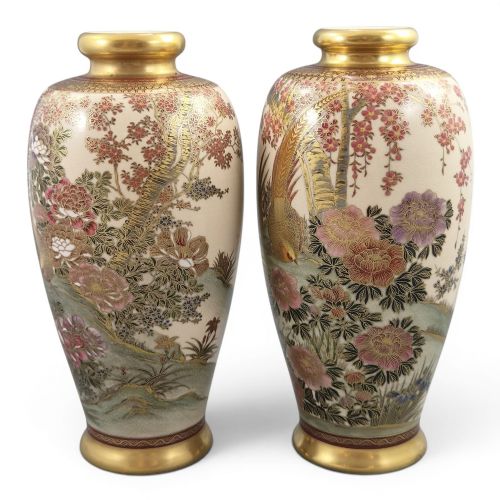
The selection on this page relies heavily on Japanese Satsuma ware featuring detailed court figures and landscapes alongside Chinese Imari, Kutani, and Rose Mandarin vessels. These items combine earthenware and porcelain bodies with rich enamel painting and gold leaf application.
Many examples date from the late nineteenth century, reflecting the strong European demand for decorative Asian ceramics during the Victorian and Edwardian eras. Collectors frequently find pairs of vases as well as miniature vessels signed by notable Kyoto workshops.
How they were made
Potters shaped porcelain and earthenware bodies into traditional forms such as baluster vases and lidded jars before applying layered enamel colours. Artisans then integrated gold leaf and detailed gilding to highlight figures, floral motifs, and geometric borders.
Many Japanese pieces utilise moriage technique, where raised clay slip creates a three-dimensional effect beneath the enamel and gold highlights. Workshops in Kyoto and Kobe employed skilled painters to execute complex figural processions and landscapes by hand.
Listings feature periods spanning the Victorian era, Edwardian years, and the Meiji period, alongside materials such as porcelain, earthenware, gold leaf, and enamel.
What varies in quality
Quality in these vases rests upon the precision of the hand-painted enamel work and the richness of the gilding applied to the surface. Finer examples display meticulous brushwork in facial expressions and robes, alongside crisp, well-defined moriage relief work.
The reputation of the workshop or maker significantly influences the standing of a piece, with signed works from established Kyoto centres commanding greater interest. The stability of the ceramic body and the preservation of the gold leaf over time also define the upper tier of the range.
Manpei·Kinkōzan·Chosei·Nanzan·Hododa·Tashiro
The Oriental Gilt Porcelain Vases Glossary
- Satsuma
- A type of Japanese earthenware featuring a crackled creamy glaze decorated with polychrome enamels and rich gilding. These pieces were widely produced for export during the Meiji period.
- Moriage
- A ceramic technique using raised clay slip to form textured decorative details beneath the glaze and enamel. This method adds tactile depth to robes, borders, and floral patterns.
- Imari
- A style of Japanese export porcelain characterised by a palette of underglaze blue, iron red, and added gold. Production centred on the town of Arita.
- Baluster
- A vertical vase form featuring a rounded body that tapers toward the base and swells slightly near the foot. This shape provides a stable canvas for expansive landscape and figural scenes.
- Kutani
- Japanese porcelain known for its bold colour schemes, particularly greens, blues, yellows, and purples, heavily accented with gold. These wares often depict nature scenes and traditional figures.
Oriental Gilt Porcelain Vases: Frequently Asked Questions
How do I identify Satsuma ware?
Satsuma ware is typically recognised by its characteristic ivory-coloured crackle glaze, which provides a textured ground for intricate enamel paintings and heavy gold leaf. Unlike hard-paste porcelain, traditional Satsuma is an earthenware body.
Many pieces bear artist signatures or workshop seals on the underside, pointing to specific production centres in Kyoto or Kobe from the Meiji period onwards.
What is the difference between Satsuma and Imari?
Satsuma ceramics use an opaque, crackled earthenware body decorated with detailed polychrome enamels and raised gold work, often depicting human figures and narrative scenes. Imari pieces are true porcelain characterised by a distinct palette of underglaze blue and iron red, frequently enhanced with gilding and symmetrical floral motifs.
While both styles were created in Japan for export, their material composition and visual appearance remain distinct.
Were these vases made for export?
The vast majority of nineteenth and early twentieth-century Japanese and Chinese gilt porcelain vases were produced specifically for Western export markets. International exhibitions in Europe and America fuelled a strong demand for ornate decorative objects.
As a result, many surviving pieces reflect a blend of traditional Eastern craftsmanship and Victorian interior tastes.
How should I display a converted lamp?
Vases converted into table lamps should be placed on stable surfaces away from high-traffic areas to protect both the ceramic body and any attached ormolu or brass mounts. Ensure the wiring is inspected periodically by a qualified professional to maintain safety.
Positioning the lamp where natural light catches the gilding will help highlight the detailed enamel work without exposing the surface to direct, harsh sunlight.