



Qing Dynasty Covered Jars
Qing dynasty covered jars are vessels of porcelain and enamel that bring traditional forms and cobalt glaze to any room.
Qing Dynasty Covered Jars
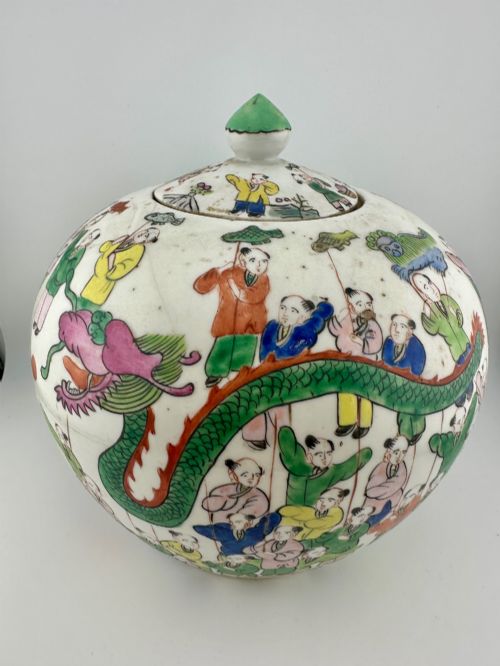
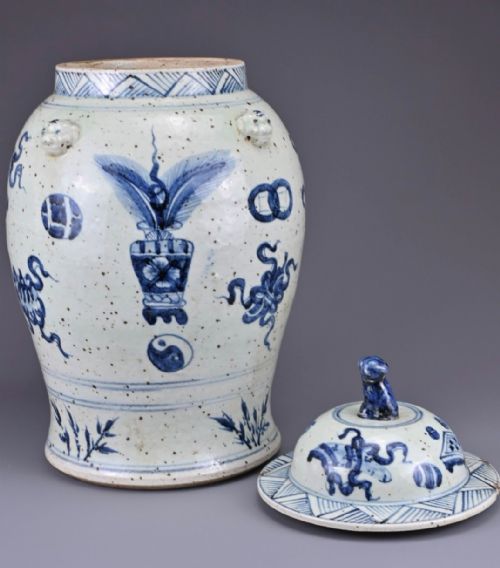
When you search for qing dynasty covered jars, you encounter vessels that range from large blue and white baluster vases with covers to smaller canister forms and kamcheng jars. These pieces emerge across the nineteenth century and the opening decades of the twentieth century, alongside earlier seventeenth-century examples.
The selection includes matching pairs mounted with ormolu, crackle-glazed porcelain snuff bottle canisters, and monochrome lidded jars. Alongside ceramic forms, the range extends to cloisonné lidded vases from the Edwardian era.
Makers and makers' marks are absent from the titles, leaving the focus entirely on the material, period design, and form of the vessel.
How they were made
The primary material is porcelain, decorated with cobalt glaze, cobalt pigment, and enamel, sometimes accented with gold leaf, brass, copper, or ormolu mounts.
Techniques span traditional porcelain throwing and glazing, alongside detailed cloisonné work where metal wires form cells filled with coloured enamel.
Qing Dynasty Covered Jars Retail Price Guide 2026
Typical asking prices for qing dynasty covered jars among the pieces listed under this phrase on Sellingantiques today, from the lower quarter to the upper quarter. They describe what is for sale here now, not the wider market.
Listings feature porcelain, enamel, and cloisonné across nineteenth-century and Edwardian periods.
What varies in quality
Quality rests in the precision of the cobalt pigment work, the richness of the enamel and glaze, and the structural integrity of any added ormolu or brass mounts. Finer pieces display crisp definition in traditional designs and balanced proportions across the jar and cover.
The depth of the glaze and the complexity of the decorative scheme distinguish standard domestic production from monumental or finely mounted display pieces.
The Qing Dynasty Covered Jars Glossary
- Baluster
- A vase form with a rounded body that tapers toward the base and flares slightly at the neck. This shape provides stability and visual balance.
- Cobalt glaze
- A rich blue pigment applied beneath the transparent glaze before firing. It creates the deep blue tones characteristic of traditional Chinese porcelain.
- Ormolu
- Gilt bronze mounts applied to the exterior of ceramic vessels. These decorative mounts add weight and a distinct metallic contrast.
- Cloisonné
- A metalwork technique employing flattened wire soldered to a base to create compartments filled with enamel. These are subsequently fired and polished.
Qing Dynasty Covered Jars: Frequently Asked Questions
How were qing dynasty covered jars used?
These vessels originally served to store tea, spices, or dry goods in domestic settings, while larger lidded jars functioned purely as decorative display pieces.
Over time, many pairs were adapted as lamp bases or integrated into European interiors alongside ormolu mounts.
How do you live with these jars?
Place large baluster jars on occasional tables or sideboards where their painted surfaces catch the light. Their substantial forms anchor a room and pair well with wood furniture.
Keep them away from direct heat sources and high-traffic edges to protect lids and delicate mounts.
How do you tell periods apart?
Dating relies on stylistic clues, such as nineteenth-century Cantonese palettes versus seventeenth-century Kangxi design motifs. Material details like crackle glazes and ormolu mounts also point to specific manufacturing decades.
Comparison of glaze depth and potting thickness helps distinguish earlier periods from later reproductions.
What is a kamcheng jar?
A kamcheng is a traditional covered ceramic container typically used for food storage in Peranakan households. These jars feature distinctive decorative patterns and fitted lids.
They stand apart from standard ginger jars through their specific utilitarian heritage.